
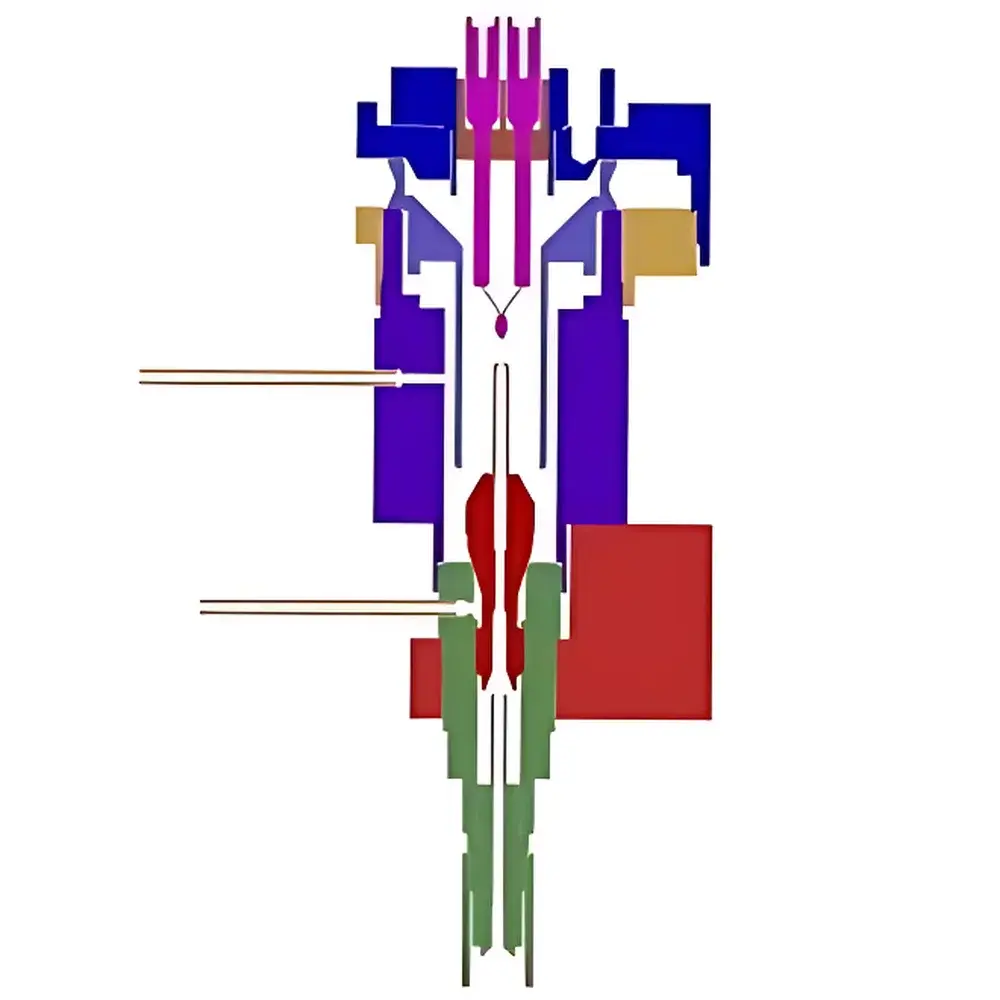
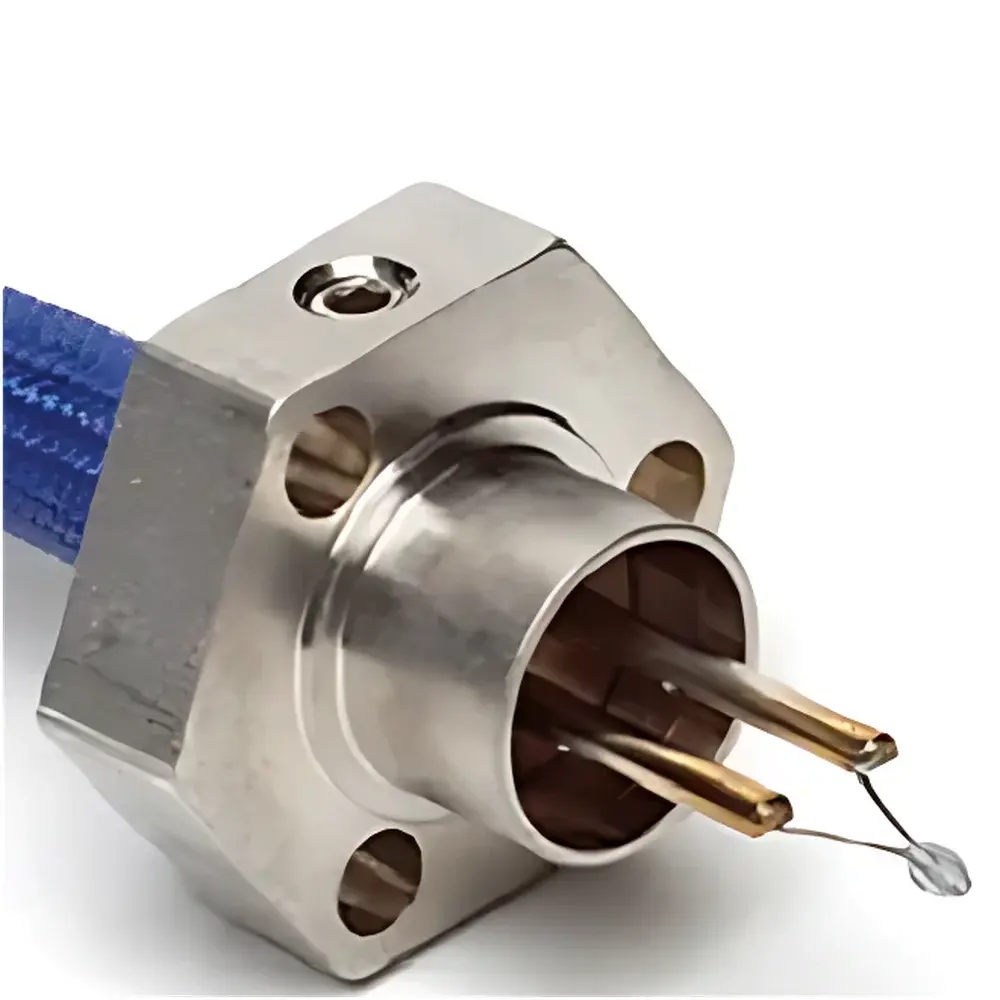
Agilent NPD Detector with Blos Rubidium Bead for GC Systems
| Brand | Agilent Technologies |
|---|---|
| Origin | Shanghai, China |
| Manufacturer | Agilent Technologies (Shanghai) Co., Ltd. |
| Type | Nitrogen-Phosphorus Detector (NPD) |
| Compatible Instrument | Gas Chromatograph (GC) |
| Bead Material | High-Performance Glass-Based Blos Rubidium Bead |
| Lifetime | ≥2× that of conventional ceramic rubidium beads |
| N-Compound Sensitivity | Comparable to ceramic beads |
| P-Compound Sensitivity | Enhanced vs. ceramic beads |
| Environmental Tolerance | High resistance to ambient humidity and moisture exposure |
| Regulatory Compliance | Designed for use in GLP/GMP environments |
Overview
The Agilent NPD Detector with Blos Rubidium Bead is a high-selectivity, thermionic emission-based detector engineered for gas chromatographic analysis of nitrogen- and phosphorus-containing organic compounds. Operating on the principle of selective thermal ionization—where alkali metal (rubidium) vapor is thermally excited in a hydrogen–air flame—the detector generates ionic current proportional to the concentration of N- or P-containing analytes eluting from the GC column. Unlike universal detectors such as FID or TCD, the NPD exhibits inherent selectivity due to its reliance on heteroatom-specific ionization pathways, resulting in signal suppression for hydrocarbons and other non-heteroatom species. This makes it especially valuable in regulated laboratories performing trace-level analysis of pesticides, pharmaceutical impurities, alkaloids, organophosphates, and nitrogenous environmental contaminants—including nitrosamines and triazines.
Key Features
- Proprietary Blos rubidium bead fabricated from advanced borosilicate glass matrix—engineered for uniform thermal conductivity and controlled alkali metal release kinetics.
- Extended operational lifetime: validated to exceed 2× the service life of standard ceramic-based rubidium beads under routine GC-NPD operating conditions (e.g., 250 °C bead temperature, 3 mL/min H2, 30 mL/min air).
- Enhanced phosphorus response: improved signal-to-noise ratio (S/N) and lower minimum detectable mass (MDM) for phosphorus-containing compounds, including parathion and malathion, without sacrificing baseline stability.
- Robust humidity tolerance: stable performance across ambient relative humidity ranges of 30–80%, minimizing drift during extended unattended runs—a critical advantage in non-climate-controlled lab environments.
- Plug-and-play compatibility with Agilent 7820A, 7890B, and 8890 GC systems via standardized electrical and pneumatic interfaces; retains full firmware integration with Agilent GC methods and calibration protocols.
Sample Compatibility & Compliance
The detector is optimized for volatile and semi-volatile N/P analytes with boiling points below 350 °C and thermal stability under GC oven programming up to 325 °C. It supports split/splitless injection modes and is routinely deployed in applications requiring compliance with EPA Method 8081B (organochlorine/organophosphate pesticides), ASTM D5845 (determination of nitrogen in gasoline), and USP (chromatography). When operated within Agilent’s validated method frameworks and paired with OpenLab CDS v2.4 or later, the system meets ALCOA+ data integrity principles and supports audit trails, electronic signatures, and 21 CFR Part 11–compliant user access controls—essential for pharmaceutical QC and contract research organizations.
Software & Data Management
Fully integrated into Agilent OpenLab Chromatography Data System (CDS), the NPD enables real-time monitoring of bead temperature, hydrogen flow, and emission current. Method parameters—including bead temperature ramping profiles, hydrogen flow modulation, and event-triggered gain switching—are programmable and stored with full version control. Raw signal data are recorded at ≥10 Hz sampling rate, supporting post-run deconvolution of co-eluting N- and P-analytes using spectral library matching. All acquisition, processing, and reporting workflows comply with ISO/IEC 17025 documentation requirements and support automated report generation in PDF/A-2 format with embedded metadata and digital signatures.
Applications
- Environmental monitoring: quantification of organophosphate pesticides in soil, water, and food matrices per EU SANTE/11312/2021 guidelines.
- Forensic toxicology: detection of nitrogen-rich alkaloids (e.g., nicotine, morphine derivatives) and phosphorus-based nerve agents in biological specimens.
- Pharmaceutical development: identification and quantitation of genotoxic nitrosamine impurities (e.g., NDMA, NDEA) in APIs at sub-ppb levels.
- Fuel analysis: determination of nitrogen-containing compounds in diesel and jet fuels per ASTM D4294 and D6443 standards.
- Academic research: mechanistic studies of heteroatom-specific fragmentation pathways in pyrolysis-GC/MS coupling setups.
FAQ
What distinguishes the Blos rubidium bead from conventional ceramic beads?
The Blos bead utilizes a thermally stable glass composite that provides more consistent alkali metal vapor pressure over time, reducing sensitivity drift and extending functional lifetime beyond 2,000 analysis hours under typical operating conditions.
Can this NPD be retrofitted onto legacy Agilent GC systems?
Yes—it maintains mechanical and electrical backward compatibility with Agilent 6850, 6890, and 7820A GC platforms when used with appropriate interface modules and firmware updates.
Is the detector suitable for quantitative analysis in regulated environments?
Yes—when deployed with Agilent OpenLab CDS and configured per validated SOPs, it supports full GxP compliance, including instrument qualification (IQ/OQ/PQ), calibration traceability to NIST SRMs, and electronic record retention per FDA and EMA requirements.
How does humidity affect baseline stability?
Unlike ceramic beads, which exhibit measurable baseline elevation above 60% RH, the Blos formulation maintains baseline noise ≤0.5 pA RMS across 30–80% RH without active desiccation or enclosure purging.
What maintenance intervals are recommended?
Bead replacement is typically required every 12–18 months under continuous operation; quarterly verification of hydrogen flow accuracy and annual calibration with triethyl phosphate (TEP) and methyl nonyl ketone (MNK) standards are advised.
Related Products







