
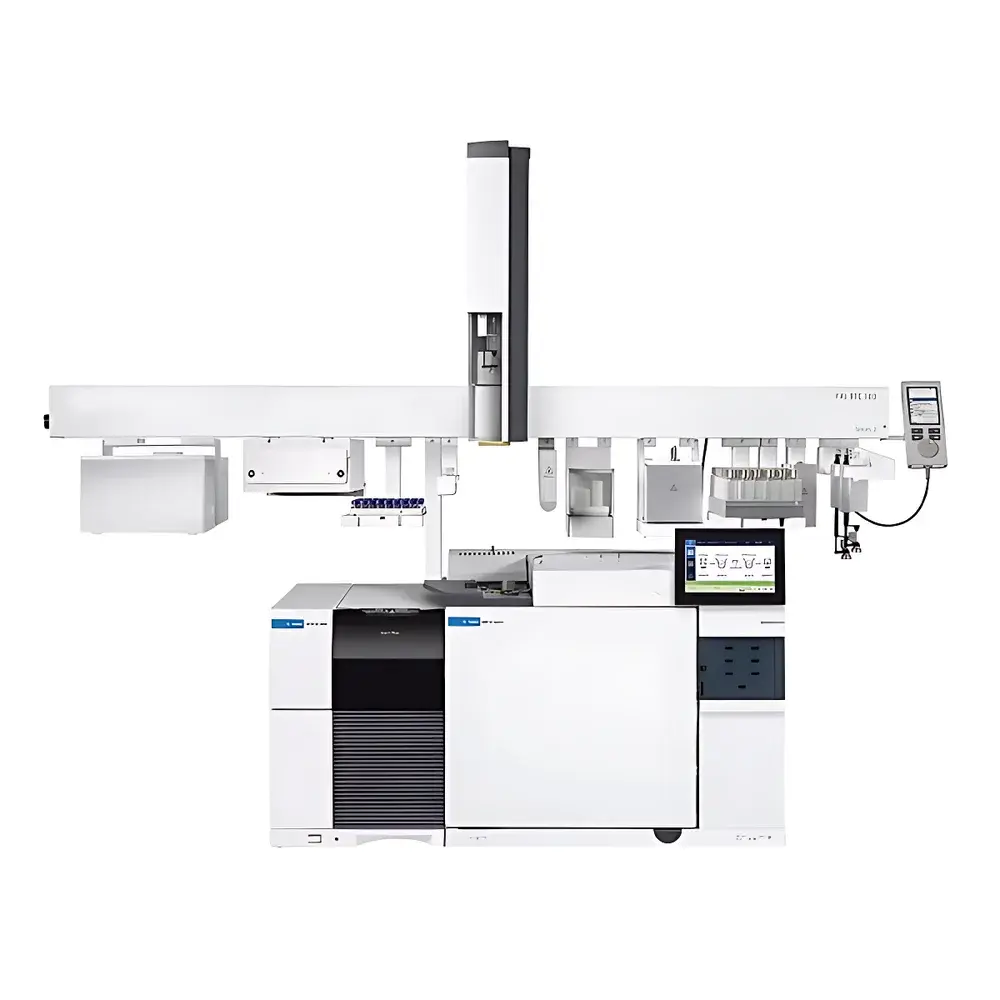
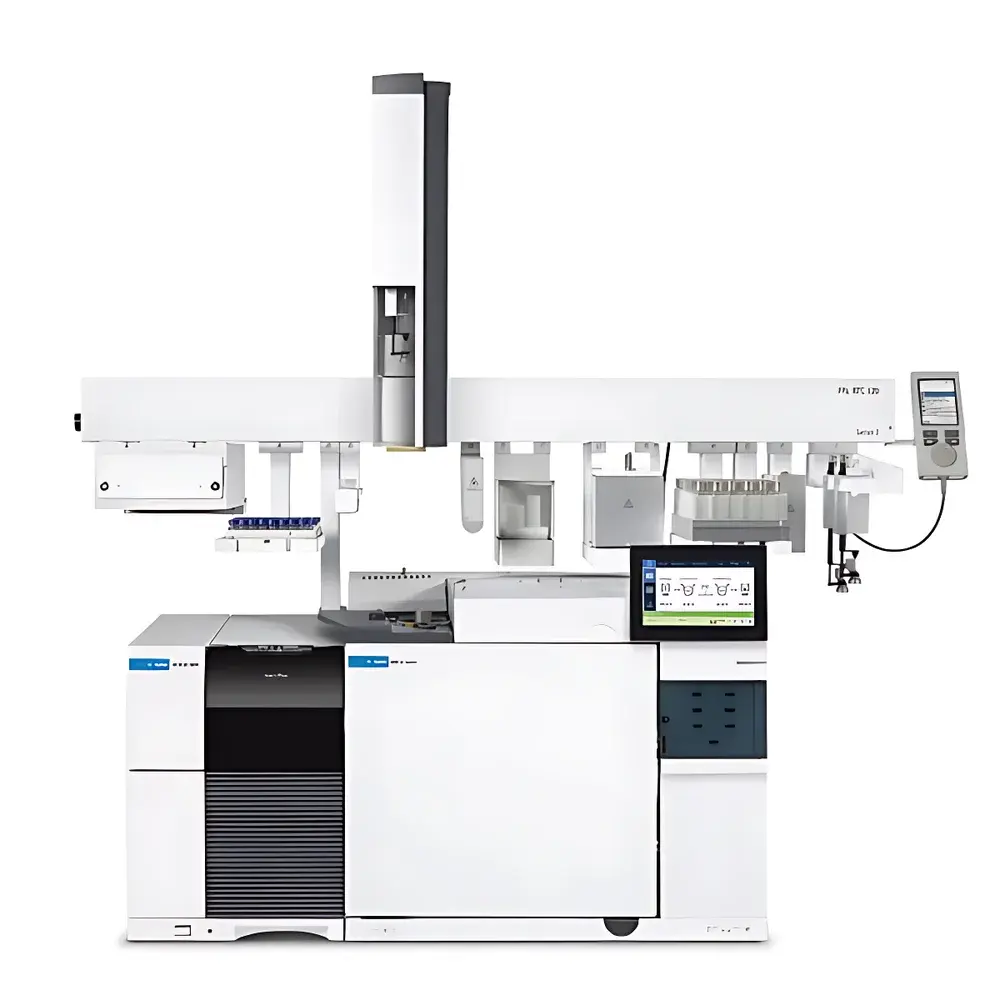
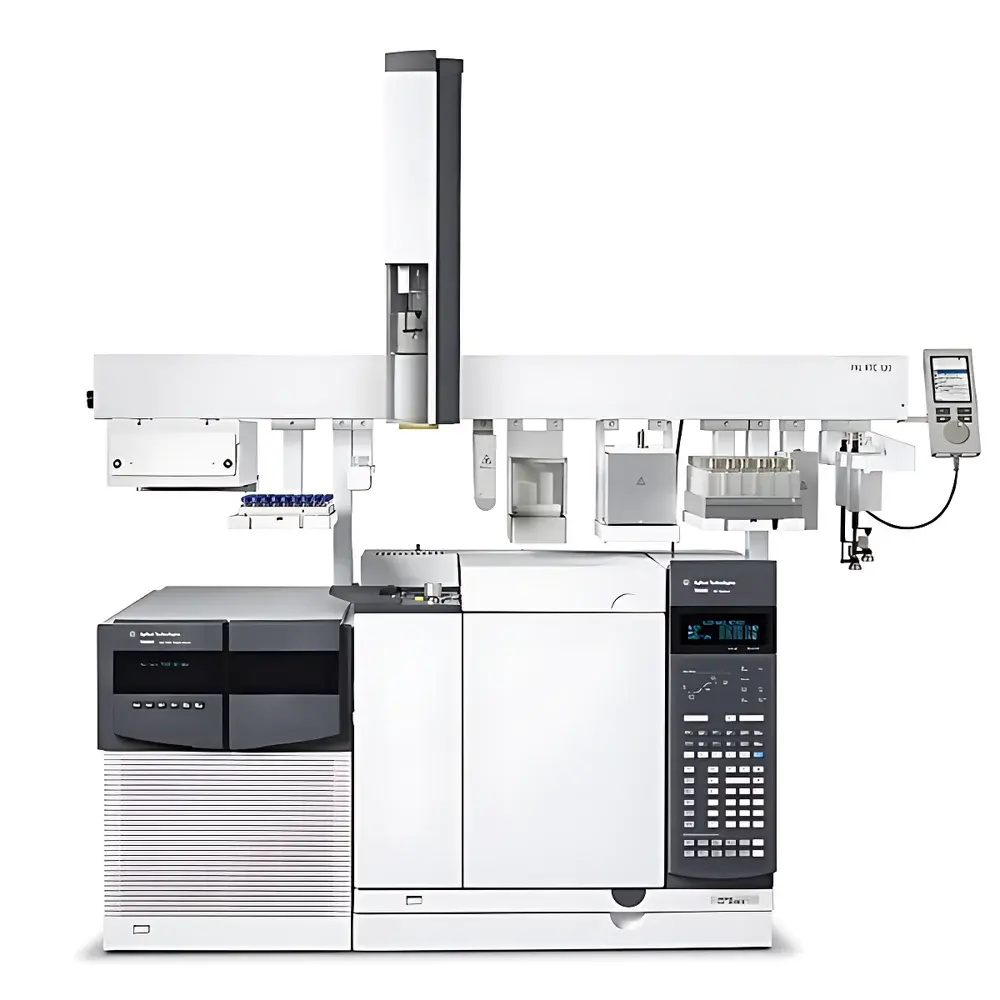
Agilent PAL3 Series 2 Multifunctional Autosampler System
| Brand | Agilent Technologies |
|---|---|
| Origin | Switzerland |
| Manufacturer | Agilent Technologies |
| Product Category | Imported Instrument |
| Model | PAL3 Series 2 |
| Instrument Type | Gas Chromatography Autosampler |
| Sample Capacity (2 mL vials) | up to 1458 (160 cm configuration) |
| Sample Capacity (10/20 mL vials) | up to 405 (160 cm configuration) |
| Compatible GC Platforms | Agilent 8890, 8860, Intuvo 9000, 7890, 7820 |
| Compatible Software | OpenLab CDS, MassHunter, ChemStation, EZChrom |
| Supported Sampling Modes | Liquid Injection, Static/Dynamic Headspace, SPME (Fiber & Arrow), RTC Tool Exchange |
| Integrated Sample Prep Functions | Dilution, Solvent Addition, Stirring, Centrifugation, Washing, Temperature-Controlled Handling |
| Consumables Intelligence | RFID/NFC-enabled smart chips for traceable usage history and automated reporting |
Overview
The Agilent PAL3 Series 2 Multifunctional Autosampler System is an engineered platform for high-throughput, traceable, and fully integrated sample introduction in gas chromatography (GC) and GC/MS workflows. Built on Agilent’s proprietary robotic sampling architecture, it operates via precise XYZ-axis motion control combined with modular tool exchange mechanisms to support multiple injection modalities—including liquid-phase injection, static and dynamic headspace analysis, and solid-phase microextraction (SPME) using both conventional fibers and SPME Arrow devices. Its core design philosophy centers on analytical robustness, operational transparency, and regulatory readiness—enabling laboratories to meet stringent quality system requirements while scaling throughput without compromising data integrity.
Key Features
- Modular hardware configurations: Six base platforms available—LSI (Liquid Sampling Interface) 85 cm; RSI (Robotic Sampling Interface) 85 cm, 120 cm, and 160 cm; and RTC (Robotic Tool Changer) 120 cm and 160 cm—each optimized for specific workflow complexity and sample volume demands.
- Intelligent consumables management: Integrated RFID/NFC tags embedded in SPME fibers, headspace vials, and syringe assemblies automatically communicate usage count, calibration status, and expiration data to the PAL3 controller and upstream software (e.g., OpenLab CDS or MassHunter), generating audit-ready reports for GLP/GMP compliance.
- Heated headspace needle technology: Enables precise temperature-controlled static or dynamic headspace sampling with minimized carryover and improved analyte transfer efficiency—critical for volatile organic compound (VOC) quantitation per ASTM D7489 and ISO 11843 standards.
- SPME Arrow compatibility: Supports enhanced extraction kinetics through increased stationary phase volume and surface area, delivering improved sensitivity and lower method detection limits (MDLs) for trace-level environmental and forensic applications.
- On-deck sample preparation: Fully automated dilution, solvent addition, vortex mixing, centrifugation, needle washing, and temperature-regulated incubation—all programmable within sequence methods and logged with full timestamped audit trails.
- Space-efficient integration: Mounts directly atop Agilent GC systems (8890, 8860, Intuvo 9000, 7890, 7820) and GC/MS platforms (5977/5975 series, 6470/6495 triple quadrupoles), eliminating external rack dependencies and preserving benchtop real estate.
Sample Compatibility & Compliance
The PAL3 Series 2 accommodates standard 2 mL crimp-top vials (up to 1458 positions on the 160 cm RTC model), 10/20 mL headspace vials (up to 405 positions), 96-well and 384-well microplates, and deep-well plates. All sample handling pathways are validated for cross-contamination control under ISO/IEC 17025-accredited environments. The system supports 21 CFR Part 11-compliant electronic signatures and audit trail generation when operated with OpenLab CDS or MassHunter in validated configurations. It complies with ICH Q2(R2) guidelines for method validation and meets essential requirements for pharmaceutical QC labs adhering to USP Analytical Instrument Qualification protocols.
Software & Data Management
Native integration with Agilent’s enterprise-grade chromatography data systems—including OpenLab CDS, MassHunter, ChemStation, and EZChrom—ensures seamless method deployment, sequence scheduling, and real-time instrument status monitoring. The PAL3 controller logs every mechanical action (e.g., vial pickup, needle insertion depth, thermal ramp profile, tool change event) with millisecond-level precision. All metadata—including consumable ID, lot number, cycle count, and environmental sensor readings (temperature/humidity)—is embedded into raw data files and exported in standardized formats (e.g., .CDF, .mzML) for LIMS interoperability and long-term archival.
Applications
The PAL3 Series 2 serves high-volume routine testing in environmental monitoring (EPA Method 502.2, 8260D), clinical toxicology (blood alcohol, volatiles screening), food safety (residue analysis per EU 2021/2071), petrochemical QA/QC (ASTM D3606, D5501), and forensic chemistry (SWGDAM guidelines). Its ability to execute unattended multi-step derivatization, internal standard spiking, and matrix-matched calibration across heterogeneous sample types makes it suitable for regulated contract research organizations (CROs) and central reference laboratories requiring ≥99.5% uptime and full chain-of-custody documentation.
FAQ
Does the PAL3 Series 2 support remote diagnostics and predictive maintenance?
Yes—via Agilent’s Instrument Management Services (IMS), which monitors motor load, positional encoder feedback, and pneumatic pressure trends to flag potential wear before failure.
Can legacy PAL2 methods be migrated to PAL3 Series 2 without revalidation?
Method porting is supported through backward-compatible scripting in OpenLab CDS; however, full revalidation per ICH Q5A and local SOPs is required for regulated use.
Is RTC tool exchange compatible with third-party SPME fibers or only Agilent-branded consumables?
While Agilent-certified SPME Arrow and fiber assemblies are fully characterized for thermal stability and mechanical fit, mechanically compatible third-party fibers may be used—but without consumable intelligence or warranty coverage.
How does the system ensure sample integrity during extended unattended runs?
Barcoded vial tracking, real-time temperature logging of sample trays, and automated vial cap verification prior to piercing prevent misidentification and degradation-related bias.
What cybersecurity controls are implemented for network-connected deployments?
The PAL3 controller supports TLS 1.2+ encrypted communications, role-based access control (RBAC), and integration with enterprise Active Directory—aligned with NIST SP 800-53 Rev. 5 controls for laboratory IT infrastructure.



