
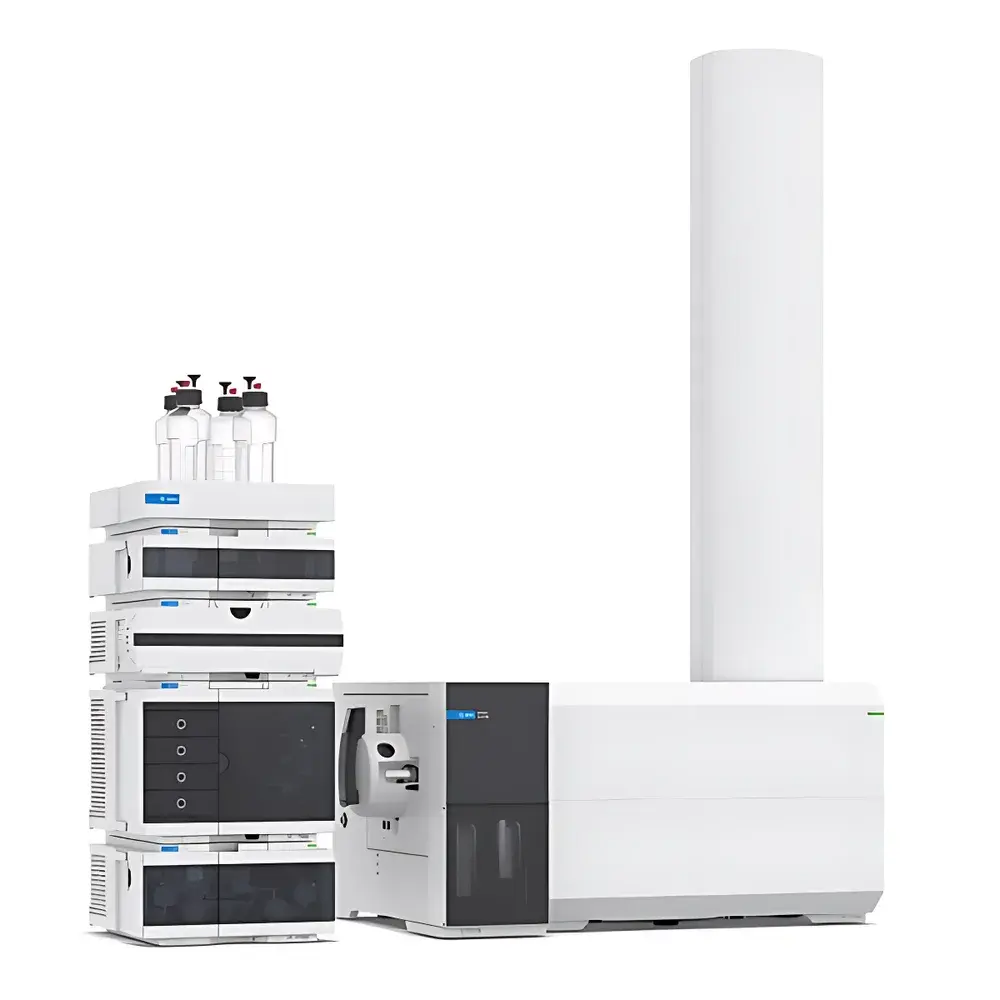
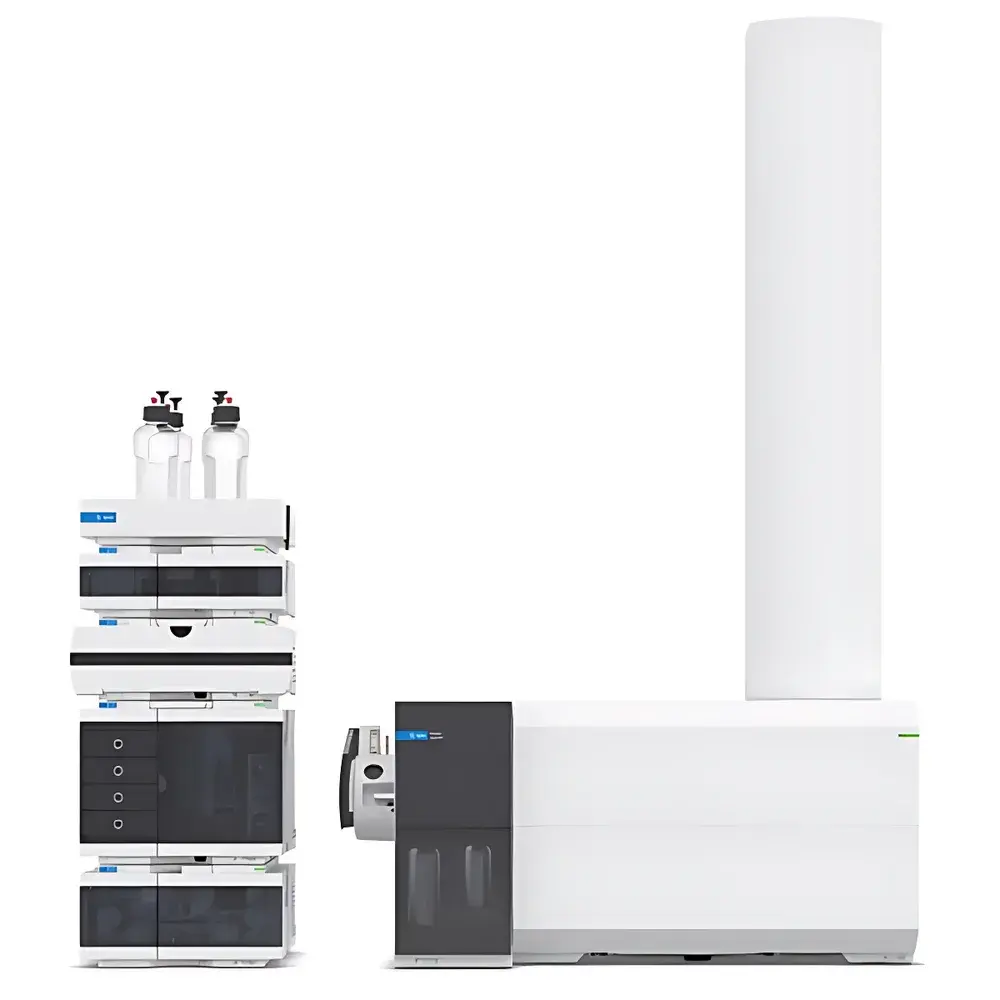
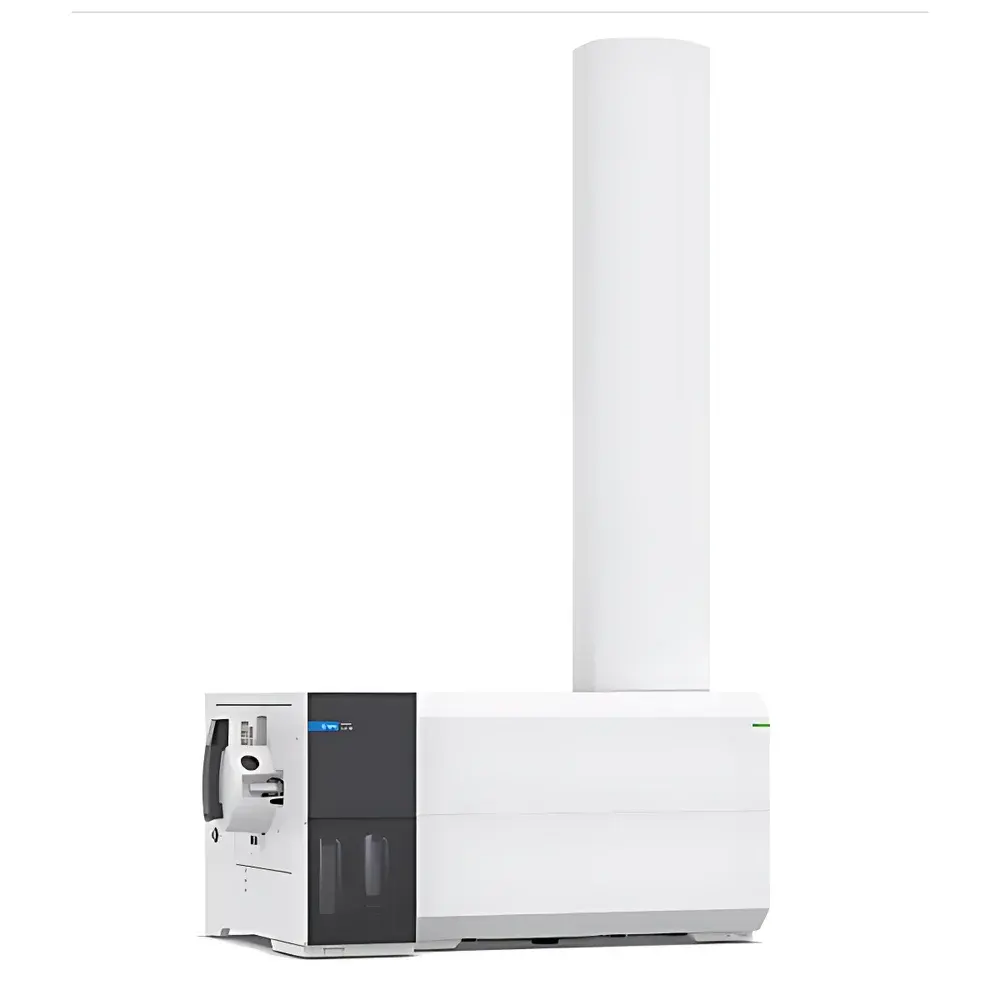
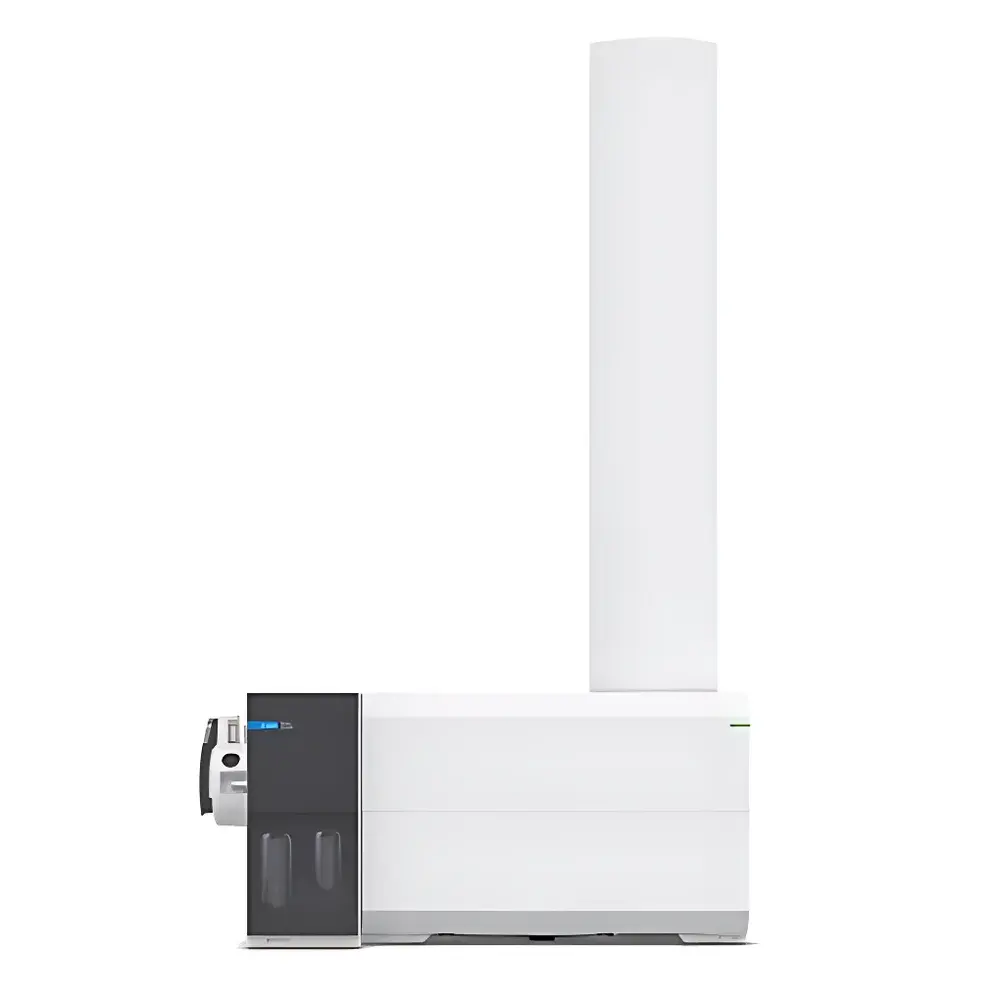
Agilent Revident LC/Q-TOF Quadrupole Time-of-Flight Liquid Chromatography Mass Spectrometry System
| Brand | Agilent Technologies |
|---|---|
| Origin | Singapore |
| Manufacturer Type | Original Equipment Manufacturer (OEM) |
| Import Category | Imported Instrument |
| Model | Revident LC/Q-TOF |
| Instrument Type | Quadrupole-Time-of-Flight (Q-TOF) |
| Application Field | General-Purpose Small-Molecule Analysis |
| Mass Range | m/z 20–10,000 |
| Sensitivity | <40 fg on-column reserpine (positive mode), <40 ppt (S/N ≥ 1000:1 for 1 pg on-column) |
| <40 fg on-column chloramphenicol (negative mode), <40 ppt (S/N ≥ 750 | 1 for 1 pg on-column) |
| Resolution | TOF mass resolution (FWHM) >60,000 at m/z 2722, acquisition-rate independent |
Overview
The Agilent Revident LC/Q-TOF is a next-generation quadrupole time-of-flight liquid chromatography mass spectrometry system engineered for high-resolution, accurate-mass analysis of small molecules in complex matrices. It integrates a dual-stage mass analyzer architecture—comprising a mass-selective quadrupole followed by a high-performance orthogonal acceleration time-of-flight (oa-TOF) analyzer—to deliver simultaneous qualitative and quantitative performance across broad dynamic ranges. The system operates on the principle of electrospray ionization (ESI), atmospheric pressure chemical ionization (APCI), and dual-jet stream (Dual-AJS) ion sources, enabling robust ion generation across polarities and compound classes. Its core measurement capability relies on precise time-of-flight separation of ions accelerated into a field-free drift tube, with mass assignment derived from flight time calibration against internal or external reference masses. Designed for compliance-critical environments—including food safety testing, environmental monitoring, pharmaceutical development, forensic toxicology, and metabolomics—the Revident LC/Q-TOF meets foundational requirements for GLP/GMP-aligned workflows and supports 21 CFR Part 11-compliant data integrity through MassHunter software audit trails and electronic signatures.
Key Features
- True Q-RAI (Quadrupole Resolved All Ions) acquisition mode: Enables non-targeted screening with retrospective fragment ion interrogation by isolating wide m/z windows pre-collision cell, improving specificity without sacrificing throughput.
- High-dynamic-range dual-channel detection: Utilizes synchronized high-gain and low-gain analog-to-digital converter (ADC) channels to extend linear dynamic range beyond five orders of magnitude—enabling co-detection of trace analytes and high-abundance matrix components within a single run.
- Intelligent Reflex workflow automation: Automates post-run re-injection for suspect confirmation, iterative MS/MS triggering, and residual peak reanalysis—minimizing manual intervention while maintaining data continuity and traceability.
- VacShield vacuum protection technology: Allows routine source maintenance—including nozzle cleaning and ion optics inspection—without breaking vacuum, reducing instrument downtime and preserving calibration stability.
- On-demand tuning & calibration scheduling: Supports configurable, role-based automatic tuning (e.g., daily, weekly, or per-batch), early maintenance feedback (EMF), and real-time diagnostic logging via integrated hardware health monitoring.
- Modular ADC-based detector architecture: Delivers high isotopic fidelity (<5% deviation), symmetric peak shapes, and sub-ppm mass accuracy (<0.5 ppm RMS positive mode; <2 ppm RMS negative mode) across full mass range (m/z 20–10,000).
Sample Compatibility & Compliance
The Revident LC/Q-TOF accommodates diverse sample types—from aqueous extracts and organic solvent supernatants to derivatized metabolites and thermally labile pharmaceuticals—via interchangeable ion sources (ESI, APCI, Dual-AJS) and optimized desolvation parameters. It complies with internationally recognized method validation frameworks including SANTE/11312/2021 for multi-residue pesticide analysis, ISO/IEC 17025:2017 for testing laboratory competence, and USP for analytical procedure verification. All mass spectral data generated under MassHunter acquisition protocols are structured in open-format mzML, ensuring long-term archival compatibility and third-party software interoperability. Instrument qualification documentation—including IQ/OQ/PQ templates, calibration certificates, and EMF logs—is fully exportable and audit-ready for regulatory inspections.
Software & Data Management
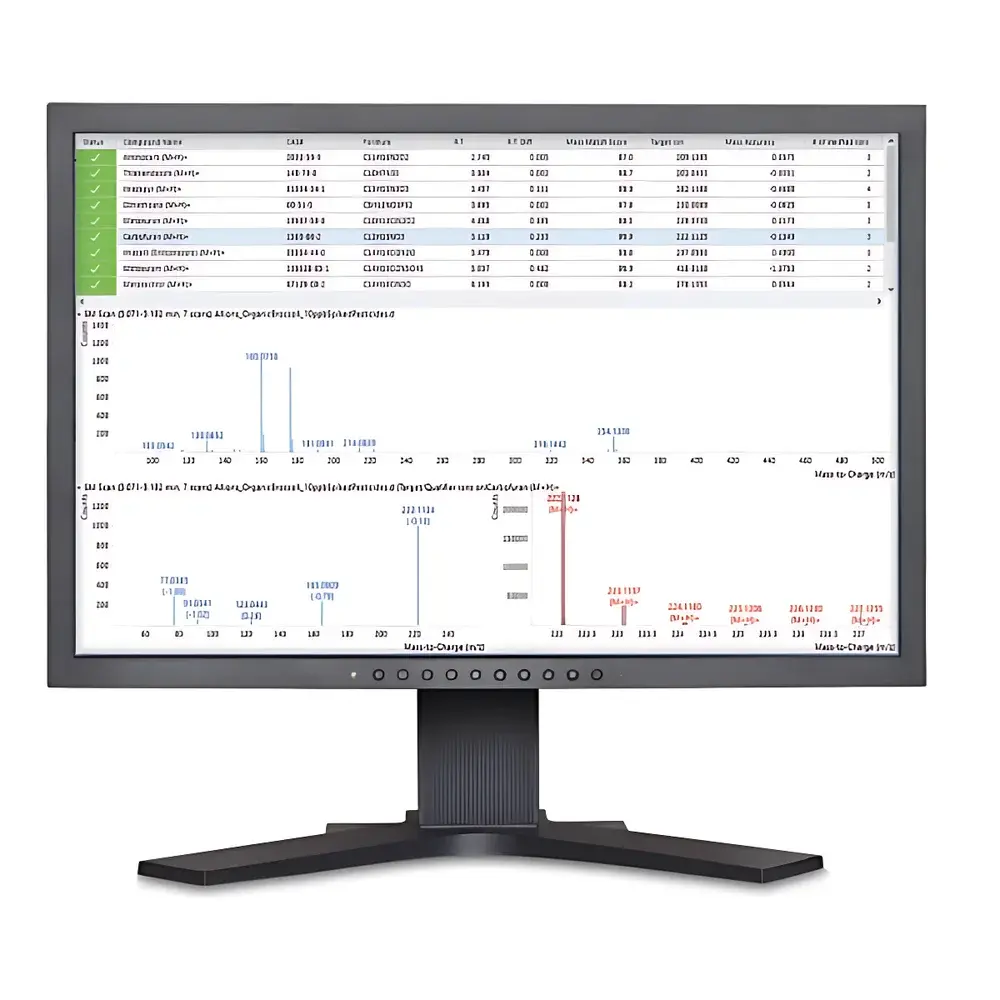
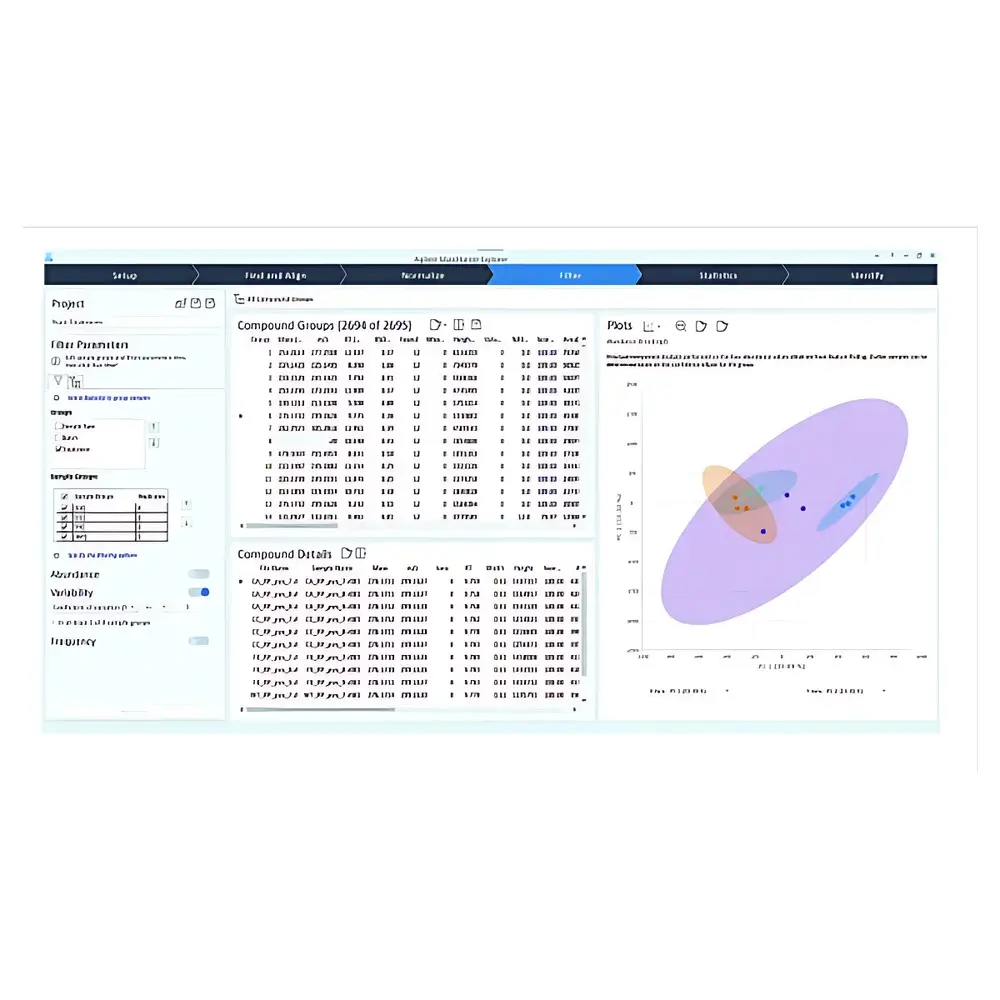
Controlled exclusively through Agilent MassHunter Workstation v11.0+, the system supports role-based UI customization for analysts, supervisors, and QA auditors. Integrated modules include MassHunter BioConfirm (for biotransformation identification), MassHunter Vista (for imaging MS data), Mass Profiler Professional (for statistical biomarker discovery), and Lipid Annotator (for lipidomics annotation). Batch processing pipelines support automated peak detection, alignment, normalization, and significance testing (ANOVA, PCA, PLS-DA). All raw data files retain embedded metadata—including acquisition method, tuning parameters, calibration status, and user credentials—enabling full chain-of-custody reconstruction. Audit trail functionality records every data modification event with timestamp, operator ID, and rationale, satisfying FDA 21 CFR Part 11 and EU Annex 11 requirements for electronic records.
Applications
- Food safety: Multi-residue screening of pesticides, mycotoxins, veterinary drugs, and adulterants using DIA-based workflows validated against SANTE guidelines; automated suspect confirmation via Intelligent Reflex-triggered targeted MS/MS.
- Environmental analysis: Identification and quantification of emerging contaminants (e.g., PFAS, microplastic additives, pharmaceutical metabolites) in wastewater, soil, and air particulates with sub-ppt sensitivity and unambiguous structural elucidation.
- Pharmaceutical R&D: Metabolite profiling in ADME studies, impurity characterization per ICH Q5A/Q3A, and forced degradation product identification with accurate-mass MS/MS spectra.
- Forensic toxicology: Broad-spectrum drug screening in biological fluids (urine, blood) with retrospective data mining capabilities, supporting ISO 17025-accredited casework reporting.
- Metabolomics: Untargeted pathway mapping in cell lysates and tissue homogenates, leveraging high mass accuracy (<0.5 ppm), isotopic pattern fidelity, and seamless integration with flux analysis platforms (e.g., Seahorse XF).
FAQ
What ionization sources are supported?
The system ships standard with Dual-AJS, ESI, and APCI sources; all are hot-swappable without venting the vacuum system.
Is the mass calibration stable across temperature fluctuations?
Yes—mass accuracy remains within <1 ppm per 3 °C ambient variation due to active thermal compensation of the TOF reflectron and reference mass delivery system.
Can the system perform polarity switching within a single LC run?
Yes—polarity switching is supported with a 1.0 s duty cycle, enabling concurrent positive/negative mode detection without compromising chromatographic resolution.
Does the system support untargeted data-independent acquisition (DIA)?
Yes—Q-RAI mode implements true DIA with variable isolation windows, enabling both full-scan HRAM acquisition and fragment ion generation in a single injection.
How is instrument performance monitored between scheduled calibrations?
Real-time diagnostics continuously track detector gain, vacuum integrity, ion transmission efficiency, and quadrupole RF/DC stability—triggering EMF alerts when deviations exceed predefined thresholds.




