
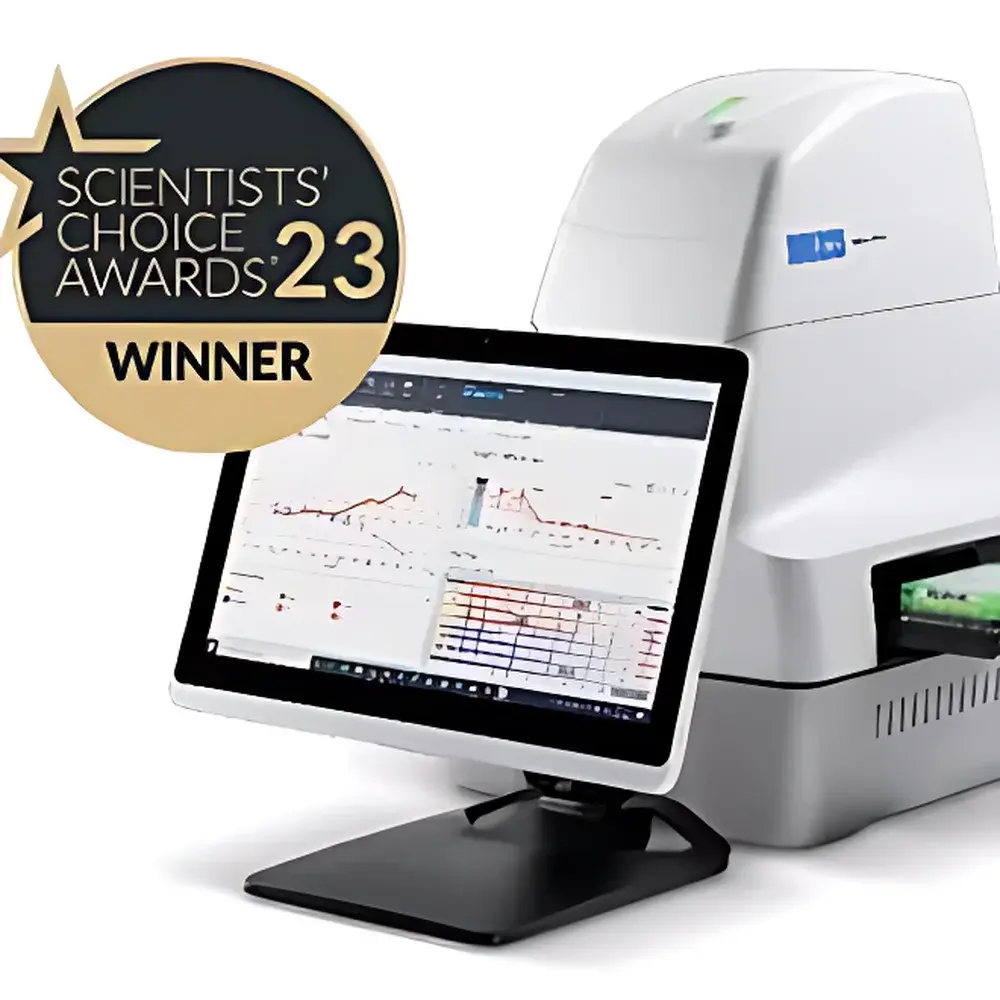
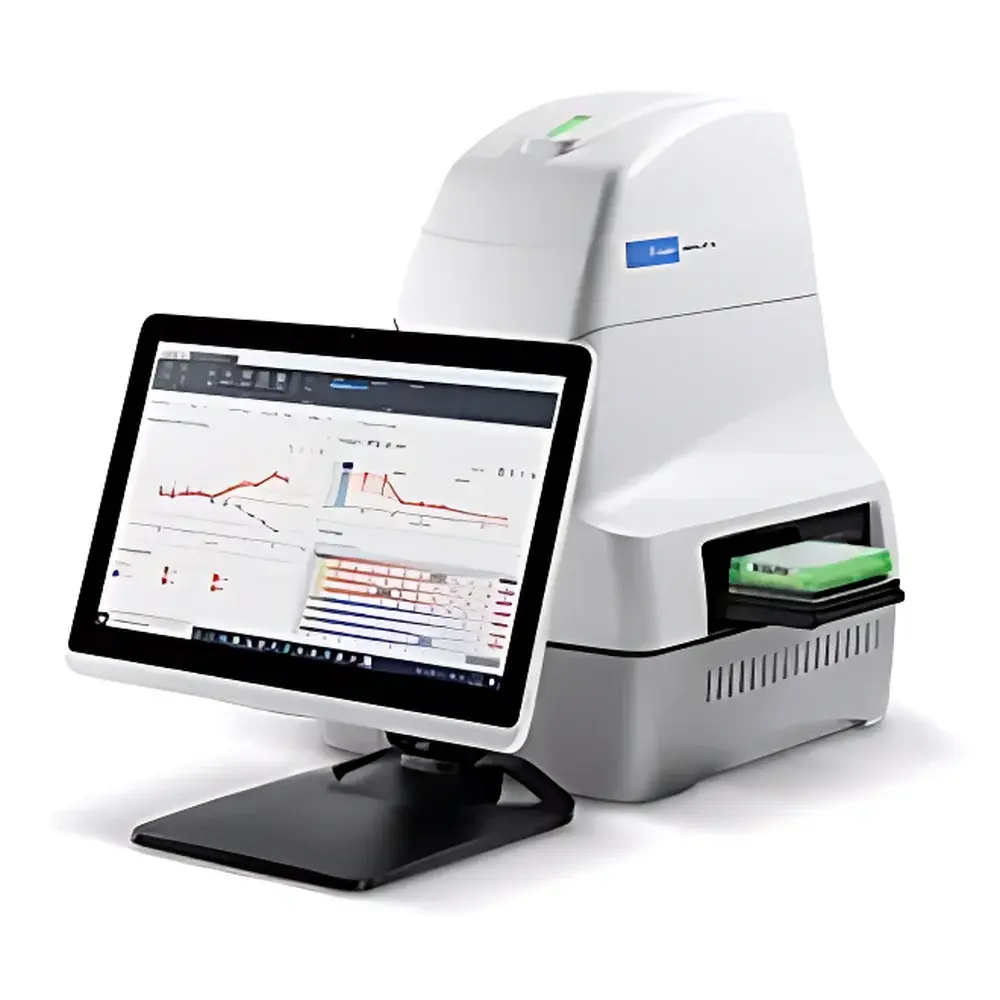
Agilent Seahorse XF Pro Cell Energy Phenotype Analyzer
| Brand | Agilent Technologies |
|---|---|
| Origin | USA |
| Manufacturer Type | Original Equipment Manufacturer (OEM) |
| Product Category | Imported Instrument |
| Model | Seahorse XF Pro |
| Pricing | Available Upon Request |
Overview
The Agilent Seahorse XF Pro Cell Energy Phenotype Analyzer is a label-free, real-time, microplate-based platform engineered for quantitative assessment of cellular bioenergetics in living cells. It operates on the principle of solid-state fluorescent biosensors embedded in a specialized probe plate, enabling simultaneous, kinetic measurement of two fundamental metabolic parameters: oxygen consumption rate (OCR), reflecting mitochondrial respiration, and extracellular acidification rate (ECAR) — equivalently reported as proton efflux rate (PER) — reflecting glycolytic flux. By integrating OCR and ECAR kinetics with ATP production rate calculations derived from these signals, the XF Pro delivers a systems-level phenotypic profile of cellular energy metabolism. This functional readout supports mechanistic interrogation of mitochondrial health, metabolic flexibility, stress responses, and compound-induced bioenergetic perturbations across diverse biological models, including adherent 2D cultures, suspension cells, spheroids, organoids, and primary tissue explants.
Key Features
- 96-well format with 92 active assay wells, optimized for high-throughput metabolic phenotyping
- Enhanced low-range OCR sensitivity and precision—validated for reliable quantification in quiescent or low-metabolic-rate cell types (e.g., naïve T cells, stem cells, and primary neurons)
- Ultra-low cell requirement: robust data generation from as few as 5,000 cells per well in XF Pro M plates, minimizing edge effects via proprietary well geometry and thermal uniformity
- Integrated four-port reagent injection system with programmable mixing—enables sequential, synchronized delivery of substrates, inhibitors, or modulators to all wells within seconds, capturing immediate dynamic responses
- Proven inter- and intra-plate reproducibility supported by factory-calibrated sensor cartridges and hardware validation protocols traceable to Agilent’s ISO 9001-certified manufacturing standards
- Wide operational ambient temperature range (4–30 °C) with precise internal assay temperature control (16–42 °C), accommodating physiological and pharmacological experimental conditions
- Dedicated Pro Controller workstation running Windows 10 Enterprise (64-bit) with touchscreen interface for intuitive assay design, instrument control, and real-time monitoring
Sample Compatibility & Compliance
The XF Pro platform accommodates a broad spectrum of sample formats without requiring genetic modification, fluorescent dyes, or cell lysis. Validated applications include immortalized cell lines, primary human and murine cells, iPSC-derived cardiomyocytes and neurons, tumor spheroids, and ex vivo tissue slices. All assays comply with Good Laboratory Practice (GLP) documentation requirements and support audit-ready workflows under FDA 21 CFR Part 11 when configured with electronic signatures and secure user access controls. Data integrity is reinforced through timestamped metadata logging, automatic QC flagging in Wave Pro software, and raw sensor signal retention—ensuring traceability for regulatory submissions aligned with ICH M10 and ISO/IEC 17025 frameworks.
Software & Data Management
The XF Pro ecosystem includes three tightly integrated software modules: Pro Controller (experimental design and instrument orchestration), Wave Pro (real-time visualization, automated outlier detection, and baseline correction), and Agilent Seahorse Analytics (advanced statistical modeling, pathway mapping, and multi-parameter clustering). Seahorse Analytics supports batch normalization, kinetic curve fitting (e.g., exponential decay for OCR post-inhibitor addition), and export to industry-standard formats (CSV, HDF5, .xslx) compatible with R, Python (via SeahorsePy), and commercial bioinformatics platforms. Audit trails record all parameter changes, user actions, and calibration events—meeting requirements for GMP-compliant metabolic screening in preclinical drug development.
Applications
- Cellular bioenergetic phenotyping in immunometabolism, oncology, neurodegeneration, and metabolic disease research
- Mechanistic toxicology studies evaluating mitochondrial uncoupling, Complex I–V inhibition, or glycolytic suppression
- Functional validation of CRISPR/Cas9-edited cell lines or siRNA knockdowns targeting metabolic enzymes
- High-content screening of small molecules, biologics, or natural compounds for metabolic modulator activity
- Longitudinal assessment of metabolic adaptation during differentiation, senescence, or hypoxia exposure
- Standardized metabolic characterization of biomanufacturing cell lines (e.g., CHO, HEK293) under fed-batch or perfusion conditions
FAQ
What is the minimum viable cell number per well for reliable OCR measurement?
For most adherent cell types, 10,000–50,000 cells/well is recommended; however, validated protocols support robust OCR detection down to 5,000 cells/well using XF Pro M plates and extended measurement durations.
Can the XF Pro analyze suspended cells without coating or adhesion enhancement?
Yes—specialized XF Pro Spheroid and XF Pro Suspension kits include centrifugation-compatible plates and optimized assay media formulations that retain suspension cells in the sensing zone during measurement cycles.
Is the system compatible with existing Agilent Seahorse assay kits and sensor cartridges?
The XF Pro accepts all current-generation XF assay kits (e.g., Cell Mito Stress Test, Glycolysis Stress Test, Real-Time ATP Rate Assay) and uses the same single-use, factory-calibrated sensor cartridges as the XF/XFe24 and XF/XFe96 platforms.
How does the XF Pro ensure temperature stability during long-duration assays?
The instrument employs dual-zone Peltier heating/cooling with independent feedback loops for both the plate chamber and probe head, maintaining ±0.2 °C stability across 24-hour kinetic runs—even under variable ambient conditions.
Does Wave Pro software support automated batch processing of multiple XF assay files?
Yes—Wave Pro v5.0+ includes scriptable batch analysis workflows with customizable QC thresholds, group comparisons, and export templates compliant with MIAME and MIAPE reporting guidelines.
Related Products





