
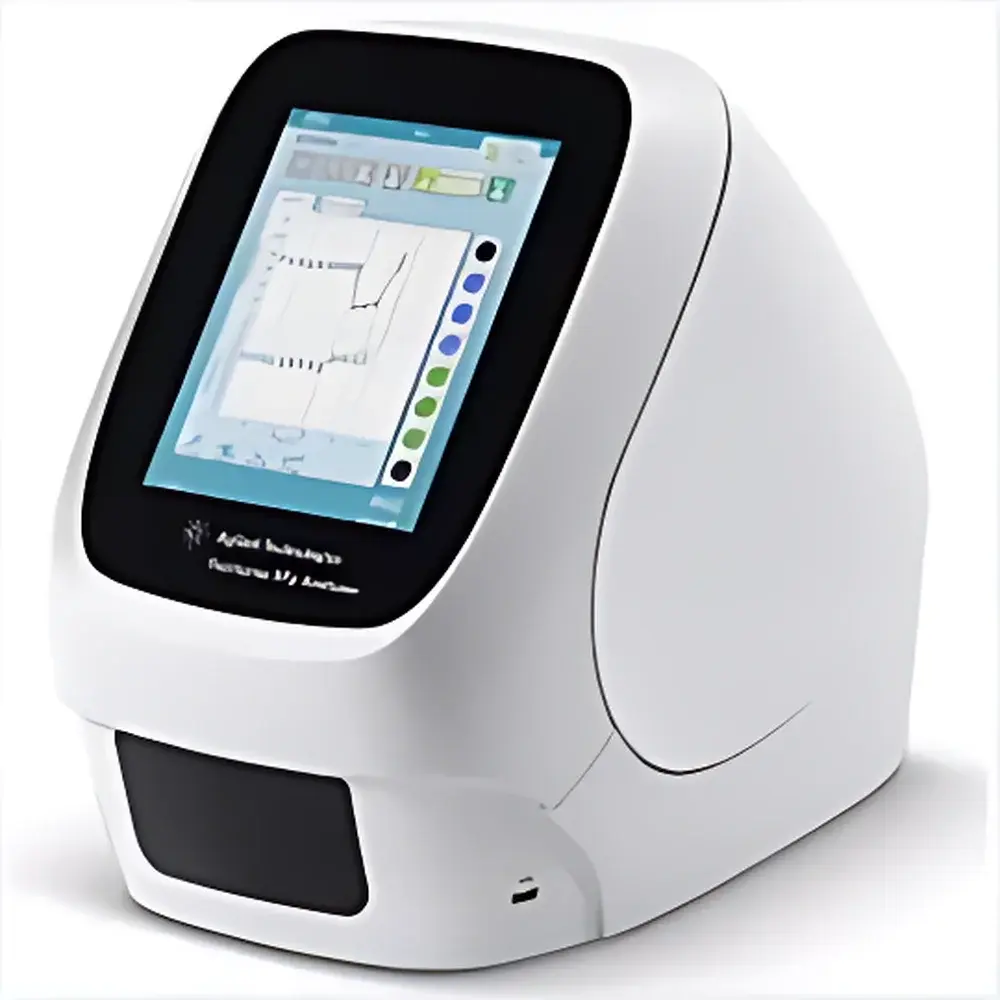
Agilent Seahorse XFp Cell Energy Phenotype Analyzer
| Brand | Agilent Technologies |
|---|---|
| Origin | USA |
| Manufacturer | Agilent Technologies |
| Import Status | Imported |
| Model | Seahorse XFp |
| Pricing | Upon Request |
Overview
The Agilent Seahorse XFp Cell Energy Phenotype Analyzer is a compact, benchtop extracellular flux analyzer engineered for real-time, label-free measurement of cellular oxygen consumption rate (OCR) and extracellular acidification rate (ECAR) in live, adherent, or suspended mammalian cells. Based on patented solid-state sensor cartridge technology and microplate-based flux analysis, the XFp platform applies a transient microchamber sealing mechanism to transiently isolate the extracellular environment above each well—enabling high-resolution kinetic detection of proton and oxygen fluxes without cell lysis, radioactive tracers, or fluorescent dyes. Designed specifically for low-throughput, hypothesis-driven metabolic phenotyping, the 8-well assay format supports rapid method development, pilot studies, and validation of metabolic interventions using limited primary or precious cell samples—making it ideal for academic labs, core facilities, and early-stage drug discovery workflows where sample scarcity and experimental agility are critical constraints.
Key Features
- Low-Cell-Number Compatibility: Quantifies OCR and ECAR from as few as 5,000 cells per well (adherent) or 15,000 cells per well (suspension), validated across >200 cell types via the Agilent Seahorse Cell Reference Database.
- Integrated 4-Port Automated Injector System: Enables sequential, precise delivery of up to four metabolic modulators (e.g., oligomycin, FCCP, rotenone/antimycin A, glucose, oligomycin + 2-DG) with on-board mixing—ensuring uniform compound distribution and minimizing handling-induced stress.
- Real-Time Kinetic Output: Generates normalized, time-resolved metabolic rate data within minutes of assay initiation; full mitochondrial stress test or glycolysis stress test completed in ≤90 minutes, with no post-assay processing required.
- Thermally Controlled Microplate Stage: Maintains assay temperature between 16 °C and 40 °C (minimum setpoint = ambient + 8 °C), supporting physiological relevance for diverse models including neurons, immune cells, and stem-derived organoids.
- Optimized Workflow Architecture: Pre-configured assay cartridges, standardized 8-well SBS-format microplates, and intuitive hardware calibration routines reduce setup time to under 15 minutes per run.
Sample Compatibility & Compliance
The XFp Analyzer accommodates standard 8-well Agilent Seahorse XFp assay plates (Cat. No. 103022-100), compatible with both adherent and suspension cells—including primary isolates, iPSC-derived lineages, patient-derived xenograft (PDX) cells, and co-cultures. All reagent kits (e.g., XFp Cell Mito Stress Test Kit, XFp Glycolysis Stress Test Kit, XFp Mitochondrial Fuel Flex Test Kit) are manufactured under ISO 13485-certified quality systems and supplied with lot-specific Certificate of Analysis. The instrument and associated software comply with GLP-relevant documentation standards; raw data files (.xfp) retain full audit trail metadata (user ID, timestamp, calibration logs, injection events) to support internal quality assurance protocols. While not intended for clinical diagnostics, all assays are validated per ASTM E3275–22 (Standard Guide for Functional Characterization of Metabolic Phenotypes in Mammalian Cells) and referenced in multiple USP and ICH S7B-aligned preclinical metabolism guidelines.
Software & Data Management
Data acquisition and initial analysis are performed using Agilent Seahorse Wave Desktop Software (v2.7+), which provides automated baseline correction, rate calculation (pmol/min O2, mpH/min), and real-time visualization of OCR/ECAR traces. The software includes embedded report generators for mitochondrial respiration parameters (basal respiration, ATP-linked respiration, maximal respiration, spare respiratory capacity, non-mitochondrial respiration) and glycolytic metrics (glycolysis, glycolytic capacity, glycolytic reserve). Export options include CSV, Excel (.xlsx), and PDF formats compliant with institutional data archiving policies. Raw .xfp files are structured XML-based archives containing unprocessed sensor voltage time-series, environmental logs, and injection metadata—enabling third-party reprocessing or integration into LIMS environments via Agilent’s open API framework.
Applications
- Functional assessment of mitochondrial bioenergetics in neurodegenerative disease models (e.g., Parkinson’s, Alzheimer’s)
- Immunometabolism profiling of T-cell activation, macrophage polarization, and dendritic cell maturation
- Metabolic screening of oncogenic drivers and therapeutic resistance mechanisms in solid and hematologic malignancies
- Stem cell differentiation efficiency evaluation via dynamic shifts in OCR:ECAR coupling ratios
- Toxicology endpoints including mitochondrial toxicity (MitoTox) and off-target metabolic disruption during compound library screening
- Validation of CRISPR/Cas9-mediated metabolic gene edits through quantitative flux phenotype rescue
FAQ
Is the Seahorse XFp Analyzer compatible with Agilent’s larger XF Analyzers (e.g., XFe24, XFe96)?
Yes—assay principles, sensor cartridge chemistry, and core reagent kits are fully cross-platform compatible. XFp-specific cartridges and plates are physically distinct but functionally equivalent in biochemical output.
Can XFp data be imported into Agilent’s Wave Central cloud platform?
No—Wave Central supports only XF96/XF24 data. XFp data remains local to Wave Desktop; however, exported CSV/Excel files integrate seamlessly with institutional cloud storage or ELN systems.
Does the XFp system meet FDA 21 CFR Part 11 requirements for electronic records?
The XFp hardware and Wave Desktop software are not validated for regulated GxP environments. For Part 11 compliance, users must implement supplementary procedural controls (e.g., electronic signatures, change control, backup validation) per organizational SOPs.
What cell culture surfaces are recommended for XFp assays?
Agilent-certified XFp Cell Culture Microplates (Cat. No. 103022-100) feature tissue-culture-treated polystyrene with optimized surface chemistry for consistent cell attachment and minimal background flux interference.
Is sensor cartridge reuse permitted?
No—cartridges are single-use, sterile, and calibrated per lot. Reuse compromises sensor stability, seal integrity, and assay reproducibility, violating Agilent’s quality warranty and ASTM E3275 validation criteria.



