
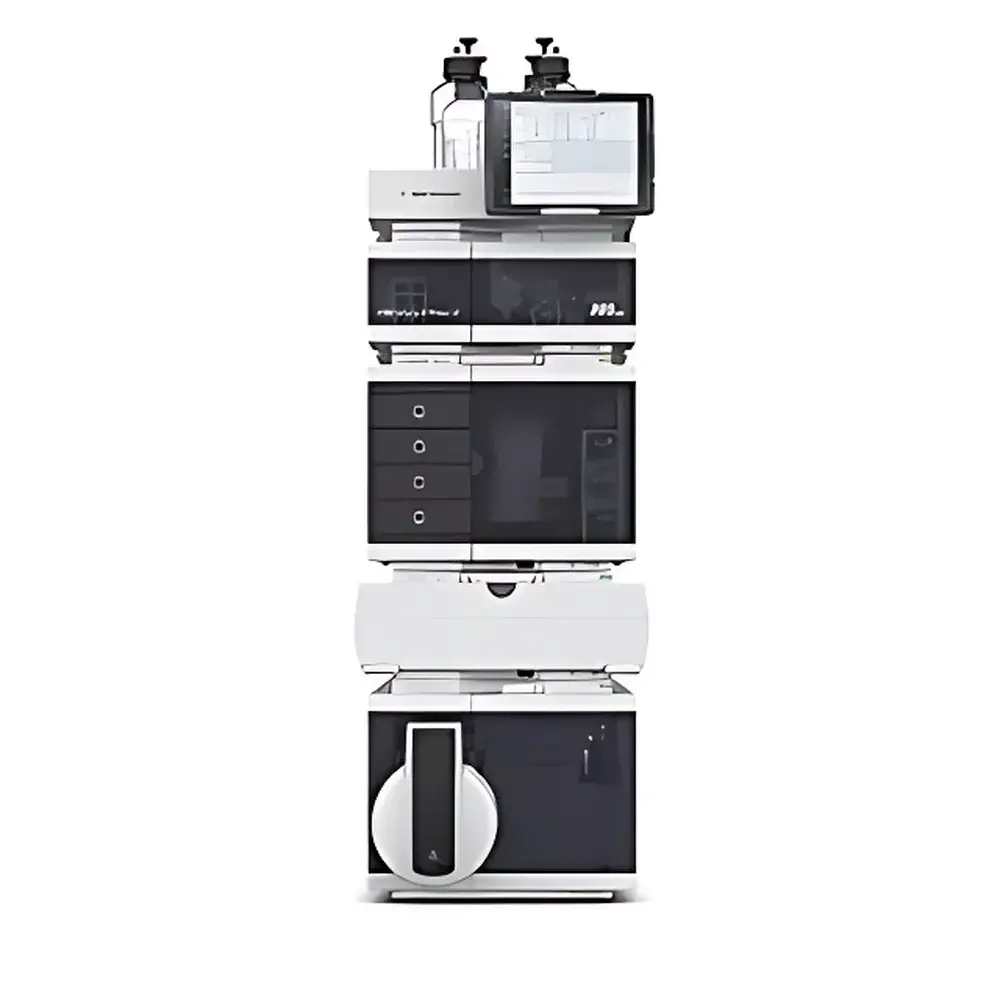
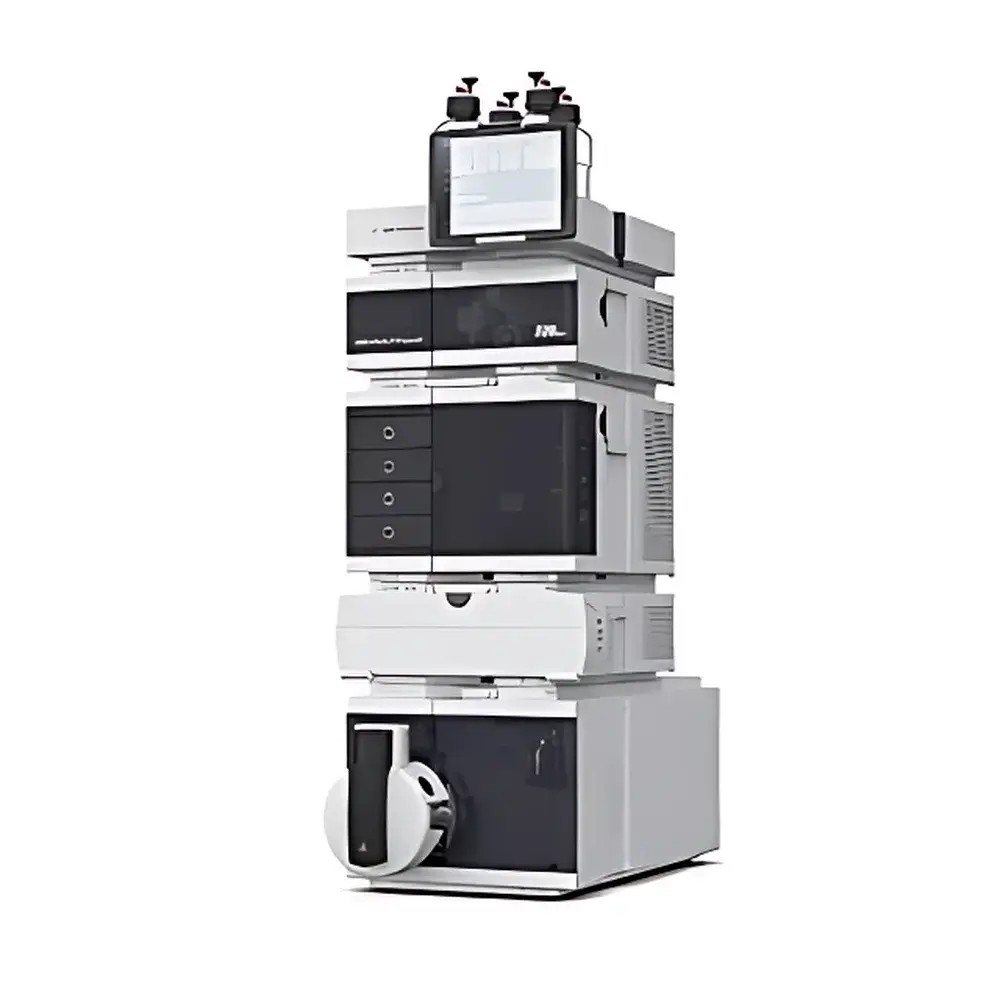
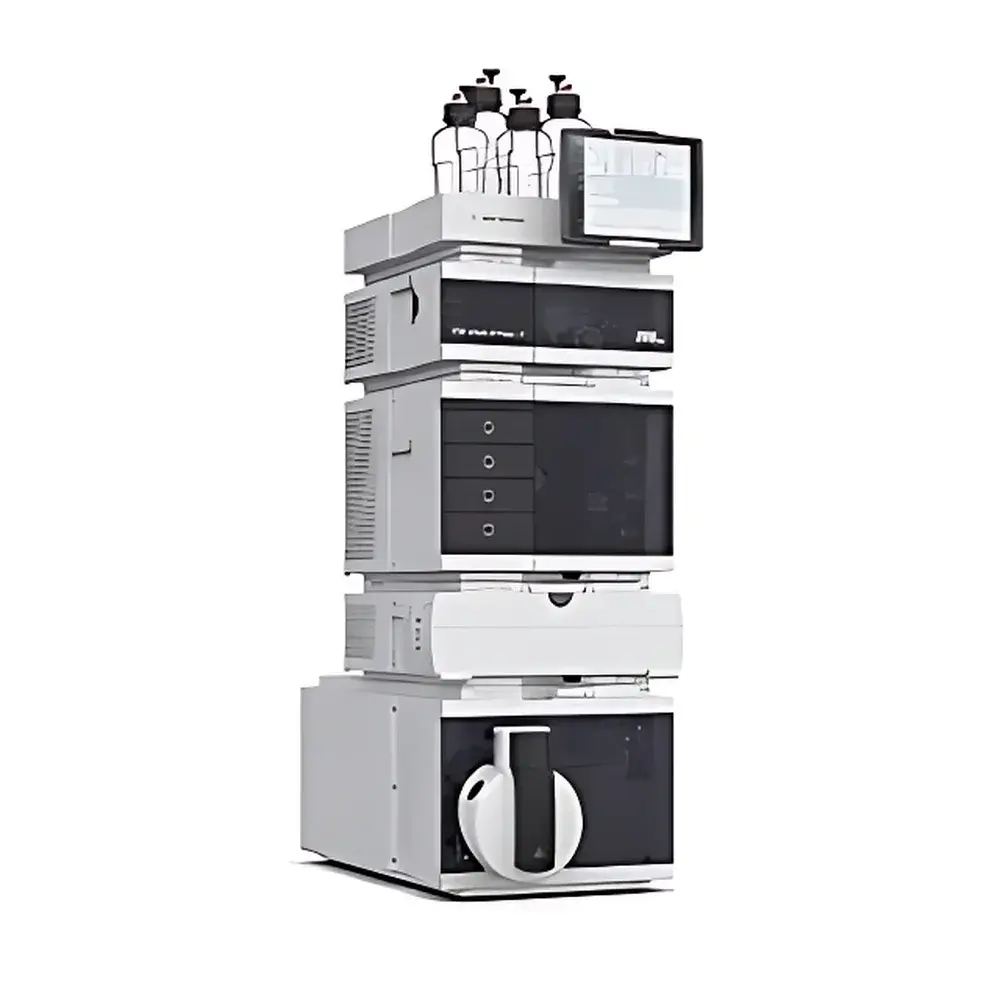
Agilent Ultivo Triple Quadrupole LC/MS/MS System
| Brand | Agilent Technologies |
|---|---|
| Origin | Singapore |
| Manufacturer Type | Original Equipment Manufacturer (OEM) |
| Origin Category | Imported Instrument |
| Model | Ultivo |
| Instrument Type | Tandem Quadrupole (QqQ) |
| Sensitivity | IDL < 12.5 fg |
Overview
The Agilent Ultivo Triple Quadrupole LC/MS/MS System is a compact, high-performance liquid chromatography tandem mass spectrometry platform engineered for precision quantitative analysis in regulated and high-throughput laboratory environments. Built upon proven triple quadrupole architecture, the Ultivo employs electrospray ionization (ESI) or atmospheric pressure chemical ionization (APCI) coupled with collision-induced dissociation (CID) in a pressurized Vortex Collision Cell to deliver robust, reproducible multiple reaction monitoring (MRM) performance. Unlike conventional benchtop triple quad systems occupying >1 m² footprint, the Ultivo integrates core mass spectrometry functionality—including ion optics, vacuum manifold, and detector—into a footprint less than 30% that of legacy platforms, without compromising detection limits, dynamic range, or duty cycle. Its design addresses critical operational constraints in modern analytical labs: limited bench space, rising instrument ownership costs, and demand for rapid method deployment across diverse sample matrices.
Key Features
- Vortex Collision Cell: A pressurized, toroidal collision cell operating at elevated nitrogen gas pressure enables efficient fragmentation and reduced cross-talk between MRM transitions, supporting high-speed scanning (≥1,000 MRM transitions/sec) while maintaining optimal signal-to-noise ratios.
- Cyclone Ion Guide: A multi-element RF-driven ion funnel system with dynamically tuned DC gradients maximizes ion transmission efficiency from the source to the first quadrupole, improving sensitivity and inter-run reproducibility—particularly for low-abundance analytes in complex biological or environmental extracts.
- VacShield Vacuum Interlock: A modular, tool-free vacuum isolation mechanism allows removal and reinstallation of the ion source and detector assembly without breaking main chamber vacuum, reducing routine maintenance downtime to under 5 minutes and eliminating need for full pump-down cycles.
- Integrated Infinity II HPLC Compatibility: Seamless hardware and software synchronization with Agilent’s Infinity II 1290/1260 II LC systems ensures precise gradient timing, low dispersion flow paths, and real-time pressure monitoring—critical for retention time stability and peak capacity in UHPLC-MS/MS workflows.
- Intelligent Diagnostics Engine: Embedded firmware continuously monitors voltage rails, detector gain, vacuum integrity, and RF stability; faults are reported via contextual, plain-language alerts in MassHunter Software with actionable remediation steps—not generic error codes.
Sample Compatibility & Compliance
The Ultivo supports broad-spectrum sample introduction via standard ESI and APCI sources, accommodating aqueous, organic, and mixed-phase eluents across pH 2–10. It routinely analyzes small molecules (<1,500 Da), peptides, metabolites, pesticides, pharmaceutical impurities, and environmental contaminants in matrices including plasma, urine, soil extracts, food homogenates, and wastewater. The system complies with regulatory requirements for validated quantitative workflows: it supports 21 CFR Part 11-compliant audit trails, electronic signatures, and data integrity controls when deployed with MassHunter Quantitative Analysis software v10.1 or later. Method validation documentation aligns with ICH Q2(R2), USP , and ISO/IEC 17025:2017 frameworks. All hardware components meet CE marking directives and RoHS 2011/65/EU standards.
Software & Data Management
Control, acquisition, and quantitation are managed through Agilent MassHunter Workstation Software—specifically the Quantitative Analysis (v10.x) and Acquisition (v10.x) modules. The software provides automated calibration, batch-optimized MRM method setup, internal standard normalization, matrix-matched calibration curve generation, and customizable reporting templates compliant with GLP and GMP reporting conventions. Raw data files (.d format) are stored in vendor-neutral, metadata-rich containers compatible with third-party processing tools (e.g., Skyline, OpenMS). Data archival follows hierarchical storage management (HSM) protocols, and optional integration with Agilent OpenLab CDS enables enterprise-level instrument scheduling, user permission tiers, and centralized audit log aggregation.
Applications
- Pharmaceutical: Residual solvent quantitation per ICH Q3C, genotoxic impurity screening (ICH M7), pharmacokinetic bioanalysis (FDA Guidance for Industry, Bioanalytical Method Validation), and extractables/leachables profiling.
- Food Safety: Multi-residue pesticide screening (EU SANTE/11813/2021), mycotoxin quantification (aflatoxins, ochratoxin A), veterinary drug residue testing (EU 2019/1871), and allergen marker detection.
- Environmental: PFAS analysis (EPA Method 1633), polycyclic aromatic hydrocarbons (PAHs), endocrine-disrupting compounds (EDCs), and microplastic additive leachates in water and sediment.
- Life Sciences: Targeted metabolomics (e.g., acylcarnitines, bile acids), clinical biomarker verification (e.g., cortisol, vitamin D metabolites), and peptide quantification in proteomics workflows.
FAQ
What is the minimum detectable level (IDL) for typical small-molecule analytes?
The system achieves an instrument detection limit (IDL) of <12.5 fg on-column for compounds such as chloramphenicol under optimized ESI-MRM conditions using a 10 µL injection.
Is the Ultivo compatible with non-Agilent LC systems?
Yes—it accepts standard analog and digital trigger signals (TTL, RS-232, Ethernet) and supports external LC synchronization via MassHunter’s Generic LC Interface module.
Does the system support scheduled MRM acquisition?
Yes, scheduled MRM is fully implemented, allowing retention time windows to be defined per analyte to maximize dwell time and sensitivity without sacrificing throughput.
Can the VacShield feature be used during routine source cleaning?
Yes—VacShield enables full ion source removal and reinstallation while maintaining high-vacuum integrity in the analyzer region, permitting daily cleaning without vacuum pump downtime.
What regulatory documentation is provided for installation qualification (IQ) and operational qualification (OQ)?
Agilent supplies standardized IQ/OQ protocols, factory test reports, and a Certificate of Conformance (CoC) traceable to NIST standards, along with optional vendor-assisted qualification services.






