
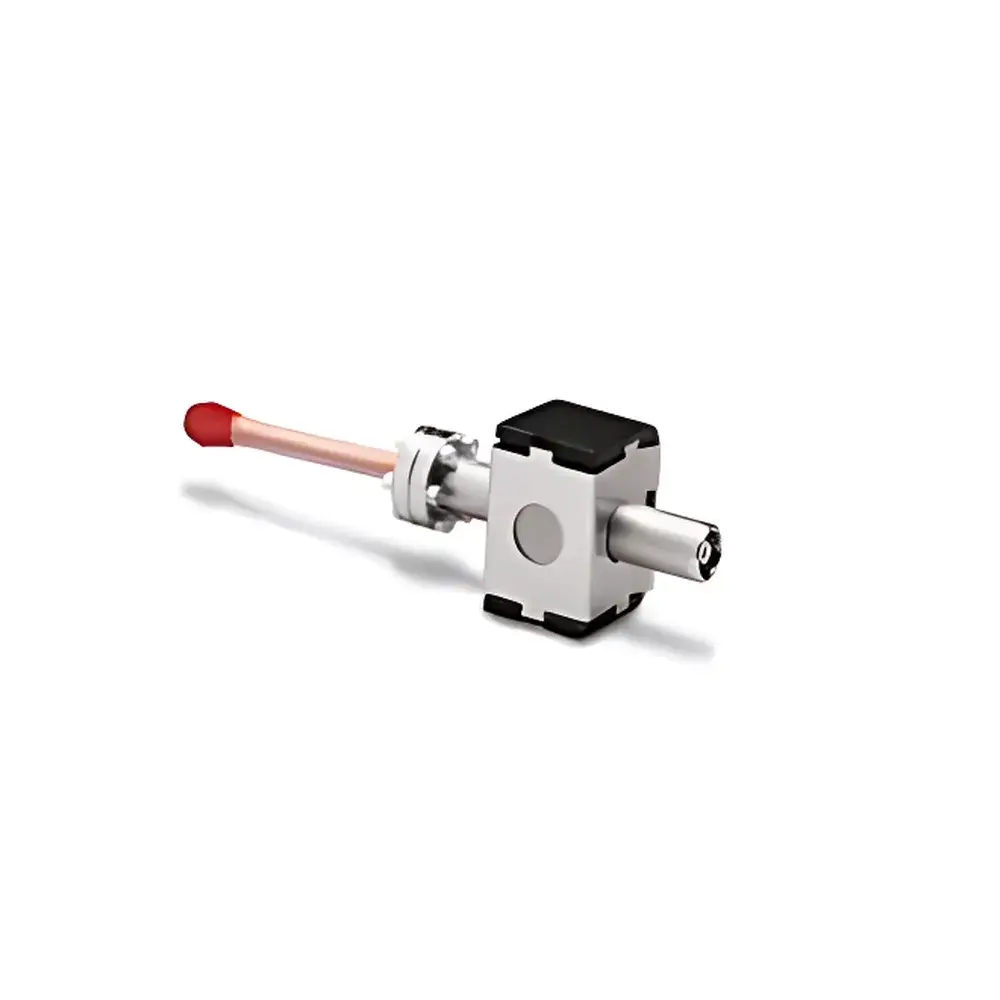
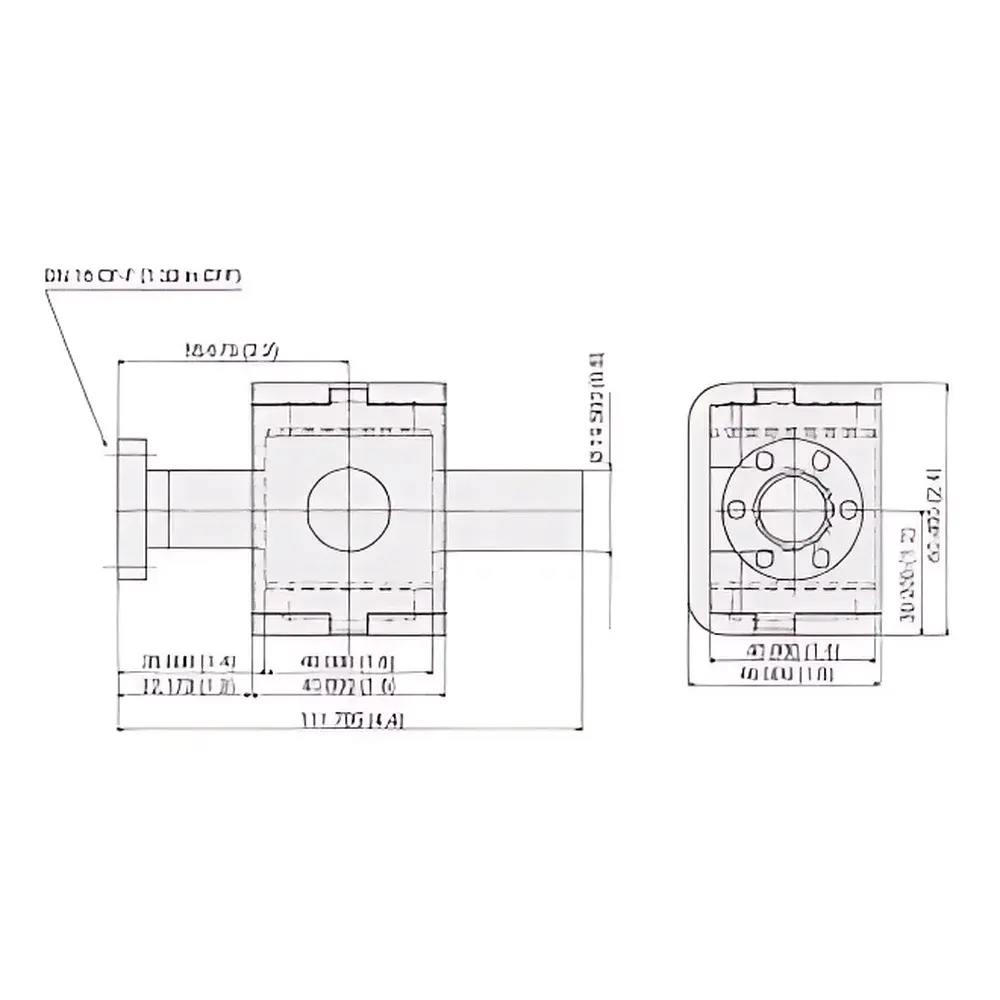
Agilent VacIon 2 L/s Ion Pump
| Brand | Agilent Technologies |
|---|---|
| Origin | USA |
| Manufacturer Type | Original Equipment Manufacturer (OEM) |
| Product Category | Imported |
| Model | VacIon 2 L/s Ion Pump |
| Instrument Type | Other Vacuum Pump |
| Product Type | Oil-Free Vacuum Pump |
| Ultimate Vacuum | < 1 × 10⁻¹¹ mbar |
| Weight | 0.3 kg (0.66 lbs) |
Overview
The Agilent VacIon 2 L/s Ion Pump is a compact, oil-free, ultra-high vacuum (UHV) pumping solution engineered for long-term stability and electromagnetic compatibility in sensitive scientific and industrial systems. Based on the principle of ion sputtering—where residual gas molecules are ionized by a high-voltage DC field and subsequently implanted into a titanium cathode—the pump achieves continuous, vibration-free, and hydrocarbon-free vacuum generation without moving parts or consumables. Designed specifically for integration into sealed UHV chambers, beamlines, surface analysis instruments (e.g., XPS, AES), and miniature mass spectrometers, the VacIon 2 L/s delivers consistent pumping speed across inert gases (N₂, Ar, O₂) and reactive species (H₂, CO), with particular efficiency in hydrogen removal due to titanium’s high sorption capacity. Its passive operation eliminates thermal drift and mechanical noise, making it ideal for applications requiring ultra-stable environments—such as quantum sensing platforms, cryogenic detector housings, and low-field electron optics.
Key Features
- Compact 2 L/s nominal pumping speed optimized for space-constrained UHV subsystems
- Ultimate pressure capability < 1 × 10⁻¹¹ mbar under clean, bakeable conditions
- Enhanced diode configuration enabling reliable starting at pressures up to 1 × 10⁻⁴ mbar—reducing dependency on roughing pumps during system cooldown or recovery
- Low leakage current design (< 1 nA typical) ensuring stable, low-noise vacuum pressure monitoring when paired with calibrated ion gauges
- Integrated high-temperature compatibility: fully bakeable to > 400 °C in situ, supporting rigorous UHV chamber conditioning protocols
- Zero magnetic field emission—no permanent magnets or ferromagnetic components—minimizing interference with electron beams, SQUID sensors, or NMR-compatible environments
- Vacuum-tight pinch-off capability: pump can be isolated and sealed under vacuum prior to installation, preserving cleanliness and eliminating venting risks during system assembly
Sample Compatibility & Compliance
The VacIon 2 L/s is compatible with stainless steel (304/316L), copper, and aluminum vacuum flanges using standard CF-16 or KF-16 interfaces. It operates continuously in static or dynamic UHV environments containing H₂, He, N₂, O₂, CO, CO₂, and H₂O vapor—though performance in methane or heavy hydrocarbons is limited due to reduced sputter yield. The pump meets ISO 8573-1 Class 0 (oil-free air/vacuum) requirements and conforms to SEMI F20-0201 standards for semiconductor tool vacuum components. While not certified to FDA 21 CFR Part 11, its deterministic behavior, absence of firmware-controlled logic, and traceable calibration history support GLP/GMP-aligned validation protocols in regulated R&D labs.
Software & Data Management
As a passive, analog-driven device, the VacIon 2 L/s requires no embedded software, drivers, or communication interfaces. Vacuum status is monitored externally via high-impedance voltage/current measurement of the pump’s discharge current—a linear proxy for pressure in the 10⁻⁶–10⁻¹¹ mbar range when correlated with a calibrated Bayard-Alpert gauge. Agilent provides comprehensive technical documentation—including I-V characteristic curves, outgassing rate data post-bakeout, and lifetime degradation models based on accumulated coulomb-hours—for integration into custom SCADA or LabVIEW-based vacuum supervision systems. Optional factory-applied calibration certificates (traceable to NIST) support audit-ready documentation for ISO/IEC 17025-accredited laboratories.
Applications
- UHV maintenance in sealed electron microscopy columns and focused ion beam (FIB) systems
- Long-term vacuum holding for atomic clock physics packages and cold atom traps
- Residual gas cleanup in ultra-low-background radiation detectors (e.g., germanium spectrometers)
- Back-up or auxiliary pumping in synchrotron beamline front-ends and monochromator chambers
- On-board vacuum stabilization in space-qualified instrumentation where zero vibration and radiation tolerance are critical
- Integration into portable residual gas analyzers (RGAs) and miniaturized mass spectrometers requiring silent, non-magnetic pumping
FAQ
What is the recommended operating temperature range?
The pump is rated for continuous operation from –20 °C to +80 °C ambient; full bakeout capability extends to > 400 °C under vacuum.
Can the VacIon 2 L/s be used as a primary pump?
No—it must be preceded by a roughing pump (e.g., diaphragm or scroll) to reach ≤ 1 × 10⁻⁴ mbar before high-voltage activation.
How does pump lifetime depend on gas load?
Lifetime is primarily determined by total charge throughput (coulombs); aggressive H₂ exposure accelerates cathode saturation, while noble gases cause slower, more uniform erosion—typical service life exceeds 5 years under nominal UHV conditions.
Is electrical shielding required during installation?
Yes—Agilent recommends grounding the pump body and using twisted-pair, shielded cabling for HV feedthroughs to suppress EMI coupling into adjacent low-level signal paths.
Are custom flange configurations available?
Yes—Agilent offers engineering support for modified vacuum conductance paths, alternate anode geometries, and integrated HV feedthrough placements per customer mechanical drawings.



