
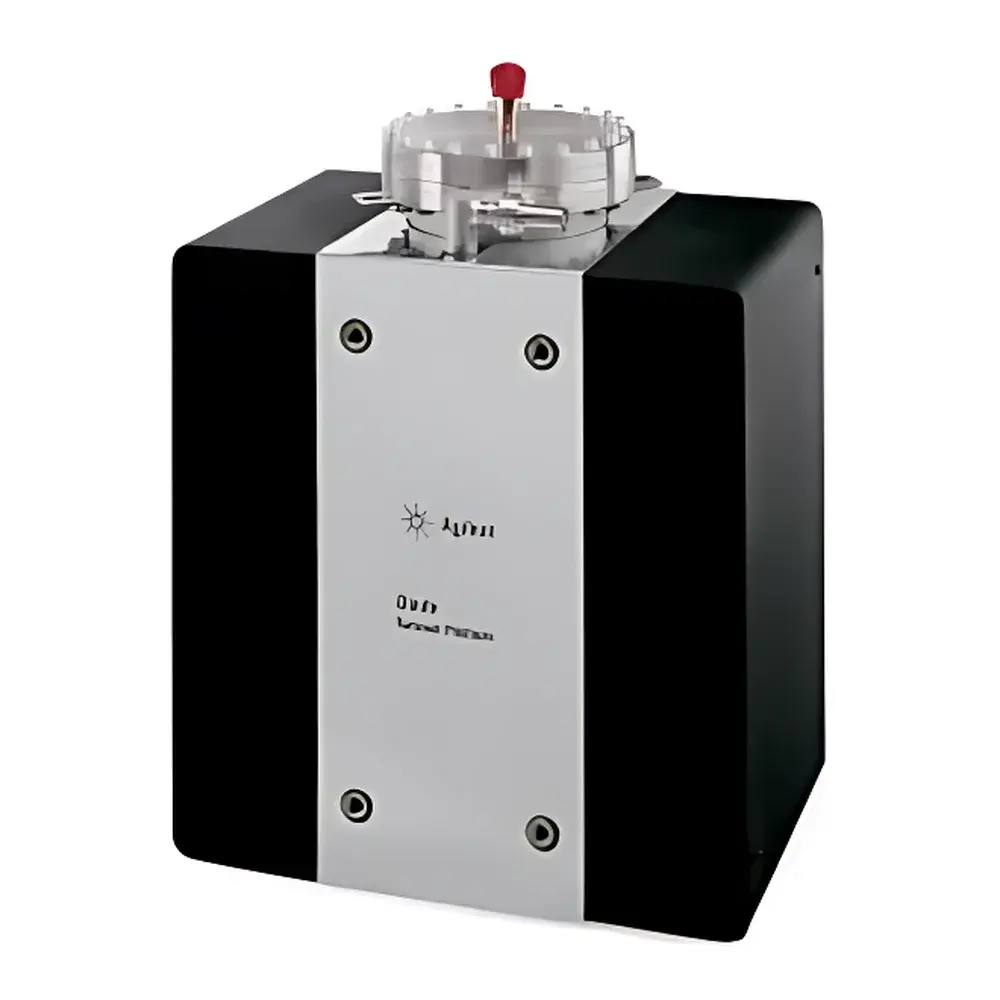
Agilent VacIon Plus 500 Ion Pump
| Brand | Agilent Technologies |
|---|---|
| Origin | USA |
| Manufacturer Type | Original Equipment Manufacturer (OEM) |
| Product Category | Imported |
| Model | VacIon Plus 500 Ion Pump |
| Pump Type | Oil-Free Vacuum Pump |
| Ultimate Vacuum | < 1 × 10⁻¹¹ mbar |
| Weight | 120 kg (264 lbs) |
Overview
The Agilent VacIon Plus 500 Ion Pump is a high-performance, non-evaporable getter (NEG)-enhanced sputter-ion pump engineered for ultra-high vacuum (UHV) and extreme-high vacuum (XHV) environments—typically ranging from 10⁻⁹ to < 1 × 10⁻¹¹ mbar. Operating on the principle of Penning discharge, it ionizes residual gas molecules via electron bombardment in a strong magnetic field, followed by momentum transfer and burial of ions into cathode surfaces (titanium or tantalum). Unlike turbomolecular or cryogenic pumps, the VacIon Plus 500 contains no moving parts, eliminating mechanical vibration, oil backstreaming, and wear-related maintenance—making it ideal for vibration-sensitive applications such as gravitational wave interferometers (e.g., LIGO-style optical cavities), synchrotron beamlines, particle accelerator beam pipes, and surface science chambers requiring long-term, stable, and clean vacuum conditions.
Key Features
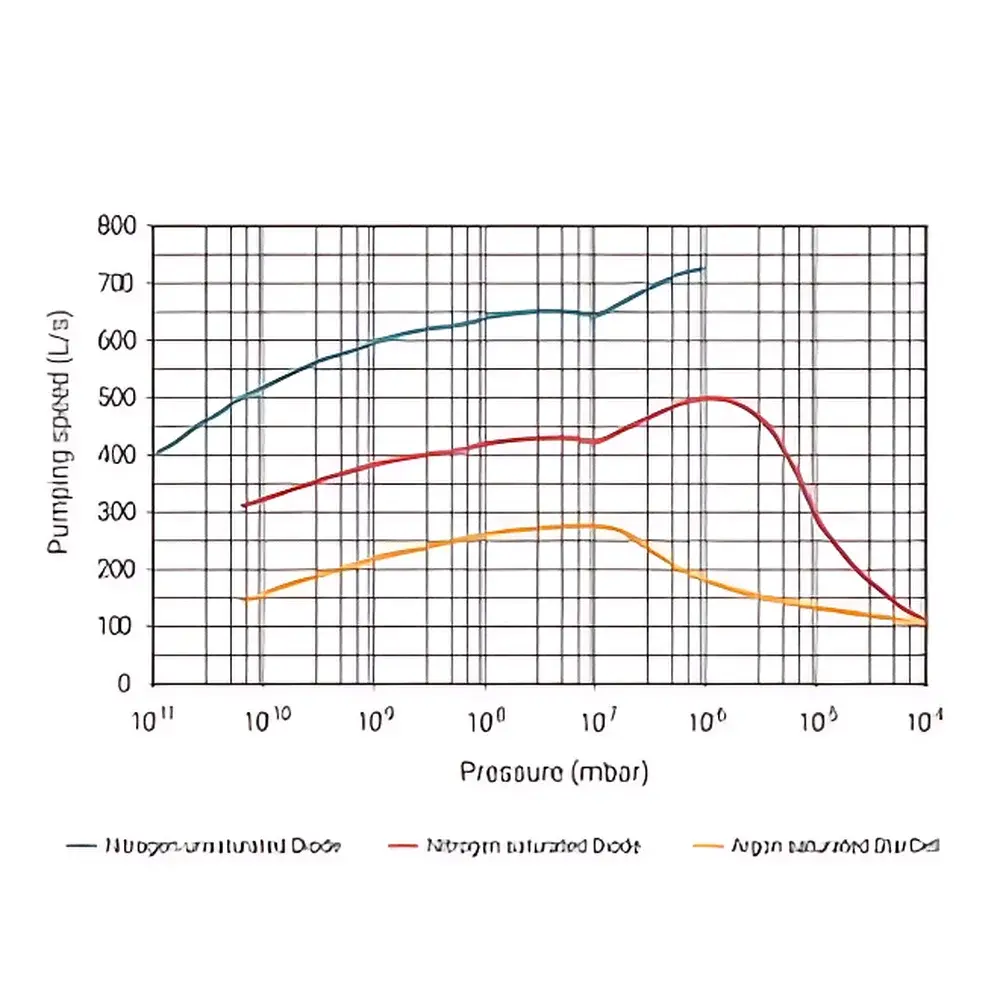
- Modular electrode architecture supporting three distinct ion pump element configurations: standard diode, triode, and inert-gas-optimized diode—each tailored to optimize pumping speed and capacity for specific gas species (H₂, He, Ar, CH₄, N₂, O₂, CO).
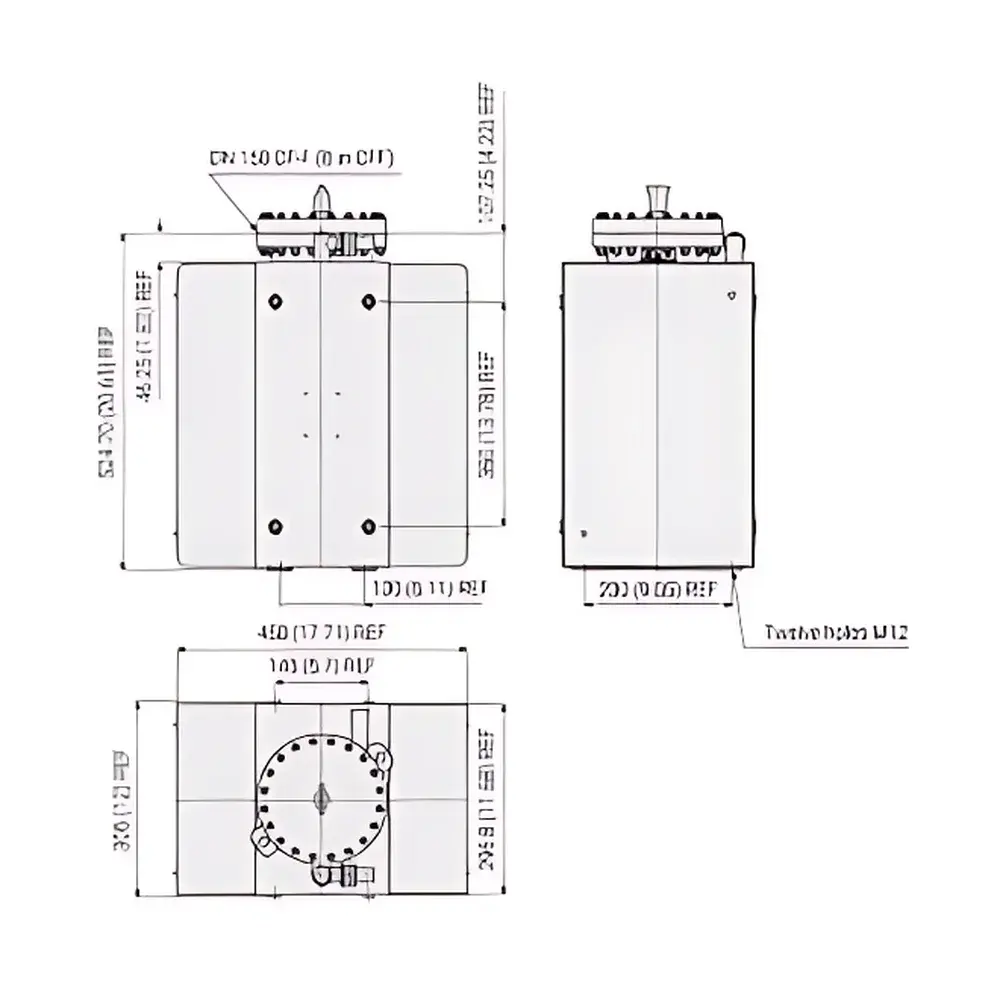
- Integrated ConFlat® 8-inch (203 mm) non-rotating flange with dual 8-inch CF ports and a side port—enabling flexible chamber integration and multi-directional vacuum routing.
- Ultra-low leakage current (< 1 nA typical at rated voltage), ensuring high signal-to-noise ratio for connected vacuum gauges and enabling precise, drift-free pressure monitoring over extended periods.
- Low magnetic field design (< 0.15 T at pump center) minimizes interference with adjacent electron optics, magnetic sensors, or quantum measurement apparatus.
- Pre-baked and sealed under vacuum at > 400 °C, ensuring minimal outgassing upon installation and immediate operational readiness in UHV/XHV systems.
- Customizable options include high-voltage feedthroughs (Fischer, King, DESY, Varian, Safeconn), optical baffles, external resistive heaters (for in-situ bakeout), magnetic shielding, and bespoke electrode geometry or port layout.
Sample Compatibility & Compliance
The VacIon Plus 500 is compatible with stainless steel (304/316L), copper, and aluminum vacuum systems conforming to ISO-KF, ISO-F, and CF flange standards. Its all-metal construction and absence of organic seals or lubricants ensure full compatibility with ultra-clean processes required in semiconductor metrology, atomic physics experiments, and space simulation chambers. The pump meets ASTM E575–22 (Standard Practice for Reporting Results of Analysis of Metals) for material traceability and complies with ISO 20483:2020 (Vacuum technology — Vocabulary) and ISO 10110–7 (Optical elements — Surface imperfection specification) when used in optical vacuum systems. It supports GLP/GMP-aligned vacuum system qualification protocols, including documented bakeout procedures and pressure stability validation per ISO 14040 series requirements.
Software & Data Management
While the VacIon Plus 500 operates autonomously without embedded firmware or digital control, it is fully compatible with industry-standard vacuum control systems—including Agilent’s Intellivac™ controllers and third-party PLC-based platforms (e.g., Beckhoff TwinCAT, National Instruments LabVIEW). Integration enables real-time monitoring of high-voltage supply status, interlock signals, and optional temperature sensors. When deployed in regulated environments (e.g., FDA-regulated analytical instrumentation or aerospace test facilities), its passive operation supports 21 CFR Part 11-compliant audit trails when paired with validated SCADA layers that log pump enable/disable events, bakeout cycles, and pressure history synchronized to system timestamps.
Applications
- Particle accelerator beamline vacuum systems (e.g., storage rings, linear accelerators)
- Laser interferometry and gravitational wave detection infrastructure (e.g., Fabry–Pérot cavities)
- Surface analysis tools: XPS, AES, LEED, and molecular beam epitaxy (MBE) chambers
- Quantum computing hardware requiring milliKelvin-compatible, low-vibration vacuum enclosures
- Space environment simulation chambers and satellite component testing facilities
- High-resolution mass spectrometry source regions demanding sub-10⁻¹⁰ mbar base pressure
FAQ
What gases does the VacIon Plus 500 pump most effectively?
Hydrogen (H₂) is pumped with highest speed in diode configuration; helium (He), argon (Ar), and methane (CH₄) achieve optimal speed and capacity in triode mode; inert-gas-optimized diode elements enhance noble gas removal where hydrogen pumping remains critical.
Can this pump be operated without a backing pump?
Yes—the VacIon Plus 500 is a self-contained, non-regenerative pump requiring no foreline or backing pump. It initiates pumping directly from atmosphere-down to ~10⁻³ mbar, then transitions to full UHV/XHV performance after initial conditioning.
Is magnetic shielding available as a factory option?
Yes—optional mu-metal or soft-iron magnetic shields are available to reduce stray fields to < 1 µT at 30 cm distance, essential for proximity to SQUID magnetometers or electron beam columns.
What is the recommended bakeout protocol prior to first use?
A minimum 24-hour bakeout at 400 °C under rough vacuum (< 10⁻² mbar) is recommended, followed by slow cool-down to ambient while maintaining power-on bias to stabilize cathode surfaces and minimize subsequent outgassing.
Does the pump require periodic maintenance or consumables?
No—there are no replaceable parts, oils, or getters requiring replenishment. Lifetime is limited only by cumulative ion implantation saturation of cathodes, typically exceeding 10 years under continuous UHV operation with low gas loads.



