
Agilent Valve Automation Solutions for InfinityLab LC Systems
| Brand | Agilent Technologies |
|---|---|
| Origin | Germany |
| Manufacturer Type | Original Equipment Manufacturer (OEM) |
| Import Status | Imported |
| Model Series | InfinityLab Quick-Change Valve Modules |
| Instrument Type | Multidimensional Liquid Chromatography (MD-LC) System Component |
| Integration | Compatible with Agilent InfinityLab LC Platforms (e.g., 1260, 1290, and 1290 II InfinityLab systems) |
| Drive Options | Internal (integrated into LC pump or detector module) or External (standalone valve driver unit) |
| Valve Types | 2-Position Switching Valves & Multi-Port Selection Valves |
| Pressure Rating | Up to 1300 bar (varies by specific valve model) |
| Material Compatibility | Stainless steel, PEEK, and MP35N alloy options available |
| Fluidic Path Volume | From <100 nL (low-dead-volume configurations) to ~5 µL per port (standard selection valves) |
Overview
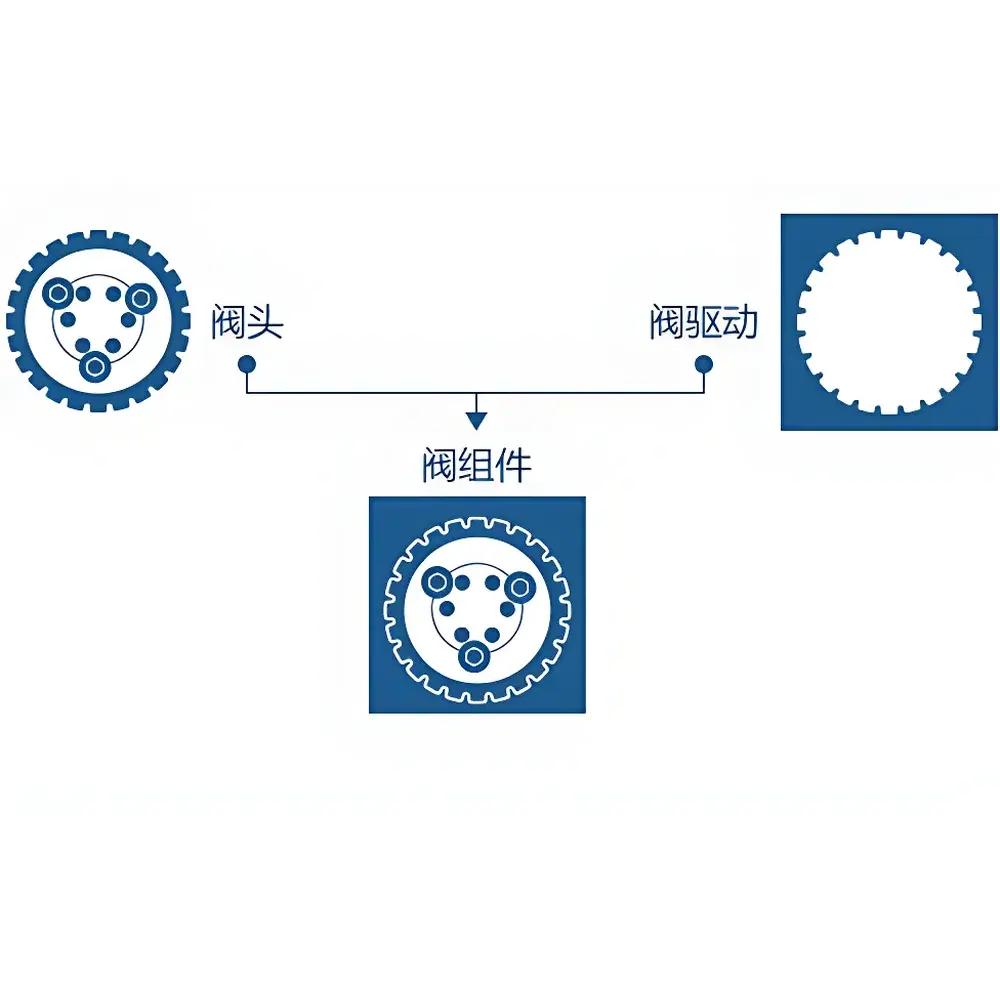
Agilent Valve Automation Solutions are engineered modular components designed to extend the functional scope of Agilent InfinityLab liquid chromatography systems—enabling robust, reproducible multidimensional liquid chromatography (MD-LC), column switching, solvent selection, sample loop loading, and heart-cutting or comprehensive 2D-LC workflows. These solutions operate on precision electromechanical actuation principles, where solenoid- or stepper-motor-driven valve heads execute deterministic, low-dead-volume fluidic routing under precise timing control synchronized with pump gradients and detector acquisition. Unlike legacy fixed-valve architectures, Agilent’s Quick-Change valve platform decouples mechanical valve body design from drive electronics, allowing field-replaceable valve modules without system recalibration or firmware reconfiguration. This architecture supports method scalability across analytical, semi-preparative, and method development applications while maintaining full compliance with GLP/GMP data integrity requirements when integrated with Agilent OpenLab CDS or MassHunter software environments.
Key Features
- Modular Quick-Change Architecture: Interchangeable valve bodies (2-position switching or multi-port selection) mount onto standardized drive units—enabling rapid reconfiguration for new methods without hardware disassembly or downtime.
- High-Pressure Compatibility: Valve modules rated up to 1300 bar support UHPLC and ultra-high-resolution separations; pressure-rated seals and flow-path materials (e.g., MP35N, PEEK, and 316L stainless steel) ensure long-term stability in aggressive mobile phases.
- Low-Dead-Volume Design: Internal flow paths engineered to minimize extra-column dispersion—critical for maintaining peak capacity in 2D-LC and trace-level quantitation applications.
- Integrated Timing Synchronization: Hardware-level trigger I/O (TTL-compatible) enables sub-millisecond coordination with pump gradient events and detector signal acquisition—essential for precise heart-cutting and fraction collection.
- Drive Flexibility: Supports both internal integration (valve driver embedded within InfinityLab LC pump or detector modules) and external standalone drivers—facilitating retrofits into existing LC systems or custom OEM instrument designs.
- Firmware-Managed Diagnostics: Real-time valve position verification, cycle counter logging, and actuation error reporting accessible via OpenLab CDS audit trails—supporting FDA 21 CFR Part 11 compliance for regulated laboratories.
Sample Compatibility & Compliance
The Agilent Valve Automation Solutions accommodate a broad range of mobile phase chemistries—including aqueous buffers, organic modifiers (acetonitrile, methanol), ion-pairing reagents, and high-pH solvents—without compromising seal integrity or flow-path inertness. All valve modules comply with ISO 9001 manufacturing standards and are validated for use in environments adhering to ASTM E2656 (Standard Guide for LC System Performance Verification), USP (Chromatography), and ICH Q2(R2) method validation guidelines. When deployed within an Agilent InfinityLab LC system configured with OpenLab CDS 2.x or later, full electronic record and signature (ER/ES) functionality—including user authentication, audit trail review, and electronic signatures—is enabled per FDA 21 CFR Part 11 and EU Annex 11 requirements.
Software & Data Management
Valve operation is fully programmable through Agilent OpenLab CDS Method Editor or MassHunter Quantitative Analysis software. Users define valve state transitions (e.g., “switch at 4.2 min”, “rotate to port 3 at 7.8 min”) as discrete timeline events synchronized with gradient profiles and detector sampling rates. All valve actuation logs—including timestamp, commanded position, actual position confirmation, and cycle count—are stored in the method-associated .audit file. These records are immutable, searchable, and exportable in CSV or PDF formats for internal QA review or regulatory inspection. Optional integration with Agilent’s Instrument Control Framework (ICF) allows remote monitoring and centralized fleet management across distributed laboratory networks.
Applications
- Multidimensional LC (MD-LC) for complex matrix analysis (e.g., biologics characterization, environmental contaminant screening, metabolomics)
- Column-switching workflows for online sample cleanup (e.g., protein precipitation, phospholipid removal, SPE-LC coupling)
- Solvent selection for method scouting and gradient optimization
- Heart-cutting 2D-LC (LC–LC) for targeted isomer separation and co-elution resolution
- Automated calibration standard introduction and system suitability testing
- OEM integration into custom analytical platforms requiring deterministic fluidic routing under PC-based control
FAQ
Can these valves be used with non-Agilent LC systems?
Yes—external drive units provide TTL and RS-232 interfaces compatible with third-party controllers, though full diagnostic integration and audit trail capture require Agilent OpenLab CDS or MassHunter.
What is the typical lifetime of a Quick-Change valve under continuous UHPLC operation?
Rated for ≥1 million actuation cycles at ≤1000 bar; lifetime varies based on mobile phase aggressiveness, particulate load, and maintenance frequency per Agilent Maintenance Guide M9010-90001.
Do valve modules require recalibration after replacement?
No—mechanical indexing and electrical interface standardization eliminate the need for post-installation calibration; position verification is performed automatically during system initialization.
Is there a difference in dead volume between 2-position and multi-port selection valves?
Yes—2-position valves typically offer lower internal volume (<100 nL in optimized configurations), while 6- or 10-port selection valves maintain sub-500 nL per path when using low-volume rotor designs.
How does Agilent ensure traceability of valve actuation events in regulated environments?
Each actuation event is time-stamped, digitally signed, and appended to the method audit trail; all logs are cryptographically protected and retained with raw data files per ALCOA+ principles.
Related Products





