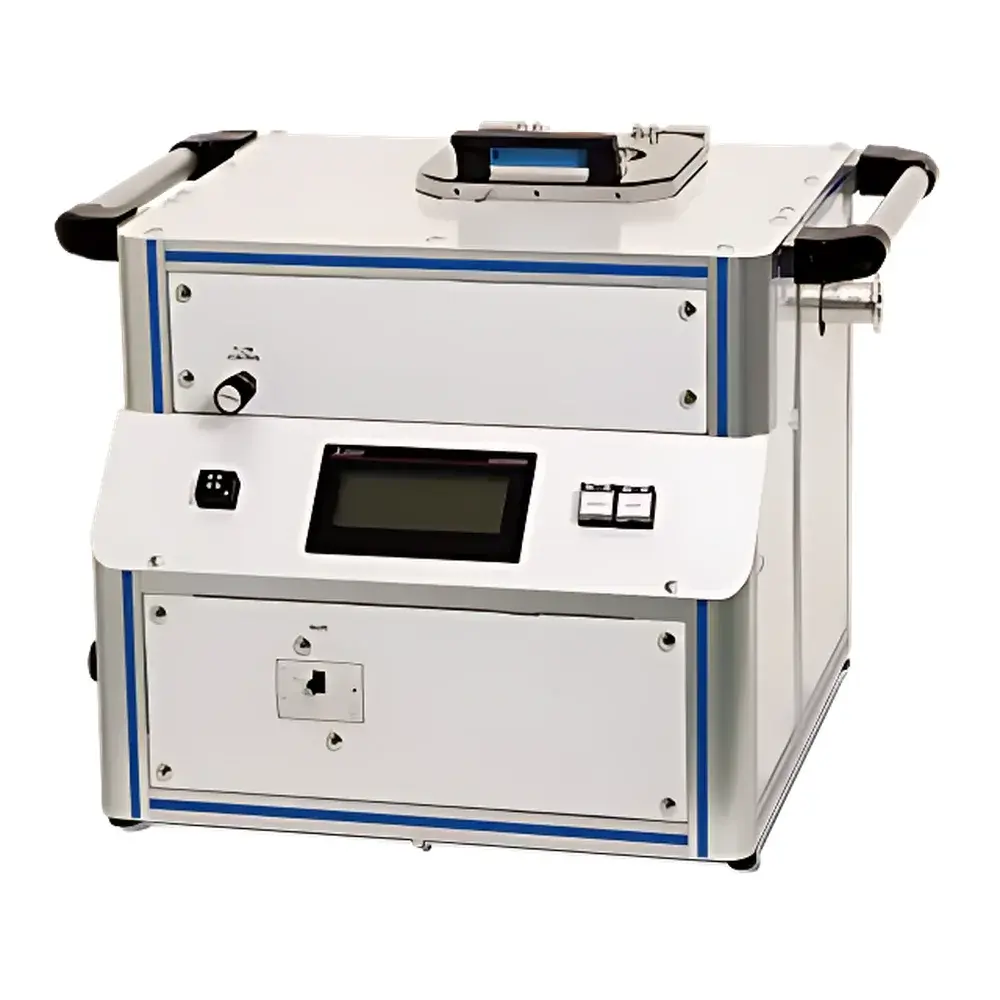
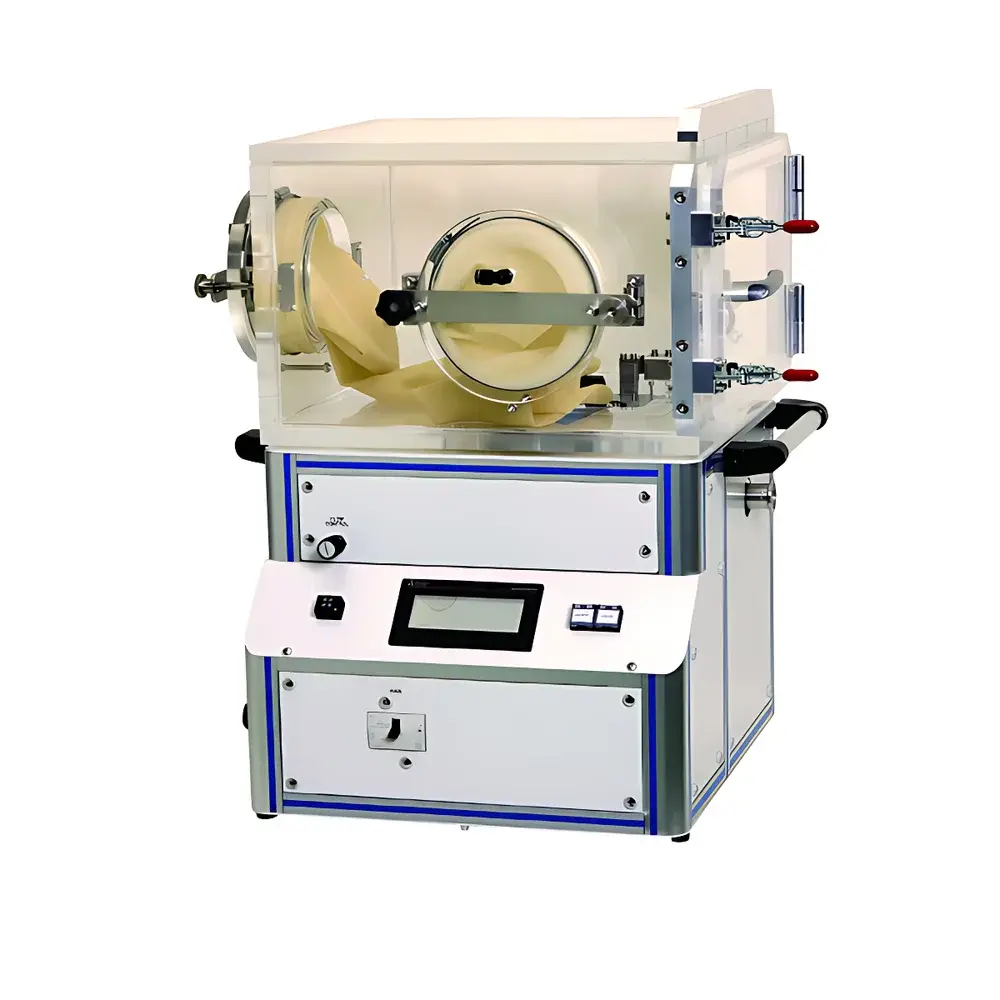
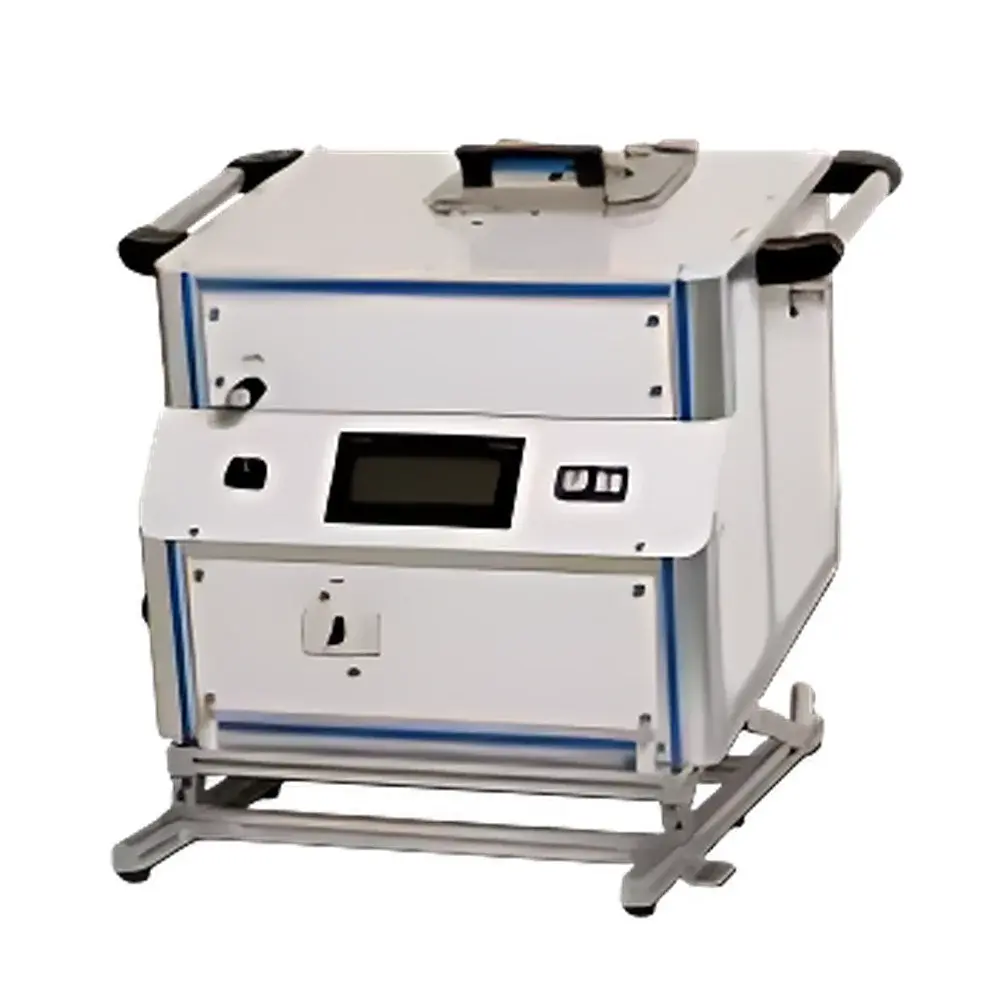
AGUS SAL1000 Series Desktop Atomic Layer Deposition System
| Brand | AGUS |
|---|---|
| Origin | Japan |
| Model | SAL1000 Series |
| Substrate Size | 4-inch (φ100 mm) |
| Process Temperature | Up to 350 °C |
| Precursor Channels | 2 |
| Uniformity | ≤3% (1σ, across 4-inch wafer) |
| Vacuum Base Pressure | ≤5 Pa |
| Dimensions (W×H×D) | 582 × 450 × 410 mm |
| Weight | 50 kg |
| Optional Accessories | Powder deposition stage (0–45° tilt, 5 cm³ capacity), ozone generator, N₂ purge module, glovebox integration kit, precursor heaters (up to 200 °C), dry vacuum pump, exhaust abatement unit |
Overview
The AGUS SAL1000 Series is a compact, benchtop-scale Atomic Layer Deposition (ALD) system engineered for precision thin-film synthesis in R&D and pilot-line environments. Based on the self-limiting surface reaction principle—where sequential, saturative exposures of gaseous precursors yield atomic-level thickness control—the SAL1000 enables conformal, pinhole-free film growth on planar wafers, high-aspect-ratio structures, and complex 3D substrates including powders. Its modular architecture supports both thermal ALD and ozone-assisted processes, with precise temperature regulation up to 350 °C and real-time monitoring of chamber pressure, precursor dosing, and purge cycles. Designed for semiconductor process development, MEMS packaging, solid-state battery electrode functionalization, and catalytic material screening, the system meets fundamental requirements for reproducible nanoscale film engineering under controlled inert or vacuum atmospheres.
Key Features
- Atomic-scale thickness control: Achieves monolayer-resolved film growth via self-limiting chemisorption, enabling sub-nanometer thickness repeatability across multiple runs.
- High uniformity & conformality: ≤3% thickness variation (1σ) over 4-inch substrates; demonstrated step coverage >95% in trenches with aspect ratios ≥10:1.
- Integrated vacuum and gas delivery architecture: Base pressure ≤5 Pa achieved with built-in dry scroll pump; independent mass flow controllers (MFCs) for two precursor lines ensure stoichiometric dose accuracy.
- Intuitive touchscreen HMI: 7-inch capacitive display with recipe-based operation, real-time status visualization (valve positions, heater status, pressure trace), and automated sequence execution—including post-deposition N₂ purge and chamber venting.
- Modular substrate handling: Standard rotating chuck for 4-inch wafers; optional powder deposition stage with motorized 0–45° tilt adjustment for uniform coating of up to 5 cm³ particulate samples.
- Expandable process environment: Seamless integration with external gloveboxes (vacuum transfer and inert gas exchange fully automated); optional ozone generator (10–100 g/h O₃ output) and heated precursor lines (up to 200 °C) support metal oxide, nitride, and sulfide ALD chemistries.
Sample Compatibility & Compliance
The SAL1000 accommodates silicon, quartz, sapphire, and flexible polymer substrates up to 100 mm in diameter. Its low-thermal-mass chamber design ensures rapid temperature stabilization and minimal thermal gradient across the substrate zone—critical for crystalline phase control (e.g., amorphous vs. polycrystalline Al₂O₃ or TiO₂). Powder deposition capability extends applicability to battery cathode/anode materials, MOFs, and supported catalysts. The system complies with IEC 61000-6-2 (EMC immunity) and IEC 61000-6-4 (EMC emission) standards. All vacuum and gas interlocks meet ISO 13850 safety requirements. For regulated environments, optional audit-trail logging and user-access control modules support alignment with GLP and GMP documentation practices per FDA 21 CFR Part 11 guidelines.
Software & Data Management
Control firmware supports full recipe scripting (dose time, purge duration, temperature ramp profiles) with versioned storage and timestamped execution logs. Process data—including chamber pressure, substrate temperature, valve actuation timestamps, and MFC setpoints—is exported in CSV format for offline analysis. Optional PC-based software provides remote monitoring via Ethernet, historical trend comparison across batches, and statistical process control (SPC) charting for thickness uniformity and run-to-run deviation. All system events are logged with operator ID, date/time stamp, and action type—enabling full traceability required for internal quality audits or third-party validation.
Applications
- Semiconductor gate dielectrics (Al₂O₃, HfO₂) and interface passivation layers
- MEMS encapsulation films with hermetic barrier properties (e.g., AlN, SiNx)
- Surface modification of Li-ion battery electrodes (LiCoO₂, NMC, Si anodes) to suppress side reactions
- Functionalization of porous scaffolds for biomedical implants (TiO₂, ZnO, CaP coatings)
- Conformal catalyst supports (e.g., Pt/Al₂O₃ on ceramic monoliths) and photocatalytic nanostructures
- R&D of emerging ALD chemistries including fluorides, phosphates, and chalcogenides
FAQ
What substrate sizes does the SAL1000 support?
The system is optimized for 4-inch (φ100 mm) wafers. Custom chucks for smaller substrates (e.g., 2-inch or diced dies) are available upon request.
Can the SAL1000 perform ozone-assisted ALD?
Yes—integration of the optional ozone generator enables low-temperature oxidation steps for metal oxide films such as ZnO, SnO₂, or Ta₂O₅ without compromising film density.
Is powder deposition truly conformal at the particle level?
The tilting powder stage ensures gravitational reorientation during pulsing, combined with extended precursor exposure times, yields uniform surface coverage on individual particles—even for irregular morphologies—as verified by cross-sectional TEM and XPS depth profiling.
How is process repeatability validated?
Each system undergoes factory calibration using reference wafers measured by ellipsometry and XRF; users receive a certified uniformity report (≤3% 1σ) and SOP templates for in-house QC verification.
Does the system support remote diagnostics?
Standard Ethernet connectivity allows secure remote access for firmware updates, log retrieval, and basic troubleshooting—subject to network security policies and IT approval.