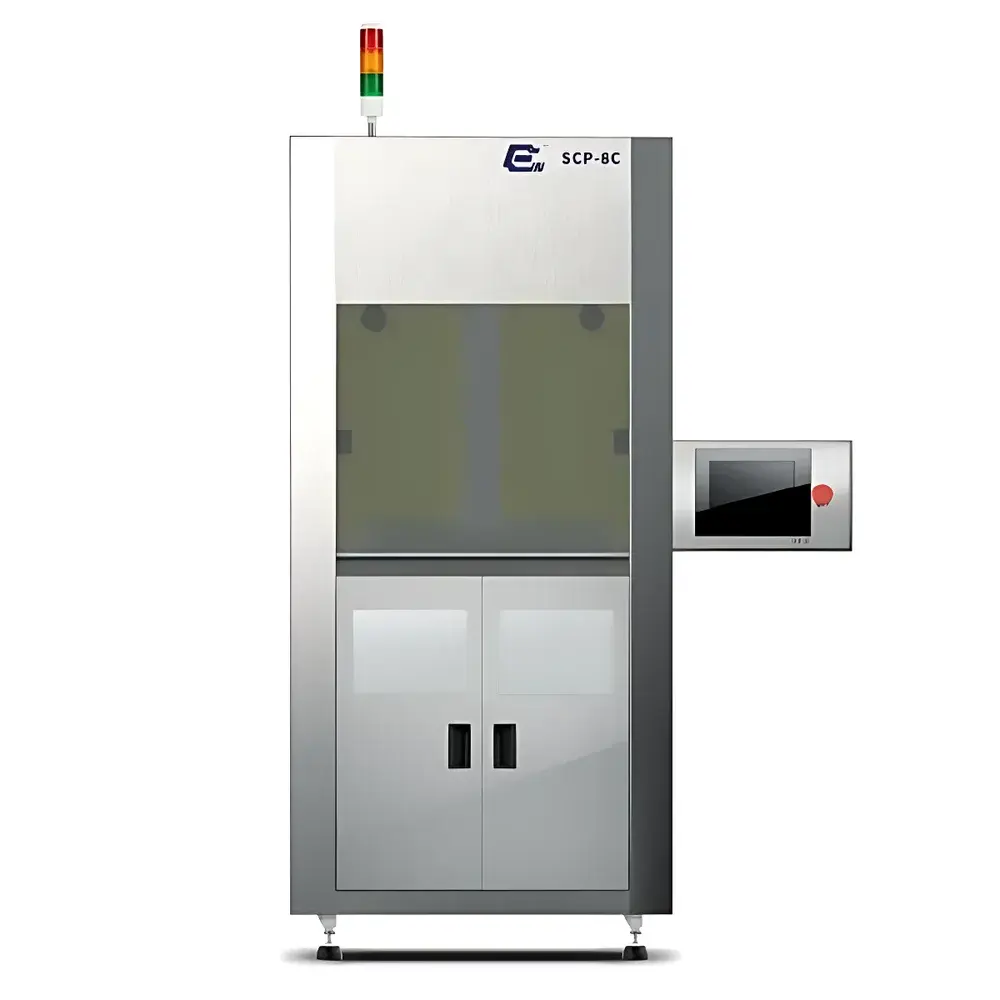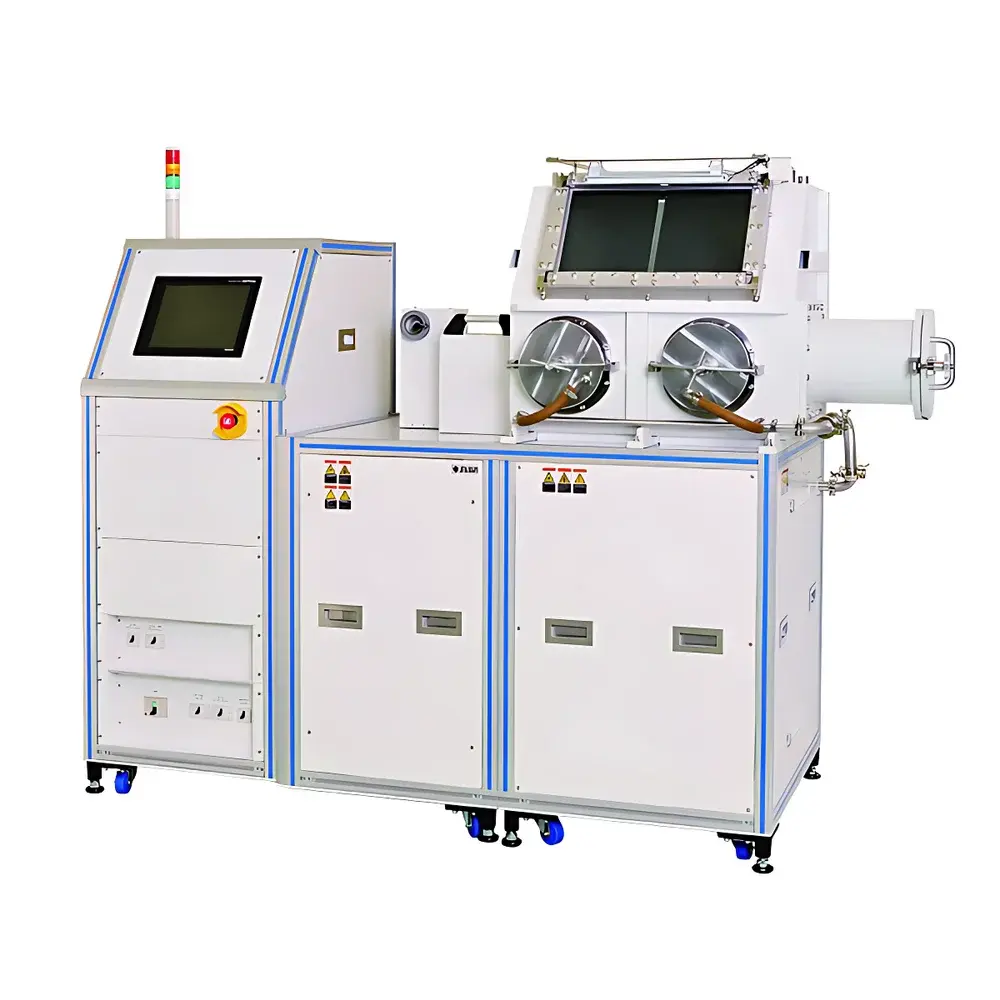
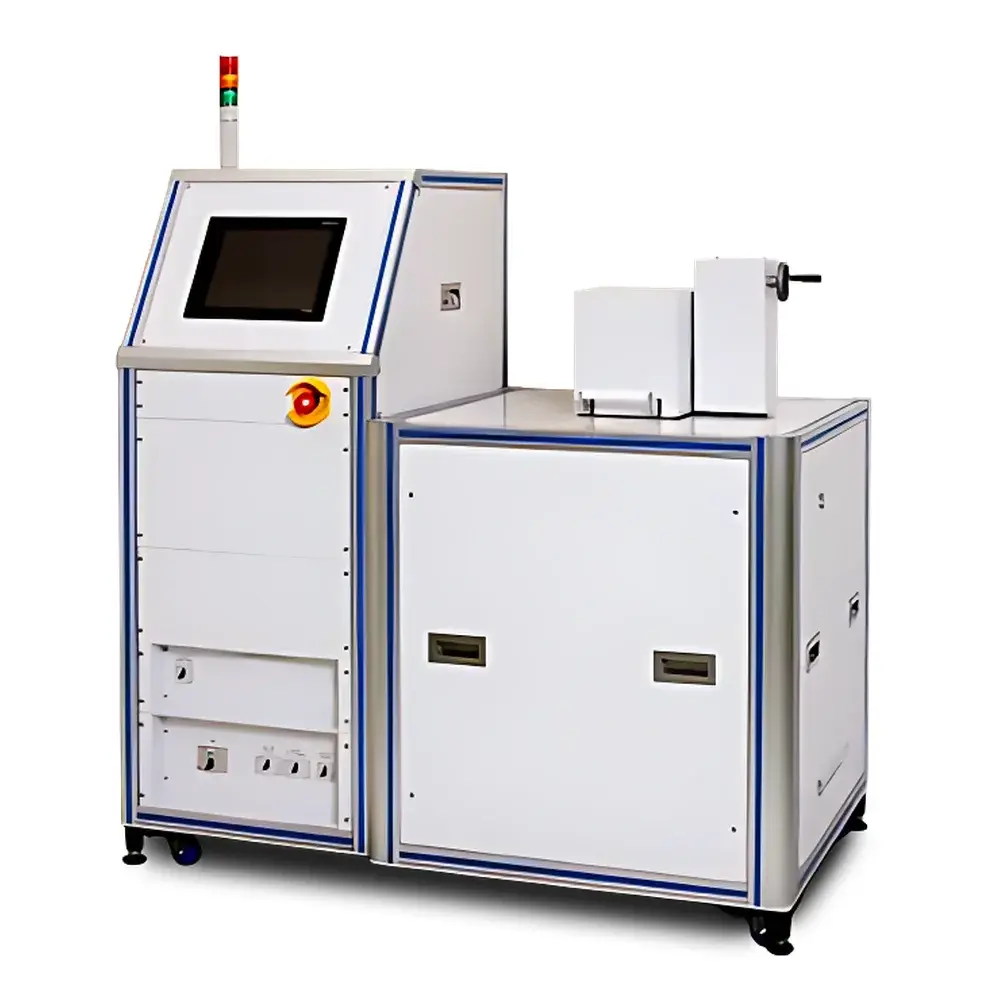
AGUS SAL3000 Atomic Layer Deposition System
| Brand | AGUS |
|---|---|
| Origin | Japan |
| Model | SAL3000 |
| Substrate Size | Ø100 mm (4-inch) |
| Process Temperature Range | 350–800 °C |
| Precursor Channels | 6 |
| Uniformity | ≤3% (at Ø100 mm) |
| Dimensions (W × H × D) | 1418 × 1728 × 840 mm |
| Weight | 200 kg |
Overview
The AGUS SAL3000 Atomic Layer Deposition (ALD) System is a research-grade thin-film synthesis platform engineered for precise, self-limiting surface reactions under controlled vacuum and thermal environments. Based on sequential, pulsed delivery of gaseous precursors and reactive co-reactants—separated by inert purge steps—the SAL3000 enables atomic-scale thickness control, conformal coverage on high-aspect-ratio structures (e.g., trenches, vias, nanopores), and reproducible stoichiometric film growth. Designed for semiconductor process development, advanced memory R&D, and functional oxide/nitride interface engineering, the system supports both thermal ALD and ozone-assisted low-temperature processes. Its modular architecture accommodates integration with load-lock chambers and inert-atmosphere gloveboxes, enabling air-sensitive precursor handling and substrate transfer without ambient exposure.
Key Features
- 6 independent, mass-flow-controlled precursor delivery lines with individual vaporization zones (up to 200 °C) and heated transport lines to prevent condensation;
- Substrate heating up to 800 °C with ±1 °C thermal stability and uniformity across Ø100 mm wafers;
- Dual-direction deposition configuration: top-side (SAL3000D) and bottom-side (SAL3000U) orientation—reducing particle adhesion during film nucleation;
- Integrated load-lock chamber option (vacuum-integrated transfer module) for batch processing and oxygen/moisture-sensitive substrates;
- Full-touch GUI with intuitive workflow navigation; stores ≥30 customizable process recipes with timestamped parameter logging;
- Modular auxiliary support: dry scroll vacuum pump (base pressure <1×10⁻⁶ mbar), ozone generator (10–200 g/h), effluent abatement unit, rapid thermal annealing (RTA) add-on capability;
- Monolithic mainframe design minimizes footprint and vibration coupling—critical for sub-nanometer thickness repeatability.
Sample Compatibility & Compliance
The SAL3000 accommodates standard 4-inch (Ø100 mm) substrates—including silicon wafers, sapphire, quartz, flexible polyimide films, and MEMS devices—with optional custom chucks for non-planar or patterned samples. All wetted surfaces are electropolished stainless steel or ceramic-coated to ensure chemical compatibility with metal halides (e.g., TiCl4, Al(CH3)3), alkylamides (e.g., TMA, TEMAHf), and oxidants (H2O, O3, O2 plasma). The system meets ISO 14644-1 Class 5 cleanroom compatibility requirements when operated in controlled environments. Process data logging complies with GLP/GMP traceability standards, supporting audit-ready records per FDA 21 CFR Part 11 when paired with validated software configurations.
Software & Data Management
Control is executed via embedded real-time OS with deterministic timing resolution (<10 ms pulse accuracy) for precursor dosing, purge, and reaction steps. All process parameters—including temperature ramps, MFC setpoints, valve actuation sequences, and vacuum profiles—are version-controlled and exportable in CSV/Excel format. Audit trails record operator ID, timestamp, parameter changes, and alarm events. Optional remote monitoring via secure TLS-encrypted Ethernet interface enables integration into centralized lab management systems (LIMS) and semiconductor MES platforms. Software updates follow IEC 62443-3-3 cybersecurity guidelines for industrial control systems.
Applications
- High-κ gate dielectrics (Al2O3, HfO2, La2O3) for CMOS scaling and FinFET integration;
- Conformal barrier layers (TiN, TaN) for Cu interconnects and through-silicon vias (TSVs);
- Functional oxide thin films for resistive RAM (ReRAM), ferroelectric RAM (FeRAM), and memristor prototypes;
- Surface passivation of perovskite solar cells and quantum dot LEDs;
- Atomic-scale encapsulation of 2D materials (MoS2, graphene) and nanowire arrays;
- Low-temperature ALD of ZnO, SnO2, and In2O3 for flexible electronics and gas sensors.
FAQ
What substrate sizes does the SAL3000 support?
The system is optimized for Ø100 mm (4-inch) substrates. Custom chucks for smaller samples (e.g., 10 × 10 mm chips) or masked wafers are available upon request.
Can the SAL3000 perform plasma-enhanced ALD (PE-ALD)?
Yes—optional RF or microwave plasma sources can be integrated into the process chamber with appropriate impedance matching and endpoint detection modules.
Is ozone generation included as standard equipment?
No—ozone is an optional accessory. The system includes dedicated ports and gas routing for seamless integration with external ozone generators (10–200 g/h output range).
How is film thickness uniformity verified and documented?
Uniformity is measured post-deposition using spectroscopic ellipsometry or X-ray reflectivity (XRR) on reference wafers. Certified calibration reports and SOP-compliant measurement protocols are provided with each system installation.
Does the SAL3000 support remote diagnostics and preventive maintenance scheduling?
Yes—embedded telemetry logs vacuum integrity, heater performance, and valve cycle counts. Predictive alerts trigger service notifications based on operational thresholds defined in the maintenance manual.