
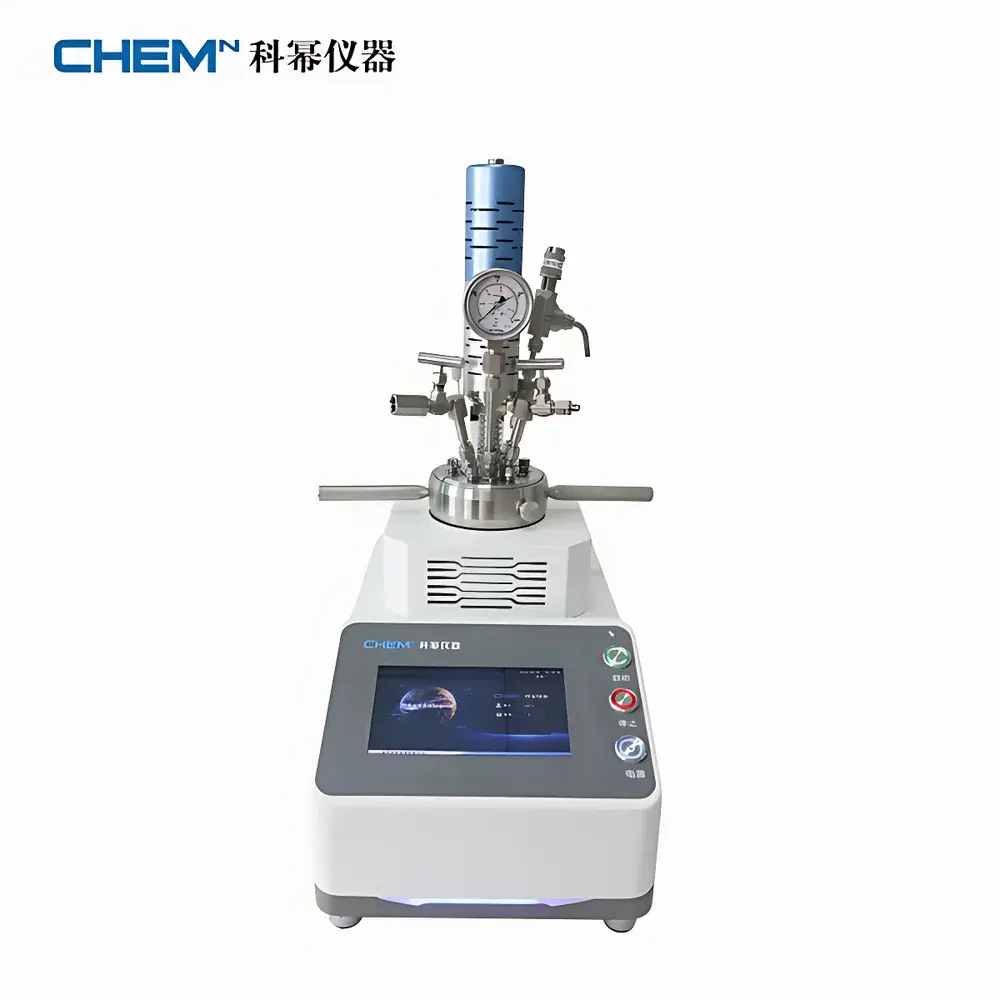
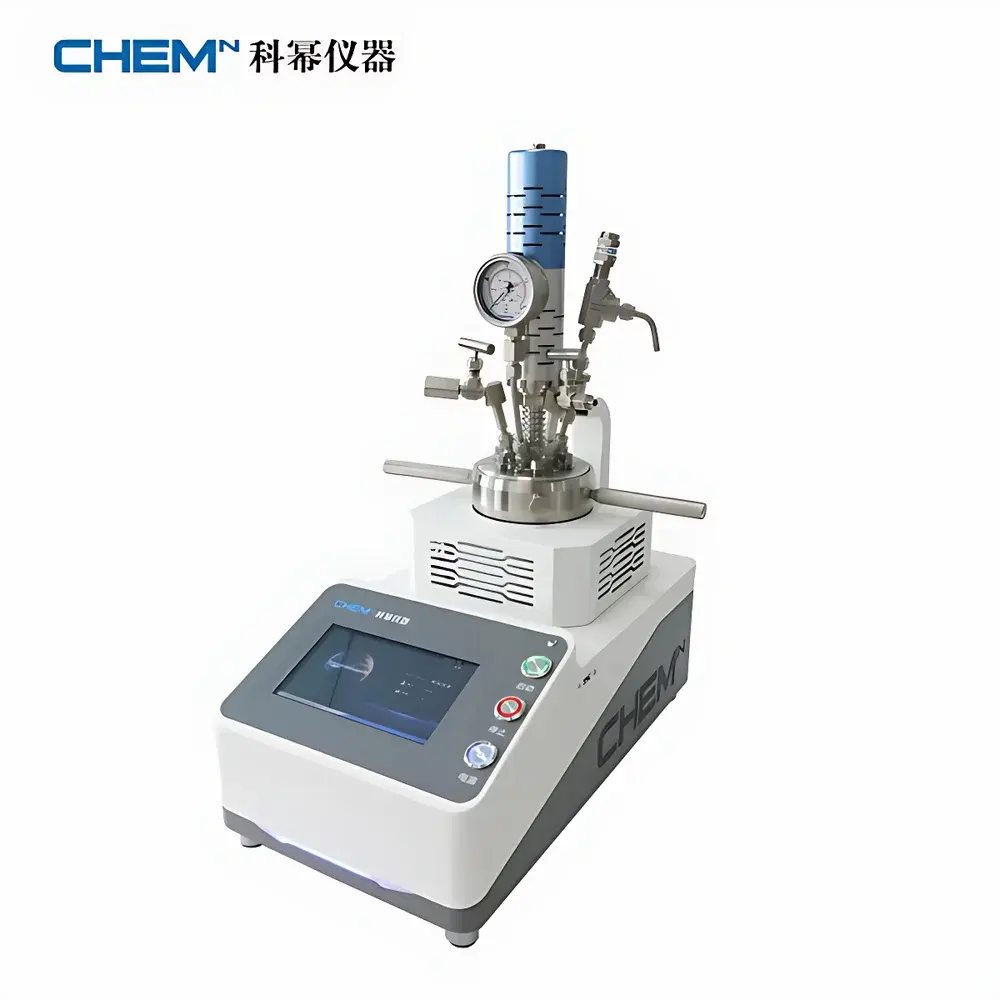
Ahkemi MSG Series Quick-Release Mechanical Stirring High-Pressure Reactor
| Brand | Ahkemi |
|---|---|
| Origin | Anhui, China |
| Model | MSG |
| Vessel Capacity | 25 mL, 50 mL, 100 mL, 300 mL, 500 mL, 1000 mL |
| Design Temperature | 550 °C (Standard Heating up to 300 °C) |
| Design Pressure | 35 MPa (Optional), Standard: 20 MPa (for 25–100 mL), 10 MPa (for 300–1000 mL) |
| Construction Material | 316L Stainless Steel or Hastelloy C-276 (Optional) |
| Stirring Speed Range | 100–1200 rpm (100–600 rpm above 350 °C) |
| Heating Method | Embedded Stainless Steel Heating Module |
| Heating Power | 1 kW |
| Control Interface | 7-inch Resistive Touchscreen Display |
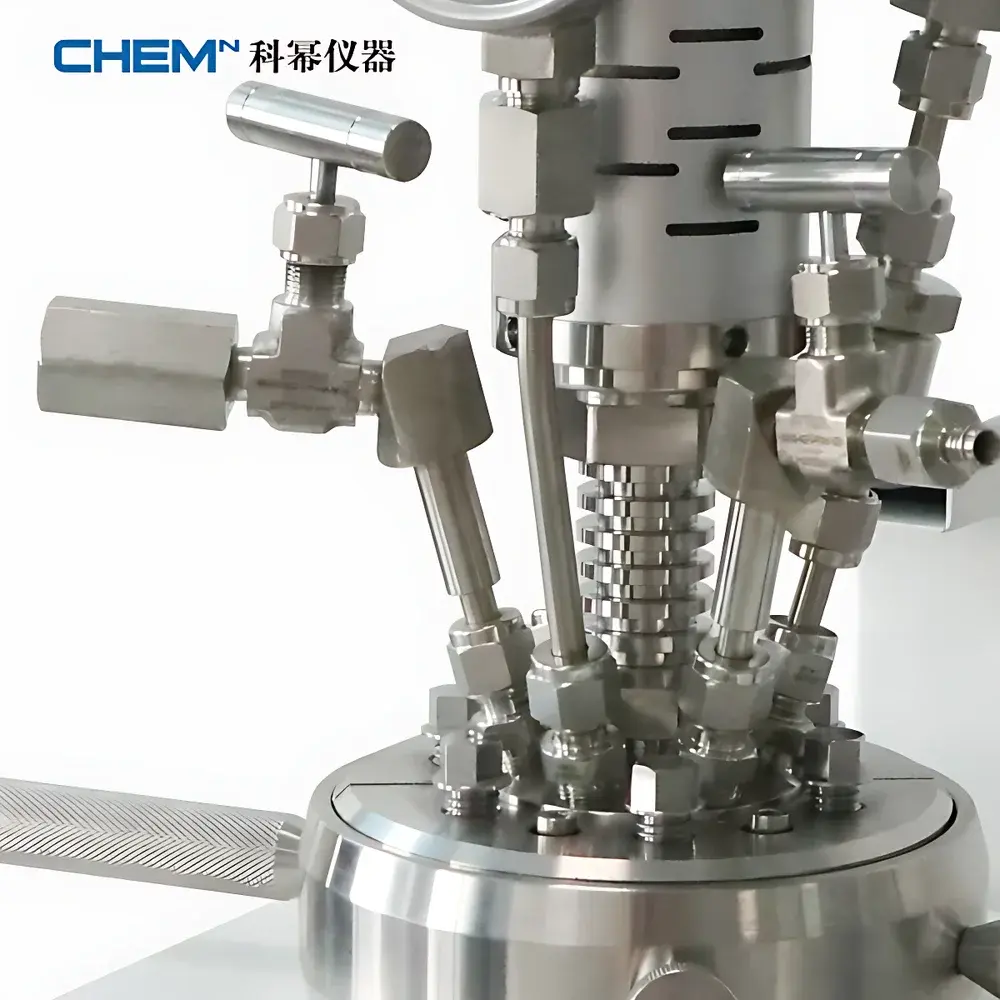
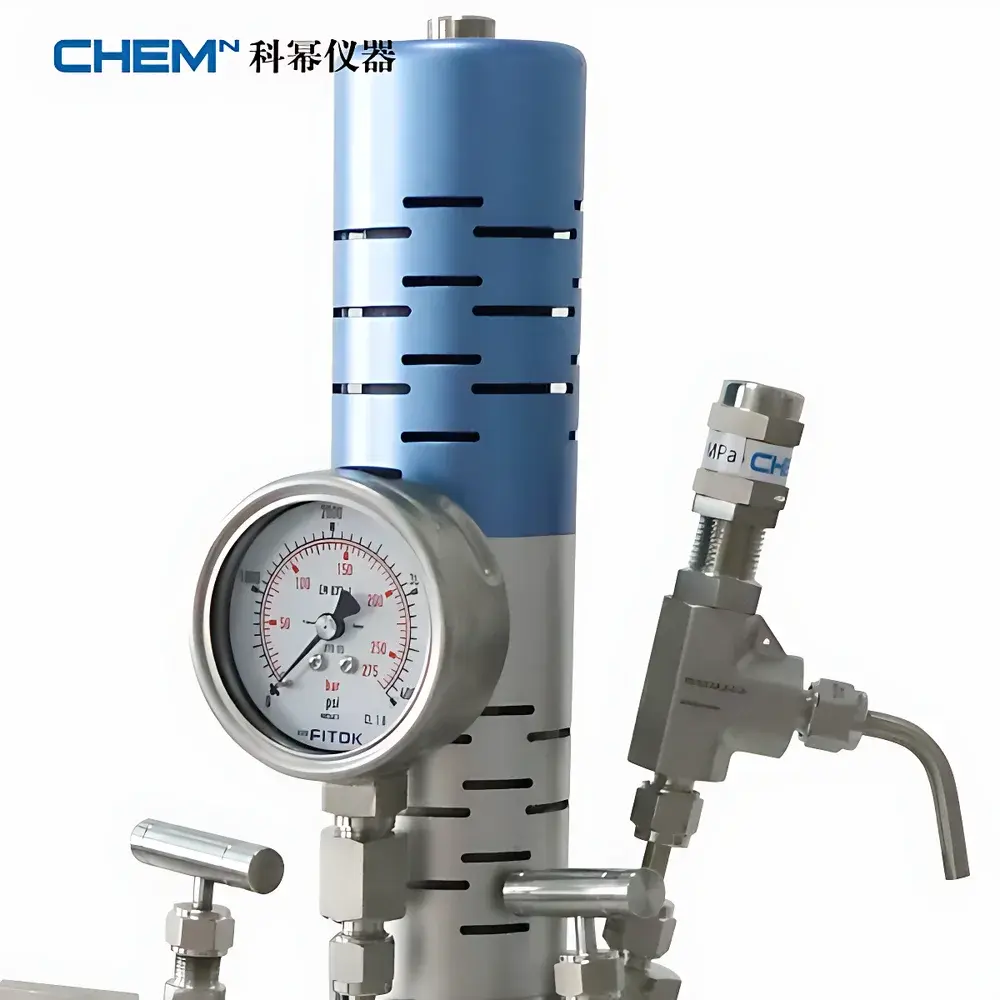
| Safety Systems | FITOK Inlet/Outlet Needle Valves, FITOK Safety Valve, Custom Burst Disc, Over-Temperature Cut-off, Over-Pressure Audible Alarm |
| Vacuum Capability | ≤ 35 MPa (gauge, as pressure rating implies full vacuum compatibility) |
| Power Supply | 200–240 V AC, 50–60 Hz |
| Dimensions (Reactor Unit) | Approx. 250 × 460 × 410 mm (L × W × H) |
Overview
The Ahkemi MSG Series Quick-Release Mechanical Stirring High-Pressure Reactor is an integrated laboratory-scale reaction system engineered for precise, reproducible, and safe operation under elevated temperature and pressure conditions. Based on the Couette flow principle, it employs high-torque magnetic coupling to transmit rotational motion across a hermetic pressure boundary—enabling continuous mechanical agitation without compromising vessel integrity. Designed for heterogeneous catalysis, hydrothermal synthesis, supercritical fluid reactions, and kinetic studies, the reactor supports process development in compliance with ISO 17025-accredited laboratory practices. Its monolithic construction eliminates flange-based leak paths, while the tongue-and-groove primary sealing interface ensures uniform load distribution and long-term gasket stability at temperatures up to 550 °C and pressures up to 35 MPa. The embedded stainless steel heating module delivers rapid thermal response and axial temperature homogeneity within ±1.5 °C across the reaction zone—critical for Arrhenius-based rate determination.
Key Features
- Quick-release clamping mechanism with ergonomic assist tools reduces assembly/disassembly time by >60% versus conventional bolted closures—validated per ASTM E2913 for repeatable torque application.
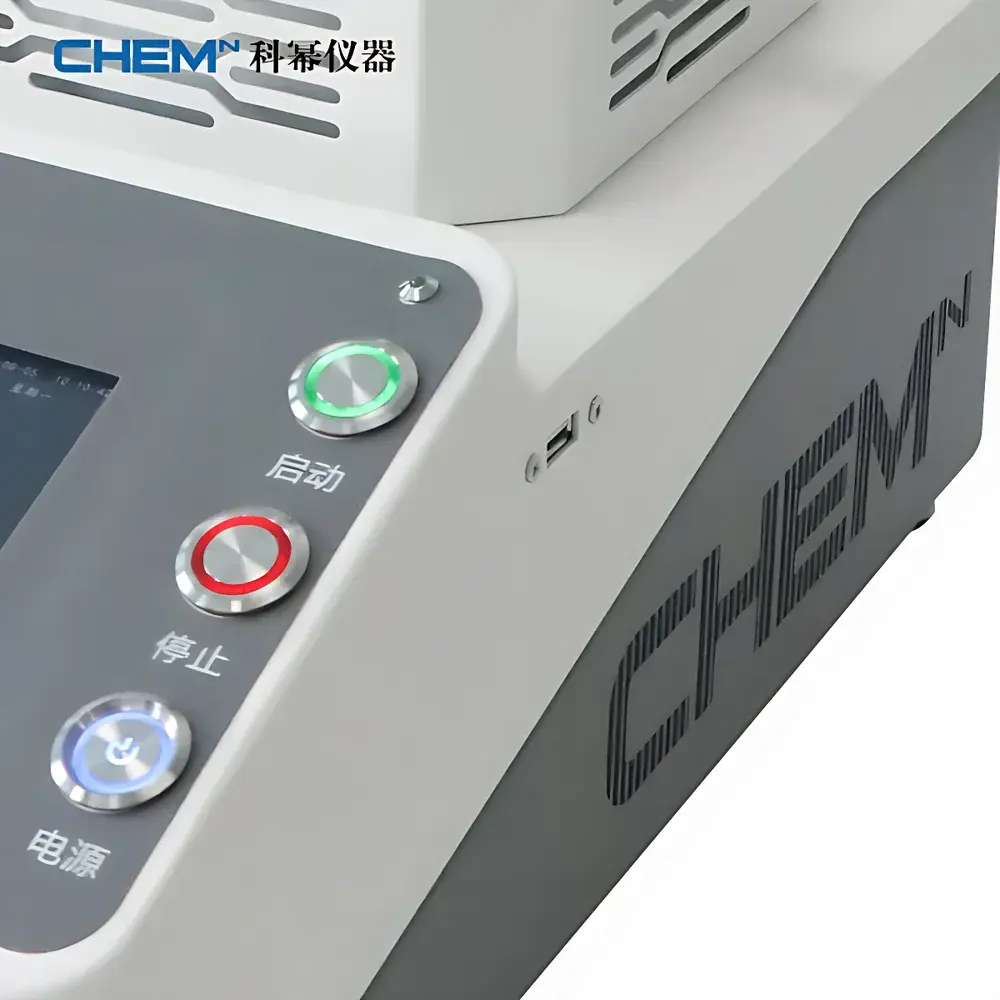
- 7-inch resistive touchscreen HMI provides real-time visualization of temperature, stirring speed, pressure, and elapsed time; supports dual-language UI (English/Chinese) and configurable alarm thresholds.
- Dual-layer safety architecture: primary protection via FITOK-certified stainless steel needle valves (inlet/outlet) and ASME-certified safety valve; secondary containment via custom-engineered rupture disc calibrated to burst at 110% of maximum allowable working pressure (MAWP).
- Intelligent PID temperature control with auto-tuning capability maintains setpoint stability within ±0.5 °C over extended dwell periods; stirring speed is digitally regulated via closed-loop feedback from optical encoder.
- Modular design accommodates optional accessories including inline sampling ports (with septum-sealed syringe access), jacketed cooling coils (for exotherm management), and gas dosing modules compatible with mass flow controllers (MFCs).
Sample Compatibility & Compliance
The MSG reactor accommodates solid-liquid, liquid-liquid, and gas-liquid reaction systems—including corrosive media such as halogenated solvents, strong acids (e.g., HF/HNO₃ mixtures), and reducing atmospheres (H₂, CO). Vessel bodies are precision-machined from ASTM A240 Grade 316L stainless steel (standard) or ASTM B575 Hastelloy C-276 (optional), both certified to NACE MR0175/ISO 15156 for sour service. All pressure-retaining components conform to PED 2014/68/EU Category IV requirements. Data logging functionality meets FDA 21 CFR Part 11 criteria for electronic records: audit trail, user authentication, and non-erasable timestamped export via USB 2.0 interface (CSV format). System documentation includes Factory Acceptance Test (FAT) reports and material traceability certificates.
Software & Data Management
No proprietary software installation is required. The onboard controller logs all operational parameters—including ramp rates, hold durations, torque transients, and pressure decay profiles—at user-defined intervals (1–60 s). Exported CSV files are structured for direct import into MATLAB, Python (Pandas), or commercial LIMS platforms. Each data packet contains metadata: operator ID, batch number, ambient humidity/temperature (via internal sensor), and firmware revision. For GLP/GMP environments, optional firmware upgrade enables electronic signature capture and role-based access control (RBAC) with three-tier privilege levels (Operator, Supervisor, Administrator).
Applications
- Catalytic hydrogenation screening under controlled H₂ partial pressure (up to 10 MPa) and temperature gradients (25–300 °C).
- Hydrothermal carbonization of biomass precursors with in situ pH monitoring via optional electrode port.
- Supercritical CO₂-assisted polymerization using rapid depressurization quenching protocols.
- Electrochemical synthesis in sealed environments with inert gas purging (N₂/Ar) and moisture exclusion (<5 ppm H₂O).
- Accelerated aging studies of battery electrolytes under thermal stress (80–200 °C) and oxygen exposure.
FAQ
What pressure ratings are certified for each standard volume configuration?
Standard configurations are rated at 20 MPa for 25–100 mL vessels and 10 MPa for 300–1000 mL vessels. The 35 MPa rating is available as an optional upgrade subject to additional FAT and material certification.
Is the magnetic coupling rated for continuous operation above 350 °C?
Yes—the coupling uses SmCo (Samarium-Cobalt) permanent magnets with Curie temperature exceeding 750 °C, ensuring stable torque transmission up to 550 °C when paired with high-temperature ceramic bearings.
Can the reactor be integrated with external gas supply systems?
Yes—standard 1/4″ VCR fittings allow direct connection to gas manifolds equipped with back-pressure regulators and residual gas analyzers (RGAs). Optional gas-phase sampling loops support GC/MS interfacing.
Does the system support automated sequential reaction protocols?
Not natively; however, the USB data export and analog output signals (0–10 V for temperature, 4–20 mA for pressure) enable integration with third-party programmable logic controllers (PLCs) or LabVIEW-based automation frameworks.
What maintenance intervals are recommended for safety-critical components?
FITOK valves require annual calibration; rupture discs must be replaced after each activation or every 24 months (whichever occurs first); graphite gaskets should be inspected and replaced prior to each high-temperature (>400 °C) run.



