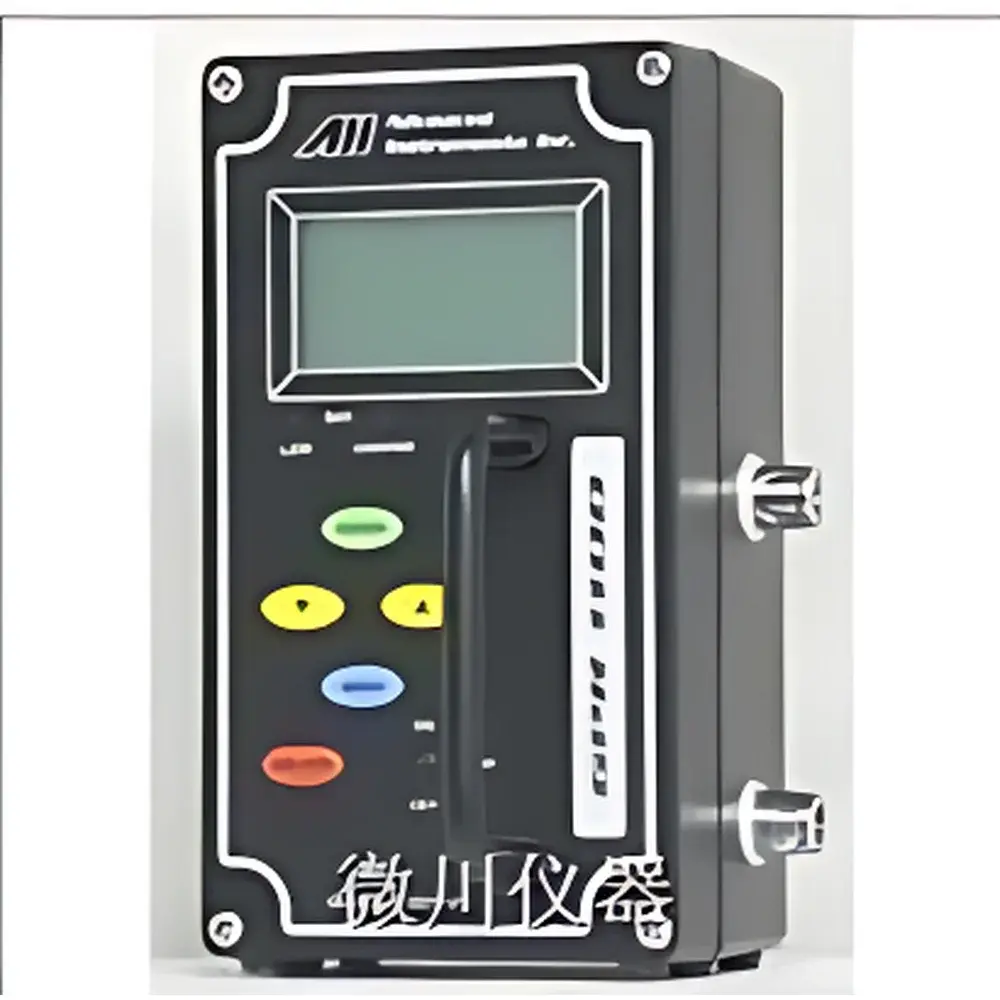
AII GPR-1000 Portable Oxygen Analyzer
| Brand | AII |
|---|---|
| Origin | USA |
| Model | GPR-1000 |
| Measurement Ranges | 0–1000 ppm, 0–1% (10,000 ppm), 0–25% O₂ |
| Accuracy | ±1% of full scale |
| Resolution | 0.01 ppm (in ppm range) |
| Sensor Type | GPR-12-100-M electrochemical cell |
| Sensor Lifetime | 24 months at 25°C with average O₂ < 1000 ppm |
| Response Time (t₉₀) | 10 s |
| Recovery Time to 100 ppm after air exposure | 10 min in N₂ |
| Operating Temperature | 5–45°C |
| Sample Pressure | 5–30 psig inlet, vented to atmosphere |
| Flow Rate | 0.25–2.5 L/min |
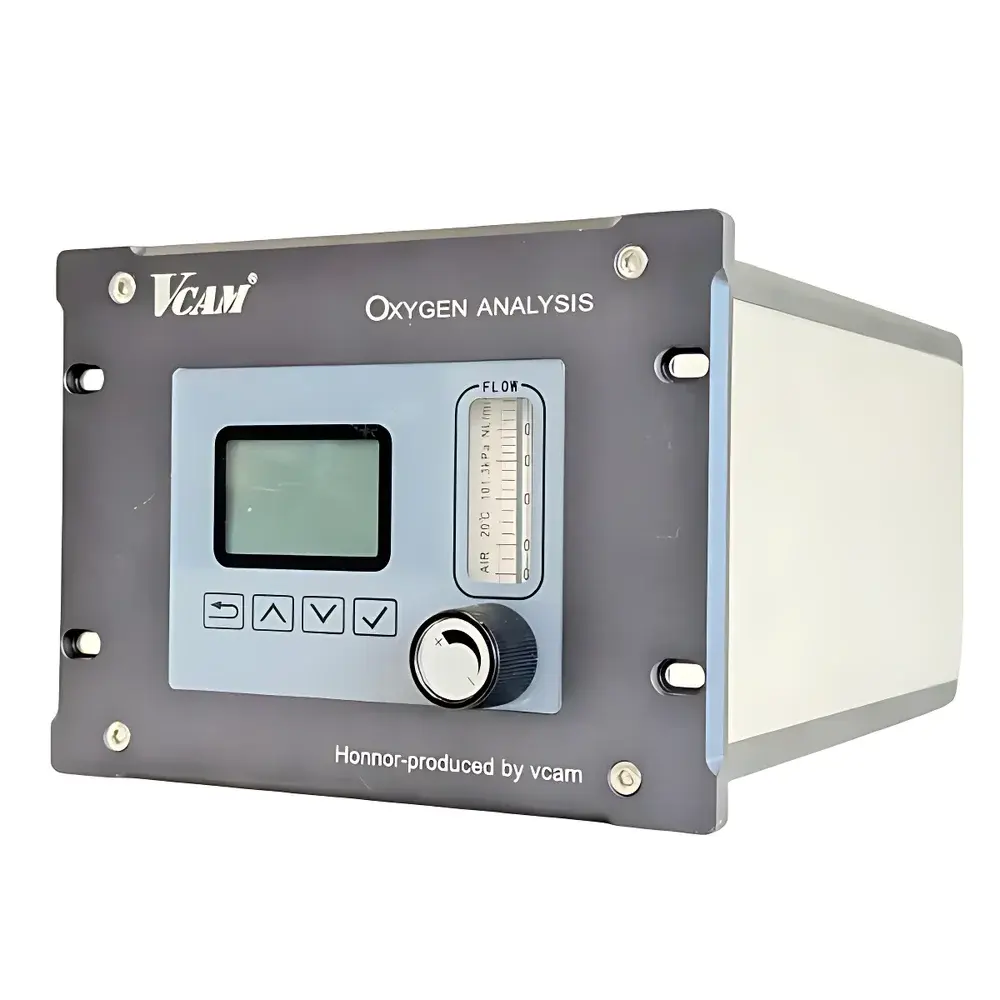
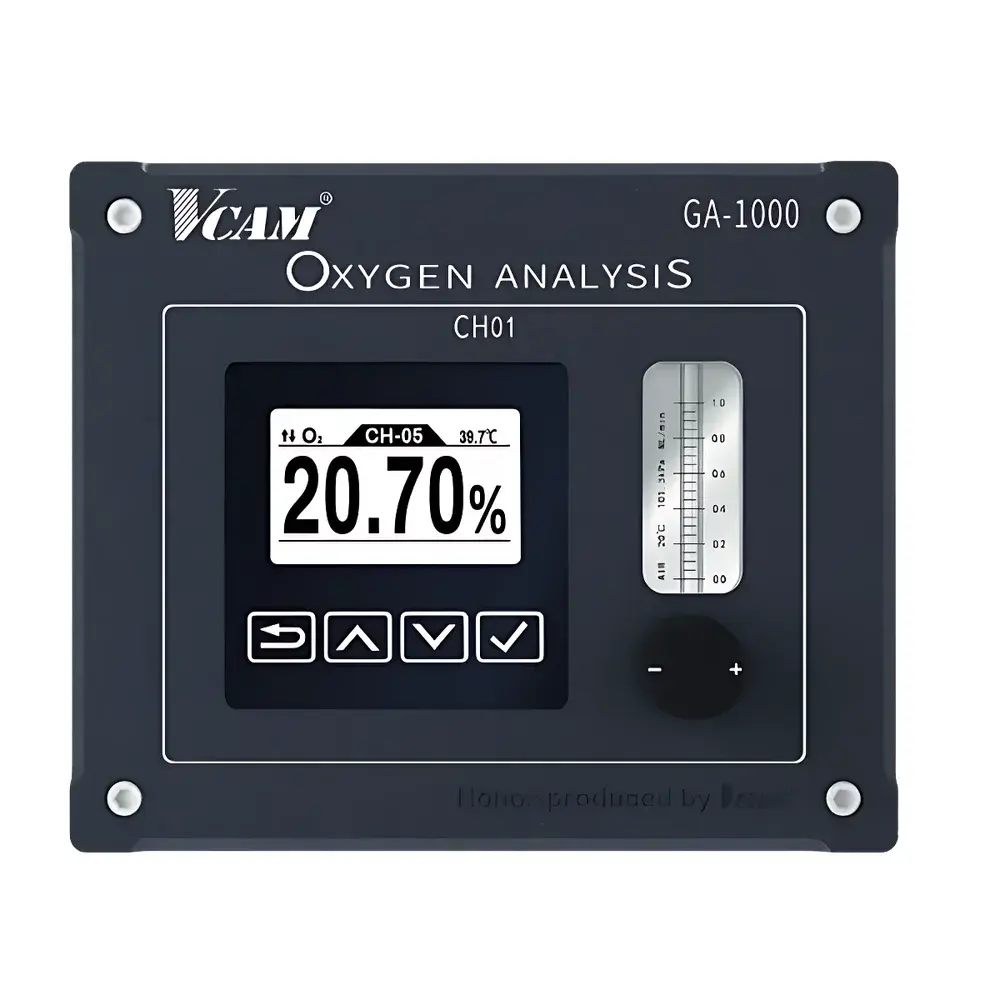
| Display | 2.75″ × 1.375″ monochrome LCD |
| Enclosure Rating | NEMA 4X |
| Dimensions | 4″ × 9″ × 3″ |
| Weight | 8 lbs |
| Power | Rechargeable battery (60-day standby life) |
| Output Signal | 0–1 V analog |
| Temperature Compensation | Built-in |
| Calibration | Ambient air or certified gas ≥80% of selected span |
| Certifications | Intrinsically safe or explosion-proof rated (per applicable Class I Div 1/Zone 1 requirements) |
| Wetted Materials | 316 stainless steel |
| Optional Accessories | Integrated sampling pump, carrying case, inlet particulate filter, on/off switch module |
Overview
The AII GPR-1000 Portable Oxygen Analyzer is an intrinsically safe, field-deployable electrochemical analyzer engineered for high-reliability trace-to-percent-level oxygen measurement in industrial process environments. Utilizing a proprietary long-life GPR-12-100-M electrochemical sensor, the instrument delivers stable, drift-minimized performance across three user-selectable ranges: 0–1000 ppm, 0–1% (10,000 ppm), and 0–25% O₂. Its measurement principle relies on diffusion-limited amperometric detection—where oxygen molecules permeate a selective membrane and undergo a controlled redox reaction at the working electrode, generating a current linearly proportional to partial pressure. This architecture ensures robustness against humidity fluctuations, moderate CO₂ interference, and transient pressure variations typical in compressed gas lines, purge verification, inerting validation, and weld purge monitoring. Designed for operation in non-hazardous and classified areas (certified for Class I, Division 1 or Zone 1 per regional regulatory frameworks), the GPR-1000 meets the functional safety expectations of QA/QC technicians, EHS officers, and maintenance engineers performing spot checks, commissioning verifications, and periodic compliance audits.
Key Features
- Triple-range capability with manual span selection via front-panel rotary switch — enabling seamless transition from ultra-trace (<100 ppm) welding purge validation to ambient air verification (20.9% O₂)
- NEMA 4X-rated enclosure (4″ × 9″ × 3″, 8 lbs) with IP66-equivalent ingress protection — suitable for outdoor, washdown, and dusty plant-floor deployment
- High-resolution 0.01 ppm display resolution in the 0–1000 ppm range, supporting ISO 8573-3 purity class certification for compressed gases
- Temperature-compensated analog output (0–1 V) referenced to measured sample temperature and pressure — facilitates integration with DCS/SCADA systems without external signal conditioning
- Rechargeable lithium-based battery providing >60 days of standby life and continuous operation exceeding 8 hours per charge
- Self-diagnostic firmware with LED indicators for low-battery and charging status — no hidden consumables or scheduled recalibration intervals beyond user-defined verification
- Minimal flow sensitivity (0.25–2.5 L/min) — compatible with both pressurized sample loops and passive diffusion sampling configurations
Sample Compatibility & Compliance
The GPR-1000 interfaces directly with gas streams via a 1/8″ Swagelok®-compatible quick-connect fitting. All wetted surfaces—including sample chamber, diffusion barrier, and internal flow path—are constructed from electropolished 316 stainless steel, ensuring compatibility with inert gases (Ar, N₂, He), reducing atmospheres (H₂/N₂ blends), and mildly corrosive process streams (e.g., CO₂-rich biogas after conditioning). It complies with ASTM D6299 (standard practice for laboratory quality control) and supports GLP/GMP traceability through documented calibration using NIST-traceable standard gases. While not FDA 21 CFR Part 11–compliant out-of-the-box (lacking electronic audit trail), its calibration log—recorded manually per SOP—meets ISO/IEC 17025 documentation requirements for accredited testing laboratories. The unit satisfies ATEX, IECEx, and UL 913 criteria for use in potentially explosive atmospheres when configured with appropriate certification options.
Software & Data Management
The GPR-1000 operates as a standalone, microprocessor-controlled instrument with no embedded operating system or remote connectivity. All configuration, calibration, and diagnostic functions are executed locally via tactile waterproof membrane keys and real-time LCD feedback. While it does not support Bluetooth, USB, or Ethernet interfaces, its 0–1 V analog output enables connection to third-party data loggers (e.g., Campbell Scientific CR1000X, Omega OM-DAQPRO-5300) for time-stamped trend capture. Users may archive calibration events, zero/span adjustments, and environmental readings (temperature, pressure) in accordance with internal QA protocols. Firmware updates—distributed annually by AII upon request—require physical connection to a service laptop using proprietary configuration utility software (Windows only, provided under NDA).
Applications
- Welding purge gas monitoring (TIG, orbital pipe welding) to verify O₂ < 50 ppm prior to arc initiation
- Inert gas blanketing validation in pharmaceutical reactors, solvent storage tanks, and food packaging lines
- Leak detection in nitrogen-purged enclosures and gloveboxes (detecting air ingress down to 100 ppm)
- Quality assurance of high-purity argon and helium used in semiconductor fabrication and analytical instrumentation
- Field verification of oxygen scavenger performance in modified-atmosphere packaging (MAP) systems
- Commissioning and troubleshooting of PSA/VSA nitrogen generators and membrane oxygen separators
FAQ
What calibration gases are recommended for routine verification?
Ambient air (20.9% O₂) is acceptable for the 0–25% range; for trace-level accuracy, certified NIST-traceable standards at 500 ppm or 1000 ppm in nitrogen are advised — always selected at ≥80% of the active measurement span.
Can the GPR-1000 measure oxygen in hydrogen-rich environments?
Yes — the GPR-12-100-M sensor exhibits minimal cross-sensitivity to H₂ below 5% v/v; however, sustained exposure to >10% H₂ may accelerate electrolyte depletion and require more frequent sensor replacement.
Is temperature and pressure compensation automatic?
Yes — internal thermistor and piezoresistive pressure transducer feed real-time corrections into the signal processing algorithm, eliminating manual correction factors during field use.
Does the instrument include a built-in sample pump?
Not standard — the base model relies on external pressure differential or customer-supplied pumping. An optional integrated diaphragm pump module is available for low-flow or vacuum-draw applications.
How is sensor lifetime defined and validated?
Rated for 24 months under continuous operation at ≤1000 ppm O₂ and 25°C; lifetime decreases logarithmically with increasing partial pressure and temperature — documented via AII’s accelerated aging test reports (available upon request).