
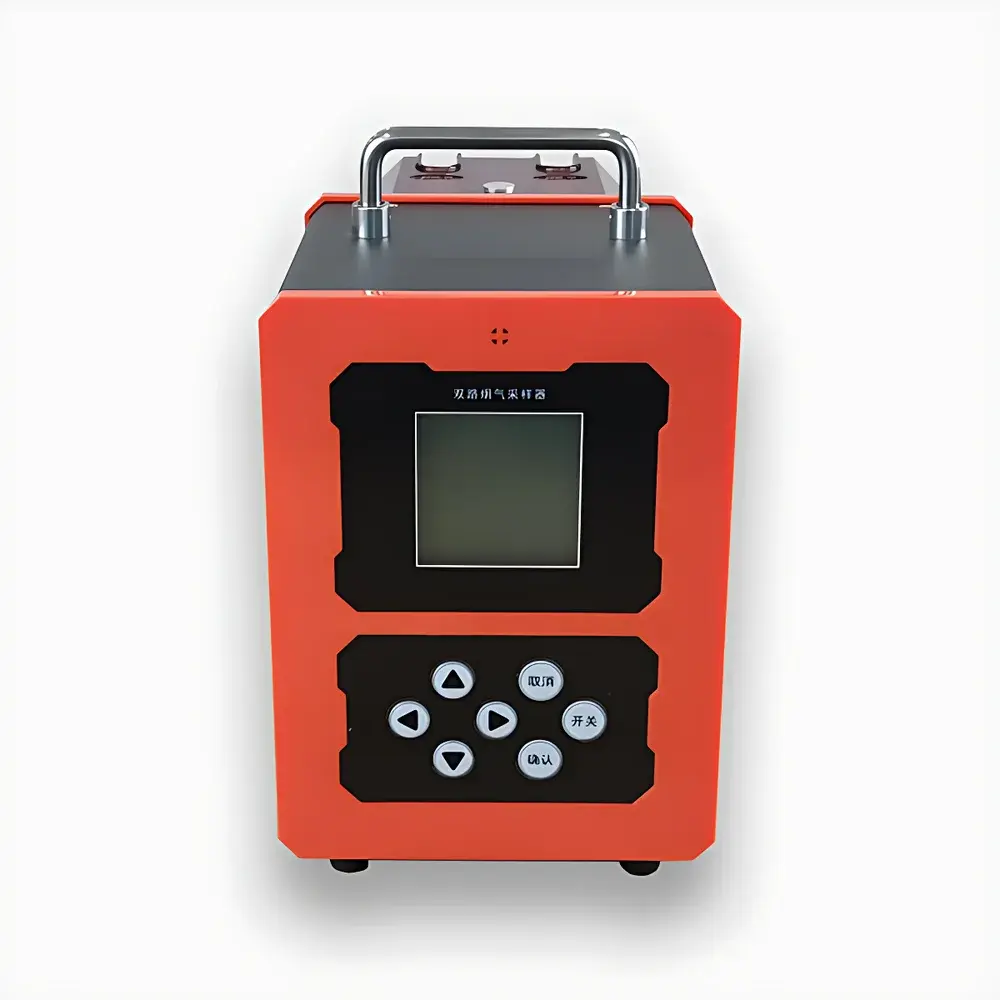
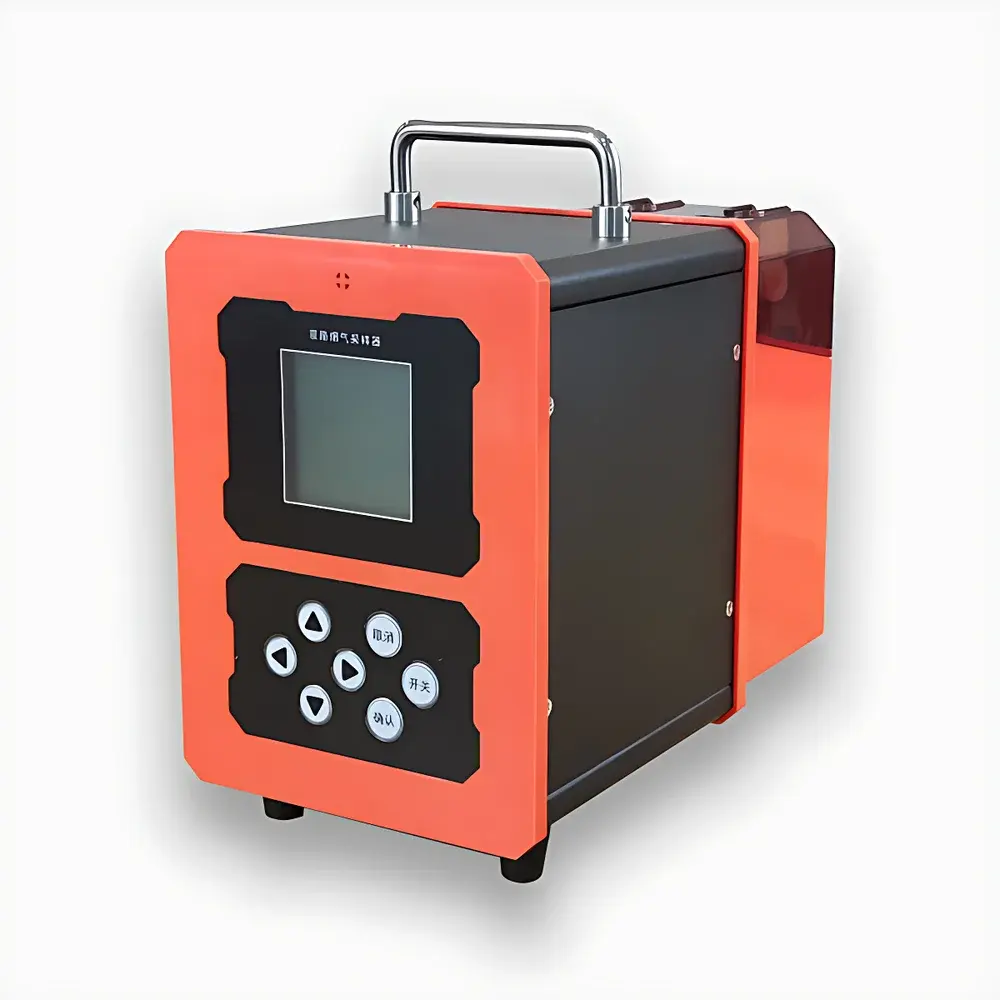
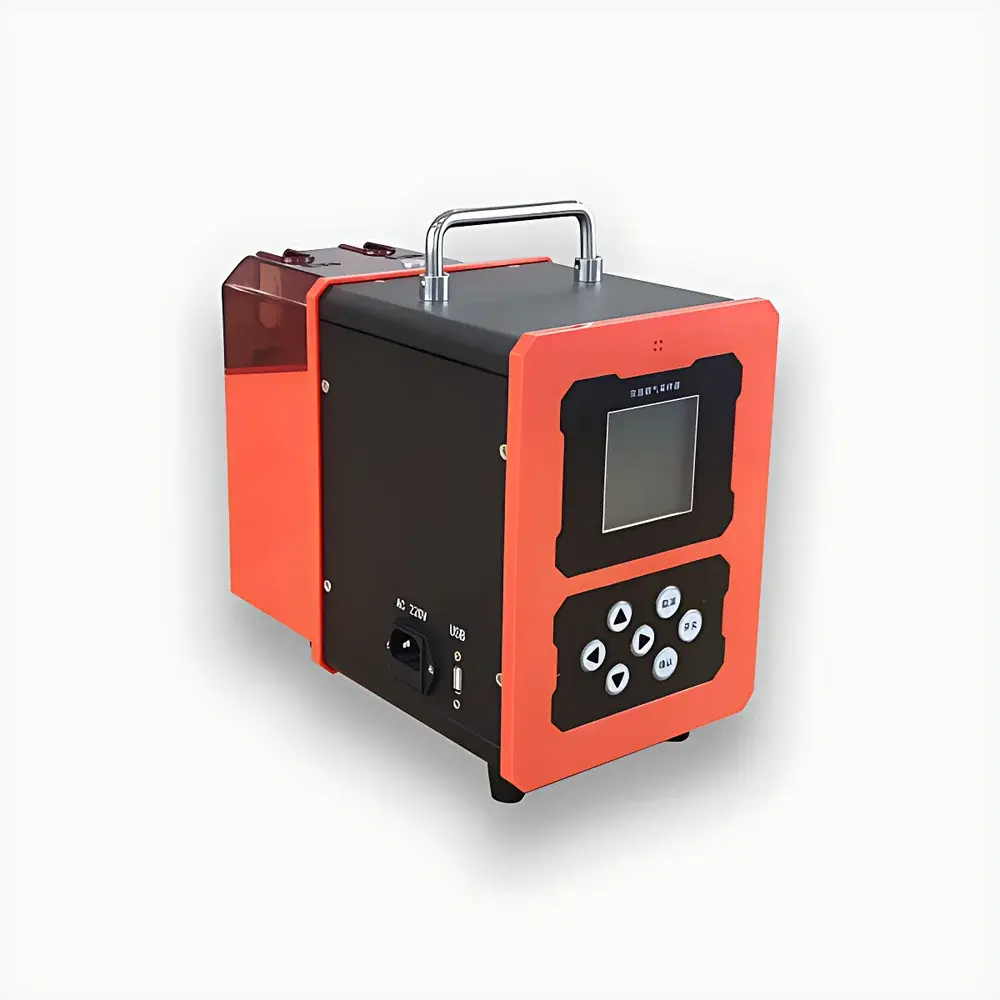
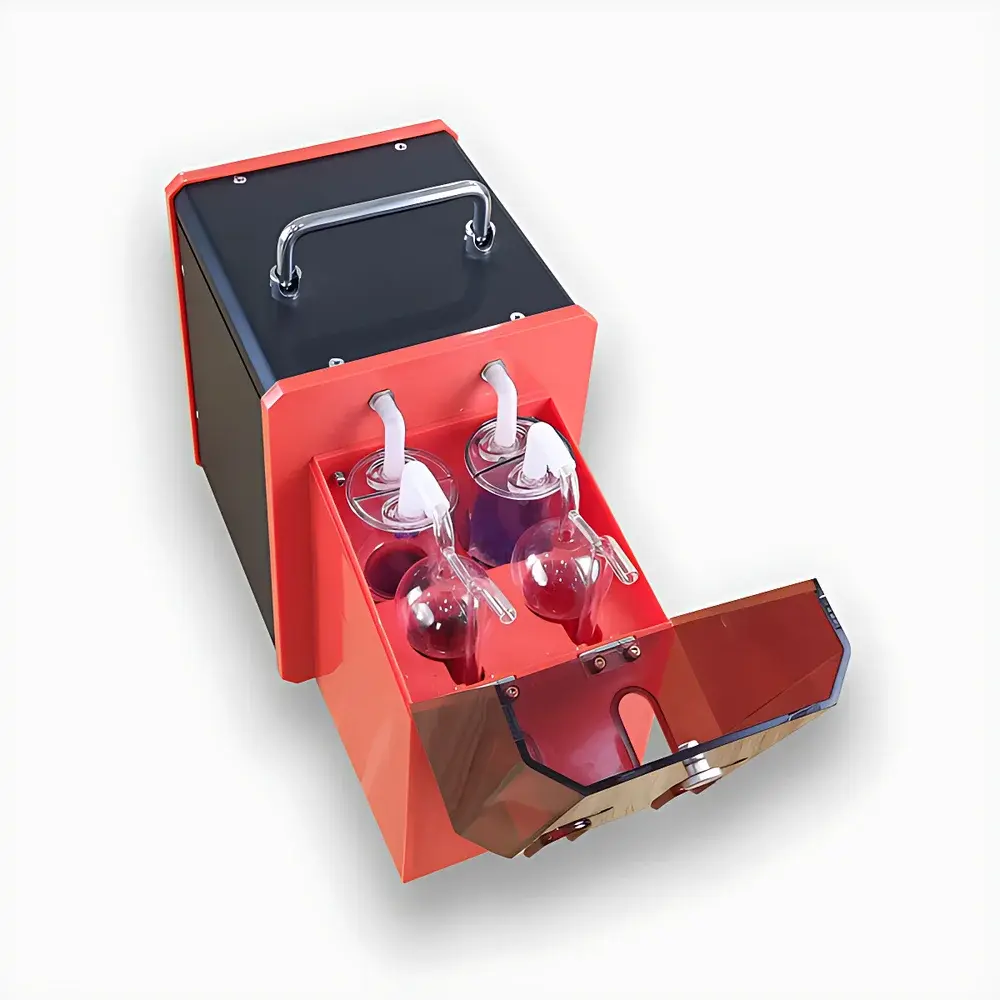
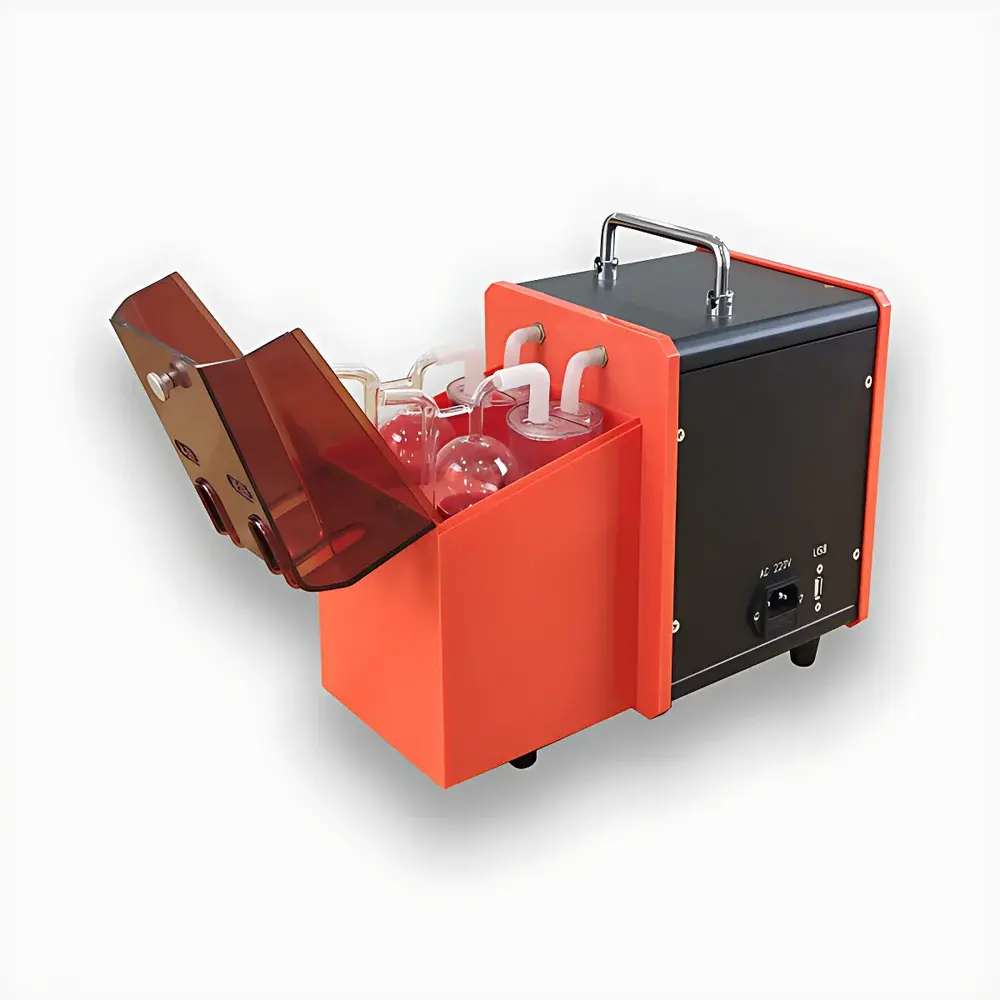
Ailun AL-2051 Dual-Channel Flue Gas Sampler
| Brand | Ailun General / Qingdao Ailun |
|---|---|
| Origin | Shandong, China |
| Model | AL-2051 |
| Sampling Flow Rate | 0.2–1.5 L/min |
| Flow Accuracy | ±0.1% (full scale) |
| Power Supply | AC 220 V ±10%, 50 Hz |
| Continuous Operation Time | >15 h |
| Operating Temperature | −20 to +45 °C |
| Operating Humidity | 0–95% RH |
| Dimensions | 240 × 180 × 240 mm |
| Weight | ~2 kg |
| Compliance | HJ/T 47–1999 |
Overview
The Ailun AL-2051 Dual-Channel Flue Gas Sampler is an engineered field instrument designed for regulatory-compliant sampling of flue gas emissions from industrial combustion sources—including coal-fired boilers, industrial furnaces, kilns, and waste incinerators. It operates on the principle of solution absorption, drawing gaseous effluents through impingers or bubblers containing absorbent reagents (e.g., potassium hydroxide for SO2, acidic potassium permanganate for NOx) to quantitatively retain target analytes for subsequent laboratory analysis (e.g., spectrophotometry, ion chromatography). The sampler meets the structural, metrological, and functional requirements specified in HJ/T 47–1999, China’s national technical specification for flue gas samplers, and incorporates design enhancements in flow stability, portability, and operational autonomy to reduce manual intervention during extended field campaigns.
Key Features
- Dual independent sampling channels—each with dedicated electronic mass flow control—enabling simultaneous collection of parallel samples, co-sampling of two distinct gas species (e.g., SO2 and NO), or flexible deployment as a single-channel atmospheric sampler;
- Microprocessor-controlled thermal-mass flow sensors with real-time compensation for pressure, temperature, and system resistance drift—ensuring flow accuracy better than ±0.1% FS across ambient conditions (−20 to +45 °C) and variable backpressure;
- High-reliability imported diaphragm pump with chemical-resistant wetted materials (PTFE, EPDM), integrated overcurrent protection, low acoustic emission (<55 dB(A)), and service life exceeding 10,000 operating hours;
- Patented anti-backflow desiccant dryer assembly that prevents absorption solution ingress into the pump head or flow sensor—even during abrupt flow termination or operator error—enhancing system integrity and reducing maintenance frequency;
- Multi-stage particulate filtration using sintered stainless steel pre-filters and hydrophobic PTFE membrane cartridges (cut-off ≥0.3 µm) to protect internal components from ash, soot, and condensable aerosols;
- Integrated environmental monitoring: real-time measurement of pre-meter temperature (±0.5 °C) and pressure (±0.01 kPa), with automatic standard-condition (101.325 kPa, 273.15 K) volume correction per ISO 10780 and EPA Method 5;
- Self-illuminating LCD with auto-adjusting contrast for low-light and sub-zero environments, supporting intuitive menu navigation and status feedback without external lighting;
- Non-volatile memory with power-fail recovery: automatically saves elapsed time, cumulative volume, flow setpoints, and environmental parameters upon AC interruption or battery under-voltage—and resumes sampling at identical conditions upon power restoration;
- Data export via USB 2.0 interface (CSV format) and optional Bluetooth 4.2 connectivity for direct printing to certified thermal receipt printers (e.g., Zebra ZQ520);
Sample Compatibility & Compliance
The AL-2051 is validated for use with standard US EPA and Chinese HJ-series impinger configurations (e.g., midget impingers, Teflon-coated glassware) and compatible with aqueous absorbents including hydrogen peroxide–sodium hydroxide (for SO2), sulfamic acid–potassium permanganate (for NOx), and sodium tetrachloromercurate (for Hg0). Its dual-channel architecture supports method-defined parallel sampling protocols required under HJ 57–2017 (SO2 determination) and HJ 482–2009 (NOx determination). All firmware logic and data logging routines comply with GLP traceability requirements: timestamps, operator IDs (via optional RFID badge integration), and audit trails are embedded in exported datasets. The device is CE-marked for electromagnetic compatibility (EN 61326-1) and carries a factory calibration certificate traceable to NIM (National Institute of Metrology, China).
Software & Data Management
No proprietary software installation is required. Sample metadata—including start/stop time, flow profiles, temperature/pressure logs, and corrected standard-volume totals—is stored in a human-readable CSV file structure compliant with LIMS ingestion standards (e.g., ASTM E1469, ISO/IEC 17025 Annex A.2). Each record contains a unique session ID, firmware version, and calibration expiration date. For laboratories operating under FDA 21 CFR Part 11, optional firmware upgrade enables digital signature authentication and electronic audit trail generation (user login, parameter changes, data export events) with SHA-256 hashing and encrypted local storage. Data integrity is further reinforced by write-once memory partitioning: raw sensor outputs cannot be modified post-acquisition.
Applications
- Stack emission testing for SO2, NOx, HCl, HF, NH3, and mercury speciation in compliance with GB 13223–2011 and EU IED (2010/75/EU);
- Performance evaluation of flue gas desulfurization (FGD) and selective catalytic reduction (SCR) systems via inlet/outlet concentration differentials;
- Source apportionment studies requiring synchronized multi-point sampling across boiler banks or process lines;
- Field validation of continuous emission monitoring systems (CEMS) per HJ 75–2017 QA/QC protocols;
- Educational demonstrations of gas-phase reaction kinetics and absorption efficiency modeling in environmental engineering labs;
FAQ
Does the AL-2051 support isokinetic sampling?
No—it is designed for non-isokinetic grab sampling per HJ/T 47–1999. Isokinetic probes require separate pitot tube assemblies and velocity profiling modules not integrated into this platform.
Can the instrument operate unattended for 24-hour cycles?
Yes—when powered by the internal 10 Ah lithium battery and configured with programmable delay/start and interval sampling (up to 99 cycles), it supports fully autonomous operation exceeding 15 hours continuously.
What calibration standards are used for flow verification?
Factory calibration employs NIST-traceable primary piston provers (±0.05% uncertainty) and secondary rotameters calibrated against ISO 6145–2 gravimetric gas mixtures; users may perform field verification using bubble meters or dry calibrators meeting ISO 4064 Class B accuracy.
Is the firmware upgradable in the field?
Yes—via USB-mounted firmware image (.bin file) with built-in checksum validation; no JTAG or serial bootloader access is required.
How is moisture managed during high-humidity flue gas sampling?
The integrated desiccant dryer uses silica gel with color-indicating regeneration endpoint, coupled with a hydrophobic membrane filter upstream of the flow sensor—effectively removing bulk water vapor while preserving soluble gas integrity for absorption-based analysis.
Related Products







