
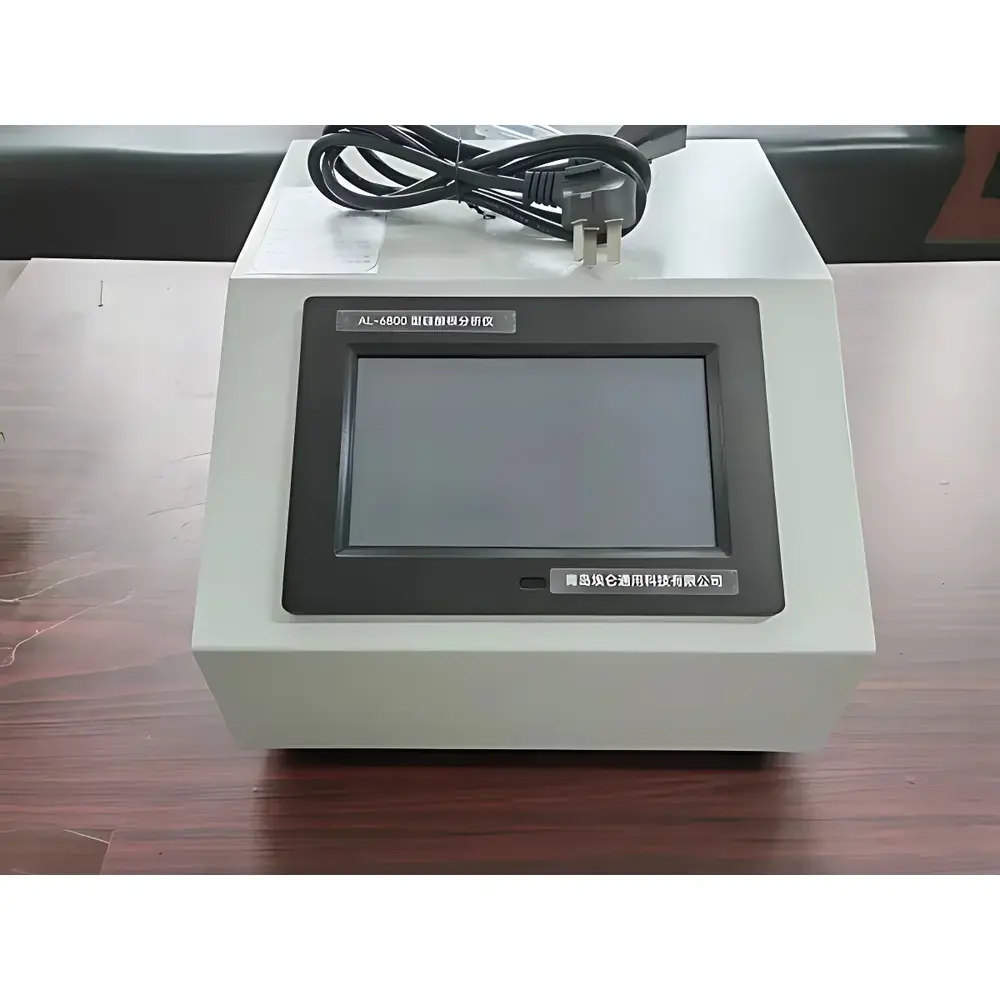
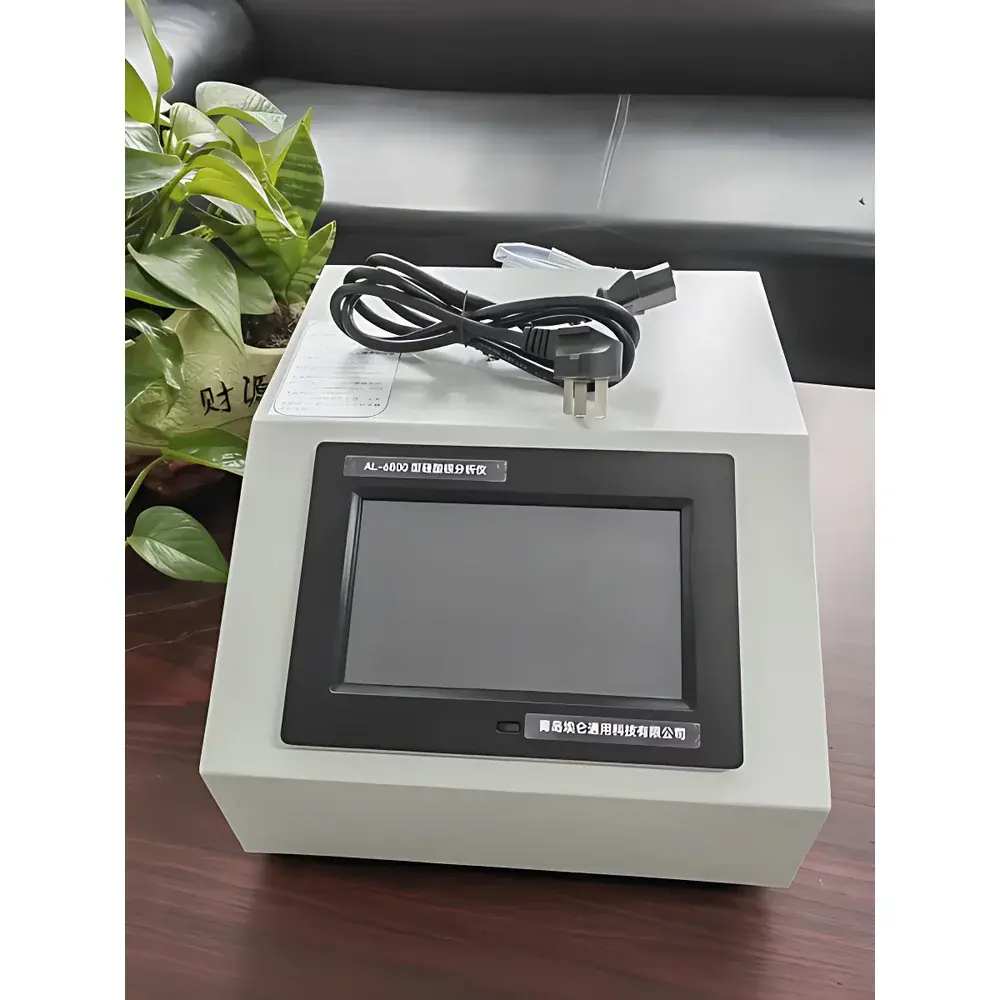
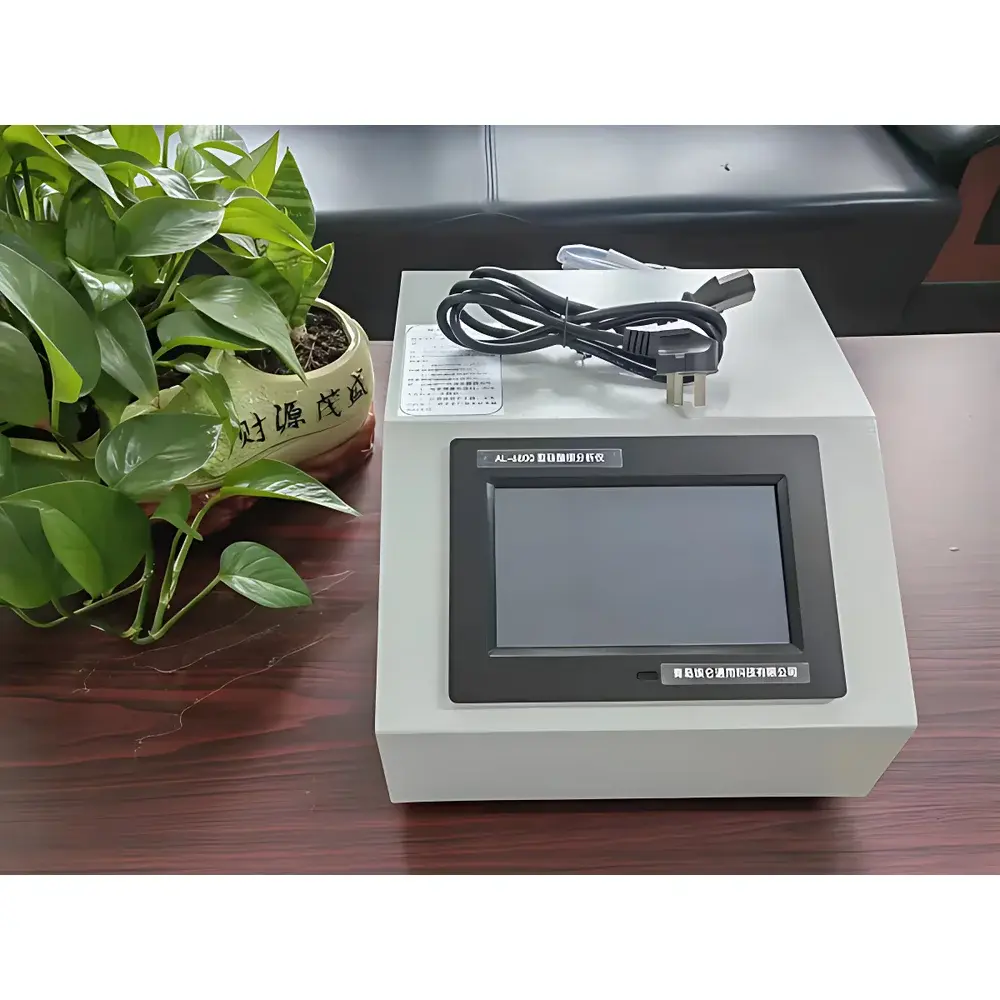
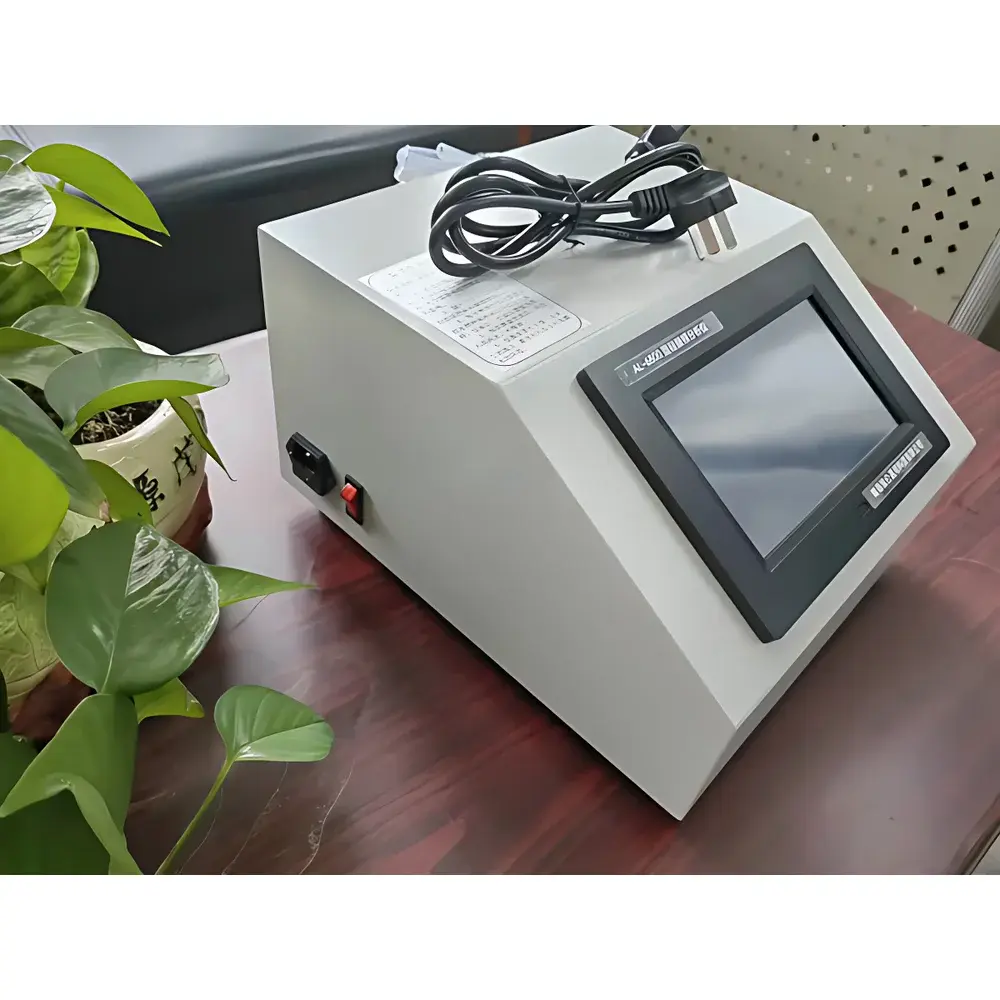
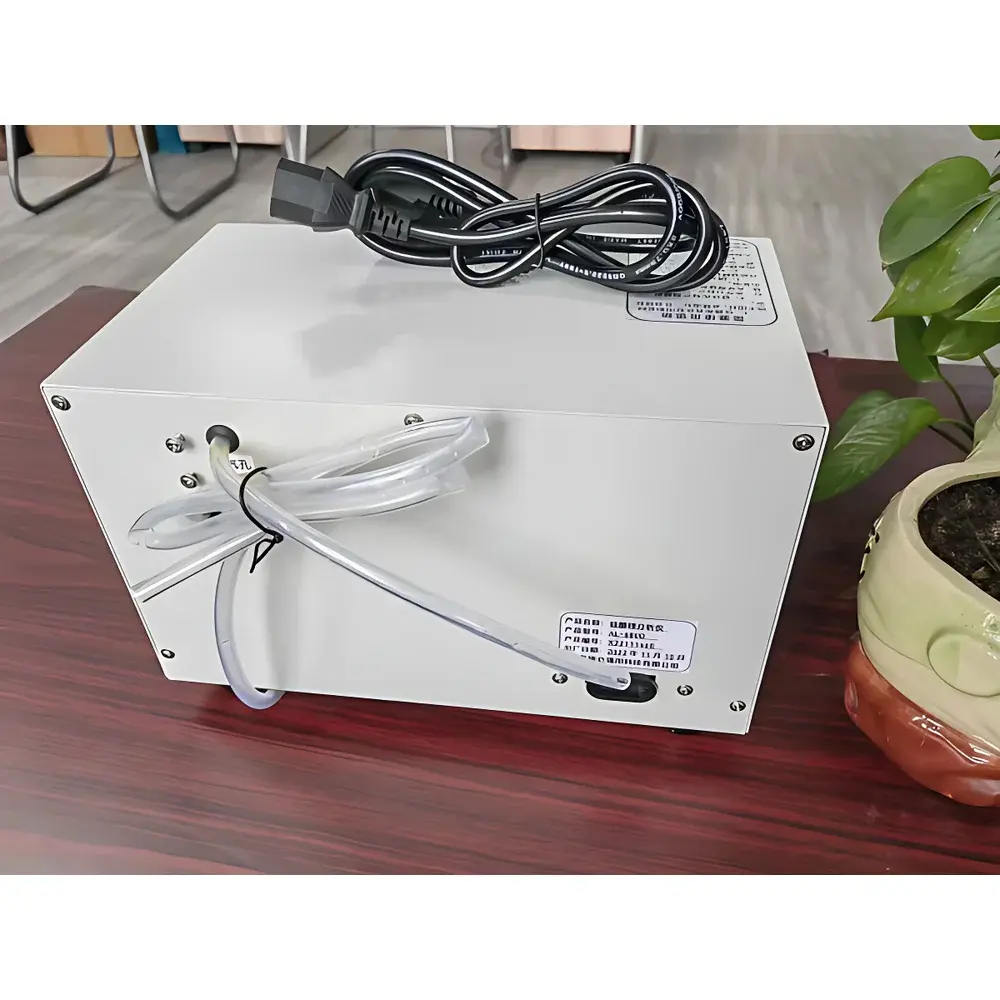
Ailun AL-6800 Silicate Analyzer
| Brand | Ailun |
|---|---|
| Origin | Shandong, China |
| Model | AL-6800 |
| Measurement Range | 0–200 µg/L (standard), 0–2000 µg/L (extended) |
| Accuracy | ±2% F.S. |
| Resolution | 0.1 µg/L |
| Repeatability | ≤1.5% |
| Stability | ±1.5% F.S. / 4 h |
| Display | 7.0-inch color TFT touchscreen |
| Power Supply | 85–265 VAC, 45–65 Hz |
| Power Consumption | 30 W |
| Dimensions (L×W×H) | 280 × 310 × 180 mm |
| Weight | 5 kg |
| Enclosure | Stainless steel, IP65-rated housing |
| Compliance | Designed for ISO/IEC 17025-aligned laboratory environments, supports GLP data integrity requirements |
Overview
The Ailun AL-6800 Silicate Analyzer is a benchtop photometric analyzer engineered for precise quantification of soluble silicate (SiO2 as SiO2) in ultra-pure and process water streams. It operates on the molybdenum blue spectrophotometric principle—where silicate ions react with ammonium molybdate under acidic conditions to form a heteropoly acid, subsequently reduced to an intensely colored molybdenum blue complex measurable at 815 nm. This method conforms to established reference protocols including ASTM D859 and ISO 15306 for silicate determination in boiler feedwater, condensate, and demineralized water. The instrument integrates a temperature-stabilized, high-intensity monochromatic cold light source (LED-based, 815 nm peak emission), ensuring minimal thermal drift and long-term photometric stability—critical for trace-level (<10 µg/L) detection in high-pressure steam cycles.
Key Features
- Stainless steel enclosure (IP65-rated) with corrosion-resistant surface finish—suitable for industrial lab and plant-floor deployment near cooling towers or turbine halls.
- 7.0-inch capacitive touchscreen with 16-bit true-color display and intuitive icon-driven interface—designed for glove-compatible operation and rapid method navigation.
- Dual calibration modes: blank calibration (zero-point offset correction) and multi-point curve calibration (up to 6 standards) to maintain linearity across both standard (0–200 µg/L) and extended (0–2000 µg/L) ranges.
- Integrated reagent timing control: programmable dosing delay and reaction incubation intervals ensure consistent color development kinetics per ASTM D859 Section 8.2.
- Onboard baseline compensation algorithm corrects for matrix interferences from residual phosphate, iron, or turbidity—minimizing false positives in mixed-anion samples.
- Non-volatile memory stores ≥10,000 measurement records with timestamps, operator IDs, calibration logs, and QC check results—fully traceable per GLP documentation requirements.
- Low-power architecture (30 W max) enables continuous 24/7 operation without active cooling; ambient operating range: 0–60 °C, ≤90% RH (non-condensing).
Sample Compatibility & Compliance
The AL-6800 accepts aqueous samples with pH 4.0–9.0 and total suspended solids <5 mg/L. It is validated for use with deionized water, reverse osmosis permeate, condensate return, and drummed reagent-grade water. Sample introduction is via gravity-fed flow into a precision-machined quartz cuvette (10-mm pathlength), eliminating pump-induced pulsation errors. The analyzer complies with mechanical safety standards IEC 61010-1 and electromagnetic compatibility per EN 61326-1. While not FDA 21 CFR Part 11–certified out-of-box, its audit trail functionality (with user authentication, electronic signatures, and immutable log export via USB) supports validation for GMP-regulated utilities where silicate monitoring is critical to turbine blade deposition control.
Software & Data Management
Data output is available in CSV format via USB 2.0 port; no proprietary software required. Each record includes sample ID, date/time stamp, measured concentration (µg/L), calibration status flag, operator code, and raw absorbance value at 815 nm. Internal clock is battery-backed for uninterrupted time-stamping during power interruptions. Firmware supports over-the-air updates via USB drive—no PC connection needed. All calibration curves are digitally signed and version-locked to prevent unauthorized modification. Audit logs retain full history of parameter changes, calibration events, and error codes for regulatory review.
Applications
- Power generation: real-time monitoring of silicate in boiler feedwater and steam condensate to prevent silica scaling on superheater tubes and turbine blades (per EPRI TR-102098 guidelines).
- Petrochemical refining: verification of silica removal efficiency in amine treaters and desalting units prior to crude unit charging.
- Pulp & paper: control of silicate carryover in white water circuits affecting filler retention and paper strength.
- Pharmaceutical water systems: periodic verification of silica compliance in Purified Water (PW) and Water for Injection (WFI) per USP conductivity-silica correlation thresholds.
- Microelectronics: incoming inspection of ultrapure water (UPW) used in wafer rinsing—silica >10 µg/L risks particle nucleation on device surfaces.
FAQ
What is the detection limit for silicate using the AL-6800?
The practical limit of quantitation (LOQ) is 1.0 µg/L under optimized conditions (fresh reagents, clean cuvettes, calibrated standards), based on signal-to-noise ratio ≥10:1 at 815 nm.
Can the AL-6800 measure orthosilicic acid and polymeric silica separately?
No—it measures total reactive silica (orthosilicic acid + monomeric silicates) via the molybdenum blue reaction. Polymeric or colloidal silica requires acid hydrolysis pretreatment prior to analysis.
Is the instrument compatible with third-party LIMS integration?
Yes—CSV exports contain structured fields (e.g., “SAMPLE_ID”, “CONC_UG_L”, “CALIB_DATE”) that map directly to common LIMS ingestion templates; no middleware required.
How often must the optical path be cleaned?
Cuvette cleaning is recommended after every 50 analyses or when absorbance baseline drift exceeds ±0.005 AU—verified via built-in dark-current diagnostic.
Does the AL-6800 support automatic dilution for out-of-range samples?
No—manual dilution is required for samples exceeding 2000 µg/L; however, the instrument’s dual-range capability eliminates need for hardware switching between low- and high-concentration modes.







