
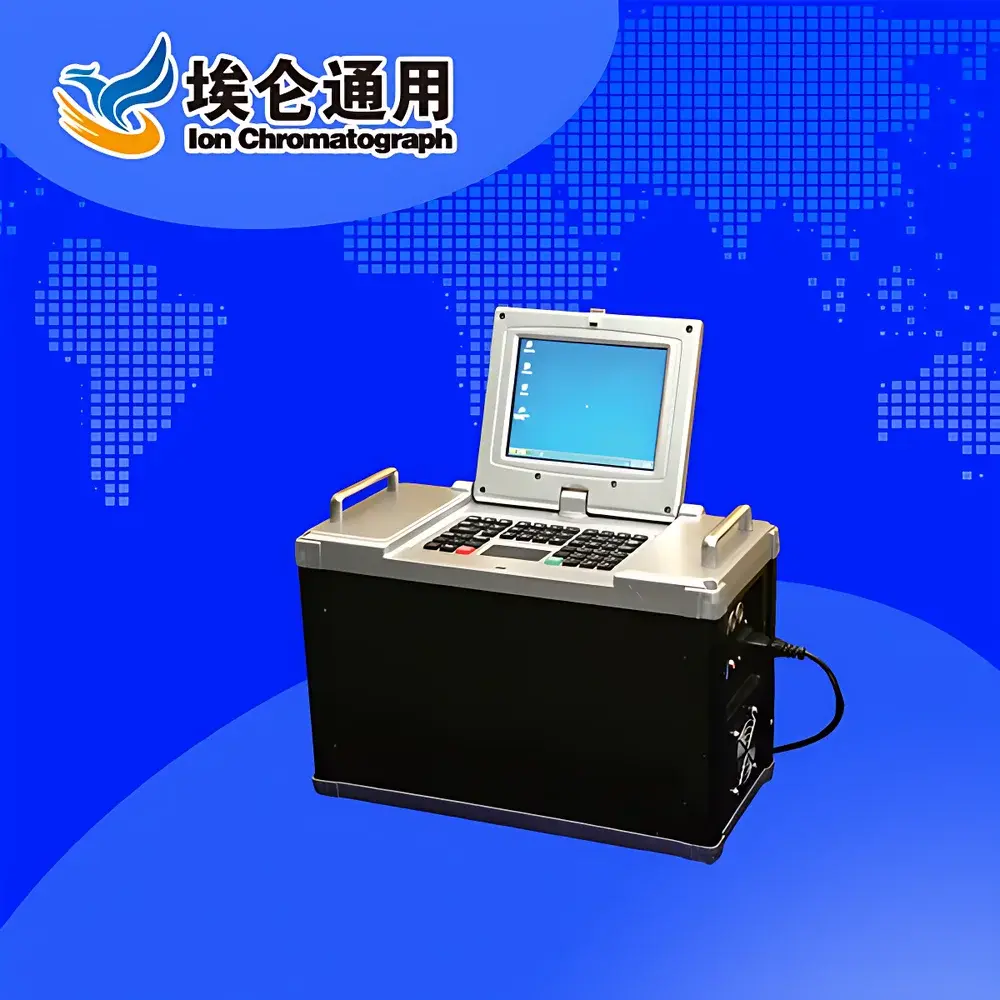
Ailun HB6040 UV Absorption Flue Gas Monitoring System
| Brand | Ailun General / Qingdao Ailun |
|---|---|
| Origin | Shandong, China |
| Manufacturer Type | Authorized Distributor |
| Country of Origin | China |
| Model | HB6040 |
| Price Range | USD 14,000–42,000 (FOB) |
| Instrument Type | In-situ UV Absorption Flue Gas Analyzer |
| Measured Gases | SO₂, NO, NO₂, CO, CS₂, H₂S, NH₃ |
| Flow Accuracy | ≤ ±2 % FS |
| Sampling Flow Rate | 0.5–1.5 L/min |
| Flue Gas Velocity Range | 5–30 m/s |
| Moisture Content Measurement Range | 0.1–40.0 % v/v |
Overview
The Ailun HB6040 UV Absorption Flue Gas Monitoring System is an in-situ, differential optical absorption spectroscopy (DOAS)-based analyzer engineered for high-accuracy, real-time quantification of key combustion-related gases—including SO₂, NO, NO₂, NH₃, H₂S, CS₂, and CO—in hot, humid, and particulate-laden flue gas streams. Unlike electrochemical or NDIR-based analyzers, the HB6040 employs fixed-wavelength ultraviolet light path absorption with spectral deconvolution algorithms to resolve overlapping absorption bands, eliminating cross-sensitivity between target species—particularly critical for low-concentration NH₃ slip and ultra-low SO₂/NOₓ emissions monitoring in post-SCR/FGD stacks. The system operates via heated probe insertion directly into the duct, maintaining sample integrity through full-path thermal conditioning (≥180 °C), thereby preventing condensation-induced spectral distortion and aqueous-phase interference on SO₂, NO₂, and NH₃ absorption features at 190–220 nm and 270–300 nm ranges. Designed for compliance-grade operation, it supports continuous emission monitoring system (CEMS) validation, performance testing, and process optimization under ISO 12039, EN 15267, and EPA Method 6C/7E frameworks.
Key Features
- In-situ DOAS measurement with dual-beam UV light source and thermally stabilized detection optics, enabling direct quantification without gas extraction or dilution
- Integrated high-purity alumina ceramic particulate filter (≤5 µm cutoff) upstream of the optical path to minimize soiling and maintain long-term photometric stability
- Heated sampling probe (180 °C nominal) and constant-temperature optical cell ensure complete water vapor phase retention—eliminating liquid water film artifacts that distort UV absorbance for polar gases
- Differential absorption algorithm with spectral baseline correction for SO₂, NO, NO₂, NH₃, H₂S, and CS₂; all calibrated against NIST-traceable standard gas mixtures
- Auto-compensated pressure and temperature correction using integrated Pt100 sensor and absolute pressure transducer (±0.5 kPa)
- Modular flow control with mass-flow-calibrated pump and closed-loop feedback to sustain stable 0.5–1.5 L/min sampling across variable stack backpressure (−10 to +5 kPa)
- Embedded Windows 7 industrial single-board computer with 7-inch resistive touchscreen, real-time absorption curve visualization, and on-device data logging to 60 GB SSD
- Support for dual concentration units (ppm and mg/m³) with automatic stoichiometric conversion; NOₓ reported as NO₂-equivalent per EN 14181
Sample Compatibility & Compliance
The HB6040 is validated for use in flue gas environments with moisture content from 0.1 to 40.0 % v/v, dust loading up to 10 g/m³, and temperatures up to 200 °C (probe-rated). Its robust mechanical design accommodates negative pressures up to −10 kPa via optimized flow recirculation geometry, mitigating suction collapse in high-velocity ducts (5–30 m/s). The system complies with CE marking requirements (EMC Directive 2014/30/EU, Low Voltage Directive 2014/35/EU) and meets functional safety principles aligned with IEC 61508 SIL 2 for continuous operation. Data integrity conforms to GLP audit trails, with timestamped calibration logs, parameter change records, and firmware version tracking—all exportable via USB or Ethernet. Optional cold-dewpoint humidity sensor (per ISO 12141) provides independent moisture verification traceable to national metrology institutes.
Software & Data Management
The HB6040 runs proprietary AilunGas™ v4.x software, a SQL Server Express–backed application supporting multi-user access, role-based permissions, and automated database backup/restore. All raw spectra, processed concentrations, environmental metadata (Tₛ, Pₜ, Qₛₙ ), and diagnostic flags are stored with microsecond timestamps. Software features include: customizable report templates compliant with Chinese HJ 75-2017 and EU EN 14181 QA/QC protocols; manual and auto-zero/span calibration workflows with electronic signature capture; spectral library management for field-deployable gas identification; and CEMS comparison mode for side-by-side validation against reference analyzers. Data export supports CSV, XML, and MODBUS TCP for integration into DCS/SCADA systems. Firmware updates are delivered via signed .bin packages with SHA-256 verification.
Applications
- CEMS performance evaluation and regulatory acceptance testing (e.g., EPA PS-11, HJ 75-2017, EN 14181 Tier 2/3)
- Ammonia slip monitoring downstream of selective catalytic reduction (SCR) systems in coal-fired and waste-to-energy plants
- Post-desulfurization (FGD) and denitrification (SNCR/SCR) efficiency quantification under variable load conditions
- Stack testing for SO₂, NOₓ, CO, and NH₃ emissions reporting per ISO 10849, ISO 12039, and US EPA CFR Title 40 Subpart JJJJ
- Combustion optimization via concurrent O₂, flue gas temperature (Tₛ), static pressure (Pₛ), and velocity (v) measurement
- Long-term unattended monitoring (24/7) in remote boiler houses or cement kiln preheater stacks using scheduled auto-calibration and alarm-triggered data retention
FAQ
Does the HB6040 require daily calibration?
No. Due to its optical stability and built-in zero-reference channel, routine calibration is recommended only every 7–14 days under normal operation; span checks may be performed monthly using certified standard gases.
Can it measure O₂ simultaneously with UV-absorbing gases?
Yes—via optional paramagnetic O₂ module integrated into the same probe housing, providing concurrent O₂ readings traceable to ISO 12039 Annex B.
Is the system suitable for high-dust applications such as cement kilns?
Yes. The sintered alumina filter and self-cleaning optical window design enable reliable operation at dust loadings up to 10 g/m³ without frequent maintenance.
How is moisture interference eliminated for NH₃ and SO₂ measurements?
Through full-path heating (>180 °C) and spectral deconvolution of H₂O’s UV absorption structure—ensuring quantitative separation of NH₃ (200–210 nm) and SO₂ (280–300 nm) bands from water vapor continuum.
What data security and audit trail capabilities does the software provide?
All user actions, calibration events, configuration changes, and error logs are time-stamped, digitally signed, and retained for ≥12 months—fully compliant with FDA 21 CFR Part 11 and EN 14181 data integrity requirements.







