
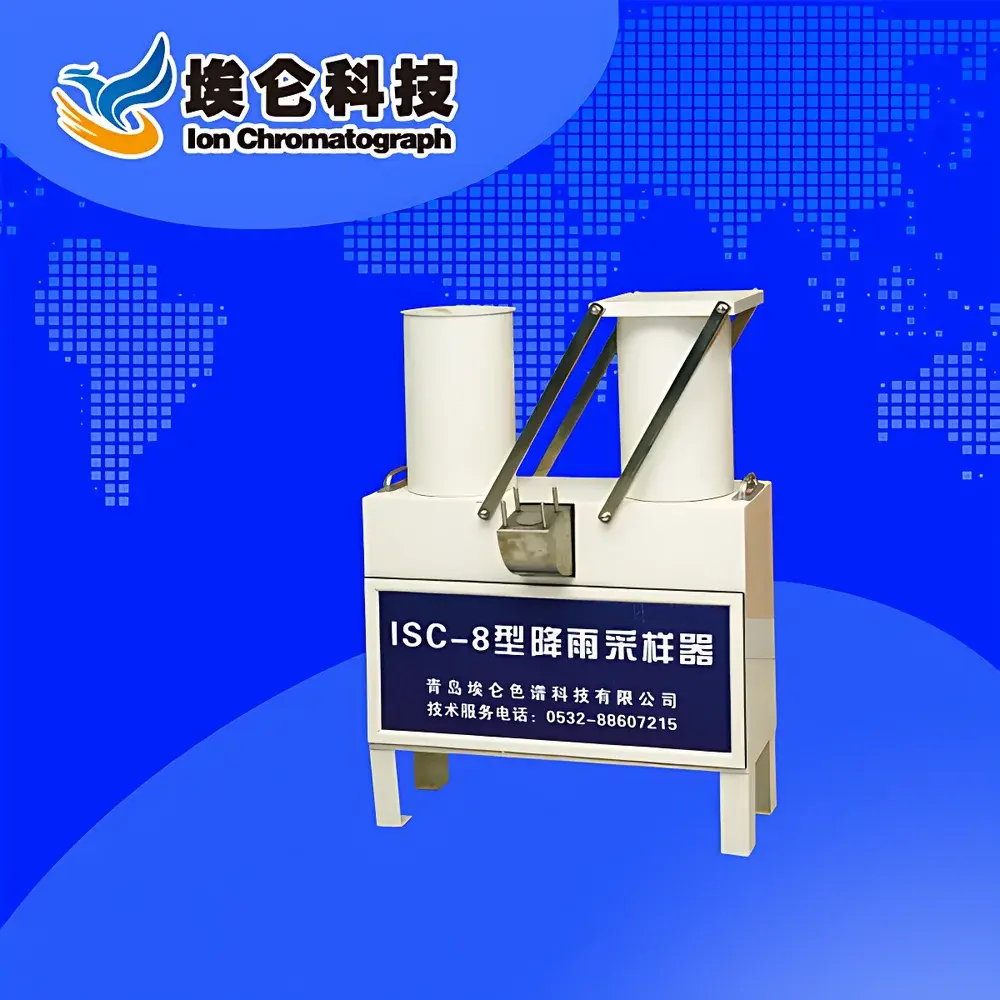
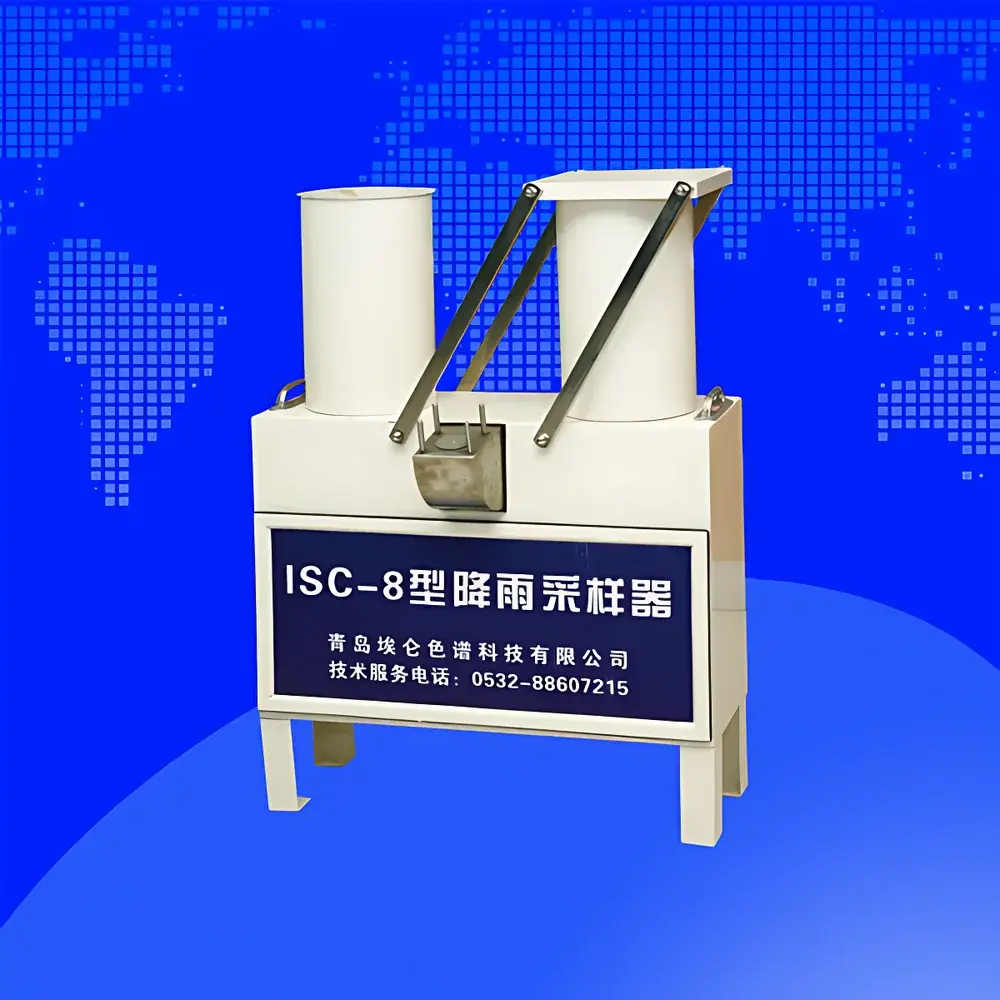
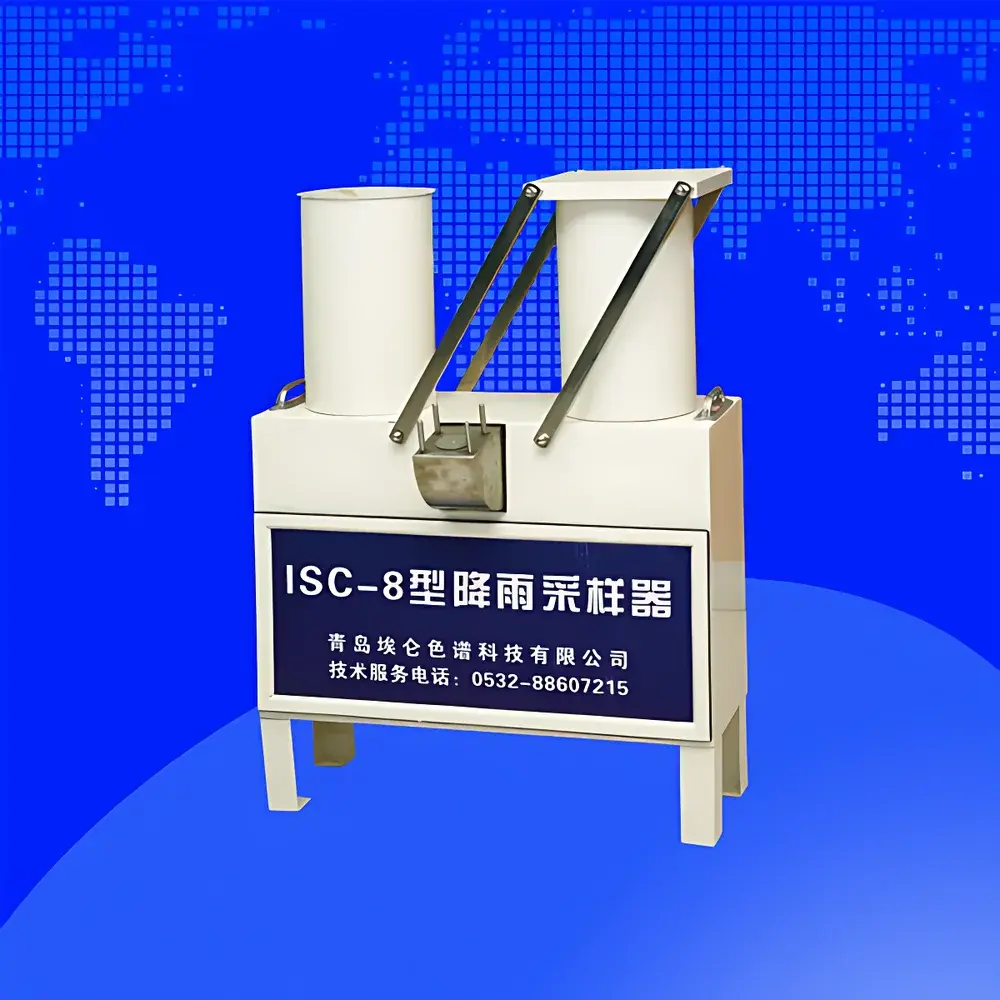
Ailun ISC-8 Automatic Rain and Dry Deposition Sampler
| Brand | Ailun General / Qingdao Ailun |
|---|---|
| Origin | Shandong, China |
| Manufacturer Type | Authorized Distributor |
| Country of Origin | China |
| Model | ISC-8 |
| Instrument Type | Laboratory-Based Automatic Water Sampler |
| Sampling Mode | Quantitative Sampling |
| Single Sample Volume | 9000 mL |
| Sampling Volume Accuracy | ±0.02 mL |
| Sampling Speed | 0.01–15 mm/min |
| Programmable Sampling Interval | Yes |
| Maximum Sampling Depth | ≥1.0 m |
| Collection Funnel Diameter | 200 mm |
| Max Collection Bucket Capacity | 10 L |
| Power Consumption | 40 W |
| Data Storage Capacity | 255 Rain Events (Start/Stop Time + Duration) |
| Lightning Protection | Multi-Stage Integrated Surge Suppression |
| Environmental Operating Range | -20°C to +60°C |
| Housing Material | Stainless Steel with Anti-Contamination Liner |
| Sensor Type | Coupled Pulse Sensor Array (Multi-Point Rain Detection) |
| Microcontroller | Samsung S3C2440A ARM9-based Embedded Processor |
| Power Failure Protection | Non-Volatile Memory Backup |
Overview
The Ailun ISC-8 Automatic Rain and Dry Deposition Sampler is an engineered environmental monitoring instrument designed for unattended, long-term collection of atmospheric precipitation and dry particulate deposition in compliance with standard field sampling protocols. It operates on a rain-triggered activation principle: integrated multi-point coupled pulse sensors detect the onset and cessation of precipitation with high temporal resolution and minimal false triggering under wind-blown mist or dew conditions. Upon detection, the system automatically deploys its stainless-steel collection funnel and opens the sealed sampling path to direct rainfall into a 10 L polyethylene collection bucket lined with an inert anti-contamination barrier layer. Simultaneously, during dry periods, the unit supports passive dry deposition sampling via an open-exposure mode—enabling co-located measurement of wet and dry fluxes within a single deployment footprint. Its embedded ARM9 architecture (Samsung S3C2440A) ensures stable operation across wide ambient temperature ranges (–20 °C to +60 °C), while multi-stage lightning protection circuits meet IEC 61643-11 requirements for outdoor installation in high-risk thunderstorm zones.
Key Features
- Stainless-steel main enclosure with electropolished interior and chemically resistant anti-contamination liner to minimize leaching and adsorption artifacts during sample storage
- Multi-point coupled pulse sensor array providing robust rain detection immunity to vibration, acoustic noise, and non-precipitation moisture events
- Programmable quantitative sampling logic: user-defined volume thresholds (up to 9000 mL per aliquot) with volumetric accuracy of ±0.02 mL per cycle
- Dual-mode operation: automatic rain-triggered wet sampling and time-scheduled dry deposition collection without mechanical reconfiguration
- Non-volatile memory retention supporting up to 255 complete rain event records—including precise start time, stop time, total duration, and cumulative volume
- Integrated power-fail safeguard: real-time clock and sampling metadata preserved during AC interruption; resumes operation without configuration loss
- Low-power design (max 40 W) optimized for solar-battery hybrid deployments in remote monitoring networks
Sample Compatibility & Compliance
The ISC-8 is validated for use in national and regional atmospheric deposition monitoring programs aligned with ISO 10393:2021 (Water quality — Sampling of atmospheric deposition), EPA Method IO-3.3 (Precipitation Sampling), and China’s HJ/T 174–2005 (Technical Specification for Atmospheric Precipitation Monitoring). Its 200 mm diameter collection funnel meets geometric capture area requirements for representative bulk precipitation sampling per ASTM D5905–22. The 10 L capacity bucket accommodates extended event durations typical in monsoonal or persistent frontal systems, while the ≥1.0 m sampling depth capability ensures compatibility with standard meteorological tower mounting configurations. All wetted surfaces comply with USP Class VI and FDA 21 CFR 177.1520 for food-contact-grade polyethylene, minimizing trace metal and organic extractables.
Software & Data Management
Data retrieval occurs via RS-232 serial interface or optional USB-to-serial adapter, supporting ASCII-formatted output compatible with common environmental data management platforms (e.g., EPANET-compatible loggers, QGIS-integrated ingestion tools). The onboard firmware implements timestamped logging with millisecond-resolution internal clock synchronization. Audit trail functionality includes automatic recording of system status transitions (e.g., “cover_open”, “pump_start”, “volume_reached”)—enabling GLP-compliant reconstruction of sampling chronology. Firmware updates are performed via secure UART bootloader, with version checksum verification to ensure integrity.
Applications
- Long-term atmospheric deposition monitoring for acid rain assessment and sulfur/nitrogen budgeting
- Source apportionment studies requiring paired wet/dry deposition flux quantification
- Calibration and validation of chemical transport models (CTMs) such as CMAQ or WRF-Chem
- Baseline characterization prior to industrial site commissioning or post-remediation verification
- Integration into national air quality monitoring networks (e.g., China’s CNEMC network or EU EMEP stations)
- Research on trace element cycling, persistent organic pollutant (POP) deposition, and microplastic fallout
FAQ
Does the ISC-8 support simultaneous collection of wet and dry deposition samples?
Yes—the system operates in dual-mode: rain-triggered collection for wet deposition and time-programmed open-exposure intervals for dry deposition, using the same funnel and bucket assembly.
What is the minimum detectable rainfall intensity?
The coupled pulse sensor array reliably detects rainfall at intensities ≥0.1 mm/h, verified per ISO 10393 Annex B test procedures.
Is the unit suitable for coastal or high-humidity environments?
Yes—stainless-steel housing, conformal-coated PCBs, and sealed connectors provide IP65-rated ingress protection against salt-laden aerosols and condensation.
Can sampling parameters be modified remotely?
No—parameter configuration requires local serial terminal access; however, logged data can be retrieved remotely if interfaced with a cellular or LoRaWAN telemetry gateway.
How is calibration traceability maintained?
Volumetric accuracy is factory-verified using NIST-traceable gravimetric standards; calibration certificates include uncertainty budgets compliant with ISO/IEC 17025.







