
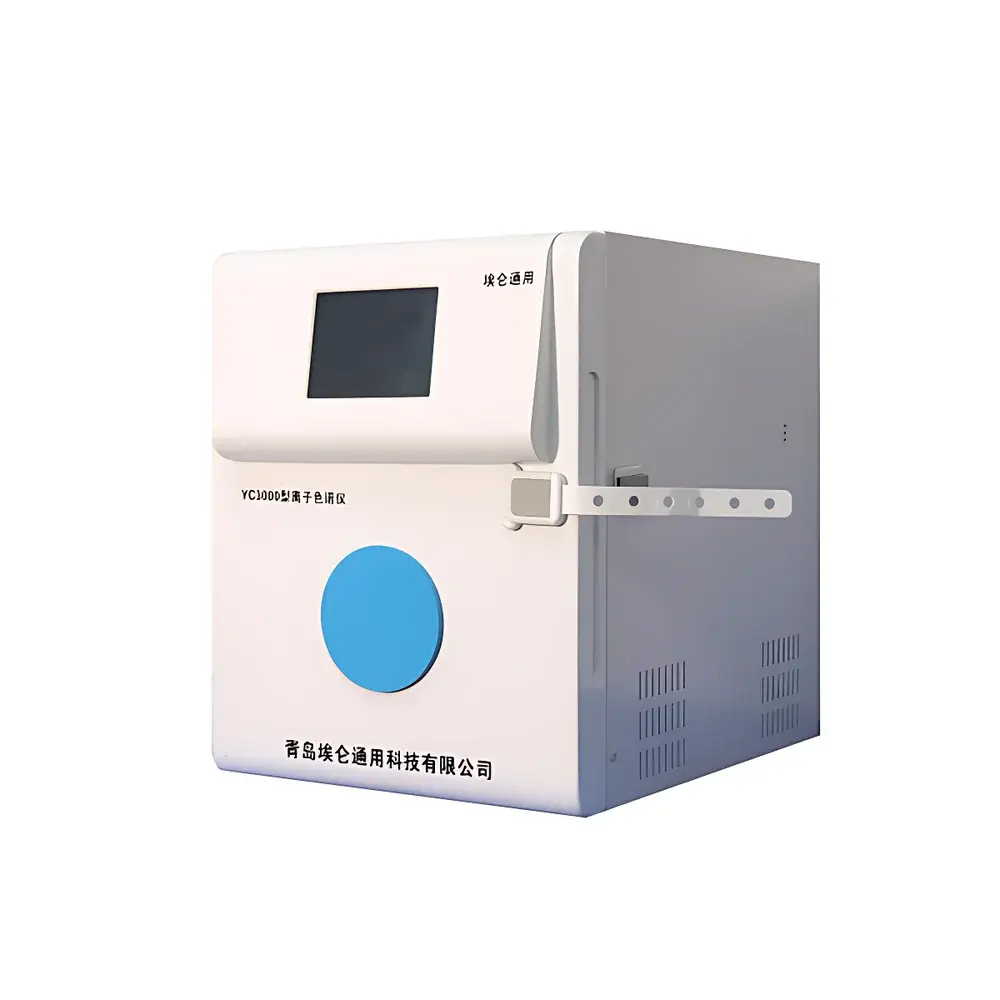
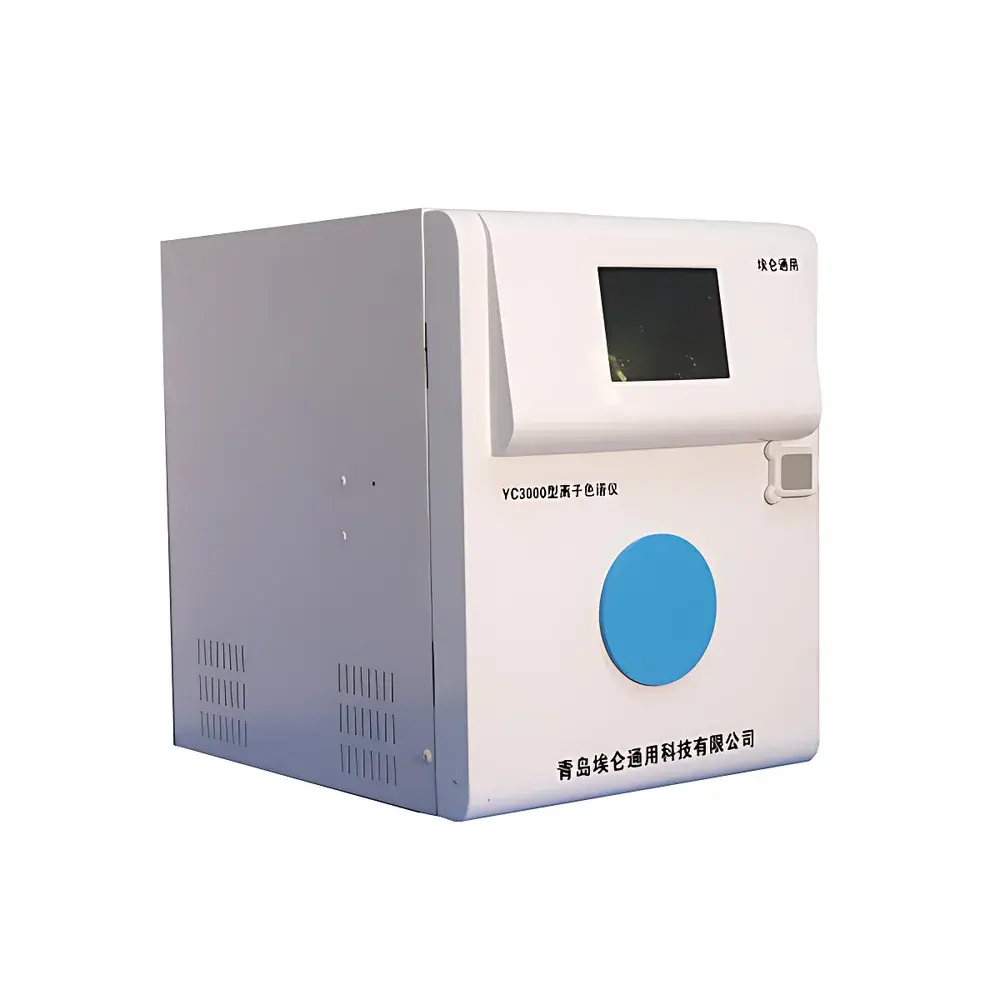
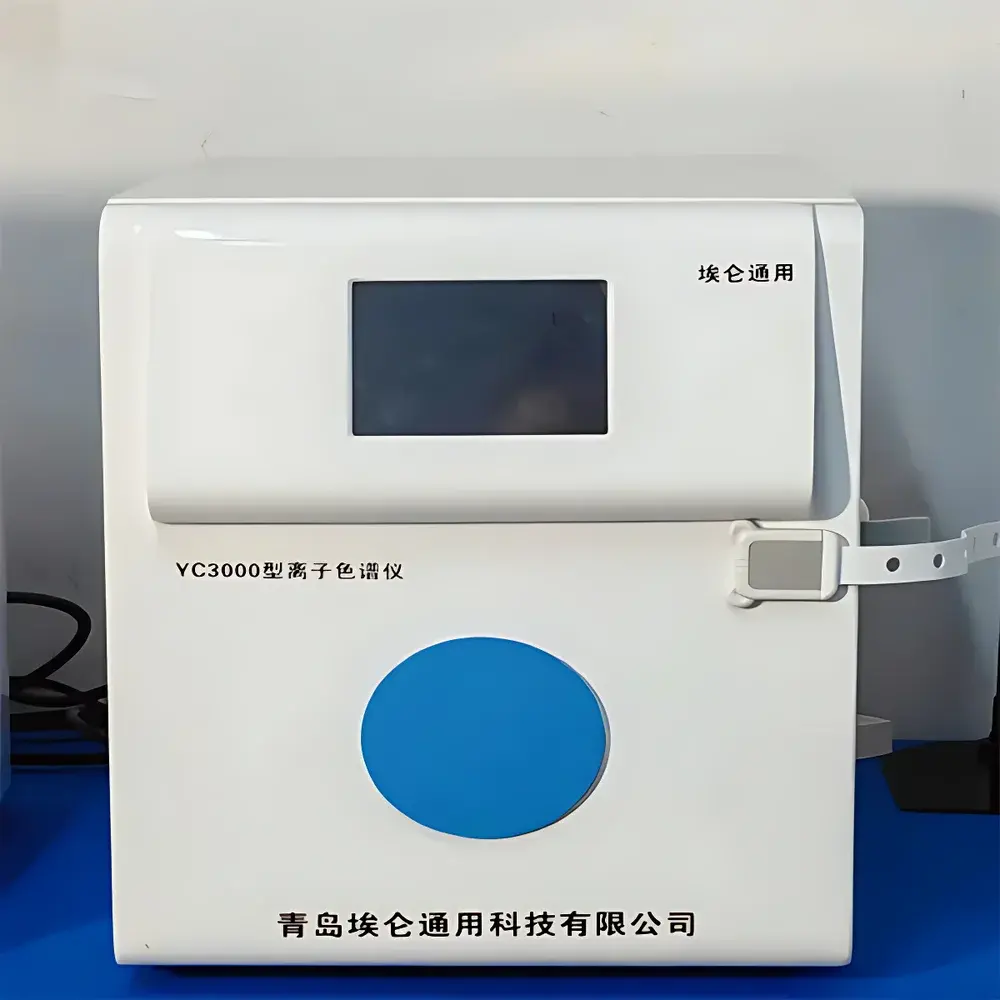
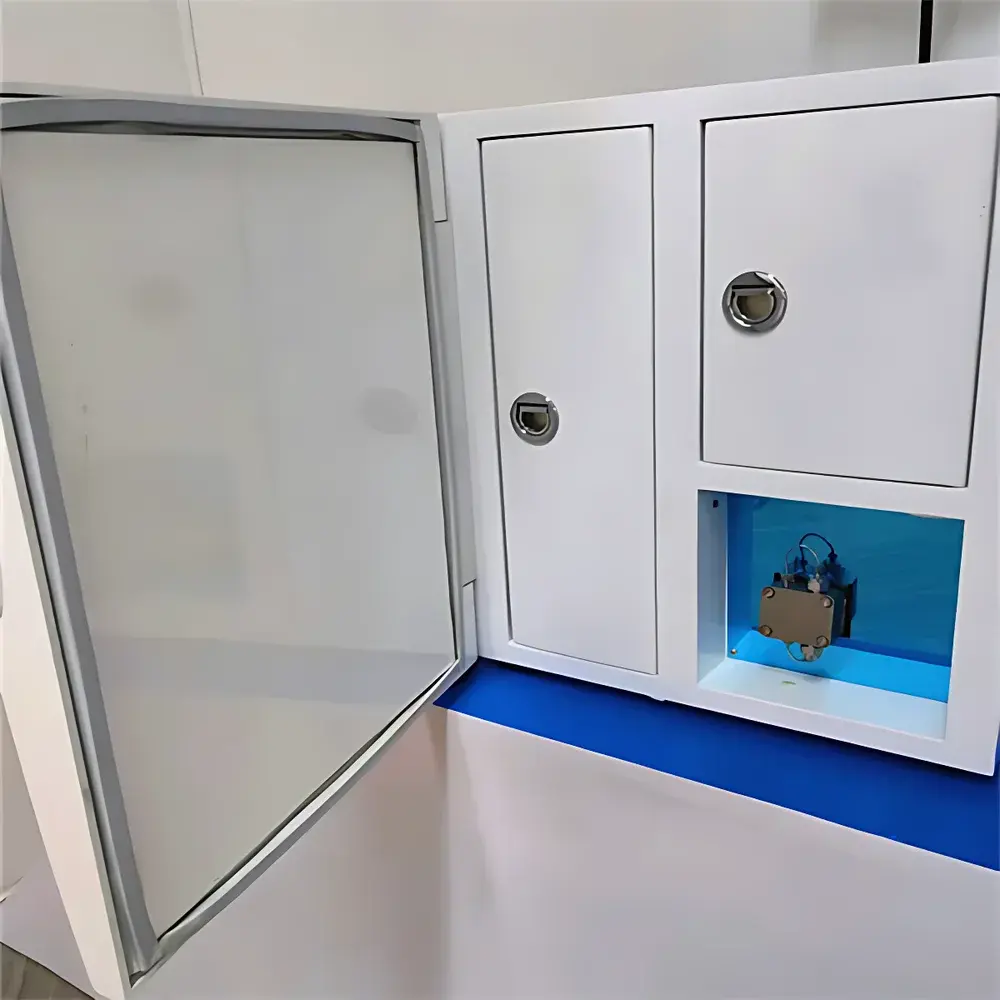
Ailun YC3080 Ion Chromatograph
| Brand | Ailun General / Qingdao Ailun |
|---|---|
| Origin | Shandong, China |
| Manufacturer Type | Authorized Distributor |
| Origin Category | Domestic (China) |
| Model | YC3080 |
| Instrument Type | Laboratory Benchtop |
| Application Scope | Universal Anion/Cation Analysis |
| Pump Pressure Range | 0–42 MPa |
| Flow Rate Range | 0.001–9.999 mL/min |
| Eluent Flow Rate | 0.7–1.5 mL/min |
| Max Operating Pressure | 42 MPa |
| Operating Temperature Range | 5–65 °C |
| Temperature Reproducibility | ±0.2 °C |
| Eluent Concentration Range | 1.92–4.8 mM |
| Detection Range | μg/L to mg/L |
| Conductivity Detector | Digital Microprocessor-Controlled |
| Conductivity Range | 0–15,000 µS/cm |
| Resolution | 0.0012 nS/cm |
| Cell Material | Titanium |
| Column | Patented AJS-80 (Anion-Specific) |
| Software | Full-Featured Chinese GUI with Peak Recognition Algorithms (Solvent Peaks, Tailing Peaks, Shoulder Peaks, Artifacts) |
Overview
The Ailun YC3080 Ion Chromatograph is a benchtop analytical instrument engineered for high-precision, reproducible quantification of common inorganic anions and cations in aqueous matrices. It operates on the principle of suppressed conductivity detection following ion-exchange separation—where analyte ions are separated on a high-efficiency, low-backpressure anion-exchange column (patented AJS-80), followed by chemical suppression to reduce background conductivity and enhance analyte signal-to-noise ratio. Designed as a direct evolution of the YC3000 platform, the YC3080 integrates digital control architecture, real-time multi-parameter monitoring, and robust fluidic engineering to deliver stable baselines (<0.5 nS/cm noise), rapid method development, and long-term operational reliability under routine laboratory conditions. Its modular design supports both isocratic and gradient elution, and its temperature-controlled compartment ensures retention time stability across varying ambient environments.
Key Features
- Digital microprocessor-controlled conductivity detector with 0.0012 nS/cm resolution and linear dynamic range spanning 0–15,000 µS/cm—enabling trace-level (μg/L) to major-component (mg/L) quantitation without manual range switching.
- Patented pulse-free high-pressure PEEK pump with dual-stage electronic flow stabilization (plunger stroke adjustment + real-time pressure feedback), delivering flow accuracy ≤±0.1% RSD at 1.0 mL/min and pressure stability within ±0.05 MPa over 24 h.
- Integrated titanium conductivity cell—chemically inert to strong acids (e.g., HNO₃, H₂SO₄) and bases (e.g., KOH, NaOH), eliminating corrosion-related drift and extending cell lifetime beyond 5 years under GLP-compliant usage.
- Touchscreen-driven human-machine interface (HMI) with full-screen real-time display of pressure, conductivity, current, flow rate, temperature, and detector gain—each parameter logged at 10 Hz for audit-ready traceability.
- Automated safety protocols including high/low pressure threshold alarms, leak detection via pressure decay monitoring, and immediate pump shutdown upon fault—protecting column integrity and detector electronics.
- Compact monolithic chassis fabricated from seamless, acid-alkali-resistant polymer composite; no threaded fittings or O-ring joints in the critical flow path—reducing dead volume and minimizing carryover risk.
Sample Compatibility & Compliance
The YC3080 accommodates a broad spectrum of environmental, industrial, and regulatory sample types—including drinking water (per EPA Method 300.0/300.1), wastewater effluents, pharmaceutical excipients (USP ), soil extracts (ASTM D4327), and food leachates (AOAC 999.02). Its eluent concentration range (1.92–4.8 mM KOH or Na₂CO₃/NaHCO₃) enables optimization for diverse anion selectivity profiles, while its 5–65 °C column oven supports method transfer across ISO 10304-1, ISO 14911, and DIN EN ISO 10304-4 workflows. The system meets essential requirements for ISO/IEC 17025:2017 technical competence and supports 21 CFR Part 11-compliant data handling when paired with validated software configurations (audit trail, electronic signatures, user access levels).
Software & Data Management
The native chromatography data system (CDS) provides a fully localized Chinese graphical interface with embedded method wizards, automatic peak integration (including deconvolution of co-eluting species such as SO₃²⁻/NO₂⁻), baseline correction algorithms, and customizable report templates compliant with CNAS and CMA accreditation standards. Raw data files (.acd) are stored in vendor-neutral HDF5 format, enabling third-party reprocessing in OpenChrom or Chromeleon. The software includes built-in calibration curve generation (linear, quadratic, weighted), QC flagging per ICH Q2(R2), and export modules for LIMS integration (ODBC, CSV, XML). All acquisition parameters—including valve timing, gradient profile, and detector settings—are version-controlled and timestamped, satisfying GLP documentation requirements.
Applications
- Environmental monitoring: Quantification of F⁻, Cl⁻, NO₂⁻, Br⁻, NO₃⁻, PO₄³⁻, SO₄²⁻, and SO₃²⁻ in surface water, groundwater, and rainwater per national standard HJ 84-2016.
- Pharmaceutical quality control: Residual chloride, acetate, and sulfate analysis in APIs and injectables per ChP 2020 General Chapter 0431.
- Food & beverage safety: Nitrate/nitrite profiling in processed meats and dairy products (GB 5009.33-2016).
- Industrial process water: Monitoring of anionic impurities in ultrapure water loops for semiconductor fabrication (SEMI F63).
- Agricultural testing: Phosphate and nitrate determination in fertilizer solutions and soil extracts (NY/T 1121.10-2012).
FAQ
Does the YC3080 support cation analysis?
Yes—the system can be configured with a cation-exchange column (e.g., CS12A or CG12A) and methanesulfonic acid eluent for Na⁺, K⁺, Ca²⁺, Mg²⁺, and NH₄⁺ analysis. Column switching is hardware-supported via optional 6-port/2-position valves.
Is the AJS-80 column compatible with carbonate/bicarbonate eluents?
Yes—AJS-80 is optimized for both hydroxide-based and mixed carbonate/bicarbonate eluents, offering extended column life (>3,000 injections) and consistent retention time repeatability (RSD <0.15% over 100 runs).
Can raw data be exported for independent processing?
Yes—acquired chromatograms are saved in open HDF5 format with embedded metadata (instrument parameters, timestamps, calibration IDs), supporting reprocessing in Python (h5py), MATLAB, or open-source chromatography tools.
What maintenance intervals are recommended for routine operation?
Pump seals: every 6 months or 1,500 hours; suppressor cartridge: every 2,000 injections or 6 months; guard column: every 200 injections; conductivity cell cleaning: monthly with 0.1 M HNO₃ rinse.
Related Products





