
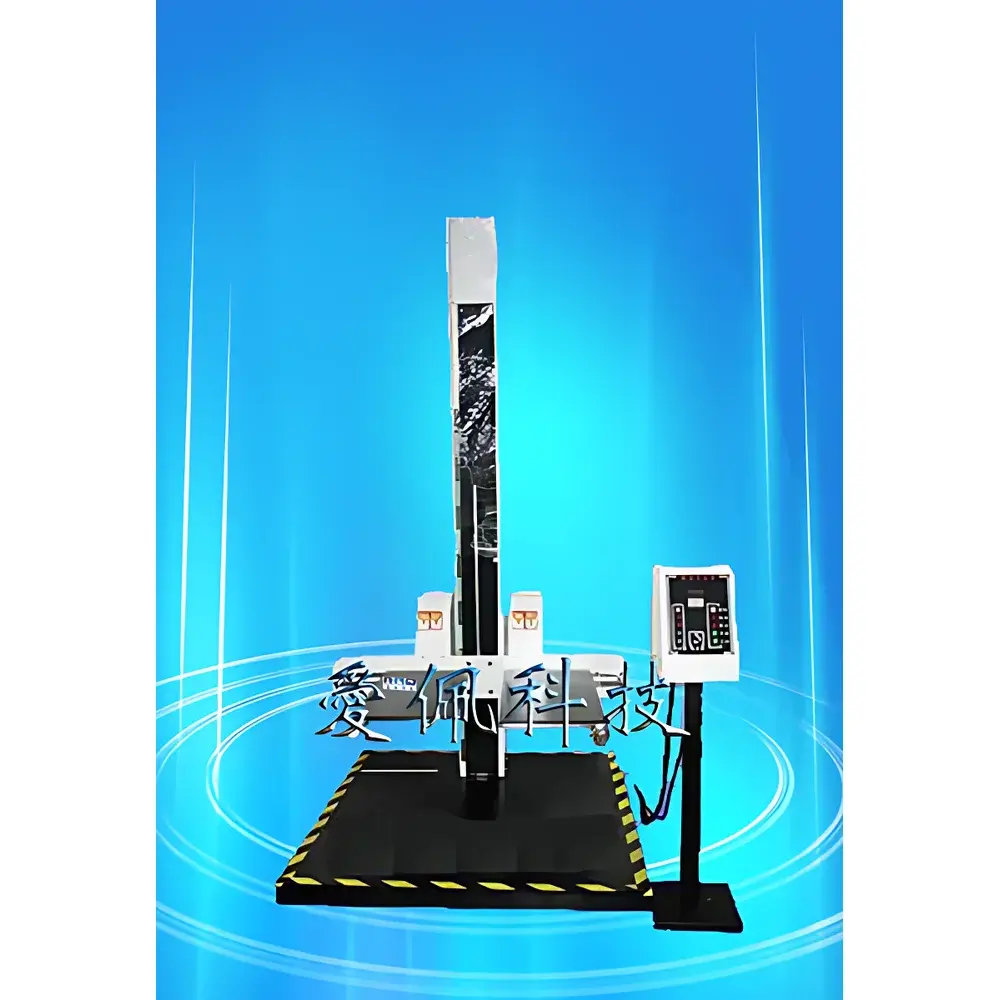
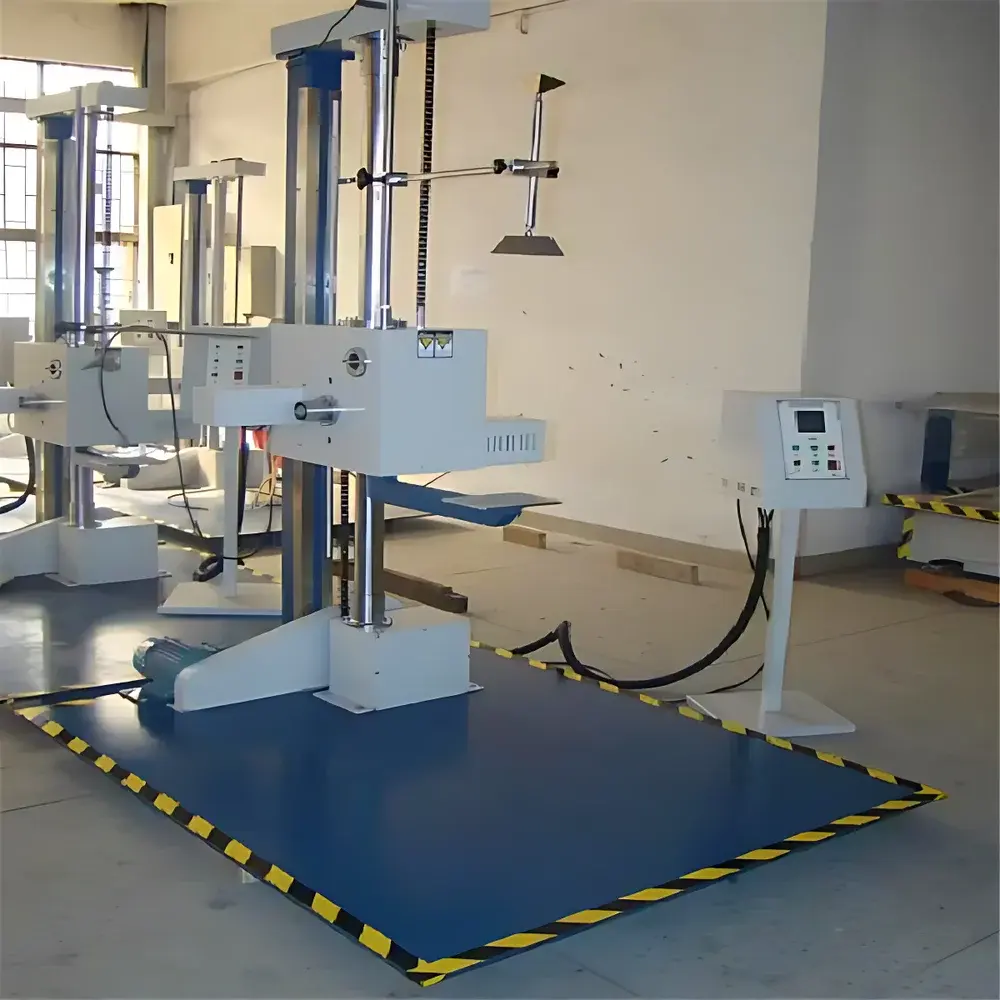
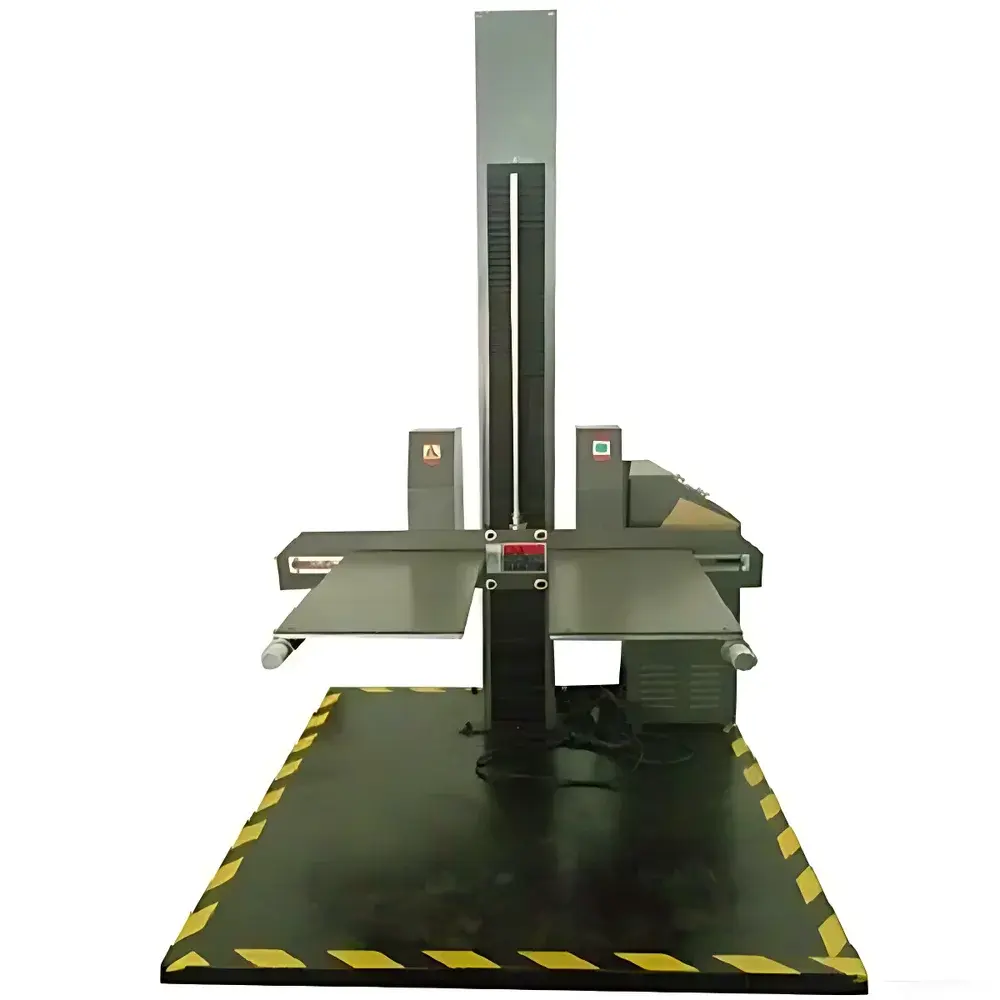
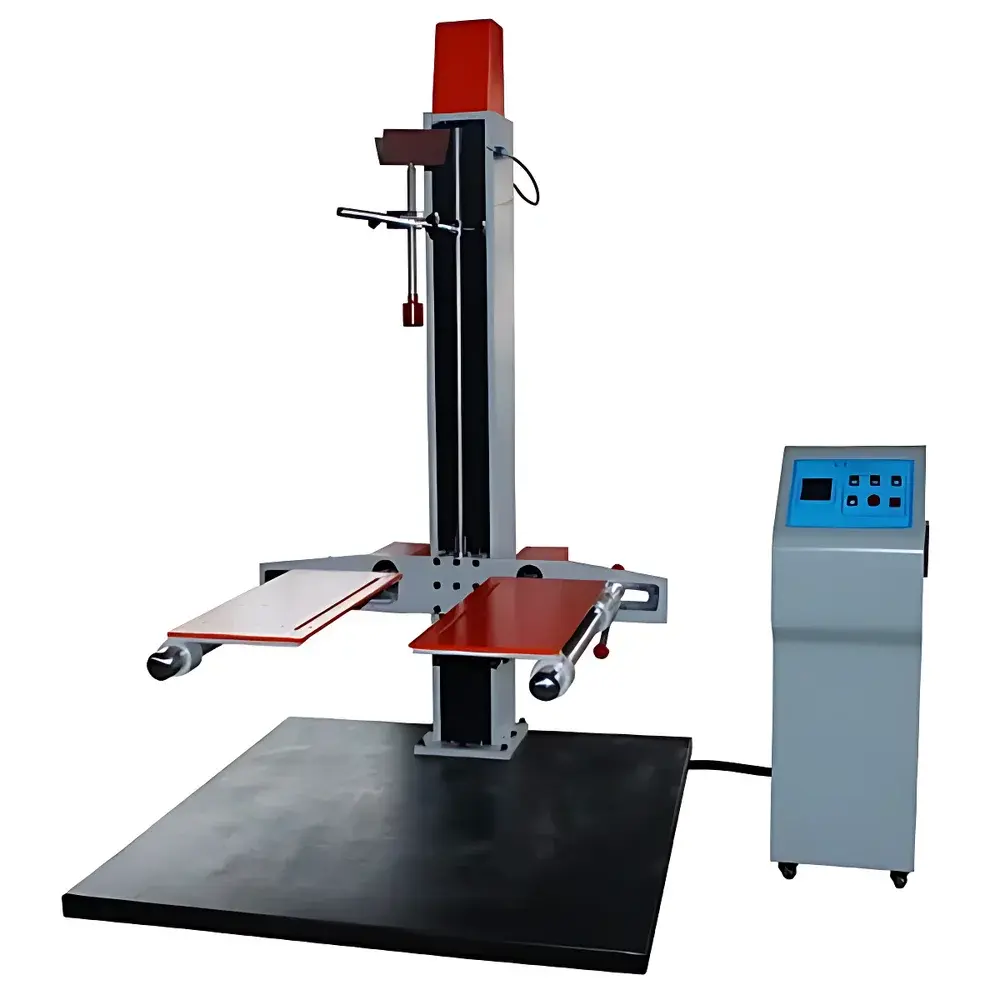
Aipie Technology AP-DL Dual-Wing Drop Test Machine
| Brand | Aipie Technology / APKJ |
|---|---|
| Origin | Guangdong, China |
| Manufacturer Type | Manufacturer |
| Product Origin | Domestic (China) |
| Model | AP-DL |
| Quotation | Upon Request |
| Drop Height Range | 300–1500 mm (AP-DL-150A) / 300–1800 mm (AP-DL-180A) |
| Height Display | Digital |
| Height Accuracy | ±10 mm |
| Max. Specimen Weight | 60 kg |
| Max. Specimen Dimensions | 200 × 800 × 1000 mm |
| Impact Surface Size | 1600 × 1100 × 20 mm |
| Overall Dimensions | 1600 × 1100 × 2230 mm (AP-DL-150A) / 1600 × 1100 × 2530 mm (AP-DL-180A) |
| Control Box Dimensions | 350 × 350 × 1100 mm |
| Height Adjustment | Motorized |
| Drop Orientations | Face, Edge, Corner |
| Motor Power | 1.1 kW |
| Net Weight | 600 kg |
| Power Supply | 3-phase 5-wire AC 380 V ±10% |
| Compliance Standard | GB/T 2423.8 |
Overview
The Aipie Technology AP-DL Dual-Wing Drop Test Machine is an electromechanically actuated, digitally controlled impact testing system engineered for precise simulation of vertical free-fall impacts encountered during transportation and handling of packaged goods. Based on the fundamental principle of gravitational acceleration, the machine lifts test specimens to programmable heights and releases them onto a rigid, horizontal impact surface—reproducing real-world drop events in accordance with internationally recognized mechanical shock test methodologies. Unlike manual or pneumatic drop testers, the AP-DL employs synchronized dual-arm lifting mechanisms that ensure stable, repeatable specimen orientation prior to release, minimizing rotational deviation and maximizing test fidelity. Its design directly supports packaging validation workflows required under ISO 13355, ASTM D5276, ISTA 3A/3E, and GB/T 2423.8—making it suitable for quality assurance labs, packaging R&D centers, and third-party certification facilities operating within regulated supply chains.
Key Features
- Dual-wing synchronized lifting structure ensures consistent specimen alignment across face-, edge-, and corner-drop configurations without manual repositioning.
- Digital height display with ±10 mm accuracy enables traceable, repeatable drop height selection from 300 mm to 1800 mm (model-dependent), supporting both low-height functional drop assessments and high-risk transport simulation.
- Motor-driven vertical positioning system eliminates reliance on counterweights or manual cranks, improving operator safety and reducing cycle time between tests.
- Robust impact base constructed from 20 mm thick steel plate (1600 × 1100 mm footprint) provides uniform energy dissipation and long-term dimensional stability under repeated loading.
- Integrated control cabinet (350 × 350 × 1100 mm) houses industrial-grade PLC logic, emergency stop circuitry, and real-time status indicators compliant with IEC 60204-1 safety standards.
- Supports specimens up to 60 kg and 200 × 800 × 1000 mm—accommodating standard shipping cartons, consumer electronics enclosures, medical device kits, and industrial component housings.
Sample Compatibility & Compliance
The AP-DL is validated for testing packaged and unpackaged products across diverse industries including consumer electronics, automotive components, pharmaceutical secondary packaging, and logistics equipment. Specimens are secured using non-restrictive clamping fixtures or custom mounting plates (optional), preserving natural dynamic response during impact. All operational parameters—including drop height, orientation sequence, and repetition count—are fully documented per test run to support GLP-compliant reporting. The system adheres to GB/T 2423.8 as a baseline; supplementary calibration and verification protocols can be implemented to align with ISO/IEC 17025-accredited laboratory requirements. While not inherently FDA 21 CFR Part 11 compliant, audit trails and electronic records may be enabled via optional data logging modules meeting ALCOA+ principles for regulated environments.
Software & Data Management
The AP-DL operates via embedded firmware with intuitive push-button interface and digital LED height readout—designed for factory-floor usability without dependency on external PCs. Optional RS-232 or Ethernet connectivity allows integration into centralized test management systems for automated job scheduling, pass/fail threshold assignment, and CSV-formatted result export. Each test record includes timestamp, selected drop height, orientation mode (face/edge/corner), specimen ID, and operator code—enabling full traceability for internal audits or customer-facing validation dossiers. Firmware updates are delivered via USB flash drive, ensuring version control and compatibility with evolving regulatory expectations.
Applications
- Validation of corrugated box compression strength and cushioning performance under simulated warehouse drop conditions.
- Functional durability assessment of handheld devices (e.g., tablets, diagnostic tools) subjected to repeated corner drops during field use.
- Verification of seal integrity and structural resilience of sterile barrier systems used in Class II/III medical device packaging.
- Comparative analysis of alternative packaging materials (foam inserts, molded pulp, air pillows) under standardized impact loads.
- Root-cause investigation of product damage reported in post-distribution quality feedback loops.
- Supporting ISTA-certified package design qualification for e-commerce fulfillment networks.
FAQ
What standards does the AP-DL comply with?
The AP-DL is designed and verified to meet GB/T 2423.8. It can also be configured and operated to satisfy ASTM D5276, ISO 13355, and ISTA 3-series protocols through appropriate test setup and documentation practices.
Can the machine perform sequential multi-orientation drops without manual intervention?
Yes—the dual-wing architecture allows pre-programmed sequences (e.g., face → edge → corner) with automatic repositioning between orientations, minimizing operator involvement and measurement variability.
Is calibration certification included with purchase?
Factory calibration data is provided upon shipment. Third-party ISO/IEC 17025 calibration services are available as an add-on option, including uncertainty budgets and traceable reference standards.
What maintenance is required for long-term reliability?
Routine inspection of guide rails, motor coupling integrity, and impact surface flatness is recommended every 500 operational cycles. Lubrication intervals and torque specifications are detailed in the technical manual supplied with each unit.
Does the system support custom fixture design for irregularly shaped samples?
Yes—Aipie Technology offers engineering consultation and mechanical drawing review for application-specific mounting solutions, ensuring secure fixation without compromising drop dynamics or safety interlocks.



