
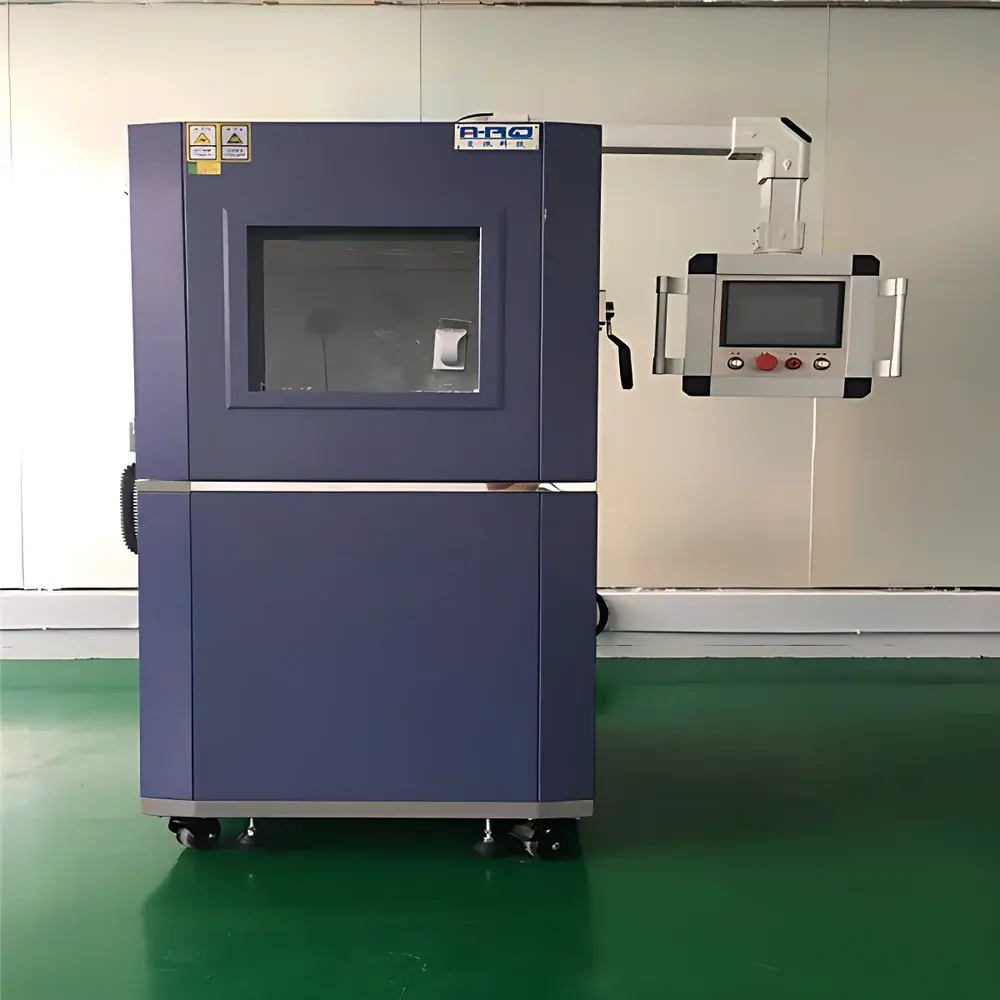
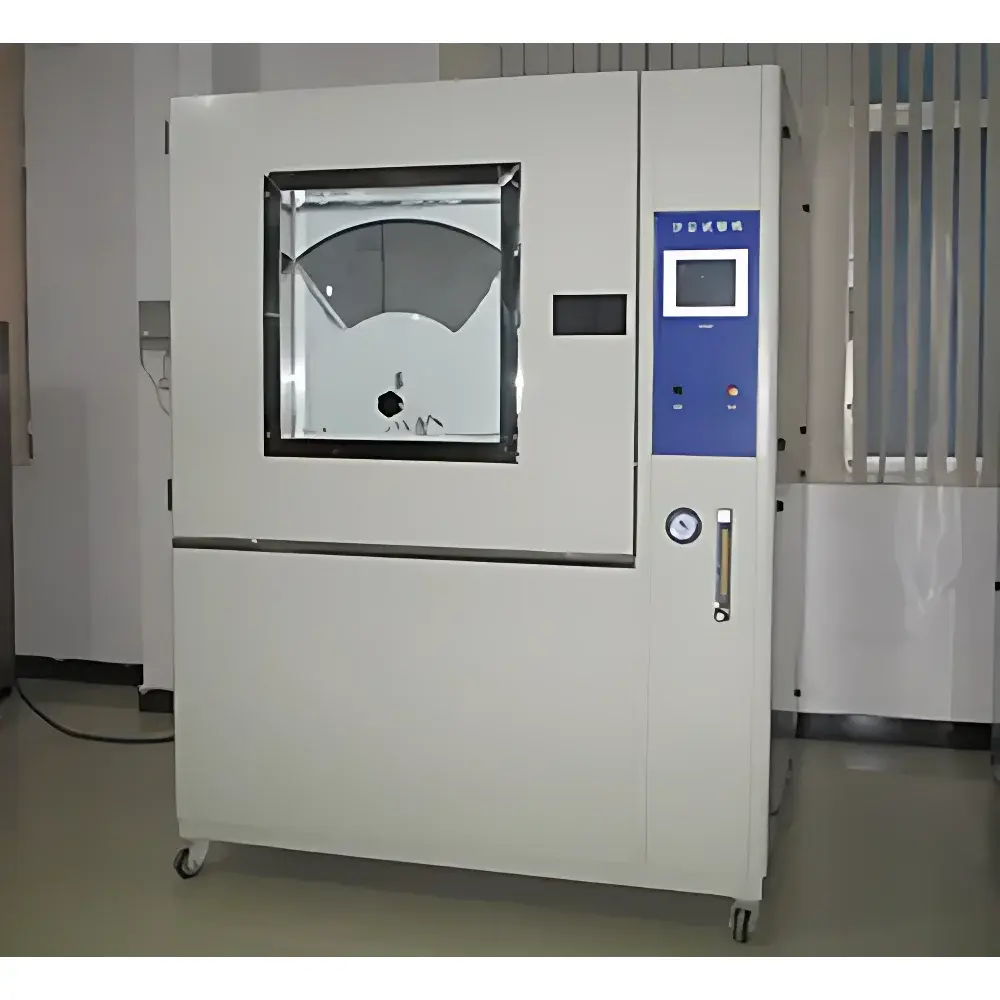
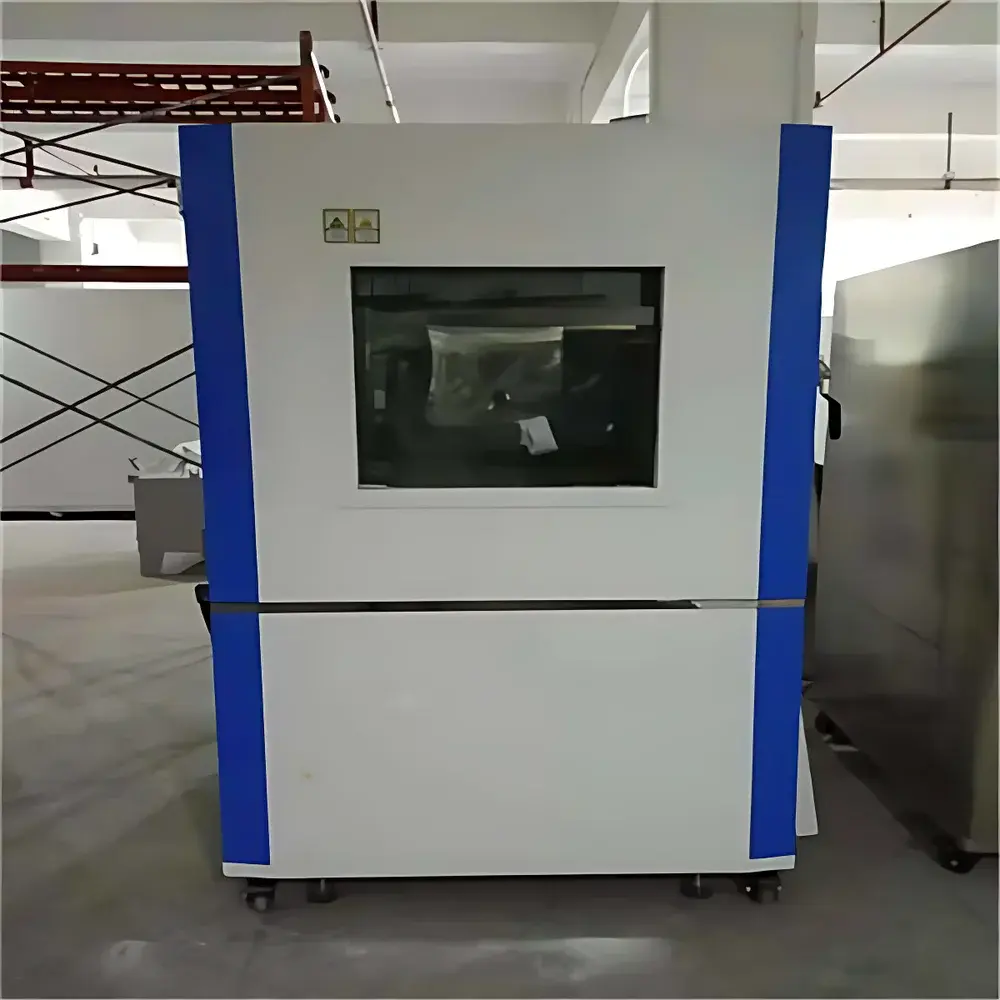
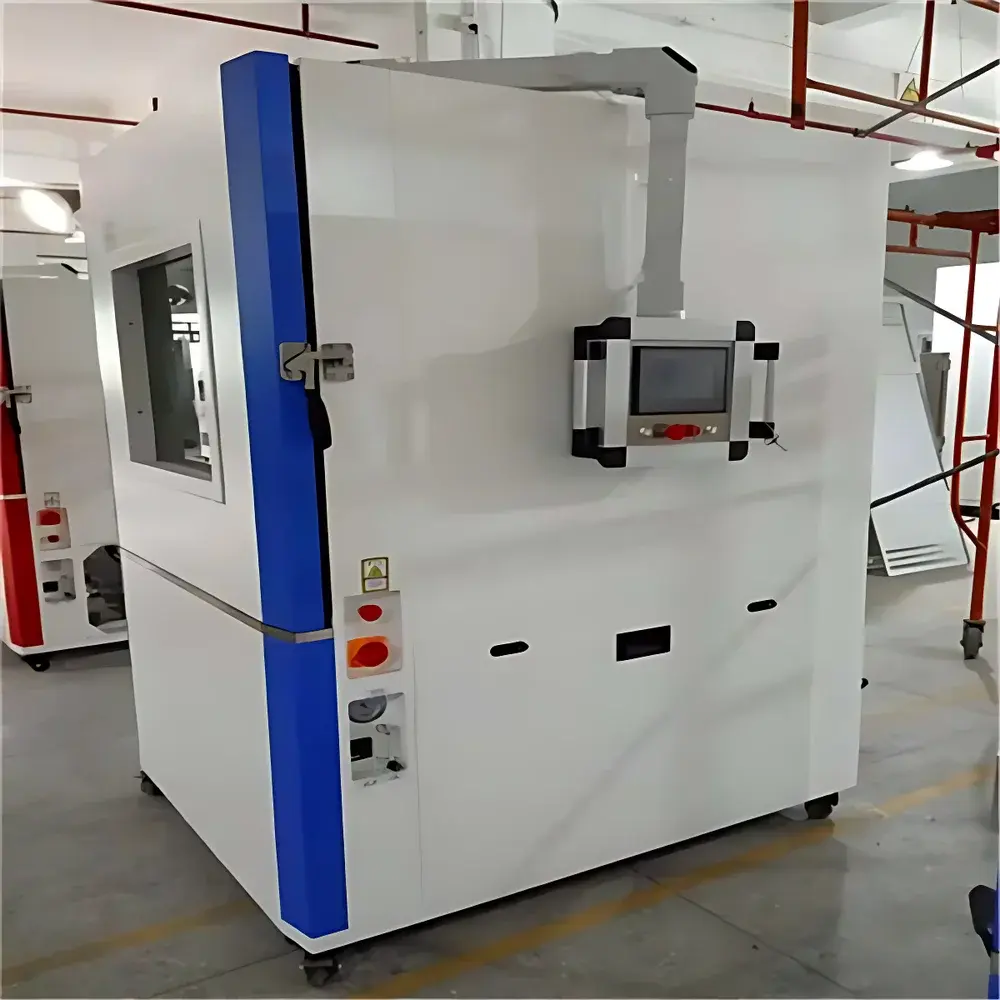
Aipke AP-SC-1000 Sand and Dust Test Chamber
| Brand | Aipke (APKJ) |
|---|---|
| Origin | Guangdong, China |
| Manufacturer Type | OEM Manufacturer |
| Model | AP-SC-1000 |
| Sand Composition | 7–99% SiO₂ |
| Sand Blowing Concentration | 1.1 ± 0.25 g/m³ to 2.2 ± 0.5 g/m³ |
| Sand Blowing Velocity | 0–29 m/s |
| Dust Blowing Concentration | 0.1–10.6 ± 7 g/m³ |
| Dust Blowing Velocity | 8.9 m/s |
| Temperature Range | 15–35 °C |
| Relative Humidity | 25–75 %RH |
| Atmospheric Pressure | 86–106 kPa |
| Power Supply | AC 380 V ±10%, 50 Hz, 3-phase 5-wire |
| Rated Power | 3 kW |
| Timer Range | 0–999 h |
| Dust Particle Size | Nominal wire diameter 50 µm, nominal mesh spacing 75 µm |
| Airflow Velocity (test chamber) | ≤2 m/s |
| Dust Types | Dry talc, silicate cement, flue ash |
| Dust Loading | 2 kg/m³ |
| Vibration Timer | 0–999 h |
| Standard Sieves Provided | 32 µm & 250 µm |
Overview
The Aipke AP-SC-1000 Sand and Dust Test Chamber is an engineered environmental simulation system designed to evaluate the ingress protection (IP) performance of electrical and electronic enclosures under controlled airborne particulate exposure. It operates on the principle of forced-air suspension and gravitational settling of standardized dust and sand particles—aligned with the test methodologies defined in IEC 60529 (IP5X/IP6X), MIL-STD-810H Method 510.7, and GB/T 4208–2017. Unlike generic dust cabinets, the AP-SC-1000 integrates dual-mode particle delivery (sand blowing and dust circulation), programmable vibration coupling, and thermal stabilization to replicate real-world desert, industrial, or construction-site particulate environments. Its sealed stainless-steel test chamber, precision airflow management, and calibrated dust dispersion architecture ensure repeatable, traceable, and metrologically sound test conditions—critical for R&D validation, quality assurance, and regulatory compliance workflows.
Key Features
- Robust dual-material construction: Cold-rolled steel exterior with electrostatic color powder coating; mirror-finished 304 stainless-steel inner chamber resistant to abrasion and corrosion.
- Modular dust delivery system: Separate high-velocity sand-blowing nozzle (0–29 m/s) and low-turbulence dust cyclonic circulation loop (≤2 m/s internal airflow), each independently controllable via PLC logic.
- Programmable multi-stage test sequencing: Independent timers for dust blow duration, rest intervals, vibration activation cycles (0–999 h range), and total test runtime—enabling IP6K9K, IP5X, and IP6X protocol execution per IEC 60529 Annex B.
- Integrated thermal management: Band-type mica-sheathed heating elements mounted in the recirculation duct prevent hygroscopic clumping of talc or cement-based test dust, maintaining consistent aerosol dispersibility across extended test durations.
- Full safety architecture: Triple-layer protection including molded-case circuit breakers (MCCB), phase-loss/leakage current detection, grounded 5-wire power interface, and automatic shutdown upon door interlock breach or overtemperature event.
- Human-centric operation: 7-inch full-color LCD HMI with native Chinese/English toggle, real-time display of elapsed time, setpoints, and system status; intuitive navigation without external PC dependency.
Sample Compatibility & Compliance
The AP-SC-1000 accommodates samples up to 1,000 L internal volume (W×D×H: 1000 × 1000 × 1000 mm), supporting enclosure testing from handheld consumer electronics to automotive ECUs and industrial control panels. Its standardized dust formulation—dry talc (CAS 14807-96-6), Portland cement (ASTM C150), or fly ash (ASTM C618)—is metered at 2 kg/m³ per IEC 60529 requirements, with optional SiO₂-enriched sand (7–99% quartz content) for accelerated abrasion evaluation. The unit ships with certified 32 µm and 250 µm stainless-steel test sieves (ISO 3310-1 compliant) and a removable dust collection tray for post-test residue quantification. All operational parameters—including airflow velocity, concentration tolerance, and temperature stability—are verifiable against ISO/IEC 17025-accredited calibration protocols. The system meets structural and functional safety criteria per GB 4793.1–2007 (equivalent to IEC 61010-1) and supports GLP-compliant audit trails when paired with optional data logging modules.
Software & Data Management
Control is executed via a Siemens LOGO! or equivalent industrial PLC platform, featuring non-volatile memory retention for up to 100 user-defined test profiles. The embedded HMI logs timestamped event records—including start/stop commands, fault codes, heater duty cycle, and fan RPM—for local review and export via USB. While the base configuration does not include Ethernet connectivity or FDA 21 CFR Part 11-compliant electronic signatures, optional RS485 Modbus RTU integration enables SCADA-level supervision and centralized data archival in validated LIMS or MES environments. All firmware updates are delivered as signed binary packages with version-controlled release notes, ensuring traceability in GMP-regulated manufacturing settings.
Applications
- IP rating verification (IP5X, IP6X, IP6K9K) for outdoor lighting, EV charging stations, and railway signaling equipment.
- Long-term reliability assessment of MEMS sensors, camera modules, and battery management systems exposed to arid or dusty field conditions.
- Validation of sealing integrity for aerospace avionics housings subjected to ground-handling particulate contamination.
- Comparative wear analysis of gasket materials (silicone, EPDM, fluorocarbon) under cyclic sand impingement at velocities up to 29 m/s.
- Development testing of dust-resistant display interfaces and touchscreens used in mining or agricultural machinery.
FAQ
What dust standards does the AP-SC-1000 support?
It complies with IEC 60529 Annex B specifications for talc-based dust (particle size distribution verified using 32 µm and 250 µm sieves) and supports custom sand formulations per MIL-STD-810H Figure 510.7-1.
Can the chamber operate continuously for 999 hours?
Yes—the timer supports uninterrupted operation up to 999 hours, with thermal cutouts and motor duty-cycle monitoring preventing overheating during extended cycles.
Is the sand blowing system compatible with silica sand?
Yes—SiO₂ content is configurable from 7% to 99%; users must supply certified silica sand meeting ASTM D1215 specifications for abrasive testing.
Does the system include calibration documentation?
Factory calibration certificates for airflow velocity (hot-wire anemometer traceable to NIM), temperature uniformity (±2 °C), and dust concentration (gravimetric sampling method) are provided with shipment.
What maintenance is required during routine operation?
Daily visual inspection of filters and seals; monthly cleaning of the dust collection tray and recirculation duct; biannual verification of sieve mesh integrity and heater resistance values.



