
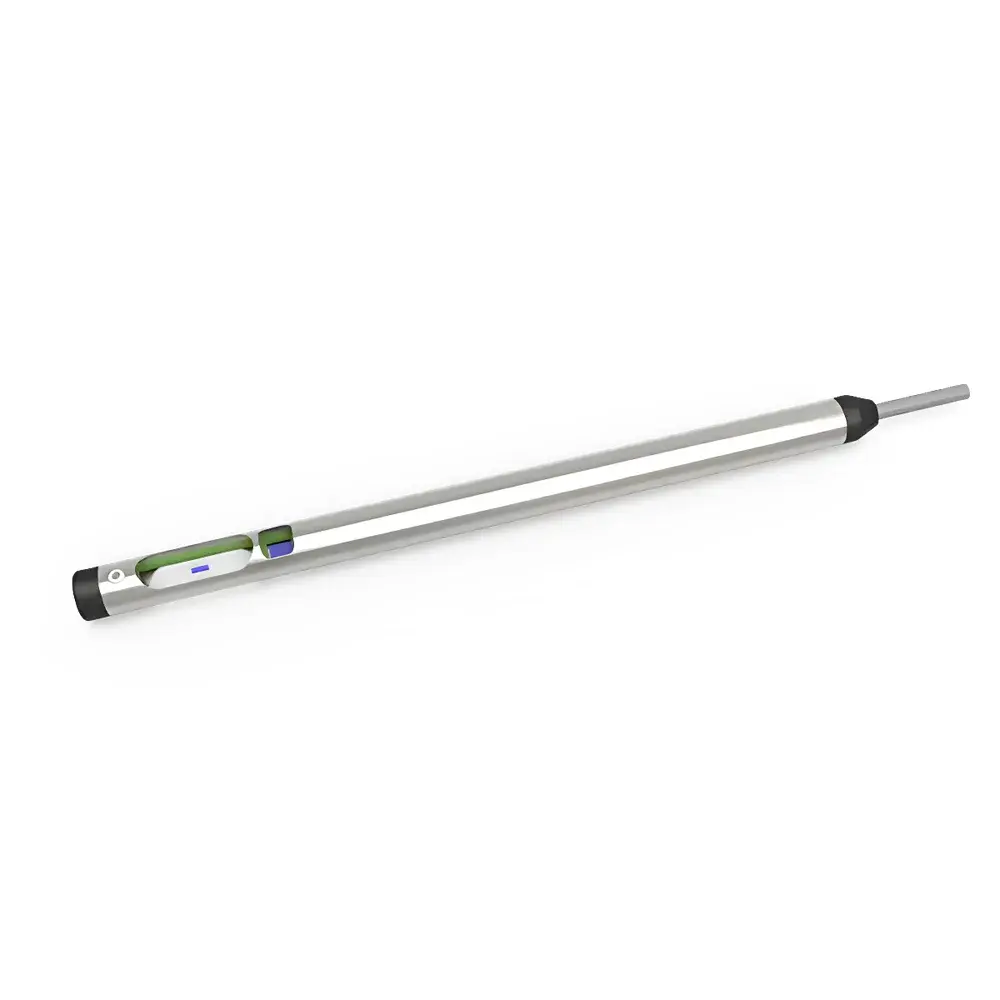
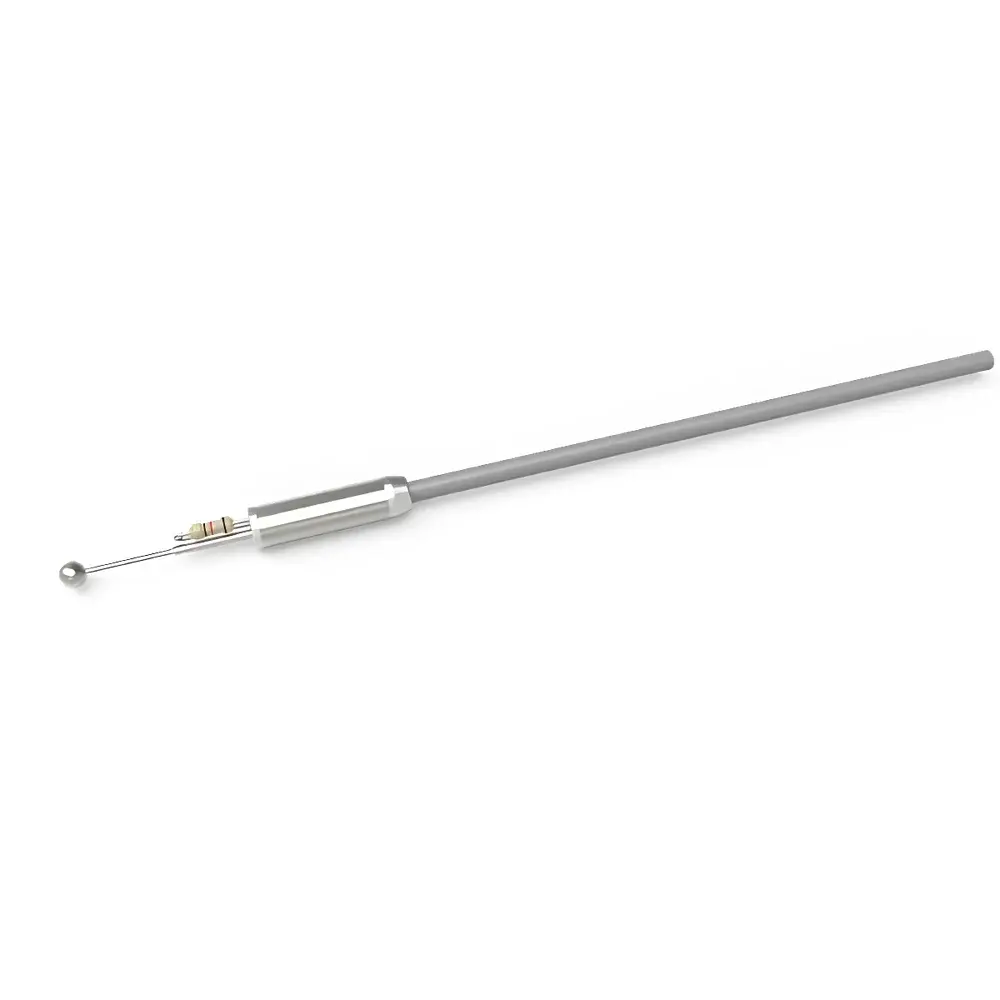
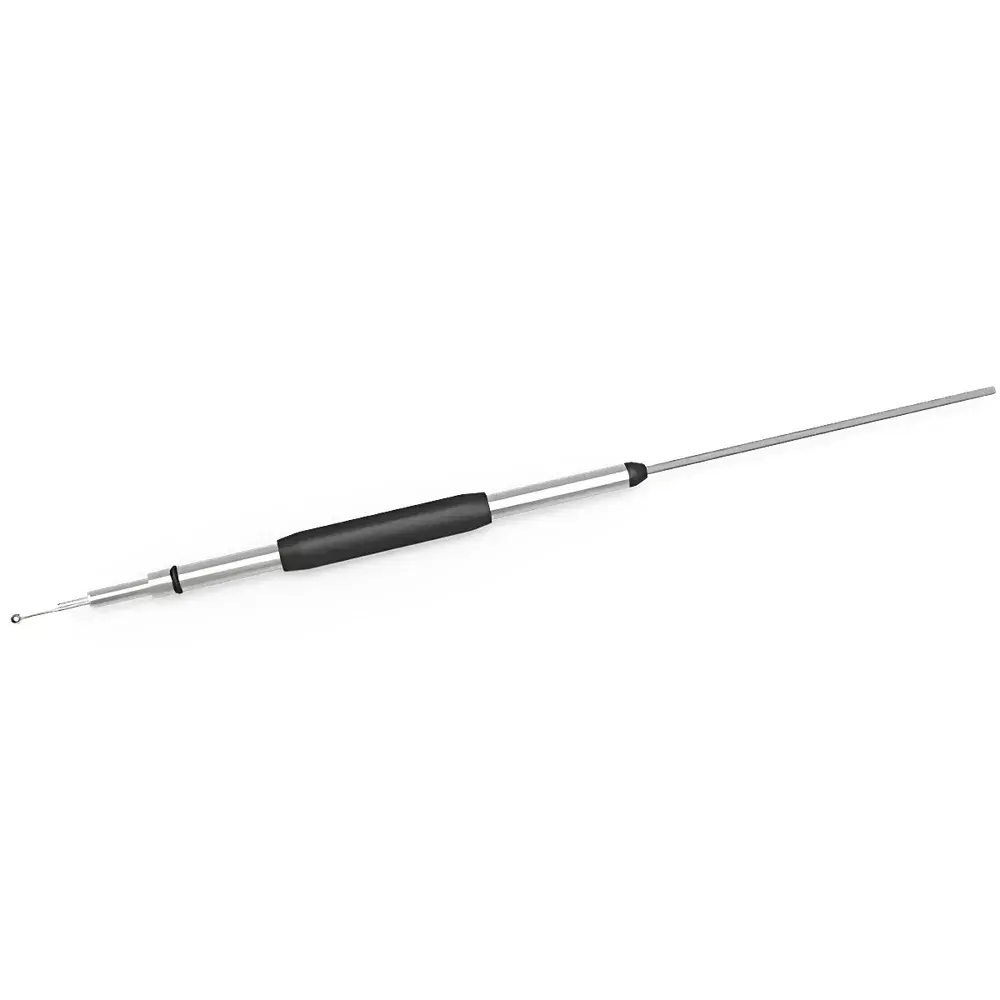
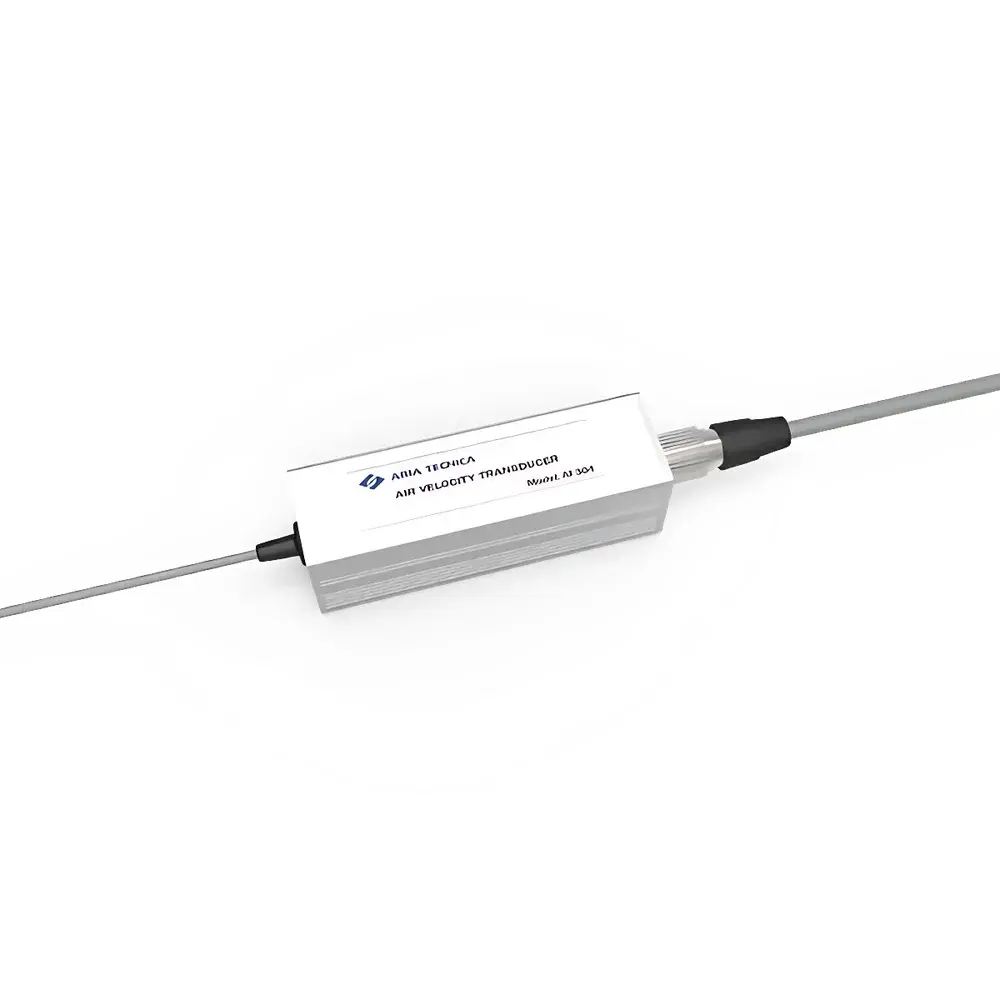
Aira AF303/AF304 Thermal Anemometer Transmitter
| Brand | Aira |
|---|---|
| Origin | Japan |
| Model | AF303 (Omnidirectional Spherical Probe) / AF304 (Directional Probe) |
| Instrument Type | Thermal Anemometer |
| Resolution | 0.01 m/s |
| Measurement Range | 0.01–50 m/s |
| Accuracy | ±2% of reading or ±0.05 m/s, whichever is greater |
| Operating Temperature | −20 to +70 °C |
| Operating Humidity | 0–95% RH (non-condensing) |
| Power Supply | 5–24 VDC, P ≥ 5 W |
| Analog Output | 4–20 mA (max. load 300 Ω) or 1–5 V |
| Digital Output | RS-485 |
| Probe Cable Length Options | 1000 / 2000 / 3000 mm |
| Output/Power Cable Length Options | 2000 / 3000 mm |
| Probe Type | AF303 — omnidirectional spherical sensor |
| Enclosure Compatibility | Designed for wall-mount or duct-integrated installation in clean-air environments |
Overview
The Aira AF303/AF304 Thermal Anemometer Transmitter is an industrial-grade airflow sensing solution engineered for continuous, high-stability velocity measurement in clean-air environments. Based on constant-temperature anemometry (CTA), the device maintains a heated sensing element at a fixed temperature differential relative to ambient air; convective heat loss is directly correlated to mass flow velocity, enabling precise real-time quantification of low-to-moderate airflow speeds. Unlike cup or vane anemometers, thermal sensors offer superior dynamic response, minimal mechanical inertia, and no moving parts—making them ideal for HVAC commissioning, cleanroom monitoring, fume hood verification, and environmental chamber validation where long-term drift resistance and repeatability are critical. The transmitter’s dual-probe architecture supports both omnidirectional (AF303) and directional (AF304) configurations, allowing flexible deployment across ducts, laminar flow hoods, and open-space ventilation assessments.
Key Features
- Thermal mass-flow sensing principle with digital signal conditioning for stable output under variable thermal loads
- Omnidirectional spherical probe (AF303) ensures uniform sensitivity regardless of airflow angle—critical for turbulent or multi-directional flows in plenums and return air shafts
- Directional probe (AF304) optimized for unidirectional duct installations, minimizing boundary layer interference and improving axial resolution
- Configurable analog output (4–20 mA or 1–5 V) compatible with PLCs, DCS systems, and building management controllers (BMS)
- RS-485 Modbus RTU interface enables networked data acquisition, remote calibration checks, and integration into SCADA-based environmental monitoring platforms
- Wide operating range (0.01–50 m/s) with 0.01 m/s resolution supports applications from ultra-low-velocity cleanroom air curtains to high-velocity exhaust ducts
- Robust electrical design: 5–24 VDC wide-input power supply with ≥5 W capability ensures compatibility with standard industrial power rails and uninterruptible backup systems
Sample Compatibility & Compliance
The AF303/AF304 is specified for use in clean, non-corrosive, particle-free gaseous media—primarily ambient air, compressed dry air, nitrogen, and other non-aggressive gases with viscosity and thermal conductivity close to that of air. It is not rated for explosive atmospheres (ATEX/IECEx), high-particulate environments (e.g., industrial dust-laden exhaust), or condensing humidity conditions. The device meets IEC 61000-6-2 (immunity) and IEC 61000-6-4 (emissions) standards for industrial environments. Its analog and digital outputs comply with ISA-50.00.01 (formerly ANSI/ISA-50) signal integrity guidelines. While not certified to ISO 14644-3 or ISO 14644-4 for cleanroom classification, it is routinely deployed in facilities adhering to those standards for routine airflow surveillance and alarm-triggered verification.
Software & Data Management
The transmitter operates as a stand-alone analog/digital sensor node without proprietary software dependency. Configuration—including range scaling, output mode selection, damping time (0.1–10 s), and zero offset adjustment—is performed via Modbus register writes using standard industrial configuration tools (e.g., ModScan, QModMaster, or vendor-neutral BMS engineering workstations). All parameter changes are retained in non-volatile memory. For auditability, the device supports timestamped diagnostic registers (e.g., sensor temperature, supply voltage, internal error flags), facilitating GLP-aligned maintenance logs. When integrated into FDA-regulated environments (e.g., pharmaceutical HVAC), the 4–20 mA output may be routed through validated signal conditioners with 21 CFR Part 11-compliant data historians for electronic record retention.
Applications
- HVAC system balancing and energy optimization in commercial and laboratory buildings
- Cleanroom ISO Class 5–8 air change rate verification per ISO 14644-3 Annex B
- Fume hood face velocity monitoring per ANSI/AIHA Z9.5 and EN 14175-3
- Environmental chamber airflow uniformity mapping during qualification (IQ/OQ)
- Exhaust stack velocity profiling for emissions compliance reporting (e.g., EPA Method 2)
- Research-grade laminar flow characterization in aerodynamic test benches and wind tunnels (low-turbulence zones)
FAQ
What is the difference between AF303 and AF304 probe configurations?
The AF303 uses an omnidirectional spherical thermal sensor suitable for multidirectional or turbulent flows, while the AF304 features a streamlined directional probe optimized for axial flow in round or rectangular ducts.
Can the AF303/AF304 be used in outdoor or high-humidity environments?
It is rated for 0–95% RH non-condensing operation; prolonged exposure to rain, fog, or dew formation will compromise sensor accuracy and longevity. Outdoor use requires NEMA 4X-rated enclosure integration.
Is field calibration possible without manufacturer equipment?
Zero-point adjustment is supported via Modbus register; span calibration requires traceable airflow reference (e.g., calibrated pitot tube or ISO 17025-accredited wind tunnel) and is typically performed during annual preventive maintenance.
Does the device support HART protocol?
No—only 4–20 mA analog and RS-485 Modbus RTU are implemented. HART functionality is not available in this series.
What is the recommended mounting orientation for the AF303 spherical probe?
The probe should be installed perpendicular to the expected dominant flow direction, with the spherical sensor centered in the cross-section and clear of obstructions within 10 pipe diameters upstream and 5 downstream.
Related Products







