
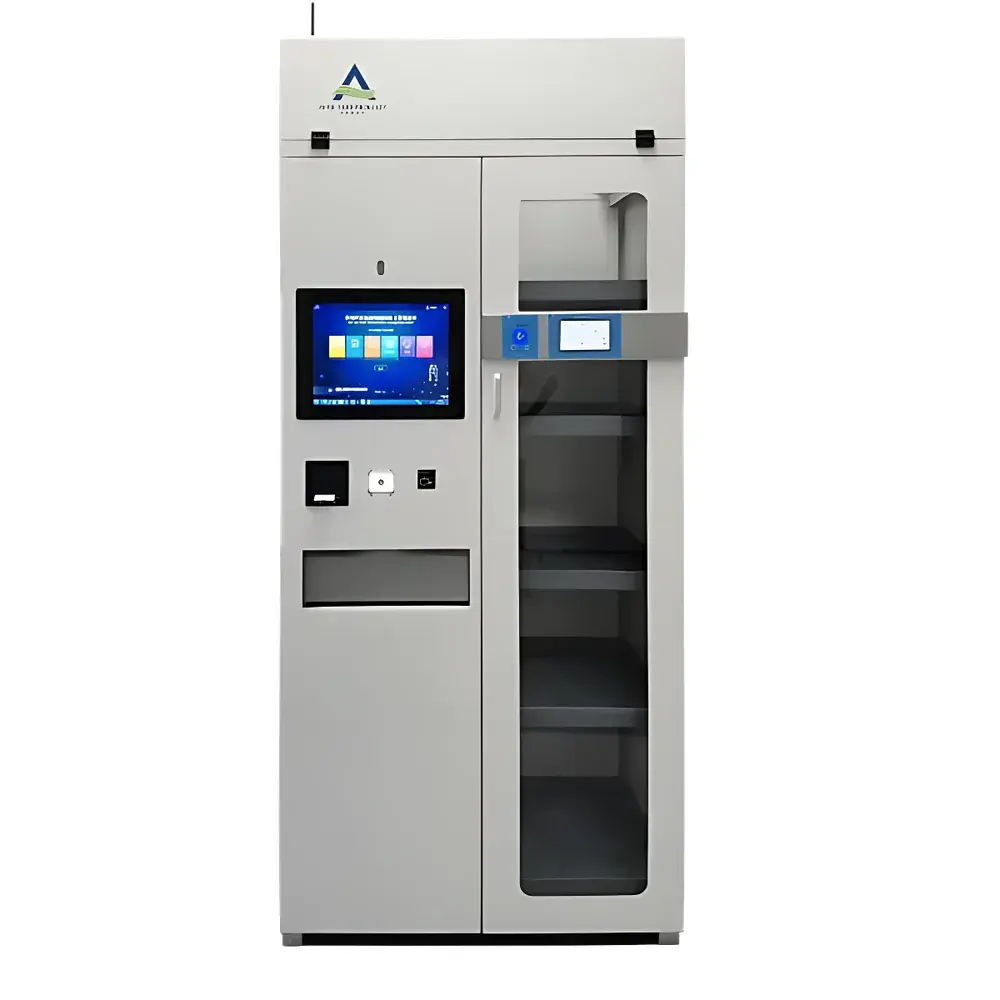
Airs AES 900 Smart Chemical Storage Cabinet (QR Code Edition)
| Brand | Airs |
|---|---|
| Origin | Shanghai, China |
| Manufacturer Type | Direct Manufacturer |
| Country of Origin | China |
| Model | AES 900 (QR Code Edition) |
| Pricing | Available Upon Request |
Overview
The Airs AES 900 Smart Chemical Storage Cabinet (QR Code Edition) is an integrated intelligent storage and environmental management system engineered for laboratories, pharmaceutical QC facilities, and research institutions requiring strict control over hazardous chemical handling, traceability, and ambient air quality. Unlike conventional ventilated or flame-proof cabinets, the AES 900 employs a closed-loop active air purification architecture coupled with real-time digital inventory governance. It operates on the principle of continuous catalytic oxidation and activated carbon adsorption to neutralize volatile organic compounds (VOCs), acidic vapors, and solvent fumes—common byproducts of stored reagents such as acetone, methanol, hydrochloric acid, and formaldehyde. Simultaneously, its pressure-regulated airflow system maintains a slight positive differential pressure relative to adjacent lab spaces, minimizing uncontrolled infiltration of contaminated air and reducing reliance on central HVAC exhaust—thereby lowering overall ventilation energy demand by up to 30% in validated installations.
Key Features
- Real-time QR code–enabled chemical lifecycle tracking: automatic logging of check-in, check-out, return, and disposal events with user ID, timestamp, and quantity verification
- Role-based access control (RBAC) supporting administrator, supervisor, technician, and trainee profiles with configurable permission tiers (e.g., inventory view only vs. full edit rights)
- Automated expiry alerting: dynamic shelf-life monitoring tied to batch-specific manufacturer expiration dates; visual and audible notifications 7/3/1 days prior to expiry
- Dual-stage air purification: pre-filter + high-efficiency activated carbon bed + low-temperature catalytic oxidizer (LTCO) for sub-ppm VOC abatement
- Positive-pressure maintenance module: digitally regulated blower system sustaining +5–15 Pa differential pressure against corridor or lab ambient, compliant with ISO 14644-1 Class 8 cleanroom interface requirements
- Integrated environmental sensors: real-time monitoring of internal temperature (±0.5 °C), relative humidity (±3% RH), and total VOC concentration (PID-based, 0–100 ppm range)
- Modular steel construction with epoxy-coated interior, 304 stainless steel shelving, and spill containment sumps (≥2.5 L capacity per shelf)
Sample Compatibility & Compliance
The AES 900 accommodates standard laboratory containers—including glass bottles (up to 4 L), HDPE carboys (up to 20 L), aerosol cans, and sealed ampoules—across UN hazard classes 3 (flammables), 8 (corrosives), and selected Class 6.1 (toxic) substances. Its design adheres to national and international safety frameworks including GB/T 3836.1–2021 (explosion protection), AQ/T 3047–2013 (chemical storage practice), and aligns with OSHA 29 CFR 1910.1200 (Hazard Communication Standard) labeling and recordkeeping expectations. While not certified as a Class I, Division 1 explosion-proof enclosure, it meets NFPA 45 (Standard on Fire Protection for Laboratories Using Chemicals) recommendations for ventilated, monitored storage of low-to-moderate volatility chemicals when installed per manufacturer-specified clearances and grounding protocols.
Software & Data Management
The cabinet integrates seamlessly with Airs ChemTrack™ v3.2, a locally hosted or cloud-deployable chemical information management platform. All transactional data—including audit trails, user actions, sensor logs, and calibration records—are stored with immutable timestamps and support export in CSV, PDF, or XML formats. The system implements ALCOA+ principles (Attributable, Legible, Contemporaneous, Original, Accurate, Complete, Consistent, Enduring, Available) for data integrity. Optional 21 CFR Part 11 compliance mode enables electronic signatures, role-based e-signature approval workflows, and automated audit trail generation for GLP/GMP-regulated environments. Data retention policies are configurable per institutional policy, with encrypted backups supported via SFTP or network-attached storage (NAS).
Applications
- Academic and industrial R&D labs managing diverse reagent inventories across synthetic chemistry, materials science, and analytical method development
- Pharmaceutical quality control laboratories requiring documented chain-of-custody for reference standards and stability study samples
- Hospital pharmacy satellite storage areas where controlled substance accountability and environmental exposure mitigation are mandated
- Contract manufacturing organizations (CMOs) undergoing FDA or EMA inspections requiring demonstrable chemical stewardship and energy-efficient facility operations
- Microelectronics fabrication cleanrooms needing localized VOC suppression without compromising ISO Class 5–8 air purity targets
FAQ
Does the AES 900 require external ducting or connection to a central exhaust system?
No—it operates as a self-contained recirculating unit; ductless installation is standard, though optional exhaust bypass is available for integration with building HVAC where local codes mandate it.
Can the cabinet be integrated with existing LIMS or ERP systems?
Yes—ChemTrack™ supports RESTful API endpoints and HL7-compliant data exchange for bidirectional synchronization with major LIMS platforms (e.g., LabWare, Thermo SampleManager) and enterprise resource planning systems.
What maintenance intervals are recommended for the air purification system?
Carbon filter replacement every 6 months under typical usage (≤8 hrs/day); LTCO catalyst recalibration annually; full system diagnostic check recommended quarterly.
Is remote monitoring and alerting supported?
Yes—email/SMS alerts for expired inventory, door-open duration >60 sec, VOC threshold exceedance, and system fault conditions are configurable via the ChemTrack™ dashboard.
Does the cabinet meet fire-resistance rating requirements?
The AES 900 is constructed with 1.2 mm cold-rolled steel and features 30-minute fire-rated insulation in accordance with GB 15630–2022; however, it is not UL 94 or EN 1363-1 certified as a fire-resistive enclosure—consult local fire authority for application-specific approval.



