
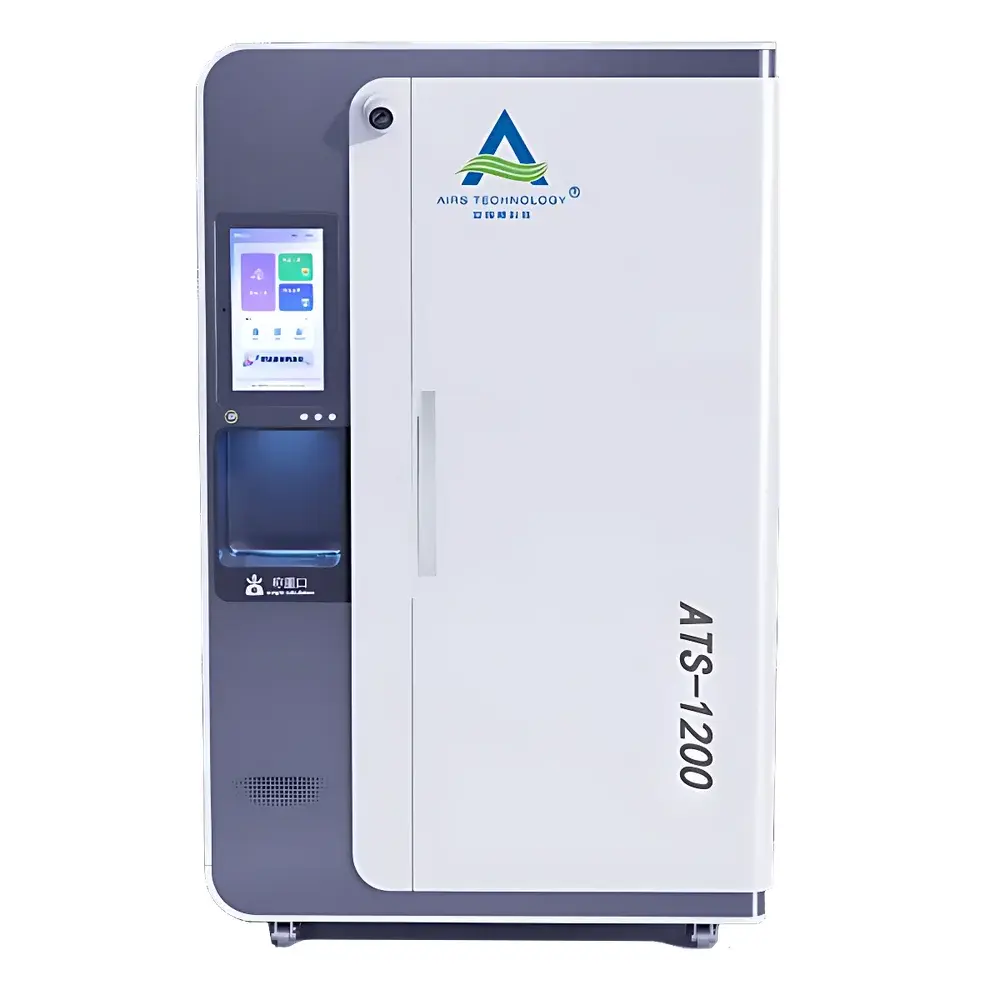
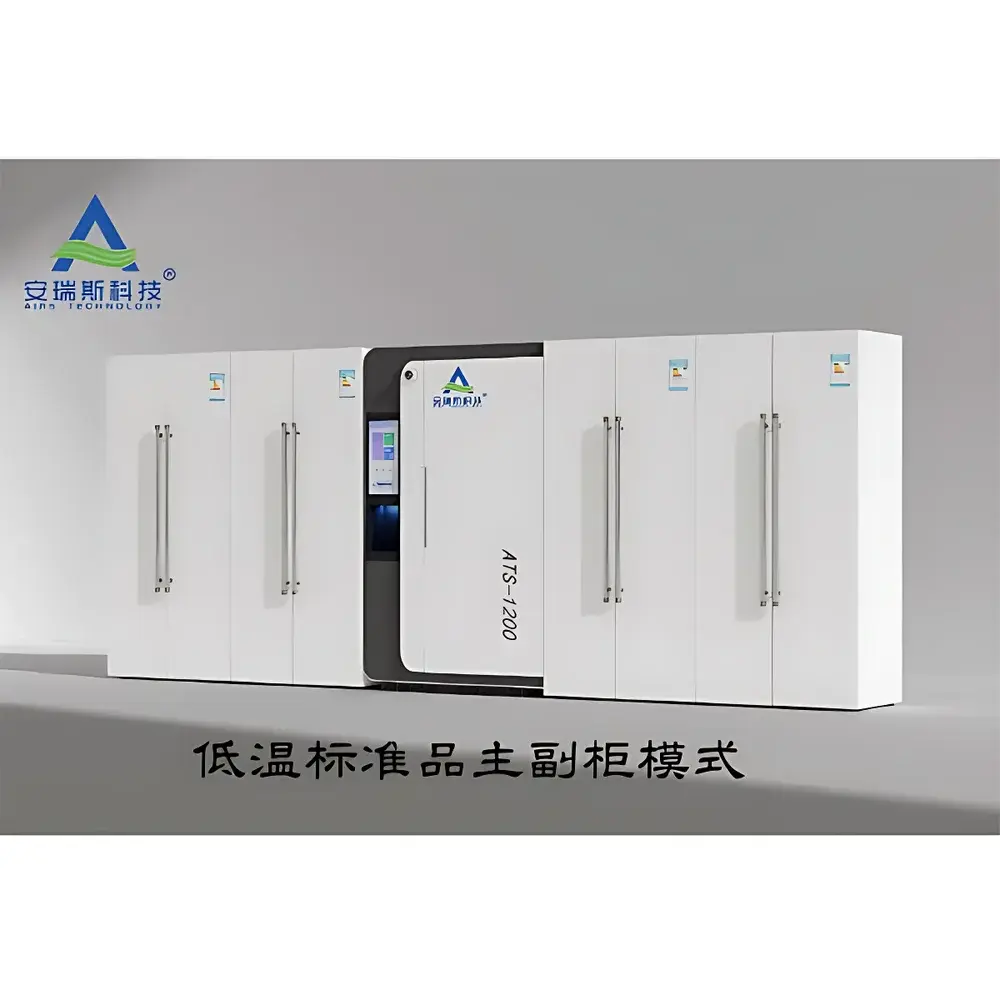
Airs ATS-1200 Smart RFID-Enabled Standard Reference Material (SRM) Storage Cabinet
| Brand | Airs |
|---|---|
| Origin | Shanghai, China |
| Manufacturer Type | Direct Manufacturer |
| Country of Origin | China |
| Model | ATS-1200 |
| Pricing | Available Upon Request |
| Temperature Control Modes | Dual-Zone Programmable (-22 to -5°C or 0 to 8°C) |
| Core Technology | Passive UHF RFID (860–960 MHz) with Antenna Array Integration |
| Software Platform | Airs SRMTrack™ Unified Inventory Management System |
| Compliance Framework | Designed for GLP/GMP-aligned laboratory environments |
Overview
The Airs ATS-1200 Smart RFID-Enabled Standard Reference Material (SRM) Storage Cabinet is an engineered solution for secure, traceable, and temperature-stable storage of certified reference materials, analytical standards, pharmaceutical controls, and calibration substances in regulated laboratory settings. Unlike conventional refrigerated cabinets, the ATS-1200 integrates a distributed UHF RFID antenna architecture—mounted within interior shelving and door frames—to enable non-contact, bulk-read identification of ISO/IEC 18000-6C compliant tags affixed to vials, ampoules, or secondary packaging. Each item’s unique identifier is synchronized in real time with the Airs SRMTrack™ software platform, establishing an auditable chain of custody from receipt through disposal. The cabinet supports two independent temperature regimes: a deep-cold zone (-22 to -5°C) suitable for thermolabile SRMs (e.g., enzyme standards, unstable metabolites), and a controlled-cool zone (0 to 8°C) optimized for hygroscopic or light-sensitive reference compounds requiring refrigeration without freezing. Its structural design adheres to IEC 61000-6-3 EMC emission limits and meets UL 61010-1 safety requirements for laboratory equipment.
Key Features
- Programmable dual-temperature zones with independent PID-controlled compressors and redundant NTC sensor arrays (±0.3°C accuracy over full range)
- Integrated 4-antenna UHF RFID system enabling simultaneous detection of ≥120 tagged items per inventory cycle (typical read success rate >99.2% under standard lab humidity conditions)
- Touchscreen HMI (7-inch capacitive display) with role-based access control (admin, technician, auditor tiers) and local event logging (last 30 days buffered)
- Modular stainless-steel shelving with embedded RFID-tagged shelf IDs, supporting configurable bin-level tracking and automatic repositioning alerts
- RS-485 and Ethernet (TCP/IP) interfaces for integration into LIMS, ELN, or enterprise ERP systems via standardized RESTful API endpoints
- Alarm hierarchy with audible/visual notifications and remote SNMP trap generation for door-open duration (>30 sec), temperature excursion (>±1.5°C), or RFID communication failure
Sample Compatibility & Compliance
The ATS-1200 accommodates standard laboratory containers including 2 mL–20 mL screw-cap vials, 10–50 mL amber glass bottles, and sealed aluminum pouches—provided they bear ISO/IEC 15693 or EPCglobal Gen2 RFID tags mounted externally or embedded in label substrates. It is validated for use with NIST-traceable SRMs, USP Reference Standards, EP Certified Reference Substances, and internally qualified working standards. The cabinet’s data integrity architecture complies with ALCOA+ principles (Attributable, Legible, Contemporaneous, Original, Accurate, Complete, Consistent, Enduring, Available) and supports 21 CFR Part 11-compliant electronic signatures when deployed with validated SRMTrack™ server configuration. Audit trails include immutable timestamps for all user-initiated actions (e.g., check-in, check-out, temperature setpoint change) and are exportable as CSV or PDF for regulatory review.
Software & Data Management
Airs SRMTrack™ is a browser-based inventory management application built on a PostgreSQL relational database with daily encrypted backups and optional cloud synchronization (AWS GovCloud or on-premise VMware deployment). The software enforces mandatory metadata fields—including lot number, expiration date, certificate ID, assigned analyst, and storage location—and auto-generates QR-coded labels upon item registration. It provides dynamic dashboards showing stock aging, usage frequency, low-stock thresholds, and deviation history. All modifications undergo versioned logging with SHA-256 hashing; rollback functionality is restricted to system administrators with dual-factor authentication. Data exports meet ISO/IEC 17025 clause 7.5.2 requirements for record retention and are compatible with third-party analytics tools via ODBC drivers.
Applications
- Quality control laboratories maintaining traceability of pharmacopeial standards across batch release testing
- Reference material producers managing distribution and recall logistics of certified reference substances
- Contract research organizations (CROs) fulfilling sponsor-mandated audit readiness for FDA, EMA, or PMDA inspections
- Academic core facilities centralizing access to shared isotopic, elemental, or biochemical standards while enforcing usage quotas
- Environmental testing labs storing EPA Method 8082 PCB standards and other temperature-sensitive matrix reference materials
FAQ
Does the ATS-1200 support integration with existing LIMS platforms?
Yes—via documented RESTful API and configurable HL7/ASTM E1384 message mapping. Pre-built connectors are available for Thermo Fisher SampleManager, LabVantage, and STARLIMS.
Can RFID tags be read through metal or foil-wrapped containers?
Standard passive UHF tags exhibit reduced performance near conductive surfaces; we recommend using on-metal tags (e.g., Alien ALN-9640) or relocating tags to non-shielded label areas. Validation testing is advised for each container type.
Is firmware update capability available remotely?
Firmware updates require authenticated USB media or secure SFTP upload to the onboard gateway; no unattended remote update functionality is implemented to preserve system integrity.
What is the mean time between failures (MTBF) for the RFID subsystem?
Based on accelerated life testing, the antenna array and reader module demonstrate an MTBF of ≥50,000 hours under continuous operation at 25°C ambient.
How is user access permission enforced across temperature zones?
Permissions are defined at the software level: technicians may access only assigned zones, while auditors receive read-only visibility across all zones without modification rights.



