
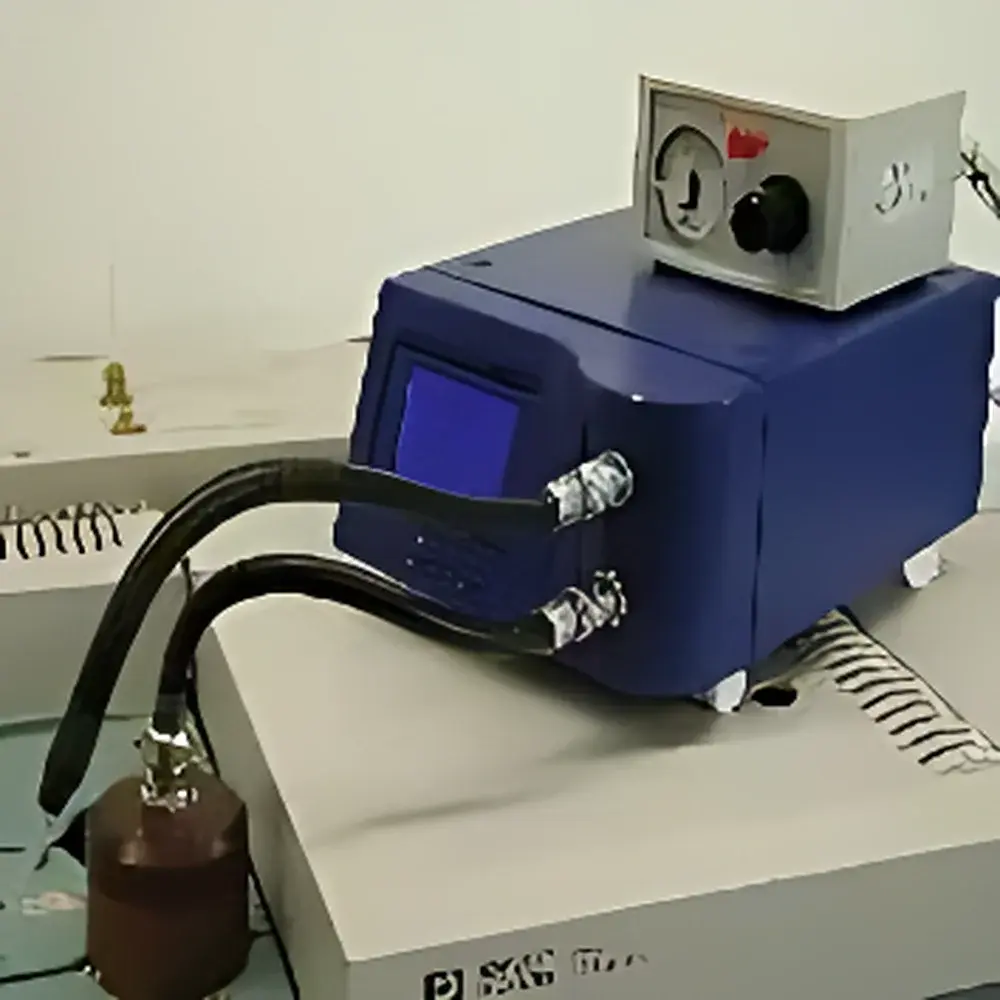
AIRSENSE EDU3 Thermal Desorption Unit for Electronic Nose Systems
| Brand | AIRSENSE |
|---|---|
| Origin | Germany |
| Model | EDU3 |
| Product Type | Olfactory Analysis System (Electronic Nose) |
| Adsorbent Compatibility | Multiple proprietary sorbents |
| Sample Flow Rate | 0.2–0.5 L/min (programmable) |
| Sample Temperature Range | 30–100 °C (adjustable) |
| Desorption Flow Rate | 50–100 mL/min (adjustable) |
| Desorption Temperature | >250 °C (adjustable) |
| Injection Port Temperature | >150 °C (heated transfer line) |
| Enrichment Factor | 10–1,000× (compound- and time-dependent) |
| Interface Compatibility | PEN3 electronic nose, GC, GC-MS, MS |
Overview
The AIRSENSE EDU3 Thermal Desorption Unit is a precision-engineered sample preconcentration and thermal desorption system designed specifically for integration with olfactory analysis platforms—particularly the PEN3 electronic nose—and complementary analytical instruments including gas chromatography (GC), GC-mass spectrometry (GC-MS), and standalone mass spectrometers. Operating on the principle of selective adsorption followed by controlled thermal desorption, the EDU3 enables quantitative enrichment of volatile organic compounds (VOCs) and semi-volatile organic compounds (SVOCs) from complex gaseous matrices. Its core function is to capture target odorants onto thermally stable, chemically tailored sorbent tubes or beds under defined flow and temperature conditions, then rapidly release them as narrow, high-concentration analyte pulses for downstream detection. This two-stage process—adsorption at ambient or moderately elevated temperatures, followed by rapid flash desorption above 250 °C—ensures high recovery efficiency, minimal compound degradation, and excellent reproducibility across repeated analyses. The system is engineered for trace-level olfactometric profiling in research and quality control environments where human sensory correlation, method robustness, and regulatory traceability are critical.
Key Features
- Programmable sample flow control (0.2–0.5 L/min) with integrated mass flow sensor feedback for precise volumetric sampling
- Independent, digitally regulated temperature zones: sample conditioning (30–100 °C), desorption oven (>250 °C), and heated transfer line (>150 °C) to prevent condensation and ensure quantitative transfer
- Adjustable desorption flow (50–100 mL/min) optimized for compatibility with both electronic nose sensors and GC inlet systems
- Multi-sorbent support—including Tenax TA, Carbopack B/C, and custom polymer-based media—enabling selective retention based on polarity, volatility, and molecular weight
- Fully automated operational sequence: sampling → tube conditioning → thermal desorption → injection → bake-out → cooling → standby
- Modular interface architecture supporting direct coupling to PEN3 electronic nose via heated capillary, or to GC/GC-MS via standard split/splitless inlets or dedicated thermal desorption injectors
- No external cryogenic cooling required; relies on passive/active air-cooling for post-desorption thermal reset
Sample Compatibility & Compliance
The EDU3 accommodates a broad spectrum of sample types across food, environmental, pharmaceutical, and materials science domains. It supports headspace sampling of solid and liquid matrices—including fermented dairy, fruits, roasted coffee, tobacco, packaging films, wastewater off-gas, and microbial cultures—without solvent extraction. Its selective adsorption capability allows discrimination between ethanol and co-eluting aroma volatiles (e.g., esters, aldehydes, terpenes), making it especially suitable for alcoholic beverage profiling per ISO 11014 and ASTM E2729 guidelines. All thermal protocols are fully logged and timestamped, supporting GLP-compliant workflows. When paired with PEN3, the combined system meets functional requirements for odorant pattern recognition referenced in ISO 17601 (electronic noses for food quality) and EN 13725 (dynamic olfactometry). Data integrity is maintained through non-volatile parameter storage and audit-ready event logging.
Software & Data Management
The EDU3 operates via embedded firmware with USB and RS-232 connectivity, enabling remote configuration and real-time monitoring through AIRSENSE’s proprietary ControlSuite software. Method parameters—including flow profiles, temperature ramps, dwell times, and cycle sequencing—are stored as encrypted .edm files with version control and user access levels. All desorption events are tagged with metadata (operator ID, sample ID, date/time, sorbent lot, calibration status) to satisfy FDA 21 CFR Part 11 requirements for electronic records when used in regulated QC laboratories. Raw thermal desorption profiles can be exported in CSV format for integration into multivariate statistical platforms (e.g., PCA, LDA, PLS-DA) alongside PEN3 response arrays or GC peak tables.
Applications
- Food & Beverage: Shelf-life assessment of meat and dairy products; varietal differentiation of fruit aromas; authenticity screening of honey and olive oil; batch consistency monitoring in coffee roasting and beer fermentation
- Materials Science: Quantification of residual monomers and plasticizers from polymer packaging; odor emission profiling of recycled paperboard and adhesives per ISO 12987
- Environmental Monitoring: Odor impact assessment at wastewater treatment plants using biofilter effluent analysis; ambient VOC mapping near industrial sites; natural gas leak detection via mercaptan fingerprinting
- Pharmaceutical Development: Real-time monitoring of microbial metabolism in bioreactors; excipient odor stability testing; counterfeit drug identification through volatile signature matching
- Academic Research: Cross-modal validation of electronic nose outputs against human sensory panels; development of odor biomarkers for bacterial species grown on agar media
FAQ
Can the EDU3 be used without an electronic nose?
Yes—the EDU3 functions as a standalone thermal desorption module and may be directly interfaced with GC, GC-MS, or FTIR systems via standard pneumatic and thermal interfaces.
What sorbent tubes are compatible with the EDU3?
The unit accepts industry-standard 6 mm OD stainless steel or glass sorbent tubes (e.g., 110 mm length), including Tenax TA, Carbopack B/C, and custom mixed-bed configurations supplied by AIRSENSE or third-party vendors.
Does the system support automated multi-tube operation?
No—the EDU3 is configured for single-tube processing per run; however, sequential unattended operation is achievable via external robotic autosamplers compatible with its digital I/O interface.
Is method validation documentation available?
AIRSENSE provides IQ/OQ documentation templates and application notes aligned with ISO/IEC 17025 for laboratory accreditation; full PQ validation must be performed in situ by the end user.
How is carryover minimized between runs?
Each cycle includes a high-temperature bake-out phase (up to 320 °C) under inert gas purge, followed by active cooling to ≤40 °C before next sampling—validated to achieve <0.5% carryover for benchmark compounds such as limonene and ethyl acetate.





