
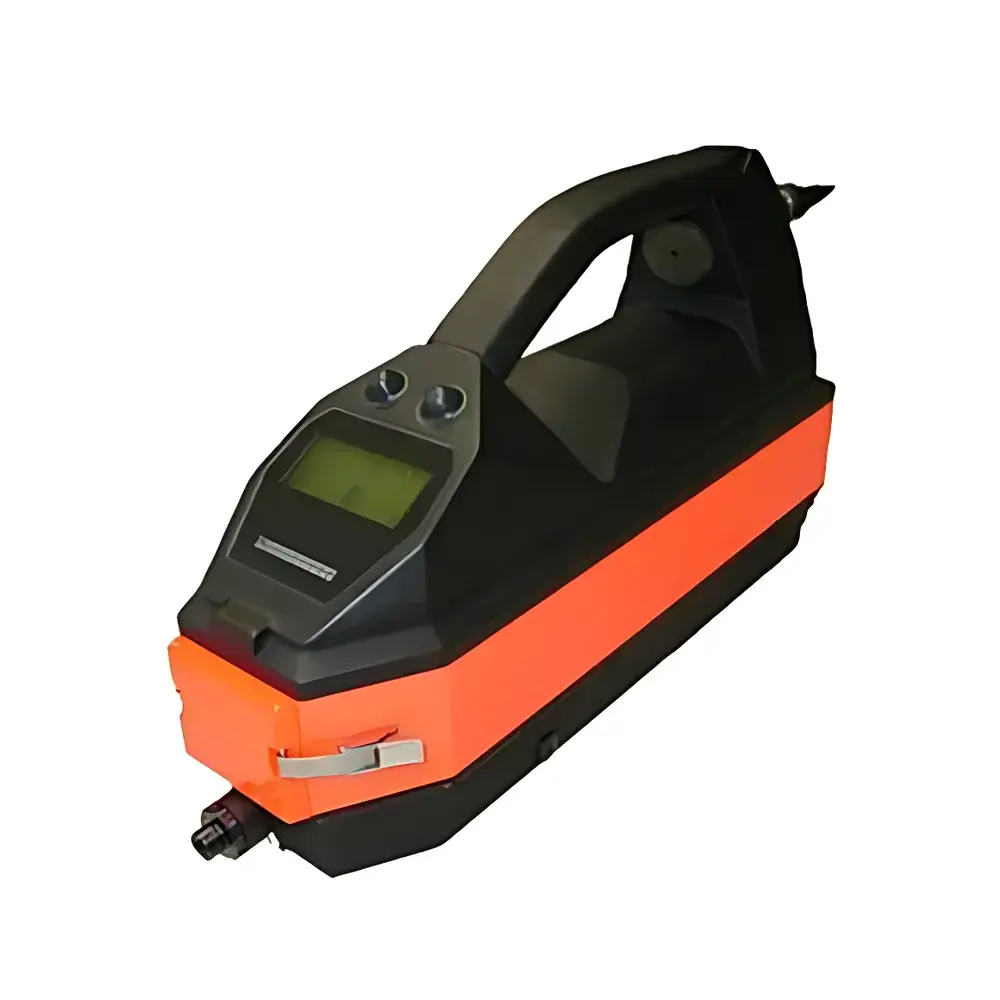
AIRSENSE GDA-F Container-Based Toxic Gas and Fumigant Residue Screening System
| Brand | AIRSENSE |
|---|---|
| Origin | Germany |
| Model | GDA-F |
| Detection Principle | Multi-Sensor Fusion (IMS, PID, MOS, EC) + Pattern Recognition Algorithm |
| Detection Time | 2–60 s |
| Detection Range | 1 ppb – 10 ppm (gas-dependent) |
| Sample Interface | Dedicated Container Probe with Integrated Auto-Sampling Pump |
| Operating Temperature | −30 °C to +50 °C |
| Relative Humidity Range | 5–95% RH (non-condensing) |
| Power Supply | Rechargeable Li-ion Battery (30 W, 4 h runtime) |
| Dimensions | 39.5 × 11.2 × 21 cm |
| Weight | 4.2 kg |
| Data Interfaces | RS-232, Ethernet, Wireless Transmission |
| Sensor Channels | 8-channel parallel acquisition (dual IMS, dual PID, dual MOS, dual EC) |
| Database | Preloaded Library of TICs & Fumigants (Expandable) |
Overview
The AIRSENSE GDA-F is a field-deployable, container-integrated toxic gas and fumigant residue screening system engineered for high-throughput, non-intrusive safety verification at border control points, customs inspection facilities, and international logistics hubs. Designed in accordance with EU regulatory frameworks for cargo security and chemical hazard surveillance, the GDA-F operates on a multi-sensor fusion architecture—integrating four complementary detection modalities: Ion Mobility Spectrometry (IMS), Photoionization Detection (PID), Metal Oxide Semiconductor (MOS), and Electrochemical (EC) sensing. Each modality is deployed across dual parallel channels, yielding an 8-dimensional response vector per sampling event. This vector functions as a chemometric fingerprint, matched in real time against a validated spectral library using supervised pattern recognition algorithms. Unlike single-technology instruments, the GDA-F delivers robust discrimination among structurally similar compounds—including methyl bromide, phosphine, chloropicrin, hydrogen cyanide, sulfur dioxide, and volatile organic TICs—without requiring sample pre-concentration or laboratory-grade infrastructure.
Key Features
- Non-invasive screening: Compatible with sealed ISO shipping containers via dedicated stainless-steel probe assembly and integrated vacuum-assisted sampling pump.
- Sub-10-second response: Typical identification and quantification completed within 6–10 seconds; configurable dwell time from 2 s (rapid triage) to 60 s (low-concentration confirmation).
- Environmental resilience: Certified operation across −30 °C to +50 °C ambient temperatures and 5–95% relative humidity (non-condensing), enabling year-round deployment in maritime, desert, and temperate zones.
- Low false-alarm rate: Adaptive baseline correction and cross-sensor correlation logic suppress interference from humidity fluctuations, diesel exhaust, and common VOC background.
- Modular maintenance: Field-replaceable sensor cartridges with embedded calibration traceability; no tools required for routine module swaps.
- Battery-operated autonomy: Integrated rechargeable Li-ion pack supports ≥4 hours of continuous operation; hot-swappable battery option available for extended shift coverage.
Sample Compatibility & Compliance
The GDA-F is validated for direct vapor-phase analysis of headspace gases extracted from standard 20-ft and 40-ft intermodal containers. Its probe interface conforms to EN 15722:2009 (sampling of hazardous substances from freight containers) and aligns with ICAO Annex 18 / IATA DGR provisions for fumigant residue verification. The instrument’s detection library covers all fumigants regulated under EU Regulation (EC) No 396/2005 and US EPA FIFRA §18 emergency exemptions—including sulfuryl fluoride, ethylene oxide, and aluminum phosphide degradation products. Data integrity meets GLP-aligned audit requirements: timestamped records include sensor health metrics, environmental metadata (T/RH), and raw channel responses. Optional firmware upgrade enables 21 CFR Part 11-compliant electronic signatures and audit trail logging.
Software & Data Management
The GDA-F runs AIRSENSE’s proprietary ScreenLogic™ firmware, accessible via touchscreen interface or remote web console (HTTPS-enabled). All measurement sessions are auto-saved in .csv and .xml formats, preserving full 8-channel time-series data alongside classification confidence scores. Integration with enterprise LIMS or customs risk management systems is supported through standardized protocols: Modbus TCP over Ethernet, ASCII framing over RS-232, and MQTT over Wi-Fi/4G. Custom database expansion is performed via encrypted firmware updates, with library validation reports provided per ISO/IEC 17025-accredited procedures. Firmware versioning, sensor calibration history, and user access logs are retained onboard for ≥12 months.
Applications
- Customs pre-clearance screening for illicit chemical shipments and undeclared fumigation residues.
- Port authority compliance verification against IMO MSC.1/Circ.1522 (container safety standards).
- Phytosanitary certification support for agricultural imports subject to ISPM 15 and EU Directive 2009/32/EC.
- Emergency response triage during suspected chemical release incidents inside confined cargo spaces.
- Periodic verification of fumigation efficacy and off-gassing kinetics in quarantine treatment facilities.
FAQ
Does the GDA-F require daily calibration?
No—sensor modules are factory-calibrated with NIST-traceable reference standards and retain calibration for ≥90 days under typical field use. A quick functional check (30 s) is recommended before each shift.
Can the system detect unknown or emerging threat agents?
It identifies only compounds present in its validated library. However, anomalous response patterns trigger “unknown signature” alerts with raw spectral data export for offline forensic analysis.
Is the probe compatible with refrigerated or insulated containers?
Yes—the stainless-steel probe and heated sampling line (optional) maintain consistent flow dynamics across refrigerated (-25 °C) and ambient conditions.
How is data security ensured during wireless transmission?
All wireless communications employ TLS 1.2 encryption; device authentication uses certificate-based mutual TLS, compliant with NIST SP 800-171 controls.
What training is required for operational deployment?
A certified 4-hour instructor-led course covers probe insertion protocol, alarm interpretation, basic troubleshooting, and report generation—no prior analytical instrumentation experience required.





