
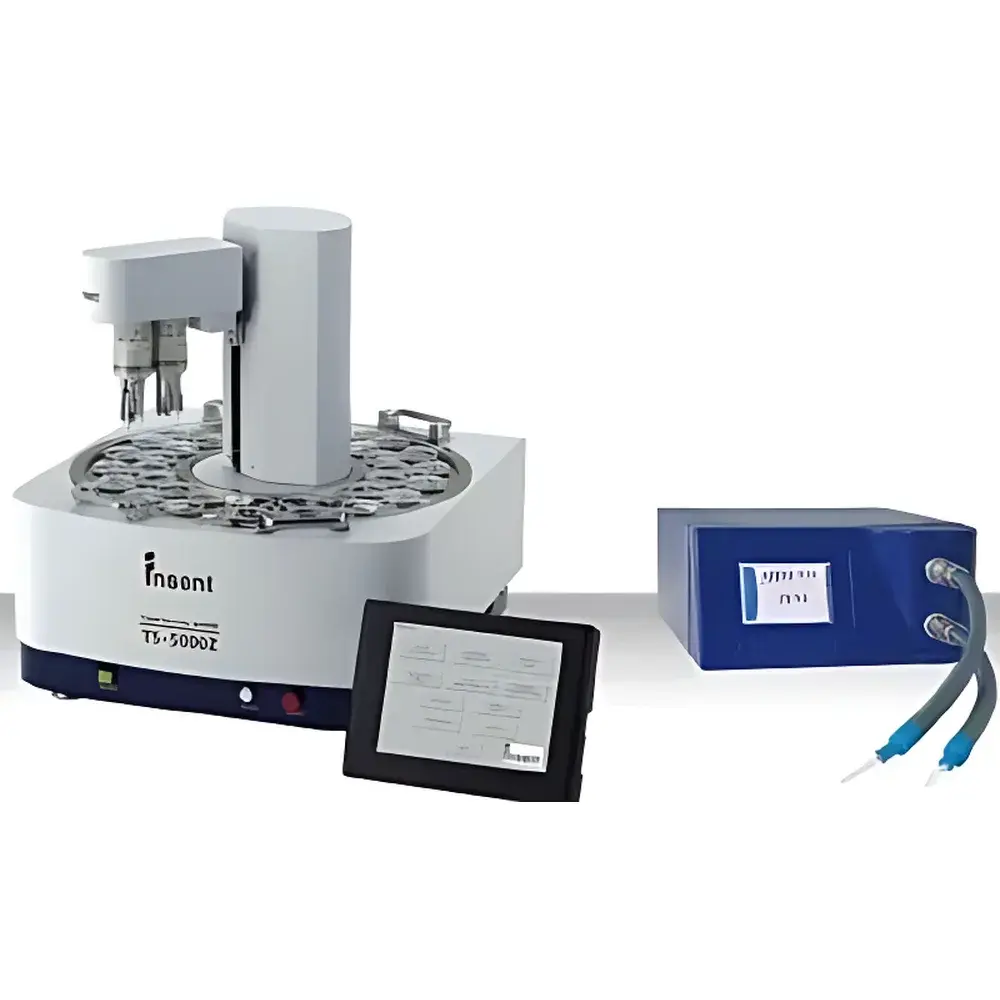
AIRSENSE TS-5000Z & PEN3 Sensory Intelligent Analysis Platform — Electronic Tongue and Electronic Nose System
| Brand | AIRSENSE |
|---|---|
| Origin | Germany |
| Manufacturer Type | Authorized Distributor |
| Product Category | Imported Instrument |
| Models | TS-5000Z (Electronic Tongue), PEN3 (Electronic Nose) |
| Application | Odor and Taste Profiling, Quality Control, Process Monitoring, Sensory Fingerprinting |
| Detection Principle | Multi-channel Biomimetic Lipid Membrane Sensors (TS-5000Z) |
| Sensitivity | Sub-ppb (PEN3), Quantitative Taste Index Resolution (TS-5000Z) |
| Compliance | Designed for GLP-compliant workflows |
| supports ASTM E2897-21 (Standard Guide for Electronic Nose Data Acquisition and Analysis) and ISO 22964 | 2021 (Electronic Tongues — Performance Requirements and Test Methods) |
Overview
The AIRSENSE TS-5000Z & PEN3 Sensory Intelligent Analysis Platform is a dual-modality analytical system engineered for objective, reproducible quantification of taste and odor profiles in complex matrices. Unlike subjective human sensory panels, this platform integrates two complementary technologies: the TS-5000Z electronic tongue—based on multi-channel biomimetic lipid membrane sensors that mimic biological taste receptor responses—and the PEN3 electronic nose, utilizing a dynamic-flow-controlled metal oxide semiconductor (MOS) sensor array optimized for volatile organic compound (VOC) pattern recognition. The system operates on the principle of cross-reactive sensor response profiling: each sensor exhibits partial selectivity, generating a unique multidimensional “sensory fingerprint” for each sample. These fingerprints are processed via chemometric algorithms (PCA, LDA, SIMCA) to enable classification, discrimination, and quantitative trend analysis. Designed for laboratories requiring regulatory-grade data integrity, the platform supports audit-ready operation under GLP and GMP frameworks, with built-in timestamped metadata logging and user-access control.
Key Features
- TS-5000Z electronic tongue delivers standardized measurement of six primary taste modalities: sourness, sweetness, bitterness, saltiness, umami, and astringency—plus secondary dimensions including bitter aftertaste intensity, umami persistence (richness), and astringency sharpness.
- PEN3 electronic nose achieves sub-parts-per-trillion (ppt) detection limits for key food volatiles (e.g., aldehydes, esters, sulfur compounds) through dynamic dilution, real-time flow regulation, and optional thermal desorption enrichment.
- Zero-gas generator integrated into PEN3 eliminates dependency on external compressed air or nitrogen cylinders—critical for field-deployable or continuous monitoring applications.
- Standalone operation: both instruments feature high-resolution LCD displays, internal flash memory (≥16 GB), and onboard data processing—no PC required for routine measurements or method execution.
- Modular sampling architecture accommodates liquid, semi-solid, powdered, and gaseous samples without pre-treatment; compatible with custom vials, Petri dishes, headspace vials, and industrial-scale sampling interfaces.
- Robust sensor protection protocol: automatic flow-rate modulation and periodic sensor regeneration cycles extend operational lifetime beyond 5 years under standard usage conditions.
Sample Compatibility & Compliance
The platform accepts direct analysis of raw, unprocessed samples across food science, pharmaceutical, agricultural, and environmental domains—including dairy products, fermented beverages, meat analogs, herbal extracts, wastewater headspace, and ambient air. No derivatization, extraction, or solvent use is required. All hardware and firmware comply with IEC 61326-1 (EMC for laboratory equipment) and CE marking requirements. Data acquisition software adheres to FDA 21 CFR Part 11 principles: electronic signatures, audit trails with immutable timestamps, role-based access control, and encrypted database storage. Method validation documentation aligns with ISO/IEC 17025:2017 for testing laboratories and supports traceability to reference standards defined in USP and EP 2.2.47.
Software & Data Management
The proprietary Alpha MOS ASTREE software provides unified control, visualization, and statistical interpretation for both TS-5000Z and PEN3 modules. It includes preconfigured SOP templates for freshness assessment (e.g., fish spoilage index), fermentation stage tracking, batch consistency scoring, and off-flavor screening. All datasets export to CSV, Excel, or CDF formats for integration with LIMS or enterprise analytics platforms. Advanced features include supervised model training (PLS-DA, Random Forest), cross-validation diagnostics, and automated outlier detection based on Mahalanobis distance thresholds. Software updates are delivered via secure HTTPS channels with SHA-256 signature verification.
Applications
- Food R&D: Objective comparison of competitive product taste/odor fingerprints to guide reformulation and claim substantiation (e.g., “reduced sodium” or “natural flavor enhancement”).
- QC/QA: Real-time release testing of incoming raw materials (e.g., coffee beans, spices) and finished goods against multivariate sensory specifications.
- Agricultural breeding: High-throughput phenotyping of crop varieties for flavor-related traits using standardized, operator-independent metrics.
- Pharmaceutical development: Bitterness profiling of APIs and excipient interactions; stability-indicating monitoring of odor drift during accelerated aging.
- Environmental compliance: Odor emission source identification and quantification per EN 13725:2022 for municipal waste facilities and biogas plants.
- Academic research: Method development for sensory biomarker discovery, correlation studies between instrumental outputs and human panel data (ASTM E2900-13), and machine learning model benchmarking.
FAQ
Can the TS-5000Z replace human sensory panels entirely?
It does not replace panels but augments them: the system provides objective, repeatable baseline data for screening and trending; human panels remain essential for hedonic evaluation and nuanced descriptor generation.
Is calibration traceable to international standards?
Yes—sensor response is validated annually using certified reference solutions (e.g., tartaric acid, quinine HCl, NaCl, MSG) traceable to NIST SRMs and ISO 8586 sensory reference materials.
What maintenance is required for long-term stability?
Daily cleaning with deionized water (TS-5000Z electrodes) and weekly sensor chamber purge (PEN3); no consumables or replacement cartridges are needed—the system has no disposable components.
Does the platform support remote monitoring and data sharing?
Via optional Ethernet/Wi-Fi module and secure cloud API, enabling centralized dashboard access for multi-site quality teams while maintaining on-premise data sovereignty.
How is method transfer handled between instruments?
ASTREE software includes method portability tools: sensor response normalization, batch correction algorithms, and inter-instrument model alignment protocols compliant with ASTM E2897-21 Annex A2.
Related Products






