
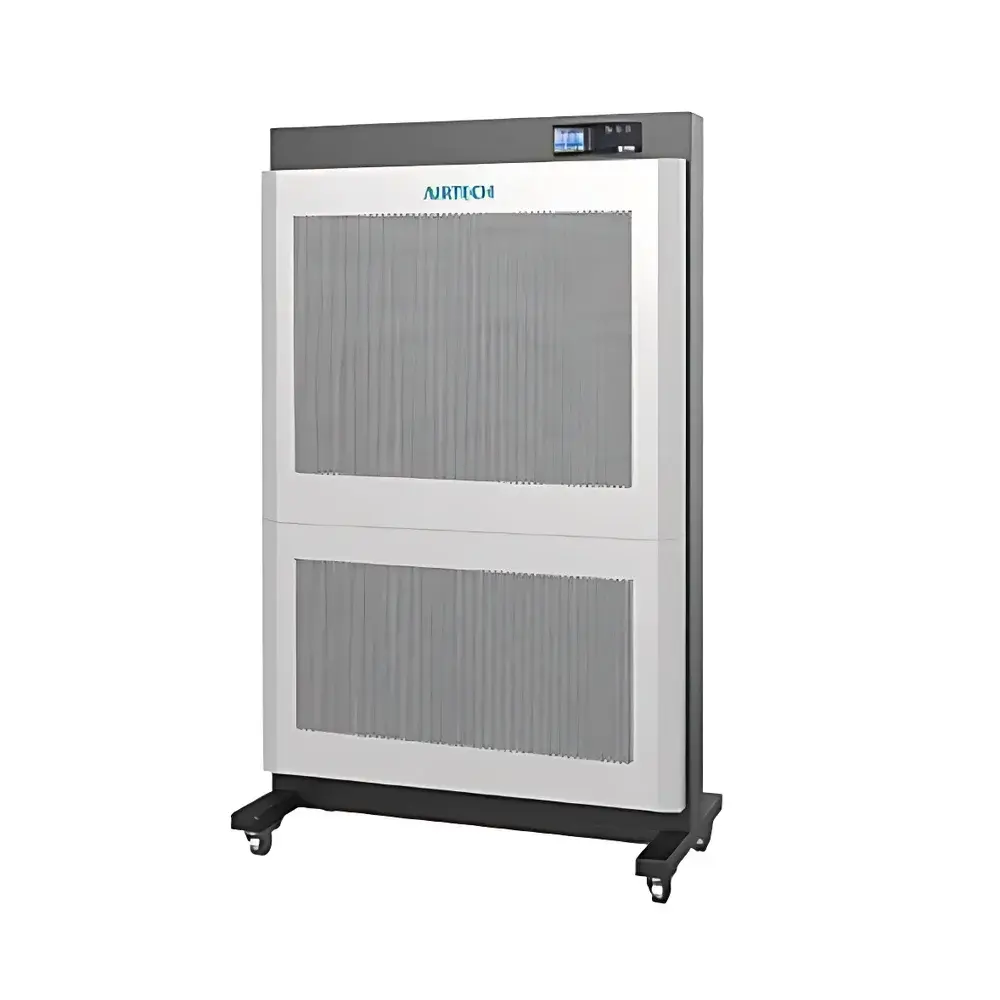
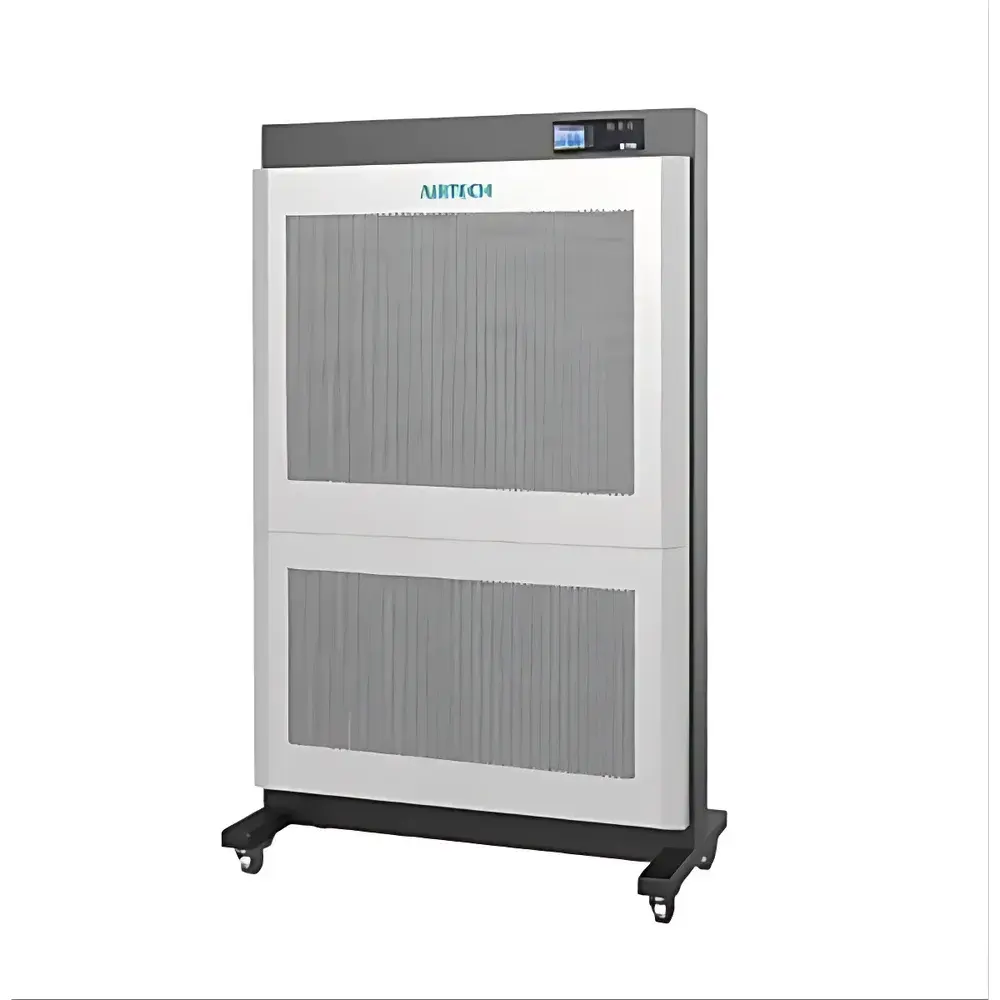
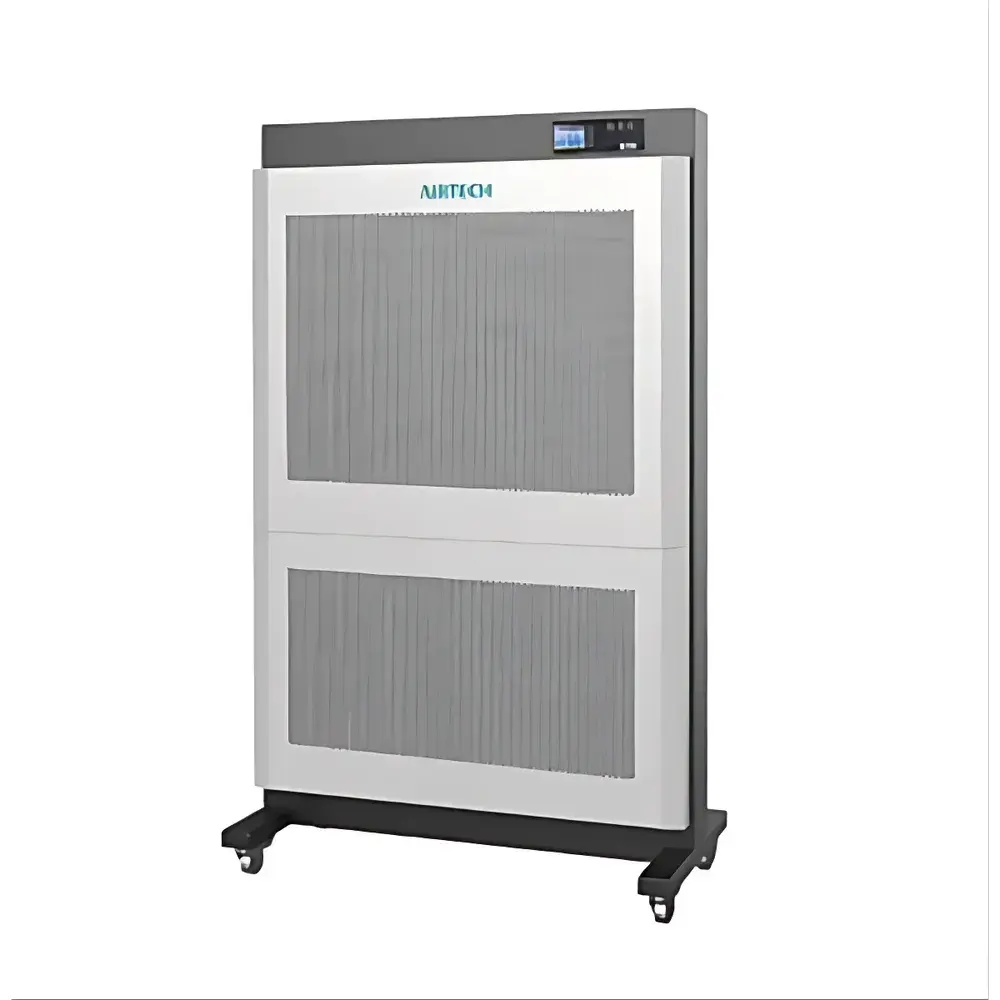
AIRTECH ACP-894 Series Plasma & UV Air Disinfection Unit (Models A/B/C/D)
| Brand | AIRTECH |
|---|---|
| Origin | Jiangsu, China |
| Manufacturer Type | Authorized Distributor |
| Country of Origin | China |
| Model | ACP-894 (A/B/C/D) |
| Instrument Type | Non-thermal Plasma + UVC Disinfection System |
| Intended Use | Medical & Laboratory Environments |
| Sterilization Efficacy | ≥99.9% reduction of Staphylococcus albus, Escherichia coli, Staphylococcus aureus, and Poliovirus (per Chinese Disinfection Technical Specifications, 2002 Edition) |
| Disinfection Mechanism | Synergistic Non-thermal Plasma + 254 nm UVC + HEPA Filtration + Photocatalytic Oxidation (TiO₂) |
| Airflow Rate | 640 / 470 / 250 m³/h (High/Standard/Silent Mode) |
| Noise Level | ≤54 / ≤45 / ≤38 dB(A) |
| Power Supply | AC 220 V, 1Φ, 50 Hz |
| Rated Power | 100 / 80 / 60 W |
| Dimensions (W×D×H) | 890 × 400 × 1500 mm |
| Net Weight | 55 kg |
| Applicable Volume | ≤80 m³ |
| Primary Germicidal Agents | Low-pressure mercury UVC lamp (254 nm), Class H13 HEPA filter (≥99.95% @ 0.3 µm), TiO₂-based photocatalyst, and dielectric barrier discharge (DBD) plasma generator |
Overview
The AIRTECH ACP-894 Series is a CE-compliant, medical-grade air disinfection unit engineered for continuous operation in sensitive environments including clinical laboratories, biosafety cabinets periphery zones, pharmacy preparation rooms, and cleanroom antechambers. It employs a multi-modal physical disinfection architecture—integrating non-thermal dielectric barrier discharge (DBD) plasma, 254 nm ultraviolet-C irradiation, high-efficiency particulate air (HEPA) filtration (H13 class), and titanium dioxide (TiO₂) photocatalytic oxidation—to achieve simultaneous microbial inactivation, particulate removal, and gaseous pollutant degradation without generating ozone above 0.05 ppm (measured per ISO 15714:2018). Unlike chemical fogging or thermal sterilization methods, the ACP-894 operates safely in occupied spaces, satisfying IEC 62471 photobiological safety requirements for UVC exposure and complying with GB 28232–2020 (Chinese Standard for Air Disinfectors) and YY 0215–2013 (Medical Air Disinfection Equipment). Its modular airflow design ensures laminar recirculation at up to 640 m³/h, maintaining steady-state airborne bioburden reduction in enclosed volumes ≤80 m³.
Key Features
- Triple-stage physical disinfection: DBD plasma generates reactive oxygen and nitrogen species (RONS) that disrupt viral capsids and bacterial membranes; 254 nm UVC induces thymine dimerization in nucleic acids; H13 HEPA captures ≥99.95% of particles ≥0.3 µm—including aerosolized microbes and allergens.
- Three operational modes (High/Standard/Silent) with adaptive fan speed control—enabling dynamic balancing between disinfection throughput (640 m³/h) and acoustic comfort (≤38 dB[A] in Silent mode).
- Real-time digital display with touch-sensitive interface showing runtime, mode status, filter life indicator, and UVC lamp operational hours (lamp life: ≥8,000 h).
- Integrated TiO₂-coated honeycomb catalyst activated by UVC photons, enabling continuous decomposition of formaldehyde, benzene, TVOCs, and tobacco-derived aldehydes per ISO 22197-1:2016.
- Robust mechanical construction: 1.2 mm cold-rolled steel chassis, anti-corrosive powder coating, and tool-free HEPA/pre-filter access for GLP-aligned maintenance logging.
Sample Compatibility & Compliance
The ACP-894 Series is validated for use in ISO Class 7–8 cleanrooms and healthcare settings requiring continuous air quality assurance. It meets the microbiological performance criteria outlined in the Chinese Disinfection Technical Specifications (2002) for airborne pathogen reduction—including ≥99.9% log₃ kill of Staphylococcus albus, Escherichia coli, Staphylococcus aureus, and Poliovirus type I within 60 minutes under standard test chamber conditions (GB/T 18204.2–2014). All electrical components conform to GB 4706.1–2005 (IEC 60335-1) safety standards. The unit carries CCC certification and supports audit-ready documentation for GMP Annex 1 (EU) and USP <797> environmental monitoring protocols. No consumables beyond scheduled HEPA and UVC lamp replacement are required.
Software & Data Management
While the ACP-894 operates as a standalone hardware platform, its embedded controller logs cumulative runtime, mode usage duration, and lamp-on hours—exportable via USB port in CSV format for integration into laboratory quality management systems (QMS). Optional RS-485 Modbus RTU interface enables centralized monitoring in multi-unit deployments. All firmware updates comply with IEC 62304 Class B software lifecycle requirements. Audit trails support 21 CFR Part 11–compliant electronic record retention when paired with validated third-party QMS platforms.
Applications
- Continuous background disinfection in microbiology labs during active sample processing.
- Airborne pathogen mitigation adjacent to biological safety cabinets (BSCs) to reduce cross-contamination risk during open-door operations.
- Pharmaceutical compounding areas requiring ISO 14644-1 Class 7 compliance and residual VOC control.
- Hospital isolation rooms and outpatient diagnostic centers where human occupancy precludes intermittent chemical disinfection cycles.
- Research facilities housing immunocompromised animal models or primary cell culture suites demanding low-bioburden ambient air.
FAQ
Is the ACP-894 certified for medical use in the EU or USA?
It holds CCC and GB-compliant certifications for use in China. For EU deployment, CE marking under the Medical Device Regulation (MDR 2017/745) requires additional clinical evaluation and notified body involvement. FDA 510(k) clearance is not held; it is marketed globally as a general-purpose air treatment device—not a regulated medical device.
Does the unit generate ozone during plasma operation?
Ozone output is consistently ≤0.05 ppm at 1 m distance (per ISO 15714:2018 testing), well below the OSHA permissible exposure limit (PEL) of 0.1 ppm and WHO indoor air guideline of 0.06 ppm.
What is the recommended maintenance schedule?
HEPA filter replacement every 12 months or after 7,500 operational hours; UVC lamp replacement every 8,000 hours; pre-filter cleaning every 2 weeks in high-dust environments.
Can the ACP-894 be integrated into a building management system (BMS)?
Yes—via optional RS-485 Modbus RTU interface (addressable node configuration supported) for status reporting and remote mode control.
How is disinfection efficacy verified post-installation?
Validation follows ISO 14644-3 Annex B: airborne microbial sampling using SAS Super 180 impactors before/after 30-min operation, with colony-forming unit (CFU/m³) reduction calculated per ISO 14698-1:2003.



