
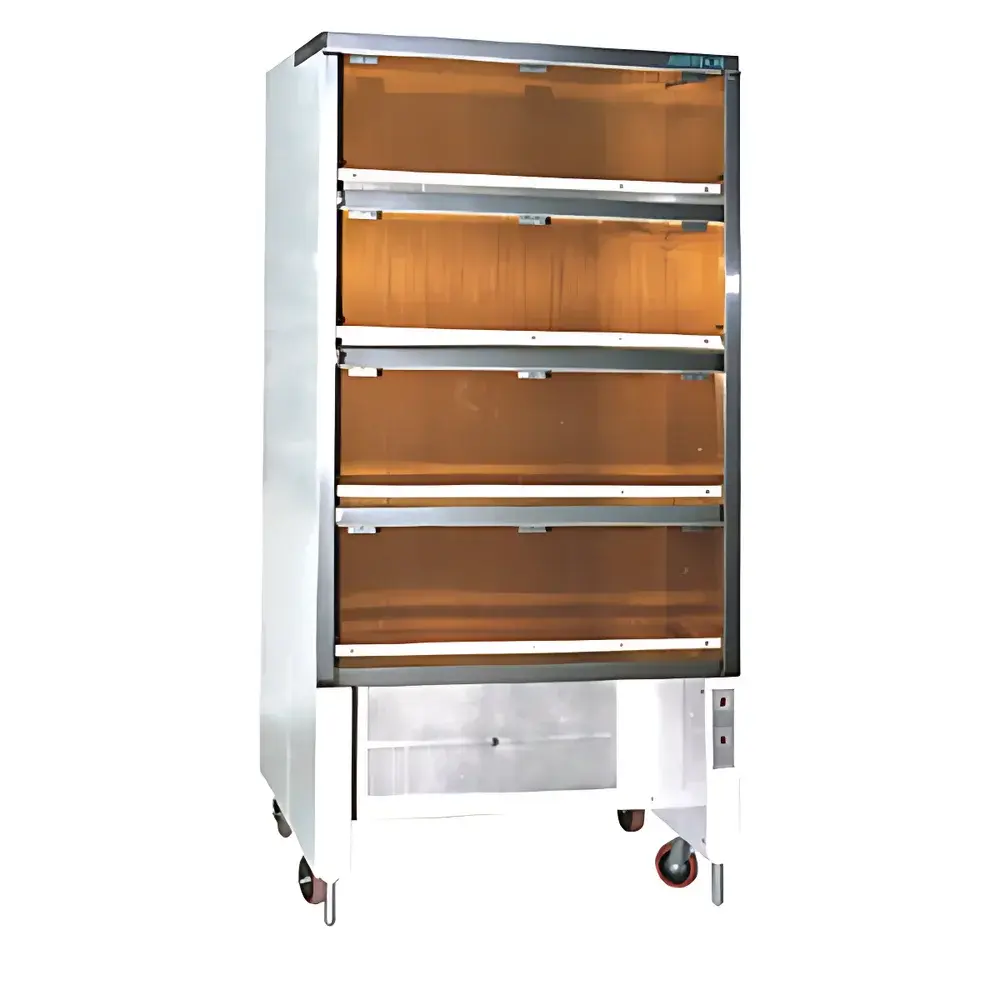
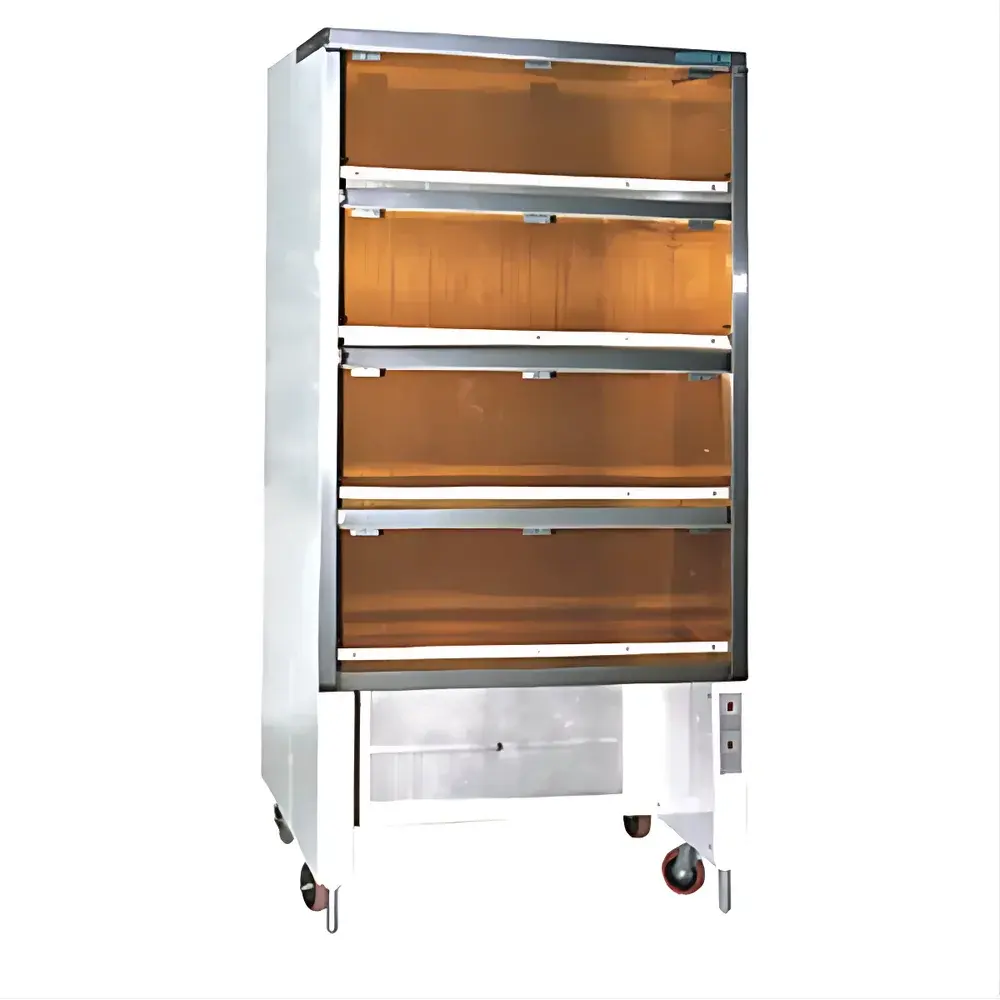
AIRTECH AML-1000 ISO Class 5 Horizontal Laminar Flow Clean Storage Cabinet
| Brand | AIRTECH (Sujing Antai) |
|---|---|
| Origin | Jiangsu, China |
| Manufacturer Type | Authorized Distributor |
| Product Origin | Domestic (China) |
| Model | AML-1000 |
| Quotation | Upon Request |
| Air Cleanliness Class | ISO 5 (100-class) |
| Filter Efficiency | ≥99.99% @ ≥0.3 µm |
| Average Air Velocity | 0.25–0.45 m/s |
| Noise Level | ≤64 dB(A) |
| Working Area Dimensions (W×D×H) | 920 × 350 × 1315 mm |
| Overall Dimensions (W×D×H) | 1000 × 750 × 1932 mm |
| Power Supply | AC 220 V, 1φ, 50 Hz |
| Rated Power Consumption | 400 W |
| Net Weight | 200 kg |
| HEPA Filter Specification & Quantity | 915 × 610 × 50 mm × 2 |
Overview
The AIRTECH AML-1000 is an ISO Class 5 (100-class) horizontal laminar flow clean storage cabinet engineered for controlled environment applications requiring continuous particle-free air protection of stored materials. It operates on the principle of unidirectional airflow—generated by a variable-speed centrifugal blower and conditioned through dual high-efficiency particulate air (HEPA) filters—to establish a consistent, low-turbulence air curtain across the entire working area. This laminar flow architecture ensures that airborne contaminants are swept horizontally away from critical surfaces, minimizing re-entrainment and maintaining surface cleanliness per ISO 14644-1 requirements. Designed specifically for non-sterile but particle-sensitive storage—such as calibration standards, reference samples, optical components, precision instrumentation parts, and pre-sterilized packaging—the AML-1000 delivers stable environmental integrity without integrated sterilization or personnel protection features (i.e., it is not a biosafety cabinet or laminar flow hood for active manipulation).
Key Features
- Stainless steel working chamber (AISI 304 grade) with seamless welds and electropolished finish—resistant to corrosion, compatible with common laboratory disinfectants (e.g., 70% ethanol, hydrogen peroxide vapor), and validated for routine cleaning and decontamination protocols.
- Dual-stage HEPA filtration system: two 915 × 610 × 50 mm filters installed in series within the air recirculation path, each certified to ≥99.99% efficiency at 0.3 µm particle size per EN 1822-1 and IEST-RP-CC001.6.
- Variable-speed blower control with manual high/low mode selection—optimized for operational flexibility: low-speed mode (0.25–0.35 m/s) maintains baseline ISO 5 compliance during idle or low-intervention periods; high-speed mode (0.35–0.45 m/s) compensates for transient turbulence during door opening and material handling.
- Horizontal unidirectional airflow pattern validated via smoke visualization and anemometric mapping—ensuring uniform velocity distribution (>85% uniformity across working plane) and absence of eddies or stagnation zones per ISO 14644-3 Annex B guidelines.
- Acoustically damped enclosure design limits operational noise to ≤64 dB(A) at 1 m distance—suitable for integration into shared laboratory spaces without acoustic interference.
- Integrated power management with over-current and thermal overload protection; conforms to IEC 61000-6-3 (EMC emission) and IEC 61000-6-2 (immunity) standards.
Sample Compatibility & Compliance
The AML-1000 is intended for passive storage of non-volatile, non-hazardous, and non-biological materials sensitive to airborne particulate contamination. Compatible sample types include—but are not limited to—reference standards (e.g., NIST-traceable weights, volumetric glassware), microelectronic wafers, semiconductor metrology artifacts, pharmaceutical primary packaging components, and analytical instrument calibration kits. It does not provide containment for volatile organic compounds (VOCs), toxic chemicals, or biological agents. The unit complies with ISO 14644-1:2015 Class 5 (formerly Fed Std 209E Class 100) for airborne particulate concentration; filter performance meets EN 1822-1:2019 H14 classification; electrical safety conforms to GB 4793.1–2019 (equivalent to IEC 61010-1). While not inherently 21 CFR Part 11 compliant, its operation supports GLP/GMP-aligned documentation practices when paired with external audit-log-enabled environmental monitoring systems.
Software & Data Management
The AML-1000 is a standalone, hardware-controlled cabinet with no embedded microprocessor, touchscreen interface, or digital data logging capability. All operational parameters—including blower speed selection and power state—are managed manually via front-panel toggle switches. For laboratories requiring traceable environmental records, integration with third-party continuous monitoring systems (e.g., Vaisala viewLinc, DeltaTrak FlashLink) is supported via analog 4–20 mA or digital RS-485 outputs (optional accessory module). Such configurations enable time-stamped logging of airflow velocity, temperature, and relative humidity—facilitating retrospective review during internal audits or regulatory inspections under ISO/IEC 17025 or FDA guidance.
Applications
- Storage of calibrated reference materials in metrology labs where particulate-induced mass drift or surface degradation must be minimized.
- Protection of high-precision optical elements (e.g., interferometer mirrors, laser cavity optics) during staging prior to assembly or testing.
- Holding pre-sterilized medical device packaging components in Class D cleanrooms prior to final aseptic filling operations.
- Secure interim storage of cleanroom garments, gloves, and tooling in semiconductor fabrication support areas.
- Controlled housing of sensitive sensors (e.g., MEMS accelerometers, photodetectors) during qualification testing phases where electrostatic discharge (ESD) mitigation is combined with particulate control.
FAQ
Is the AML-1000 suitable for sterile storage of pharmaceutical products?
No. It provides particle control only—not microbial decontamination or sterility assurance. Sterile storage requires validated autoclaving, VHP treatment, or ISO 5 environments with full environmental monitoring and aseptic transfer protocols.
Can the cabinet be integrated into a building management system (BMS)?
Yes—via optional analog/digital signal interface modules. Contact AIRTECH technical support for compatibility verification with your BMS protocol (Modbus RTU, BACnet MS/TP, etc.).
What maintenance intervals are recommended for the HEPA filters?
Filter replacement frequency depends on ambient air quality and usage intensity. Under typical lab conditions (ISO 8 ambient), annual replacement is advised; pressure differential monitoring across filters is strongly recommended to determine actual service life.
Does the unit include validation documentation (e.g., IQ/OQ/PQ protocols)?
Factory-installed IQ/OQ documentation packages are available upon request. PQ execution requires site-specific testing by qualified personnel using ISO 14644-compliant particle counters and anemometers.
Is the stainless steel chamber electropolished to ASTM A967 standards?
Yes—the interior surfaces meet ASTM A967 Method A (nitric acid passivation) and exhibit Ra ≤ 0.4 µm surface roughness, verified per ISO 13522-2.



