
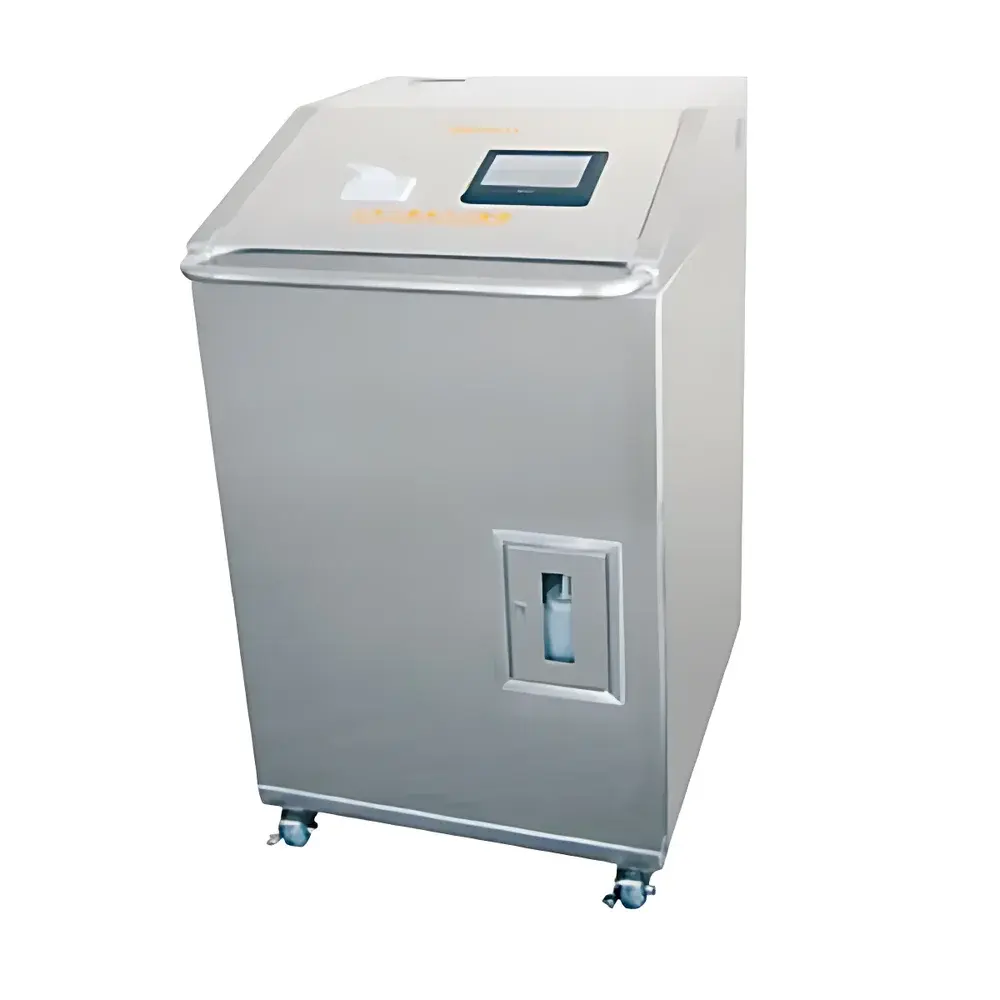
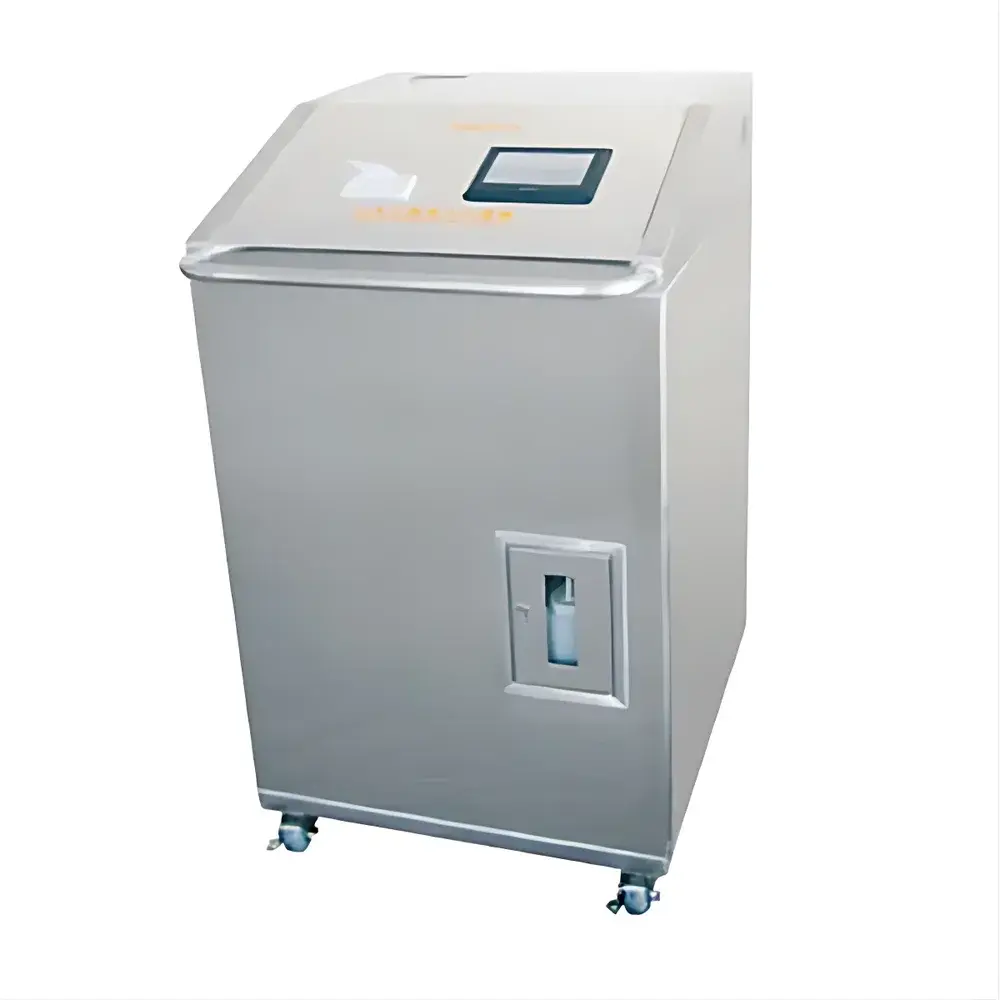
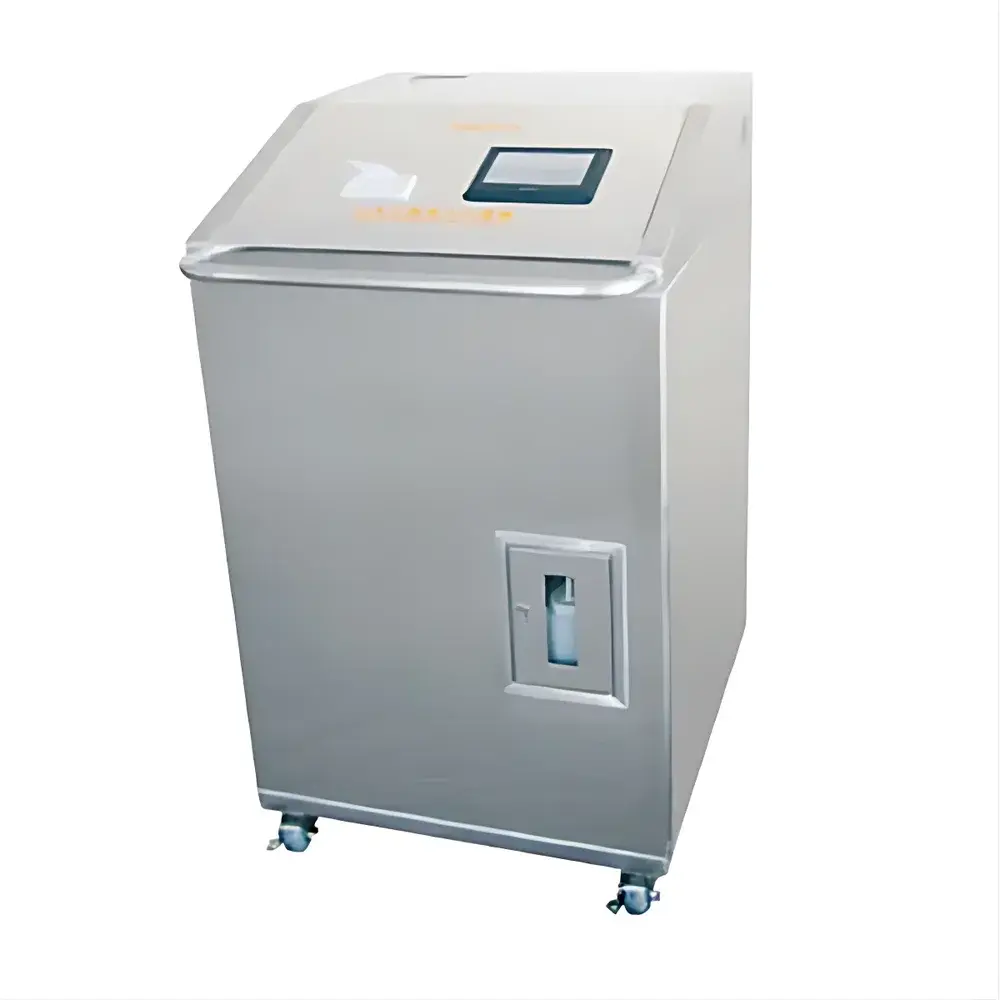
AIRTECH AVHP Hydrogen Peroxide Vapor Sterilizer
| Brand | AIRTECH (Suzhou AnTai) |
|---|---|
| Origin | Jiangsu, China |
| Manufacturer Type | Authorized Distributor |
| Country of Origin | China |
| Model | AVHP |
| Power Supply | AC 220 V, 1φ, 50 Hz |
| Hydrogen Peroxide Dosing Rate | 0–10 mg/min |
| Sterilant | 35% w/w A.R.-grade hydrogen peroxide |
| Rated Power | 2500 W |
| Air Flow Rate | 500 L/min |
| Log Reduction Value (LRV) against Geobacillus stearothermophilus | ≥6 |
| Compliance | Designed for ISO 14644-1 Class 5–7 environments, supports FDA 21 CFR Part 11-compliant validation workflows and EU Annex 1 requirements for aseptic processing |
Overview
The AIRTECH AVHP Hydrogen Peroxide Vapor Sterilizer is an engineered solution for low-temperature, residue-free terminal sterilization of isolators, transfer hatches, RABS, and small cleanroom chambers. It operates on the principle of vapor-phase hydrogen peroxide (VHP®) delivery via patented variable-frequency pulsed atomization and flash-vaporization technology—originally developed by AIRTECH Japan and adapted under strict quality oversight by Suzhou Antai. Unlike liquid-spray or condensate-based systems, the AVHP generates a stable, sub-micron (<1 µm) dry bioactive vapor cloud with precise control over concentration (ppm), relative humidity (30–70% RH), and temperature (20–28 °C), ensuring uniform distribution and reproducible microbial inactivation without surface wetting or material degradation. The system integrates a central microprocessor-based control unit that logs all critical process parameters—including vapor concentration, chamber pressure differential, dwell time, and environmental setpoints—in real time, supporting full traceability and regulatory audit readiness.
Key Features
- Variable-frequency pulsed nebulization: Enables consistent aerosol generation across diverse load configurations and chamber geometries, minimizing droplet coalescence and condensation risk.
- Flash-vaporization module: Converts 35% w/w AR-grade hydrogen peroxide into true vapor phase (not mist or fog) within milliseconds, achieving rapid saturation and homogeneous dispersion.
- Real-time environmental feedback loop: Integrated Pt100 temperature sensors and capacitive RH probes continuously adjust vapor injection rate and air exchange to maintain target setpoints within ±0.5 °C and ±3% RH.
- Intuitive HMI with dual-mode operation: Touchscreen interface supports both fully automated pre-validated cycles and manual parameter tuning for R&D or non-standard chamber commissioning.
- Full-cycle data integrity: All operational events—including start/stop timestamps, alarm triggers, sensor readings, and user actions—are time-stamped, digitally signed, and exportable in CSV or PDF format compliant with ALCOA+ principles.
- Modular quick-connect interface: Standardized 1/2″ VCR and ISO-KF flanges enable seamless integration with isolator ports, pass-throughs, and HVAC recirculation ducts without custom fabrication.
Sample Compatibility & Compliance
The AVHP has been validated for use with common pharmaceutical and biotech materials including stainless steel (316L), anodized aluminum, silicone gaskets, polycarbonate viewports, and ethylene propylene diene monomer (EPDM) seals. It is not recommended for extended exposure to copper alloys, uncoated carbon steel, or cellulose-based filters. The system architecture adheres to IEC 61000-6-2 (EMC immunity) and IEC 61000-6-4 (EMC emissions) standards. Process validation documentation—including IQ/OQ/PQ protocols, cycle development reports, and biological indicator challenge studies using Geobacillus stearothermophilus ATCC 7953 spores—is provided per customer request and aligns with ISO 14644-2, ISO 11135:2014, and EU GMP Annex 1 (2022) requirements for sterilization process control. Data handling conforms to FDA 21 CFR Part 11 for electronic records and signatures when deployed with optional audit-trail-enabled software modules.
Software & Data Management
The embedded controller runs proprietary firmware (v4.2+) supporting configurable cycle templates, multi-level user access (Operator, Technician, Administrator), and encrypted local storage of ≥10,000 complete sterilization logs. Optional PC-based software (SteriView Pro) enables remote monitoring, trend analysis of vapor concentration decay profiles, deviation investigation via root-cause tagging, and automated report generation for regulatory submissions. All data exports include digital hash verification and are compatible with LIMS and MES platforms via OPC UA or Modbus TCP interfaces. Audit trails record user login/logout, parameter modifications, and emergency aborts with immutable timestamps and operator IDs.
Applications
- Decontamination of closed-system isolators used in aseptic filling lines for injectables and ophthalmics.
- Pre-use sterilization of gloveports, rapid-transfer ports (RTPs), and split butterfly valves prior to batch transfer.
- Recovery-phase decontamination following environmental excursions or maintenance interventions in Grade A/B cleanrooms.
- Validation support for barrier technology qualification per PDA Technical Report No. 56 and ISO 14644-3.
- Research-scale sterilization of lab-scale bioreactor components, filtration housings, and sampling manifolds where autoclaving is impractical.
FAQ
What biological indicators are recommended for routine validation?
Geobacillus stearothermophilus spores (ATCC 7953 or equivalent), immobilized on stainless steel carriers at ≥1 × 10⁶ CFU per strip, placed at worst-case locations (e.g., chamber corners, behind obstructions, near exhaust vents).
Can the AVHP be integrated into a facility’s SCADA system?
Yes—via optional Modbus TCP or OPC UA gateway modules, enabling real-time status reporting, alarm forwarding, and centralized event logging.
Is post-cycle aeration required before opening the chamber?
Yes. Residual H₂O₂ must be catalytically decomposed to ≤1 ppm using integrated palladium catalysts and HEPA-filtered air exchange; typical aeration duration ranges from 20–45 minutes depending on chamber volume and load porosity.
Does the system support cycle requalification after hardware maintenance?
Yes—the built-in self-test sequence verifies sensor calibration, valve actuation, vapor generator output, and airflow consistency prior to each run, and full PQ re-execution is supported per ISO 11135:2014 Clause 9.3.



