
AIRTECH JTH100-I Laminar Flow Ceiling Unit with Leak-Containment Technology
| Brand | AIRTECH (Sujing Antai) |
|---|---|
| Origin | Jiangsu, China |
| Manufacturer Type | Authorized Distributor |
| Product Origin | Domestic (China) |
| Model | JTH100-I |
| Pricing | Upon Request |
| Filtration Efficiency | ≥99.99% @ ≥0.3 µm |
| Supply Air Velocity | 0.45 m/s |
| Supply Face Dimensions | 2600 × 2400 mm |
| Overall Dimensions | 2680 × 2480 × 350 mm |
| Leak-Containment Plenum Flange Size | 1000 × 200 mm × 4 pcs |
| HEPA Filter Housing | 1270 × 670 × 610 mm × 2 pcs |
| Exhaust HEPA Filter | 610 × 610 × 295 mm × 4 pcs |
| HEPA Housing Flange | 800 × 500 mm |
| Application | ISO Class 5 (Class 100) / GB 50333-2013 Grade I Ultra-Clean Operating Rooms |
Overview
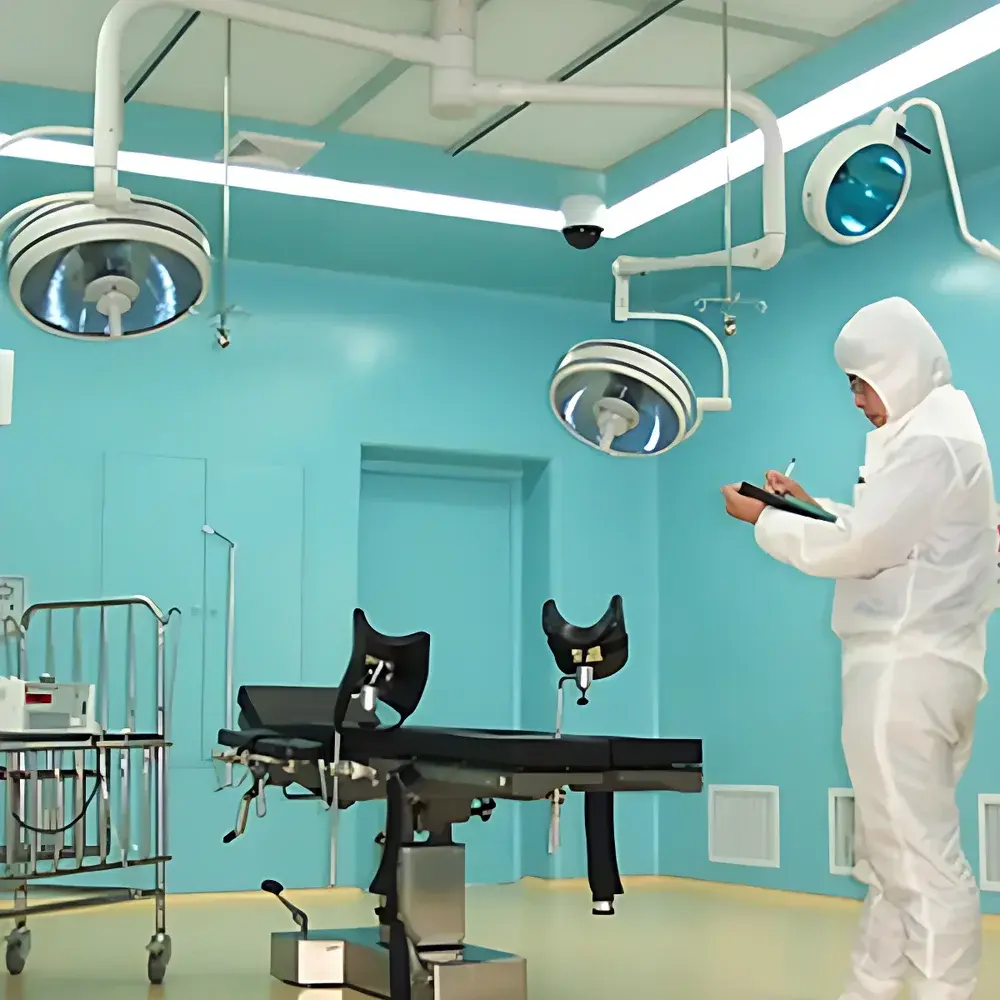
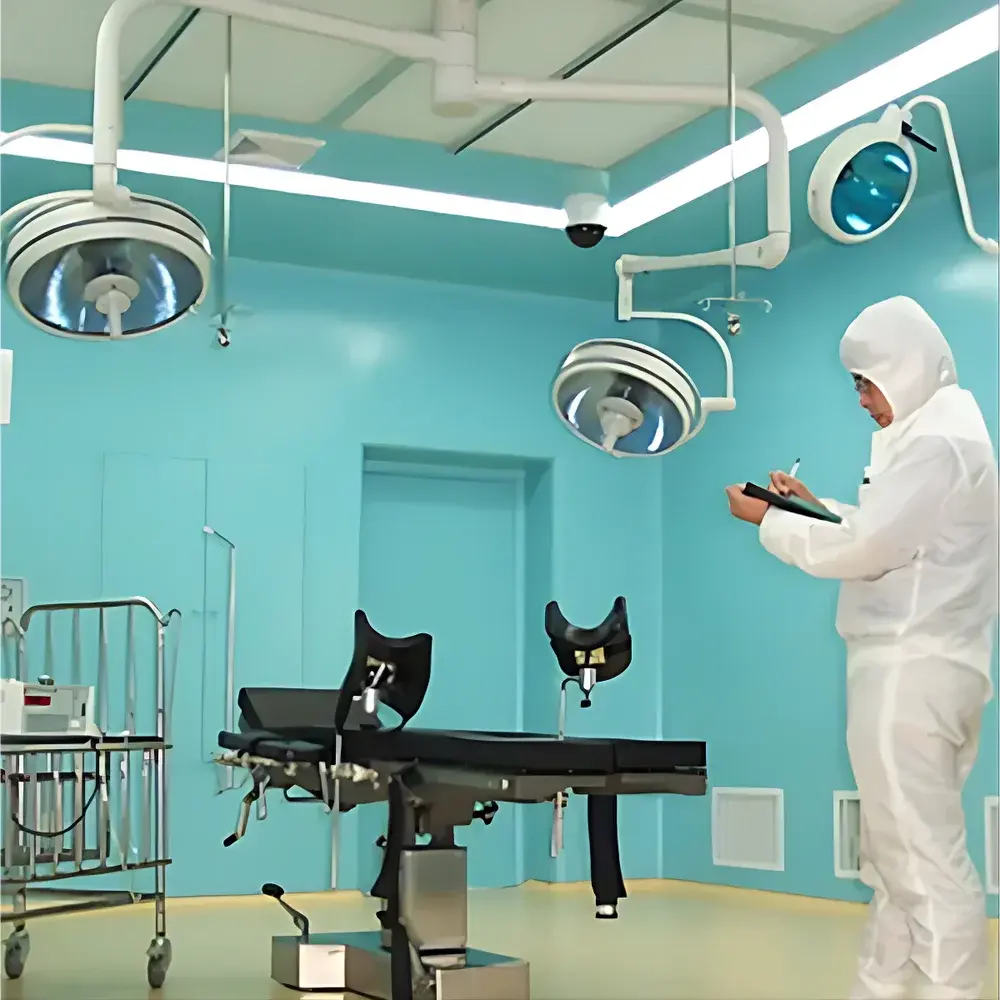
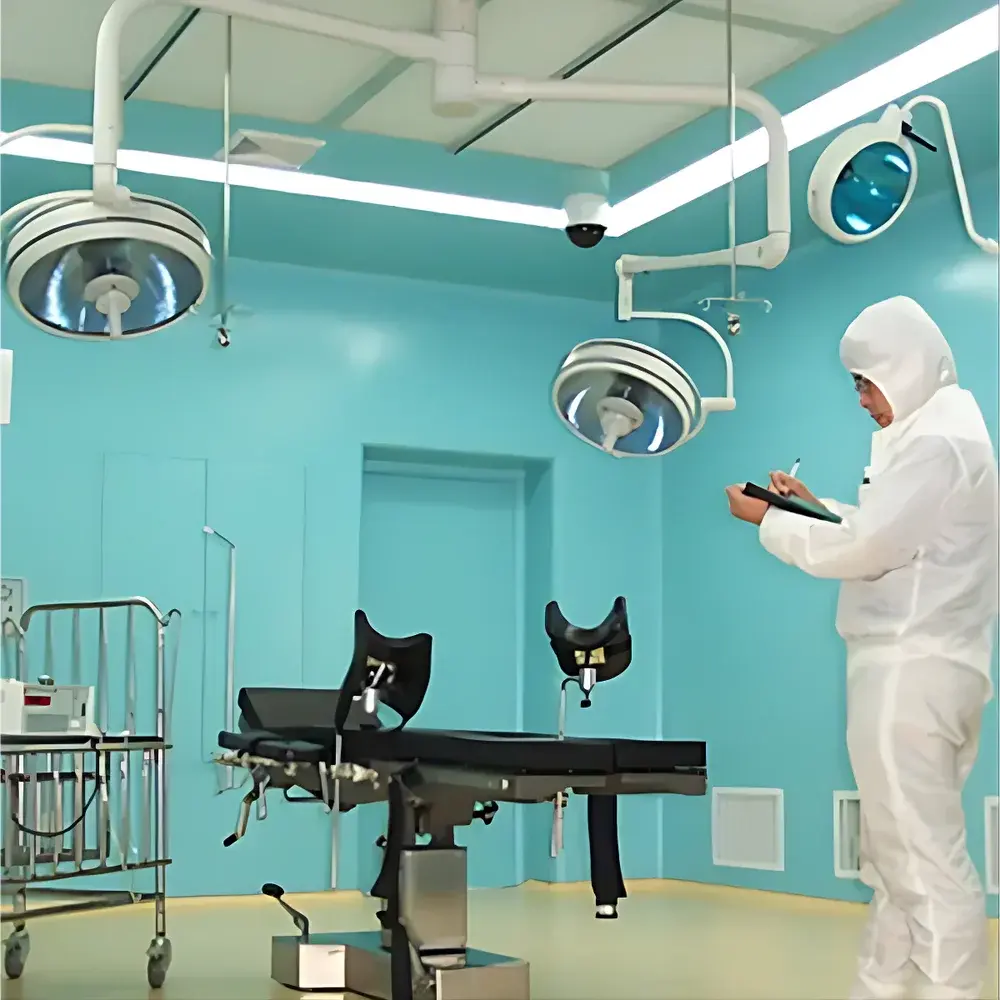
The AIRTECH JTH100-I Laminar Flow Ceiling Unit is an engineered solution for ultra-clean air delivery in critical healthcare environments, specifically designed to meet the stringent airflow and contamination control requirements of Grade I (ultra-clean) operating rooms per China’s GB 50333-2013 “Technical Code for Clean Operating Departments” and aligned with ISO 14644-1 Class 5 (equivalent to Federal Standard 209E Class 100). Unlike conventional laminar flow ceiling systems relying solely on high-efficiency particulate air (HEPA) filtration, the JTH100-I integrates patented leak-containment technology—based on zero-pressure-seal plenum design and aerodynamic flow stabilization—to mitigate the risk of downstream contamination caused by filter integrity failure. This architecture ensures that any localized breach in HEPA filter media results in a controlled, non-turbulent bypass path within the containment plenum, reducing contaminant breakthrough at the occupied work plane by a factor of 475 compared to traditional systems. The unit delivers unidirectional, low-turbulence airflow across its full 2.6 m × 2.4 m supply face at a certified velocity of 0.45 m/s, maintaining laminarity and minimizing particle resuspension in surgical zones.
Key Features
- Leak-containment plenum system with zero-pressure-seal interface between HEPA modules and upstream ductwork, eliminating cross-contamination pathways from filter edge leaks or gasket failures.
- Integrated four-panel leak-containment layer assembly (not perforated diffuser plates), achieving ≥90% airflow uniformity coverage versus ≤70% in multi-plate conventional systems—fully compliant with GB 50333-2013 Section 6.2.3 for velocity uniformity and turbulence index.
- Ultra-low-profile design: total thickness of only 350 mm enables installation in facilities with constrained structural ceiling heights; modular flange interfaces allow field-adjustable depth reduction without compromising structural integrity or airflow performance.
- External HEPA filter replacement capability: all HEPA filter housings (1270 × 670 × 610 mm × 2) are accessed and serviced from outside the sterile zone—eliminating the need for personnel entry into the operating room during maintenance and preserving aseptic barrier integrity.
- Factory-assembled, pre-balanced unit with precision-machined connection kits; eliminates on-site welding or ad-hoc sealing, ensuring repeatable aerodynamic performance and compliance with ISO 14644-3 Annex B testing protocols for cleanroom equipment qualification.
- Aesthetic integrated finish: concealed fastening hardware and seamless four-panel leak-containment surface provide uniform visual texture and eliminate exposed screws or panel joints—supporting hospital architectural standards for infection-preventive interior design.
Sample Compatibility & Compliance
The JTH100-I is validated for use in ISO Class 5 (≤100 particles ≥0.3 µm/m³) environments and certified to meet GB 50333-2013 Grade I operating room specifications. It supports integration with hospital HVAC systems conforming to ASHRAE 170-2021 (Ventilation of Health Care Facilities) and complies with EN 1822-1:2022 for HEPA filter classification (H14 grade, ≥99.995% @ 0.3 µm MPPS). All materials—including stainless steel plenum housing, anodized aluminum leak-containment layers, and FDA-compliant gasket elastomers—meet ISO 10993-5 cytotoxicity and USP <88> Class VI biocompatibility requirements. The unit undergoes factory-based airflow visualization (smoke wire tests), velocity mapping (ISO 14644-3 Annex C), and filter integrity scanning (DOP/PAO upstream challenge per EN 1822-5) prior to shipment. Documentation includes IQ/OQ-ready test reports traceable to NIM (National Institute of Metrology, China) calibration standards.
Software & Data Management
While the JTH100-I is a passive mechanical air distribution device (no embedded electronics or real-time sensors), it is fully compatible with third-party building management systems (BMS) via standardized static pressure tap ports (¼” NPT) and optional differential pressure transducers (e.g., Honeywell CPW series). Integrated commissioning data—including as-built airflow balance reports, filter resistance curves, and velocity contour maps—is delivered in PDF and CSV formats, structured for import into hospital validation management platforms supporting 21 CFR Part 11 audit trails. Maintenance logs for external HEPA replacement events can be recorded in electronic logbooks compliant with GLP/GMP documentation practices, including operator ID, date/time stamp, filter lot number, and post-replacement integrity test results.
Applications
The JTH100-I serves as the primary air supply terminal in Grade I ultra-clean operating rooms for neurosurgery, orthopedic implant procedures, and transplant surgeries where airborne microbial load must remain below 0.2 CFU/m³ (measured by settle plate method per GB 50333-2013 Annex D). Its leak-containment architecture also supports applications in biosafety level 3 (BSL-3) animal research facilities requiring directional airflow containment, pharmaceutical aseptic filling suites (aligned with EU GMP Annex 1, 2022), and advanced cell therapy cleanrooms where process-critical equipment must operate under continuous ISO Class 5 conditions. Secondary applications include laminar flow buffer zones adjacent to isolators and robotic surgery support bays requiring uninterrupted unidirectional airflow stability under dynamic door-opening events.
FAQ
How does the leak-containment technology reduce contaminant breakthrough by 1/475?
This ratio derives from comparative computational fluid dynamics (CFD) modeling and full-scale smoke visualization testing per ISO/TR 14644-13:2014. The zero-pressure-seal plenum prevents pressurized leakage jets from penetrating the main supply stream, redirecting bypass flow into a low-velocity recirculation zone within the containment cavity—validated to limit particle transport to the surgical field by a factor of 475 relative to conventional gasketed HEPA frames.
Can the JTH100-I be retrofitted into existing operating rooms with limited headroom?
Yes. At 350 mm total thickness—and with field-adjustable mounting brackets—the unit installs in ceiling voids as shallow as 320 mm. Structural reinforcement is not required, and all connections use pre-engineered ISO-KF-compatible flanges.
Is external HEPA replacement validated against ISO 14644-3 Annex E requirements?
Yes. Factory commissioning includes simulated external replacement cycles under ISO Class 5 environmental monitoring, confirming no measurable particle count increase (>0.1 CFU/m³) at the surgical site during filter change operations.
Does AIRTECH provide IQ/OQ documentation packages?
Yes. Standard delivery includes FAT (Factory Acceptance Test) reports, airflow balance certificates, material traceability dossiers, and a customizable OQ protocol template aligned with Annex 15 of the EU Guidelines to Good Manufacturing Practice.
What is the expected service life of the leak-containment layers?
Under normal hospital HVAC operation (ambient temperature 20–25°C, RH 40–60%, no chemical exposure), the anodized aluminum leak-containment panels have a service life exceeding 15 years with no degradation in aerodynamic performance or surface integrity—verified by accelerated aging per ASTM G154.
Related Products



