
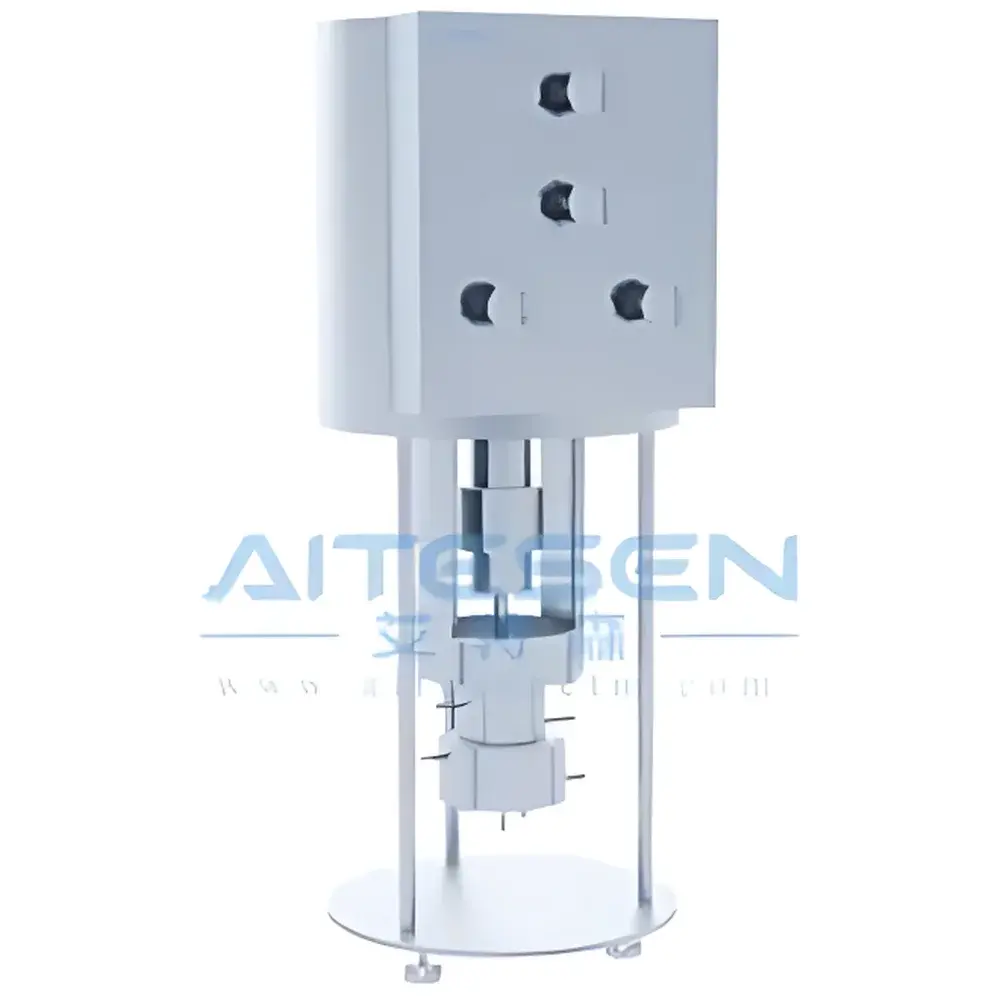
Aitesen Extru25-20 Desktop Liposome Extruder
| Brand | Aitesen |
|---|---|
| Model | Extru25-20 |
| Max Operating Pressure | 25 MPa |
| Final Particle Size Range | 50–1000 nm |
| Batch Volume Capacity | 0–20 mL |
| Max Liposome Concentration | 200 mg/mL |
| Operating Temperature Range | 5–80 °C |
| Construction Material | SS316L |
| Membrane Diameter | 25 mm |
| Power Source | Compressed Nitrogen Gas |
| Carrier Type | Liposomes |
| Regulatory Compliance | FDA-approved elastomers (O-rings, gaskets), GMP-compatible design |
Overview
The Aitesen Extru25-20 Desktop Liposome Extruder is an engineered solution for precise, reproducible size reduction and homogenization of lipid-based nanocarriers—particularly liposomal formulations used in nucleic acid delivery (e.g., siRNA, mRNA, DNA), small-molecule encapsulation, and protein-loaded vesicles. It operates on the principle of membrane extrusion under controlled hydrostatic pressure: lipid suspensions are forced through polycarbonate (PC) track-etched membranes with defined pore sizes (typically 50–200 nm), where laminar shear forces induce uniform bilayer reorganization, resulting in narrow particle size distribution (PDI < 0.1) and improved batch-to-batch consistency. Unlike sonication or high-pressure homogenization, extrusion avoids thermal degradation, chemical denaturation, or metal contamination—critical for thermolabile payloads such as siRNA and labile proteins. The system’s integrated thermostatic jacket enables temperature stabilization between 5 °C and 80 °C, accommodating phospholipid phase transition requirements (e.g., DPPC at ~41 °C, HSPC at ~55 °C) to ensure optimal membrane fluidity during extrusion.
Key Features
- High-pressure capability up to 25 MPa—enabling efficient extrusion of viscous, high-concentration liposomal dispersions (up to 200 mg/mL)
- Stainless steel 316L wetted path ensures corrosion resistance, cleanability, and compatibility with organic solvents and aqueous buffers
- Zero-residue chamber design minimizes sample loss—critical for precious siRNA-lipid complexes and clinical-grade batches
- Full temperature control via circulating water jacket; pre-heating and real-time maintenance within ±0.5 °C across 5–80 °C range
- Automated nitrogen-driven actuation eliminates manual force variability, ensuring repeatable extrusion cycles and operator-independent outcomes
- FDA-compliant elastomeric components (O-rings, gaskets) meet USP Class VI biocompatibility standards for pharmaceutical manufacturing
- Modular construction supports rapid disassembly, CIP/SIP validation, and integration into ISO Class 5–7 cleanroom environments per ISO 14644-1
- 25 mm membrane format accommodates standard commercial PC filters (Whatman®, Nuclepore™) with certified pore size tolerances (±5%)
Sample Compatibility & Compliance
The Extru25-20 is validated for extrusion of unilamellar and multilamellar liposomes composed of synthetic or natural phospholipids (e.g., DSPC, DOPE, DOPC), cholesterol, PEGylated lipids (DSPE-PEG2000), and cationic lipids (DOTAP, DC-Chol). It accommodates both aqueous buffer systems (PBS, HEPES, Tris) and low-organic-content formulations (<10% ethanol or isopropanol). The system conforms to core regulatory expectations for nanomedicine process equipment: its materials of construction align with USP cytotoxicity testing, surface finish meets Ra ≤ 0.8 µm per ASME BPE-2022, and documentation supports traceability per ISO 9001:2015. While not a GMP-certified device per se, its design facilitates qualification (IQ/OQ/PQ), audit readiness for FDA 21 CFR Part 11 data integrity, and alignment with ICH Q5A(R2) and Q5E guidelines for nanoscale biopharmaceuticals.
Software & Data Management
The Extru25-20 operates as a standalone mechanical system without embedded firmware or digital controls. However, it is fully compatible with external process monitoring: pressure transducers (0–35 MPa range, 0.25% FS accuracy) and PT100 temperature sensors can be integrated into facility SCADA or LIMS platforms via 4–20 mA or Modbus RTU outputs (optional add-on). All operational parameters—including extrusion cycles, pressure ramp profiles, dwell time per pass, and jacket temperature logs—are manually recorded or captured using compliant electronic notebooks adhering to ALCOA+ principles. For regulated environments, users implement procedural controls (SOPs) governing membrane lot traceability, pre-use integrity testing (bubble point or diffusion test), and post-extrusion dynamic light scattering (DLS) verification per USP .
Applications
- Preclinical and clinical-scale preparation of siRNA-encapsulated liposomes (e.g., Onpattro®-like formulations)
- Manufacturing of chemotherapeutic liposomes: doxorubicin, amphotericin B, paclitaxel, oxaliplatin, and irinotecan
- Production of albumin-bound nanoparticle suspensions requiring post-formulation size refinement
- Generation of uniform extracellular vesicle (EV) mimetics and hybrid lipid-polymer nanoparticles
- Process development for mRNA-LNP final formulation polishing prior to sterile filtration
- Quality-by-Design (QbD) studies linking extrusion pressure, temperature, and cycle count to CQAs (size, PDI, encapsulation efficiency, zeta potential)
FAQ
What membrane pore sizes are supported?
Standard configurations support 10 nm, 20 nm, 50 nm, 100 nm, and 200 nm polycarbonate membranes—certified for nominal pore size and narrow size distribution per ASTM F838-22.
Can the system process non-liposomal nanoparticles?
Yes—provided the suspension is filterable and non-abrasive; it has been used for polymeric micelles, solid lipid nanoparticles (SLNs), and lipopolyplexes, though membrane fouling must be assessed empirically.
Is sterilization possible between batches?
All wetted parts are autoclavable at 121 °C for 20 min (including SS316L body, aluminum heating plates, and FDA-grade silicone gaskets); membrane holders accept gamma-irradiated disposable components.
How many extrusion cycles are typically required to achieve target size?
For most liposomal formulations, 5–11 passes through a 100 nm membrane yield sub-100 nm mean diameter with PDI < 0.1—validated by orthogonal DLS and TEM analysis.
Does the system comply with FDA 21 CFR Part 11?
The base unit does not include electronic records or signatures; however, when interfaced with validated third-party data acquisition systems meeting Part 11 requirements (audit trail, electronic signature, role-based access), full compliance is achievable.




