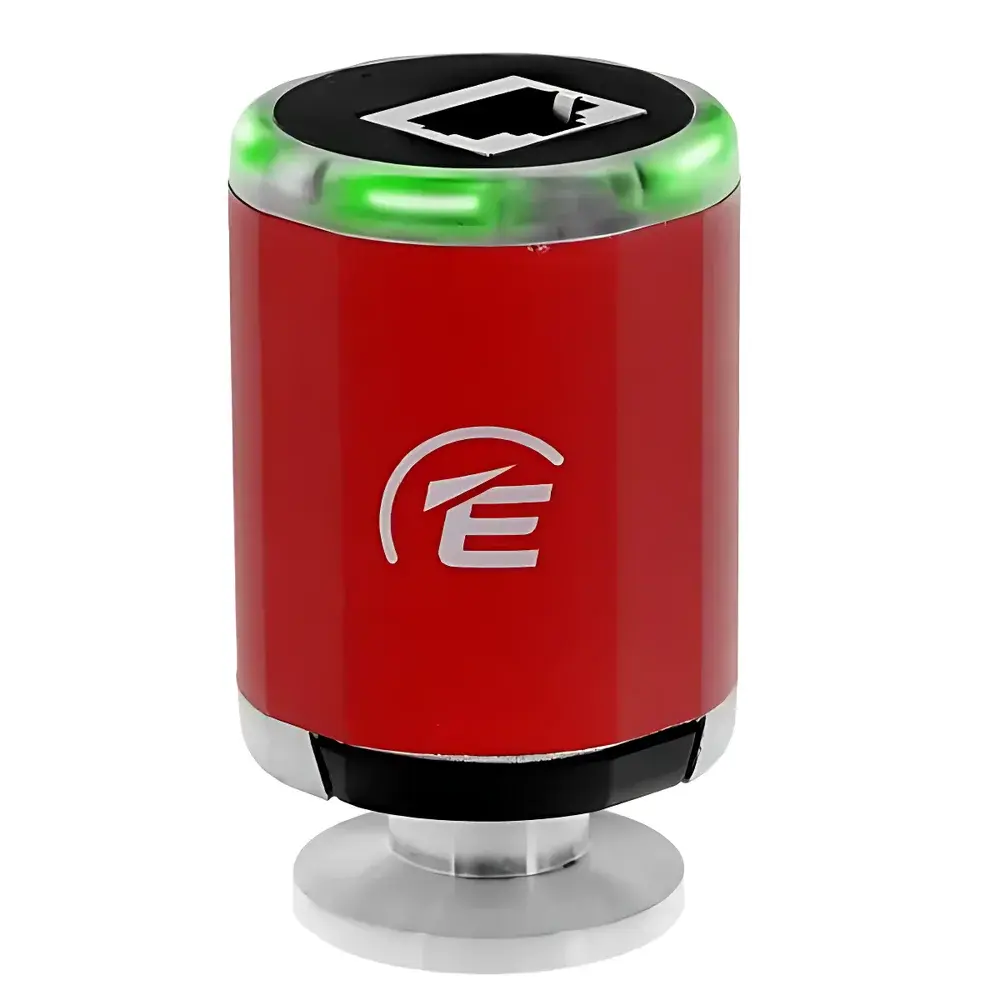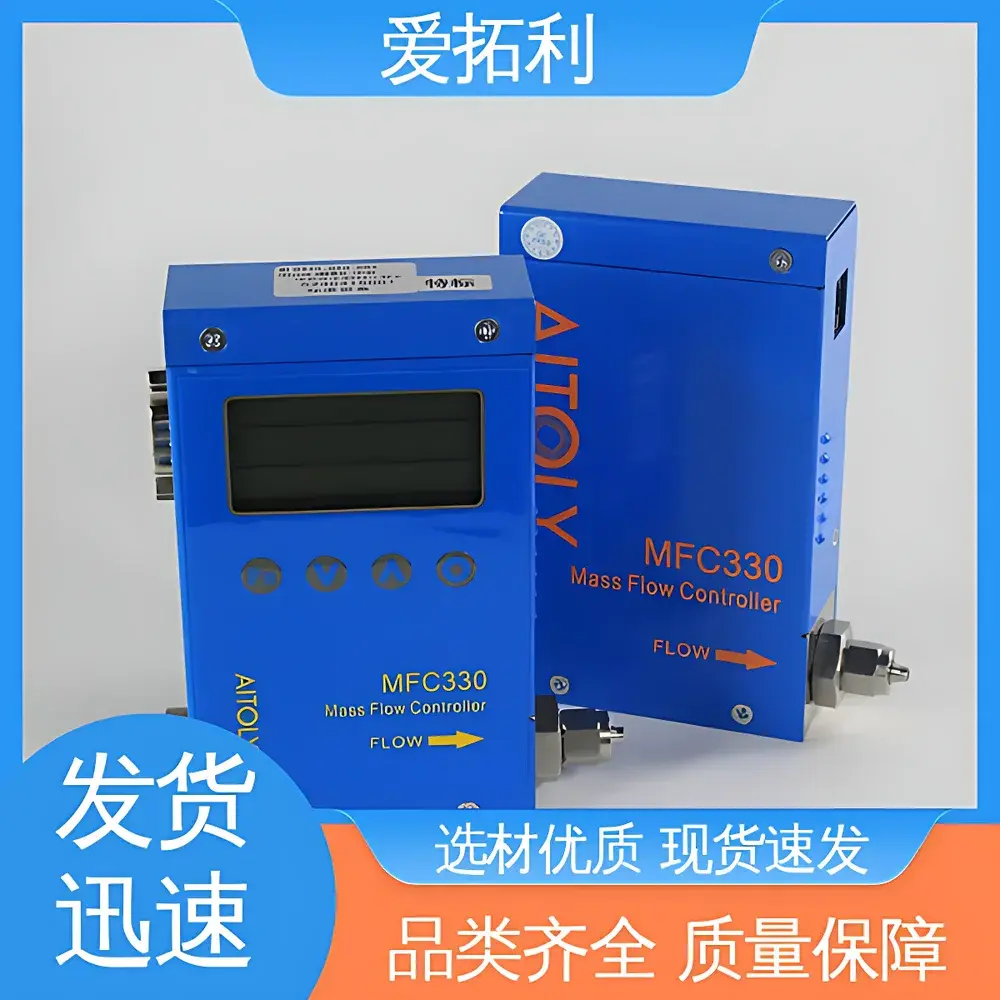
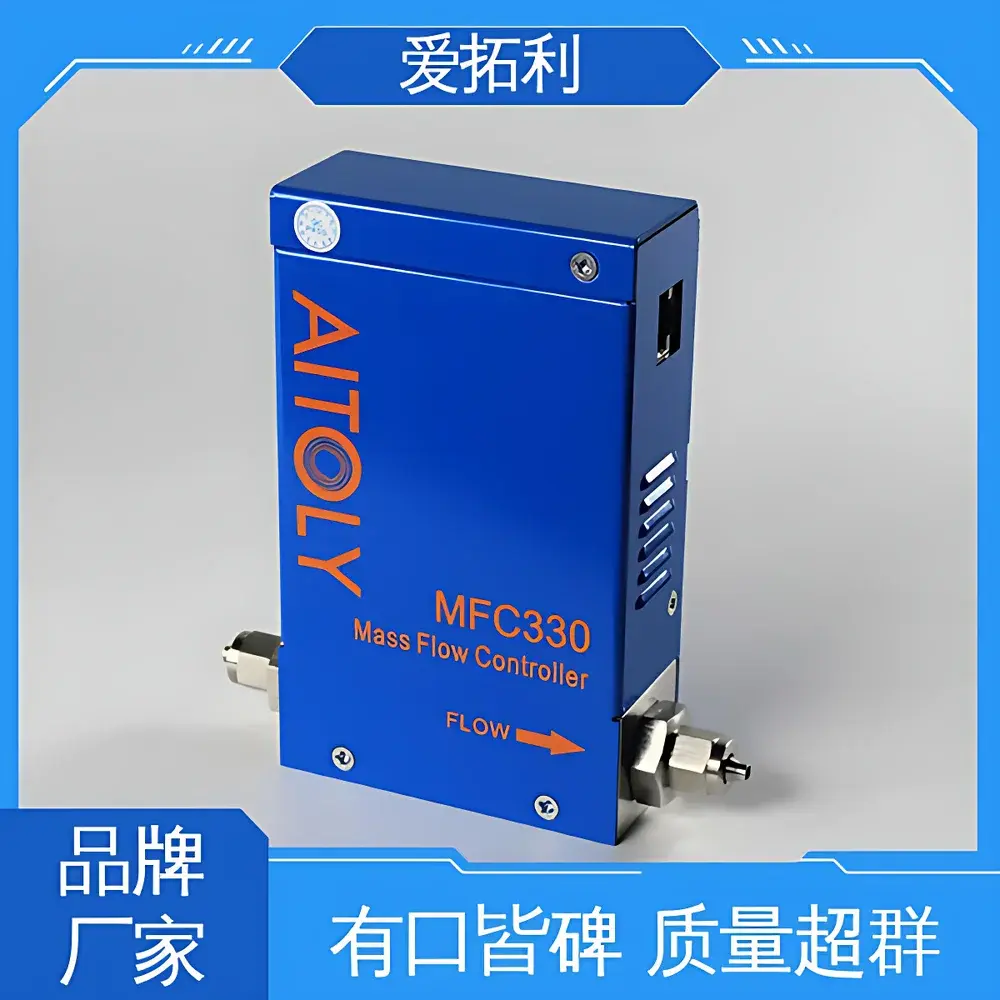
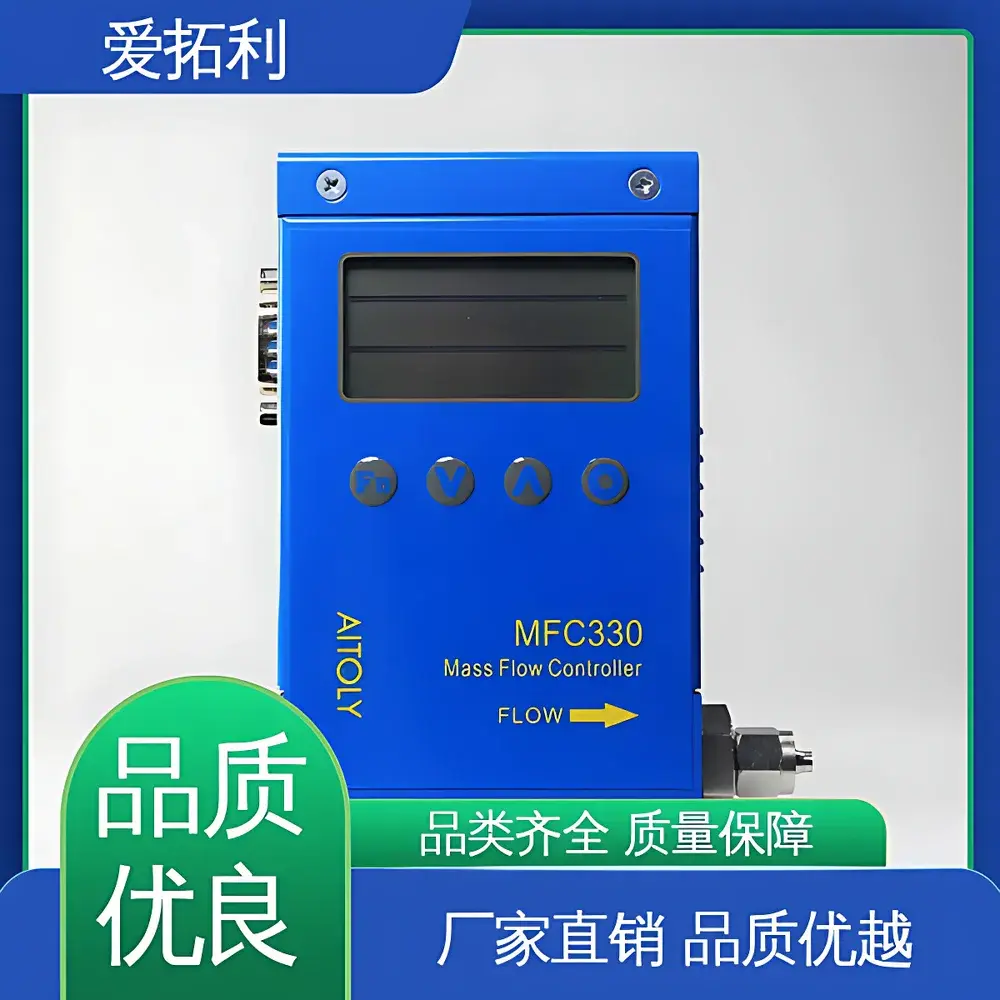
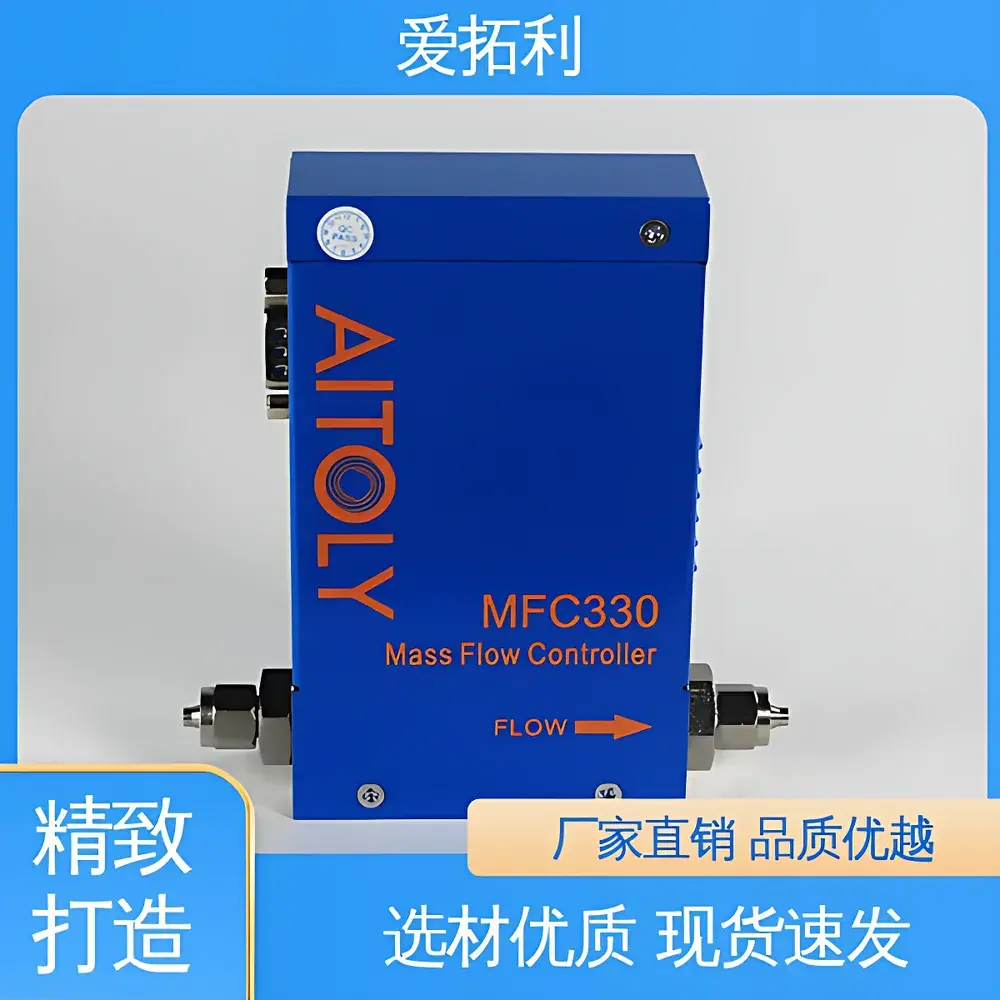
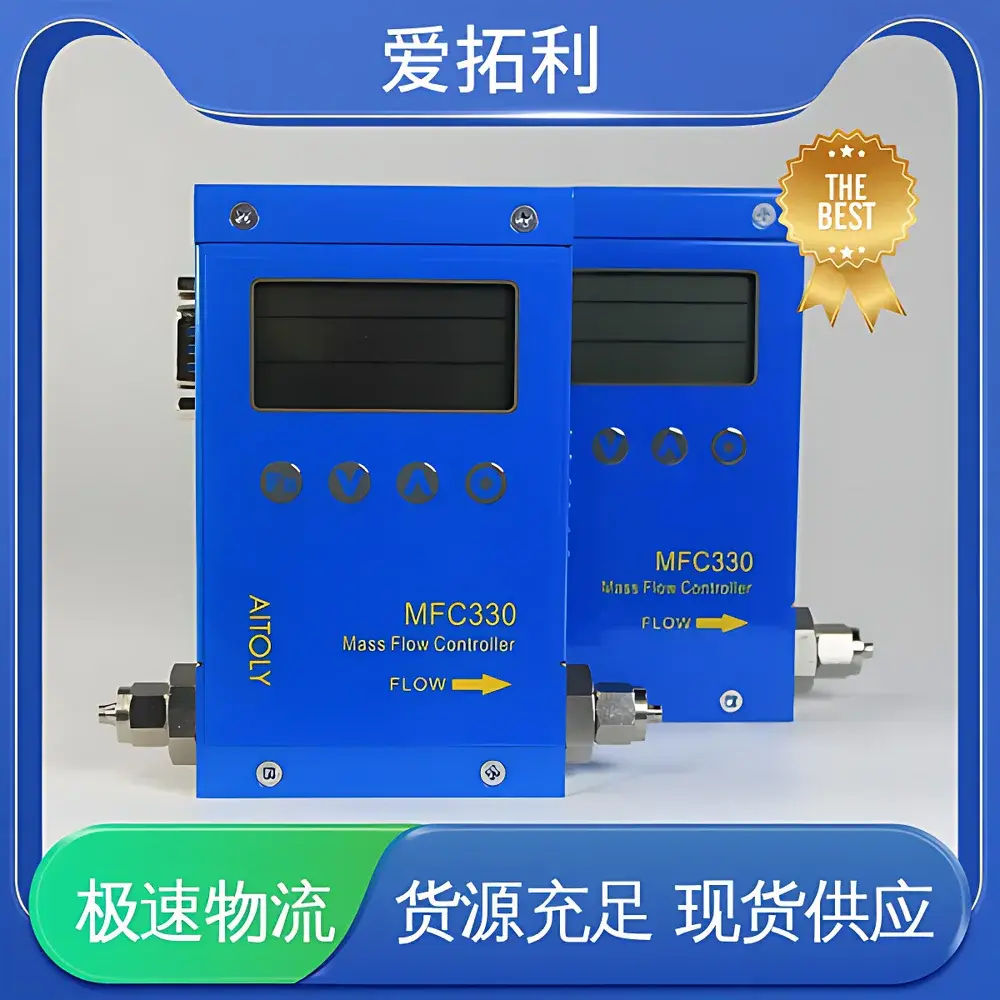
AITOLY MFC330 Thermal Mass Flow Controller
| Brand | AITOLY |
|---|---|
| Origin | Jiangsu, China |
| Type | Thermal Mass Flow Controller |
| Model | MFC330 |
| Flow Range Options | 0–2 / 10 / 20 / 50 / 100 / 300 / 500 sccm |
| Accuracy | ±1% FS |
| Repeatability | ±0.2% FS |
| Linearity | ±0.2% FS |
| Control Range | 1–100% FS (1:100) |
| Measurement Range | 0.5–100% FS (1:200) |
| Response Time | <3 s |
| Warm-up Time | 5 min (T95), 30 min optimal |
| Operating Pressure Drop | 0–1 MPa |
| Valve Type | Normally Closed Proportional Solenoid Valve |
| Optional | Full-metal valve, integrated LCD display |
Overview
The AITOLY MFC330 is a precision-engineered thermal mass flow controller designed for stable, high-reproducibility gas flow measurement and closed-loop control in laboratory, pilot-scale, and light industrial applications. Based on constant-temperature anemometry (CTA), the device employs a capillary-tube sensor element heated to a fixed temperature differential above ambient. As gas flows across the sensor, convective heat transfer alters the power required to maintain that differential—this power change is linearly correlated to mass flow rate under calibrated conditions. Unlike volumetric flowmeters, the MFC330 delivers true mass flow output (standard cubic centimeters per minute or standard liters per minute), independent of upstream pressure or ambient temperature fluctuations—provided gas composition and thermal properties remain within calibration bounds. Its integrated bypass architecture routes a representative fraction of total flow through the sensing element while directing the remainder through a parallel path regulated by a high-bandwidth proportional solenoid valve. This dual-path design enables fast dynamic response and robustness against inlet/outlet pressure variations up to 1 MPa differential.
Key Features
- Thermal mass flow sensing with capillary-tube sensor element for high sensitivity and long-term stability
- Closed-loop control architecture combining real-time flow measurement and proportional valve actuation for setpoint tracking accuracy
- Wide operating pressure drop range (0–1 MPa), enabling use in both low-backpressure vent lines and moderate-pressure process streams
- Low pressure loss design minimizes system energy demand and avoids unintended flow restriction in sensitive gas delivery networks
- Normally closed proportional solenoid valve with optional full-metal construction for enhanced chemical compatibility and longevity with aggressive gases
- Configurable flow ranges spanning from 0–2 sccm to 0–500 slpm, supporting applications from microfluidic calibration to bulk gas supply regulation
- Fast control response time (<3 seconds) and rapid thermal stabilization (T95 = 5 minutes), facilitating efficient process ramping and automated sequence execution
Sample Compatibility & Compliance
The MFC330 is validated for use with clean, dry gases exhibiting thermal conductivity and specific heat capacity within the calibration envelope of common industrial and laboratory gases—including nitrogen, oxygen, argon, helium, hydrogen, carbon dioxide, methane, and synthetic air (≥98% purity). It is not suitable for corrosive, condensing, or particulate-laden media without external filtration and drying. While not certified to ISO/IEC 17025 or ANSI Z540, the device complies with general electromagnetic compatibility (EMC) requirements per IEC 61326-1 for laboratory equipment. Its analog and digital interfaces support integration into systems requiring traceable calibration records; users are advised to perform periodic verification per internal SOPs aligned with ISO/IEC 17025 or ASTM D7504 guidelines for gas flow instrumentation.
Software & Data Management
The MFC330 supports analog (0–5 VDC or 4–20 mA) and digital (RS-485 Modbus RTU) communication protocols, enabling seamless integration into SCADA, PLC, and custom LabVIEW or Python-based data acquisition environments. Optional integrated LCD display provides local readout of actual flow, setpoint, valve position, and status flags (e.g., over-range, fault, warm-up). All firmware and calibration parameters reside in non-volatile memory. For regulated environments (e.g., pharmaceutical QC labs), external software can be configured to log timestamps, operator IDs, and parameter changes—supporting audit trails consistent with FDA 21 CFR Part 11 principles when deployed with appropriate system-level controls (e.g., user authentication, electronic signatures, and immutable storage).
Applications
- Gas dosing and blending in semiconductor CVD and PECVD tooling
- Carrier and purge gas control in analytical instruments (GC, GC-MS, ICP-MS)
- Calibration and verification of other flow sensors using gravimetric or bubble-meter reference standards
- Controlled atmosphere furnaces and environmental test chambers
- Bioreactor sparging and fermentation feed-gas management
- R&D-scale fuel cell testing and catalyst evaluation rigs
- Leak detection systems requiring precise, repeatable gas injection
FAQ
What gases are supported by the MFC330?
The MFC330 is calibrated for clean, dry gases with known thermal properties—primarily N₂, O₂, Ar, He, H₂, CO₂, CH₄, and synthetic air (≥98% purity). Custom calibration files may be generated for other gases upon request.
Is the MFC330 suitable for vacuum applications?
It operates effectively at inlet pressures down to atmospheric and can tolerate downstream vacuum conditions, provided the pressure differential remains within the 0–1 MPa specification and gas remains non-condensing.
Does the device require zero calibration before use?
No factory-zero calibration is needed under normal operation; however, users should allow ≥30 minutes for thermal equilibrium prior to critical measurements to achieve optimal accuracy and repeatability.
Can the MFC330 be used with corrosive gases like Cl₂ or NH₃?
Only with optional full-metal valve and wetted-path components—and only after confirming material compatibility (e.g., 316L SS, Hastelloy); consultation with AITOLY’s technical team is required prior to deployment.
How is traceability maintained for quality-critical processes?
While the unit ships with a factory calibration certificate, users must implement periodic in-house verification using NIST-traceable reference standards and document results per their site-specific quality management system (e.g., ISO 9001, GLP, or GMP).