Albillia Liquid Sodium Fluorescein Concentrate – 30% (300 g/L)
| Brand | Albillia |
|---|---|
| Origin | Switzerland |
| Product Form | Liquid Concentrate |
| Concentration | 300 g/L (30% w/w) |
| CAS No. | 518-47-8 |
| EINECS No. | 208-253-3 |
| Color Index | Acid Yellow 73 (CI 45350) |
| Excitation/Emission Maxima | 491 nm / 515 nm |
| Detection Limit | 0.001 mg/L |
| Visual Detection Threshold | 50–100 µg/L |
| Solubility | >500 g/L in water |
| Adsorption | Low |
| Stability | Degrades under UV exposure, acidic conditions (pH < 7), and oxidative microbial activity |
| Interference | Eosin |
| Purity | ≥90% |
| Chloride Content | ≈7% |
| Moisture Content | ≈5% |
| Packaging | 5 L HDPE container |
Overview
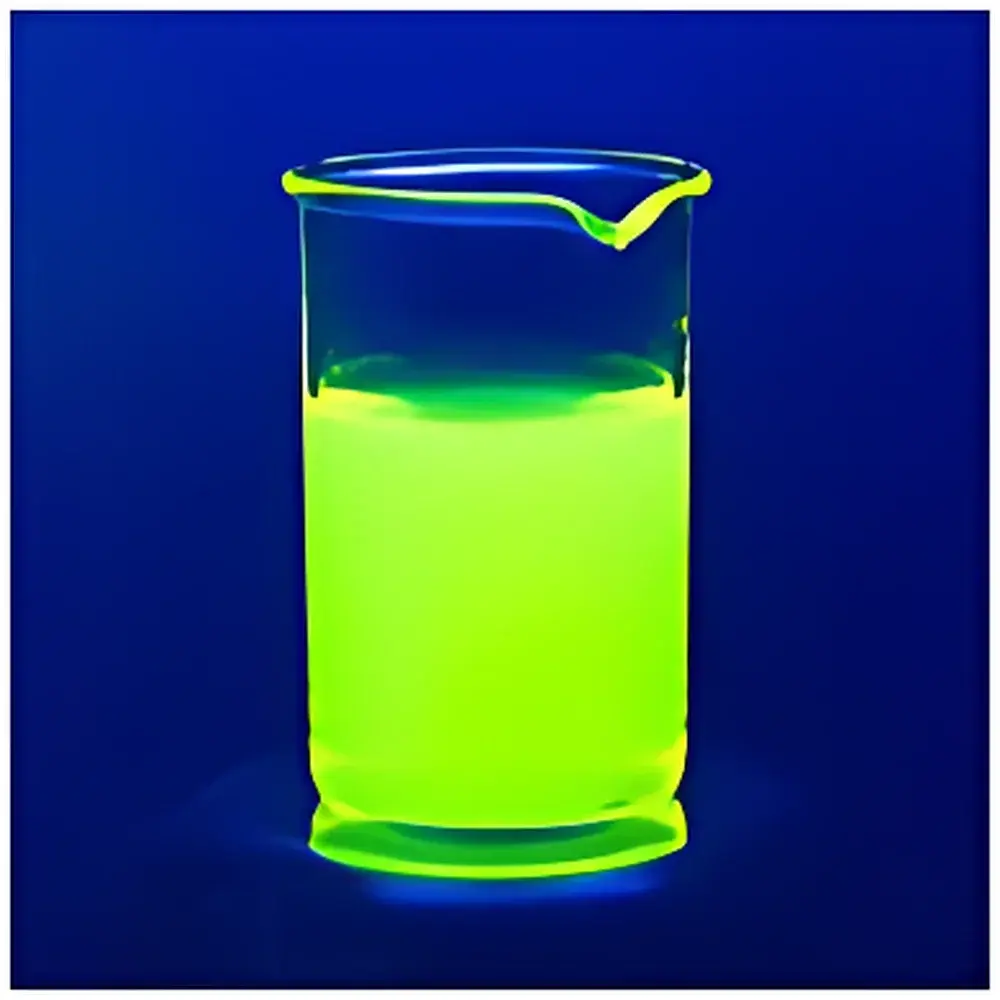
Albillia Liquid Sodium Fluorescein Concentrate – 30% (300 g/L) is a high-purity, aqueous tracer solution engineered for quantitative hydrological and environmental tracing applications. As a sodium salt of fluorescein (C20H10Na2O5), it functions as a conservative, non-reactive fluorescent dye with well-characterized photophysical properties. Its utility stems from strong absorption in the blue-green spectrum and intense green fluorescence upon excitation at ~491 nm, enabling highly sensitive detection via fluorometry or visual inspection under UV-A light (365 nm). Unlike reactive tracers, sodium fluorescein exhibits minimal sorption to aquifer matrices—making it ideal for delineating flow paths, quantifying transit times, and validating hydraulic connectivity in porous and fractured media. It is not a measurement instrument but a certified reference-grade chemical tracer compliant with standard field protocols defined in ISO 23851:2022 (Tracer tests in groundwater) and ASTM D6117 (Standard Guide for Use of Tracers in Hydrologic Investigations).
Key Features
- Highly soluble formulation (>500 g/L in deionized water), ensuring rapid and homogeneous dispersion in aqueous systems
- Low adsorption coefficient (Kd < 0.1 mL/g across common silicate and carbonate aquifer materials), supporting conservative transport behavior
- Defined spectral characteristics: excitation maximum at 491 nm and emission peak at 515 nm—optimized for compatibility with standard portable fluorometers (e.g., Turner Designs Cyclops-7, Hach DR3900)
- Verified detection sensitivity down to 0.001 mg/L (1 µg/L) by laboratory-grade spectrofluorometry; visible fluorescence detectable at 50–100 µg/L under controlled UV illumination
- Manufactured under strict quality control in Switzerland, with full batch-specific CoA including HPLC-assessed purity (≥90%), chloride content (≈7%), moisture (≈5%), and absence of eosin interference
- Stable for ≥24 months when stored unopened at 2–8 °C in opaque, UV-shielded containers; degradation monitored via absorbance ratio (A490/A440) per EPA Method 415.3
Sample Compatibility & Compliance
This tracer is compatible with natural waters (freshwater, brackish, treated effluent), cementitious grouts, and polymer-modified sealants used in infrastructure diagnostics. It is not recommended for use in strongly acidic environments (pH < 6.5) or prolonged direct sunlight due to pH-dependent lactone formation and UV-induced photobleaching. The product meets EU REACH Annex XIV exemption criteria for research and industrial tracing applications. Batch documentation includes full traceability to synthesis origin, heavy metal screening (Pb, Cd, Hg < 1 ppm), and compliance with OECD Test Guideline 305 (Bioaccumulation in Fish) — confirming negligible bioconcentration potential (BCF < 10). While not intended for human injection, its chemical identity aligns with USP-NF monograph for Sodium Fluorescein (Category: Diagnostic Aid), and it is supplied with SDS compliant with GHS Rev. 10.
Software & Data Management
As a consumable tracer—not an instrument—Albillia Sodium Fluorescein Concentrate does not interface with proprietary software. However, its use integrates seamlessly into established hydrological modeling workflows. Field concentration time-series data acquired via calibrated fluorometers can be imported directly into industry-standard platforms including MODFLOW-USG (with MT3DMS/RT3D), FEFLOW v7.5+, and AquiferTest Pro for breakthrough curve analysis, dispersion coefficient estimation, and residence time distribution (RTD) modeling. All batch certificates include QR-coded metadata for digital audit trails, supporting GLP-aligned data integrity requirements (ALCOA+ principles). Traceability records are retained for 10 years per ISO/IEC 17025:2017 clause 7.8.2.
Applications
- Groundwater flow mapping and inter-aquifer leakage assessment in karst and alluvial systems
- Sanitary sewer exfiltration/infiltration (I/I) studies and stormwater network integrity verification
- Roof membrane and plaza deck leak localization using controlled surface application and subsurface monitoring
- Maritime search-and-rescue marker deployment (IMO Resolution A.918(22)-compliant visual contrast in seawater)
- Industrial process line validation—including heat exchanger tube bundle testing and HVAC chilled water loop commissioning
- Laboratory-scale reactive transport experiments simulating contaminant plume migration under controlled redox/pH gradients
- Educational demonstrations of advection-dispersion dynamics in porous media columns (ASTM D5125-16)
FAQ
Is this product suitable for potable water system testing?
Yes—when applied at recommended dosing levels (typically 0.1–10 mg/L), it poses no regulatory barrier to subsequent disinfection and meets WHO Guidelines for Drinking-water Quality (4th ed.) Appendix 3 thresholds for fluorescent tracers.
Can it be used in saline or seawater environments?
Yes, though quenching effects may reduce effective detection limits by ~30%; calibration curves must be generated in matrix-matched standards per ISO 10303-2.
What is the shelf life after opening?
Refrigerated (2–8 °C), protected from light, and sealed with inert gas overlay: up to 6 months. Avoid repeated freeze-thaw cycles.
Does it interfere with chlorine residual measurements?
No—unlike phenolphthalein or methylene blue, sodium fluorescein does not react with free chlorine at concentrations ≤5 mg/L; validated per Standard Methods 4500-Cl G.
Is batch-specific analytical data available?
Yes—each 5 L container ships with a Certificate of Analysis listing HPLC chromatogram, UV-Vis spectrum (200–700 nm), pH (6.8–7.2), density (1.28–1.32 g/mL at 20 °C), and microbiological testing (absence of Pseudomonas spp. per ISO 11731).