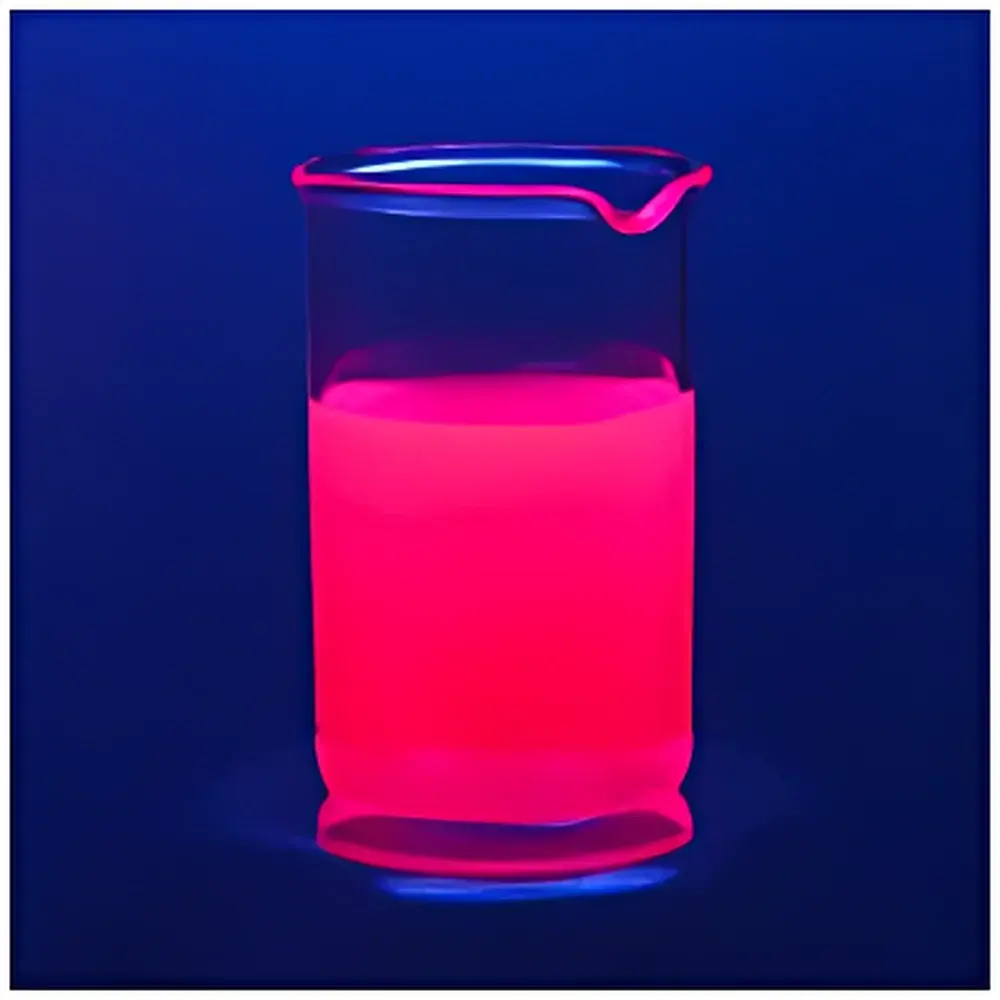
Albillia Sulforhodamine B Tracer (20% w/v Aqueous Concentrate)
| Brand | Albillia |
|---|---|
| Origin | Switzerland |
| Product Form | Liquid concentrate (20% w/v) |
| CAS No. | 3520-42-1 |
| EINECS No. | 220-025-2 |
| Detection Limit | 0.01 µg/L |
| Visual Detection Threshold | >500 µg/L |
| Excitation/Emission Maxima | 565 nm / 585 nm |
| Solubility in Water | 50 g/L |
| Adsorption Behavior | Moderate |
| Primary Interferent | Sulforhodamine G |
| Chemical Stability | Susceptible to oxidative degradation |
| Purity | ≥75% (by HPLC) |
Overview
Albillia Sulforhodamine B Tracer is a high-performance, fluorescent dye tracer engineered for quantitative hydrological tracing applications in surface water, groundwater, and engineered hydraulic systems. As a water-soluble xanthene derivative, it operates on the principle of fluorescence detection—absorbing light at 565 nm and emitting strongly at 585 nm under UV or blue-light excitation. Its photophysical profile enables sensitive, real-time detection using portable fluorometers, laboratory spectrofluorometers, or fixed-field monitoring stations. Unlike conservative tracers such as chloride or bromide, Sulforhodamine B provides orders-of-magnitude lower detection limits (0.01 µg/L), enabling precise mass-balance calculations, residence time distribution analysis, and low-concentration breakthrough curve characterization. It is not a reactive tracer; its transport behavior approximates that of dissolved non-sorbing solutes under typical aquifer and streambed conditions—making it suitable for validating flow models, calibrating numerical simulations (e.g., MODFLOW-MT3DMS), and supporting regulatory hydrogeological assessments.
Key Features
- Highly stable aqueous concentrate formulation (20% w/v), eliminating on-site dissolution variability and ensuring batch-to-batch reproducibility
- Optimized spectral separation: narrow excitation/emission bandgap minimizes interference from natural organic matter (NOM) fluorescence and common background contaminants
- Controlled adsorption kinetics—moderate affinity for silicate and iron oxide surfaces permits use in sandy aquifers and gravel-bed streams without excessive retardation
- Trace-level quantification validated against EPA Method 415.3 and ISO 20977:2019 (Water quality — Determination of fluorescent dyes by spectrofluorimetry)
- Supplied with full Certificate of Analysis including HPLC chromatogram, purity assessment (≥75%), residual solvent profile, and certified detection limit verification
Sample Compatibility & Compliance
This tracer is compatible with standard polyethylene, HDPE, and glass sample collection containers. It exhibits negligible interaction with common field sampling equipment (e.g., peristaltic pumps, stainless-steel tubing) when used within recommended concentration ranges (1–100 µg/L in ambient water). The product complies with EU REACH Annex XIV exclusion criteria for intentional release into the environment and meets OECD Test Guideline 305 (Bioaccumulation in Fish) classification as non-bioaccumulative (BCF < 100). While not classified as hazardous under CLP Regulation (EC) No. 1272/2008, users must adhere to site-specific environmental permits governing tracer injection volumes and post-trace containment protocols. Documentation supports GLP-compliant study reporting per OECD Principles of Good Laboratory Practice.
Software & Data Management
Albillia provides traceable calibration standards (1 mg/L and 10 µg/L certified reference solutions) compatible with major fluorometric platforms—including Turner Designs Cyclo, HORIBA Aqualog, and Shimadzu RF-6000. Raw fluorescence intensity data can be imported into hydrological modeling suites (e.g., UCODE, PEST++, FEFLOW) via CSV or ASCII export. The accompanying TraceLog Manager software (v2.3+) enables automated peak identification, baseline correction, dilution-series interpolation, and audit-trail generation compliant with FDA 21 CFR Part 11 requirements for electronic records and signatures. All calibration logs, field injection logs, and detection reports are timestamped, user-authenticated, and exportable in PDF/A-2 format for regulatory submission.
Applications
- Groundwater flow path delineation and karst conduit mapping
- Inter-basin transfer verification and watershed boundary validation
- Residence time estimation in riparian zones and hyporheic exchange zones
- Leak detection and integrity testing of lined reservoirs, canals, and wastewater infiltration galleries
- Calibration of solute transport parameters (dispersion coefficient, retardation factor) in column and field-scale experiments
- Validation of CFD models simulating mixing dynamics in stormwater retention basins and constructed wetlands
FAQ
Is Sulforhodamine B approved for use in drinking water source protection studies?
Yes—when applied below 1 µg/L ambient concentration and following local regulatory pre-approval (e.g., USGS Circular 1394, German LAWA guidelines), it is widely accepted for reconnaissance-scale tracing in protected catchments.
How does oxidative degradation affect field deployment?
Exposure to free chlorine (>0.2 mg/L), ozone, or UV-C irradiation accelerates decay; therefore, avoid injection downstream of disinfection units or in highly photolytic shallow streams without concurrent quenching controls.
Can this tracer be used alongside other fluorescent dyes in multi-tracer experiments?
Yes—Sulforhodamine B’s distinct 585 nm emission peak allows spectral deconvolution from fluorescein (520 nm), eosin Y (545 nm), and rhodamine WT (580 nm), provided instrumentation supports multi-wavelength acquisition and linear unmixing algorithms.
What is the shelf life of the 20% concentrate?
When stored at 4–25°C in amber glass bottles under inert gas (N₂) headspace, the unopened vial maintains specification compliance for 24 months from date of manufacture.
Does Albillia provide technical support for experimental design?
Yes—Albillia’s HydroTracer Application Team offers free pre-deployment consultation, including mass loading calculation, detection sensitivity modeling, and regulatory documentation templates aligned with ISO 20426 and ASTM D7977 standards.