
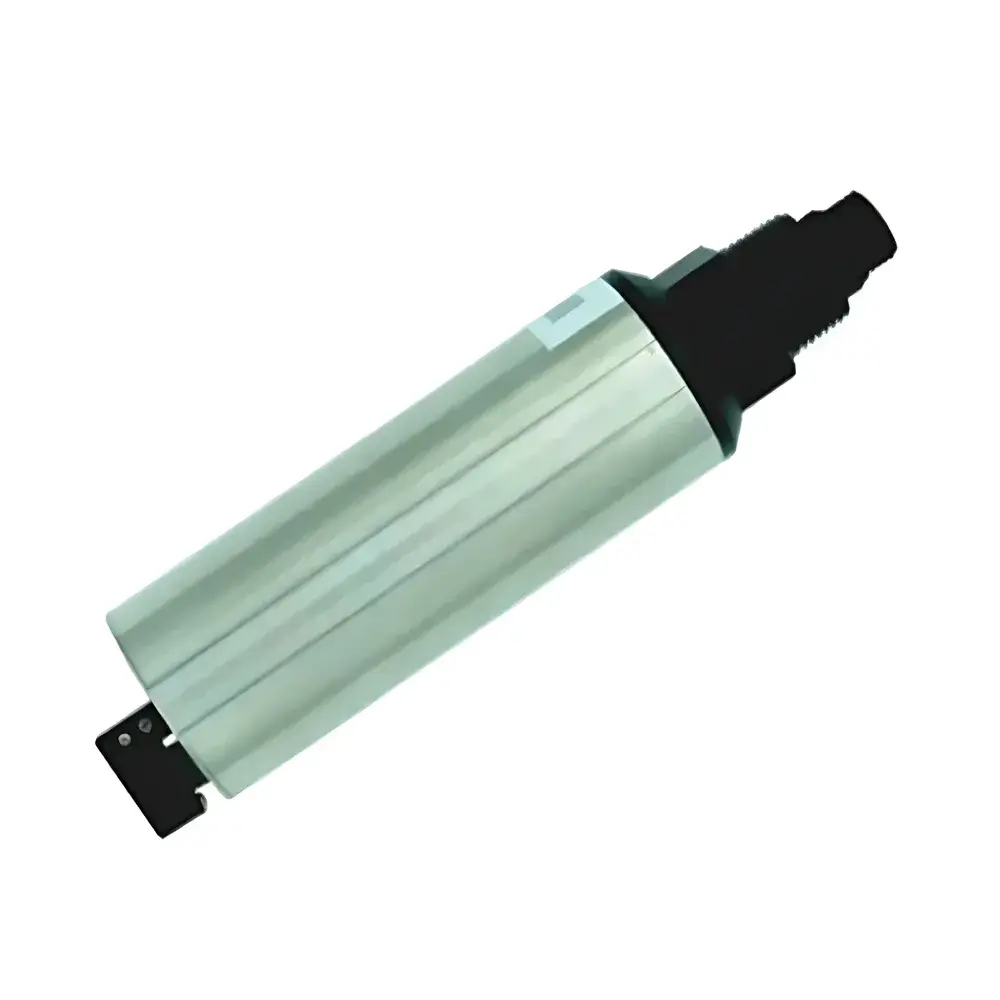
ALG-300 Algal Density Water Quality Auto-Analyzer by EXPEC
| Brand | EXPEC (Puyu Technology) |
|---|---|
| Origin | Zhejiang, China |
| Manufacturer Type | Authorized Distributor |
| Country of Manufacture | China |
| Model | ALG-300 |
| Pricing | Available Upon Request |
Overview
The ALG-300 Algal Density Water Quality Auto-Analyzer is an in-situ, continuous-monitoring instrument engineered for the quantitative assessment of phytoplankton biomass in natural and engineered water systems. It operates on the principle of in vivo chlorophyll-a fluorescence excitation and emission detection, leveraging species-independent, wavelength-specific optical interrogation (typically 470 nm excitation / 685 nm emission) to deliver real-time, non-destructive estimation of algal cell density. Unlike manual microscopic enumeration or spectrophotometric extraction methods—which require sample collection, preservation, lab processing, and introduce significant analytical delay—the ALG-300 enables direct, field-deployable measurement with sub-minute response time. Its optical architecture incorporates temperature-compensated photodiodes and calibrated LED excitation sources to ensure long-term signal stability under variable ambient conditions. Designed for unattended operation in harsh aquatic environments, the analyzer integrates environmental resilience with metrological rigor—making it suitable for early-warning monitoring of algal blooms, compliance tracking against regulatory thresholds (e.g., WHO guidelines for cyanobacterial toxins precursors), and integration into automated water quality surveillance networks.
Key Features
- Digital Sensor Architecture: Integrated microcontroller with embedded firmware ensures deterministic signal acquisition, onboard baseline correction, and drift compensation over extended deployment cycles.
- RS-485 Communication Interface: Native Modbus RTU protocol support enables seamless integration with SCADA systems, PLCs, and centralized data loggers without requiring protocol gateways or middleware.
- Self-Cleaning Mechanism: Motor-driven stainless-steel brush rotates at programmable intervals to physically remove biofilm, sediment deposits, and air bubbles from the optical window surface—reducing fouling-induced signal attenuation and extending maintenance intervals to ≥90 days in typical freshwater applications.
- In-Situ Calibration Compatibility: Supports two-point field calibration using traceable reference standards (e.g., cultured Chlorella vulgaris suspensions with NIST-traceable cell counts), ensuring ongoing accuracy verification without instrument retrieval.
- Environmental Hardening: IP68-rated housing with marine-grade 316L stainless steel wetted parts and UV-stabilized polymer optics provide resistance to corrosion, hydrostatic pressure (up to 10 m submersion), and prolonged solar exposure.
Sample Compatibility & Compliance
The ALG-300 is validated for use across diverse aqueous matrices including oligotrophic and eutrophic freshwater (lakes, reservoirs, rivers), estuarine and coastal seawater (salinity range: 0–35 ppt), and municipal drinking water distribution systems. It exhibits minimal interference from suspended solids (<500 mg/L turbidity), dissolved organic carbon (<20 mg/L DOC), and common ions (Ca²⁺, Mg²⁺, Na⁺, Cl⁻) within environmentally relevant concentrations. The device complies with IEC 61000-6-2 (EMC immunity) and IEC 60529 (ingress protection). While not a certified medical or pharmaceutical device, its data integrity features—including timestamped raw fluorescence values, sensor health diagnostics, and configurable data logging intervals—support alignment with GLP documentation requirements for environmental monitoring programs. It is routinely deployed in projects adhering to ISO 14001 environmental management frameworks and national water quality monitoring protocols (e.g., China’s HJ 91.2-2022 standard for surface water monitoring).
Software & Data Management
Data output is delivered as ASCII-formatted Modbus registers containing: raw fluorescence intensity (mV), temperature-compensated relative algal density units (RDU), internal sensor temperature (°C), cleaning cycle status flag, and diagnostic codes. No proprietary software is required for basic integration; however, EXPEC provides optional cloud-based dashboard tools (EXPEC AquaView™) supporting multi-node fleet management, automated alerting (SMS/email upon RDU threshold breach), and export to CSV/JSON for downstream statistical analysis (e.g., PCA, time-series trend modeling). All stored data include immutable timestamps and source identifiers, satisfying audit-trail expectations under ISO/IEC 17025 Clause 7.5.2 for measurement traceability.
Applications
- Early detection and quantification of cyanobacterial and diatom bloom initiation in drinking water source reservoirs
- Real-time performance monitoring of tertiary treatment effluent in wastewater reclamation plants
- Long-term trophic state assessment in lake restoration projects (e.g., correlation with Secchi depth, TP, TN)
- Regulatory compliance reporting for recreational water bodies under national bathing water directives
- Research-grade phytoplankton dynamics studies in mesocosm experiments and coastal observatories
FAQ
What units does the ALG-300 report algal density in?
The instrument outputs Relative Density Units (RDU)—a dimensionless, factory-calibrated scale correlating linearly with chlorophyll-a concentration (µg/L) and viable cell count (cells/mL) for common freshwater phytoplankton genera. Absolute conversion requires site-specific empirical calibration.
Can the ALG-300 distinguish between algal species?
No. It measures total photosynthetic pigment-associated fluorescence and does not perform spectral deconvolution or taxonomic identification. Complementary techniques such as flow cytometry or high-performance liquid chromatography (HPLC) are recommended for species-level resolution.
Is routine recalibration required?
Yes. While drift is minimized via thermal compensation and self-cleaning, annual field recalibration against certified reference materials is recommended per ISO 5667-16 for environmental monitoring validity.
Does the device meet FDA 21 CFR Part 11 requirements?
It does not implement electronic signature or audit-trail encryption natively; however, when integrated with validated third-party SCADA platforms compliant with Part 11, full data integrity and accountability can be achieved.
What is the maximum recommended deployment depth?
10 meters below water surface, provided the mounting structure ensures stable orientation and minimizes shadowing or sediment resuspension near the optical path.







