
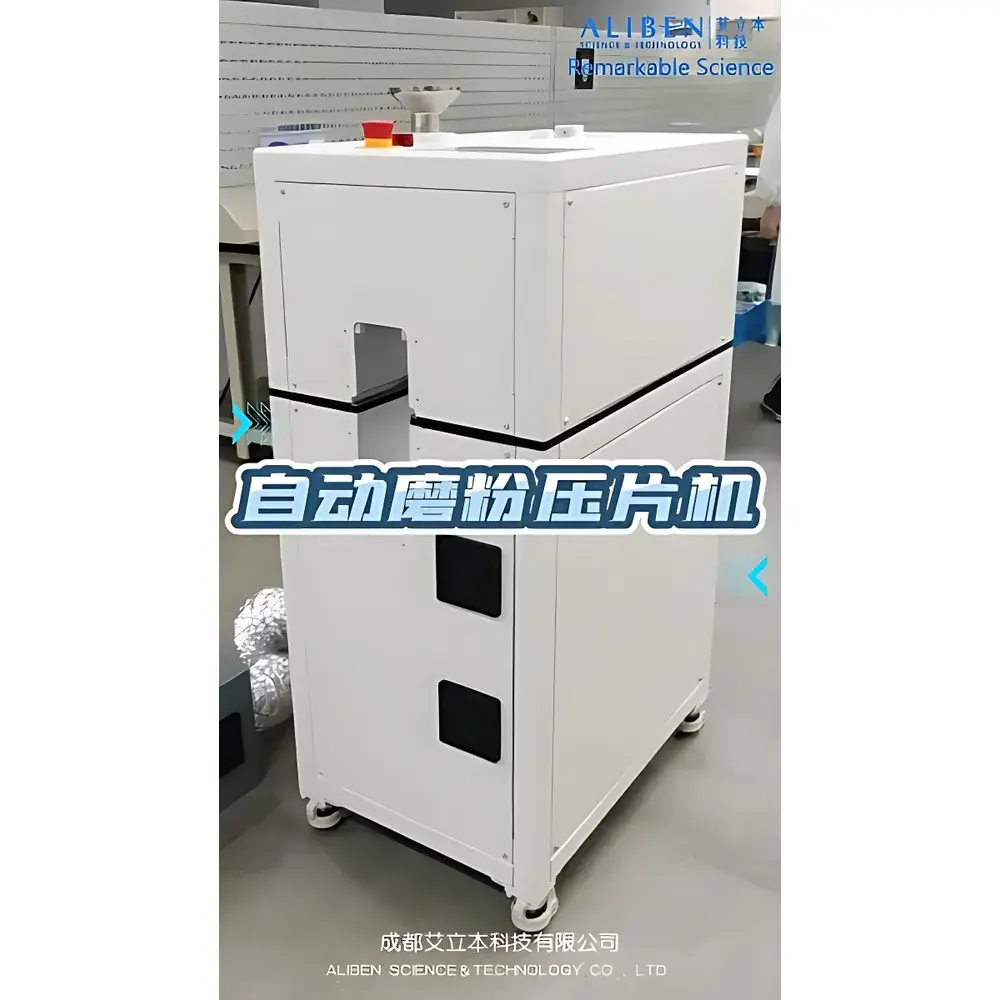
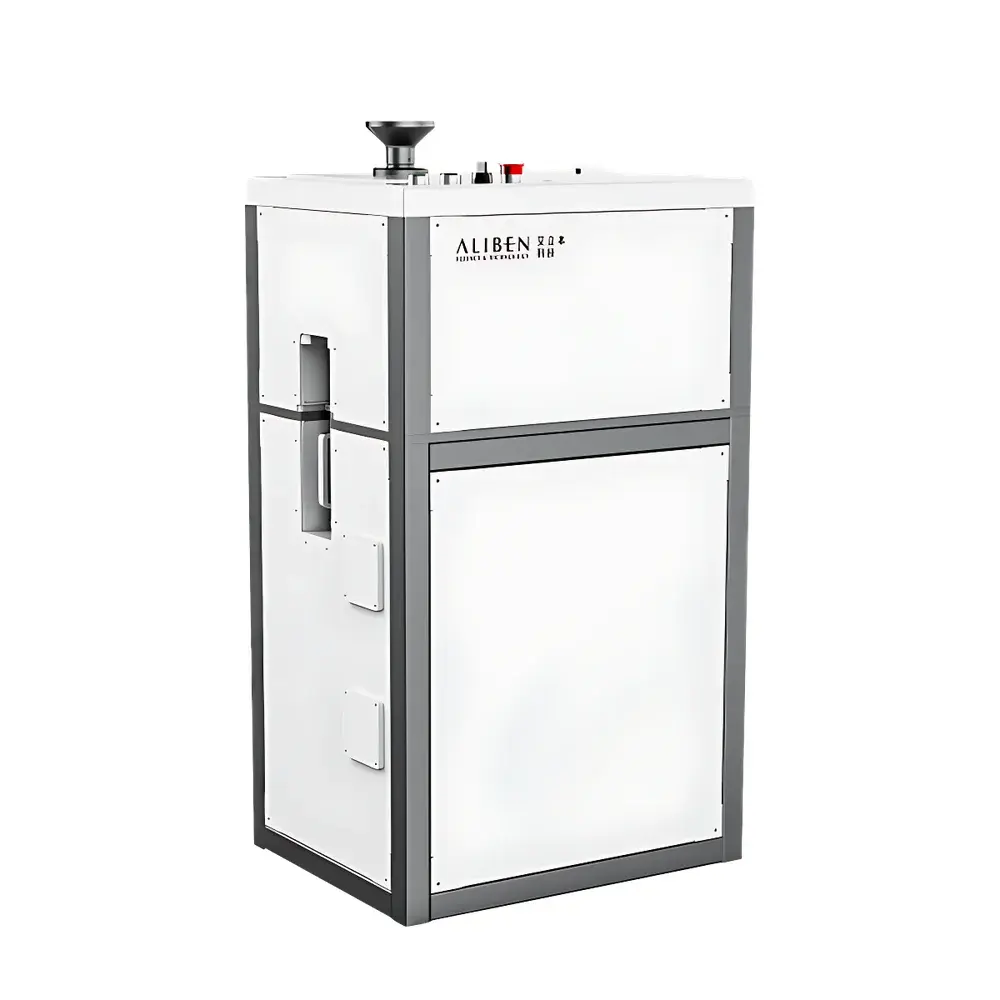
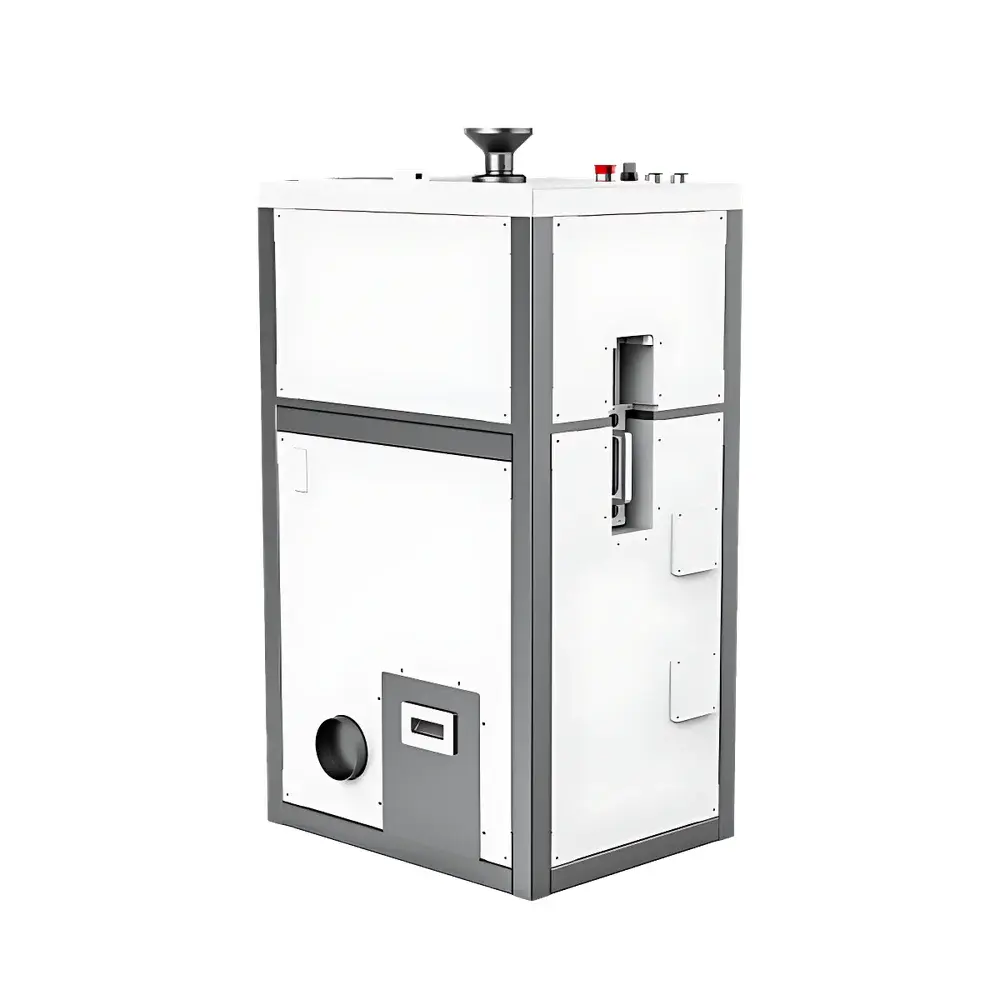
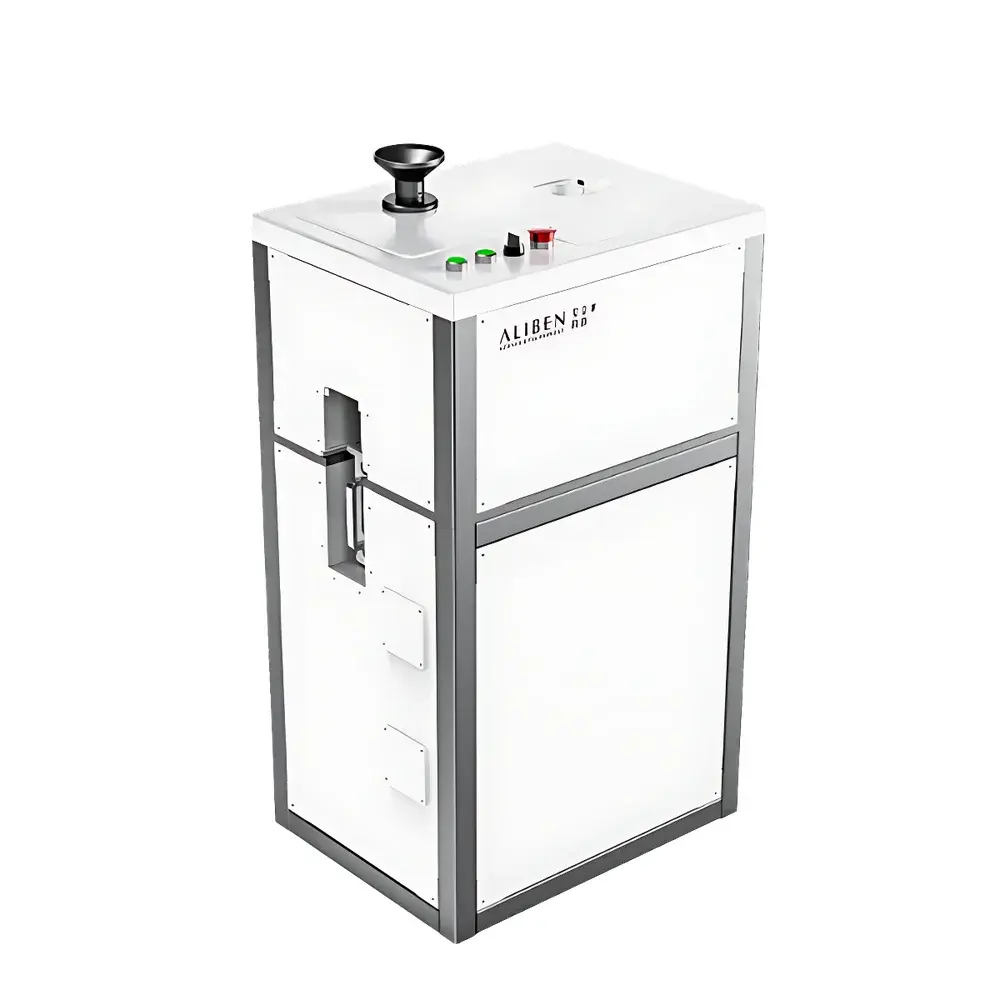
Aliben AGT Automatic Powder Milling and Pellet Press
| Brand | Aliben |
|---|---|
| Origin | Sichuan, China |
| Manufacturer Type | Direct Manufacturer |
| Regional Category | Domestic (China) |
| Model | AGT |
| Instrument Type | Fully Automatic Pellet Press |
| Application Scope | Sandstone, Mudstone/Shale, Dolomite, Limestone, Gypsum, Igneous Rock |
| Function | Fully Automated Powder Milling and Pellet Pressing |
| Maximum Sample Dimension | Longest Edge < 1.5 cm |
| Operation Mode | Fully Automatic |
Overview
The Aliben AGT Automatic Powder Milling and Pellet Press is an integrated sample preparation system engineered for high-throughput, reproducible preparation of geological and mineralogical specimens prior to X-ray fluorescence (XRF), X-ray diffraction (XRD), or inductively coupled plasma (ICP) analysis. It combines precision milling and uniaxial hydraulic pressing within a single, closed-loop automated platform. The system operates on the principle of controlled mechanical attrition—using hardened alloy milling elements under programmable rotational speed and dwell time—to achieve consistent particle size reduction, followed by isostatic or uniaxial compaction under precisely regulated pressure and dwell duration. Designed specifically for heterogeneous rock matrices, the AGT ensures minimal preferential grinding, reduced amorphization, and preserved phase integrity—critical for quantitative geochemical and petrographic workflows.
Key Features
- Fully automated end-to-end workflow: sequential loading, milling, powder homogenization, die filling, pressing, and ejection—requiring no manual intervention between cycles.
- 45-second cycle time per sample (including milling and pressing), validated across standard reference materials (e.g., USGS BCR-2, NIST 278, GBW07105) under routine operating conditions.
- Adjustable milling parameters: rotational speed, grinding time, and pulse interval enable optimization for varying hardness (Mohs 2–7) and brittleness of geological samples.
- Integrated powder dispersion and vibratory die-filling mechanism to minimize segregation and ensure uniform powder bed density prior to compression.
- Hydraulic pressing unit with real-time pressure feedback control (range: 0–30 t, resolution: ±0.1 t), supporting programmable ramp-hold profiles to mitigate elastic rebound and improve pellet cohesion.
- Compact footprint (< 600 × 500 × 550 mm) and sealed milling chamber compliant with ISO 14644-1 Class 8 cleanroom requirements for dust containment.
Sample Compatibility & Compliance
The AGT accommodates irregularly shaped rock fragments with a maximum linear dimension of less than 1.5 cm—enabling direct processing of drill core chips, field-collected outcrop samples, and archived thin-section rejects. It has been verified for use with sandstone (quartz-rich and feldspathic), mudstone/shale (including organic-rich variants), dolomite, limestone (low- to high-Mg), gypsum (dihydrate and hemihydrate forms), and fine- to medium-grained igneous rocks (e.g., basalt, andesite, granodiorite). All contact surfaces are constructed from corrosion-resistant stainless steel (AISI 316L) and tungsten carbide tooling, ensuring compatibility with mildly acidic or saline matrices. The system supports GLP-compliant operation through audit-trail-enabled firmware logging (timestamped cycle records, parameter sets, operator ID) and aligns with ASTM D5108 (XRF pellet preparation) and ISO 29581-2 (cement XRD sample prep) procedural frameworks.
Software & Data Management
The AGT is operated via an embedded industrial touchscreen HMI running a deterministic real-time OS. Each method file stores milling speed (rpm), grinding duration (s), vibration amplitude (%), pressing force (t), hold time (s), and ejection sequence—supporting up to 99 user-defined protocols. All cycle logs—including raw sensor data (torque, pressure, temperature), pass/fail flags, and timestamped images of final pellets—are exportable in CSV and XML formats. Optional integration with LIMS platforms (via OPC UA or Modbus TCP) enables traceability across sample batches. Firmware complies with IEC 62443-3-3 for industrial cybersecurity baseline and supports electronic signature functionality per FDA 21 CFR Part 11 when deployed in regulated QA/QC laboratories.
Applications
- Routine geochemical screening in exploration and mining labs requiring rapid turnaround for multi-element XRF quantification.
- Preparation of pressed pellets for quantitative XRD phase analysis of carbonate diagenesis and clay mineral assemblages.
- Standardized sample conditioning for ICP-OES/MS dissolution validation studies where particle size distribution directly impacts acid digestion kinetics.
- Reference material certification programs demanding inter-laboratory reproducibility in pellet density (>2.8 g/cm³) and surface flatness (Ra < 0.8 µm).
- Teaching laboratories conducting hands-on instruction in analytical petrology, emphasizing method standardization and error propagation in bulk-rock analysis.
FAQ
What sample mass is required for optimal pellet formation?
Typically 5–8 g of crushed rock feed; minimum mass depends on grain density and porosity—automated fill-level detection adjusts vibration duration accordingly.
Can the AGT process hydrated or sulfide-bearing samples without oxidation artifacts?
Yes; optional inert gas purging (N₂ or Ar) can be integrated into the milling chamber upon request, minimizing oxidative alteration during comminution.
Is method transfer possible between AGT units across different sites?
Yes—method files are portable and calibrated against NIST-traceable load cells and rotary encoders; inter-unit CV for pellet thickness is ≤1.2% (n=30, limestone CRM).
Does the system support custom die geometries?
Standard configuration uses 32-mm diameter dies; custom diameters (25–40 mm) and stepped or segmented dies are available as factory options.
How is maintenance access structured for routine calibration and wear-part replacement?
Milling chamber and pressing head are modular; full recalibration (torque, pressure, position) can be completed in <25 minutes using onboard diagnostic routines and certified reference standards.



