
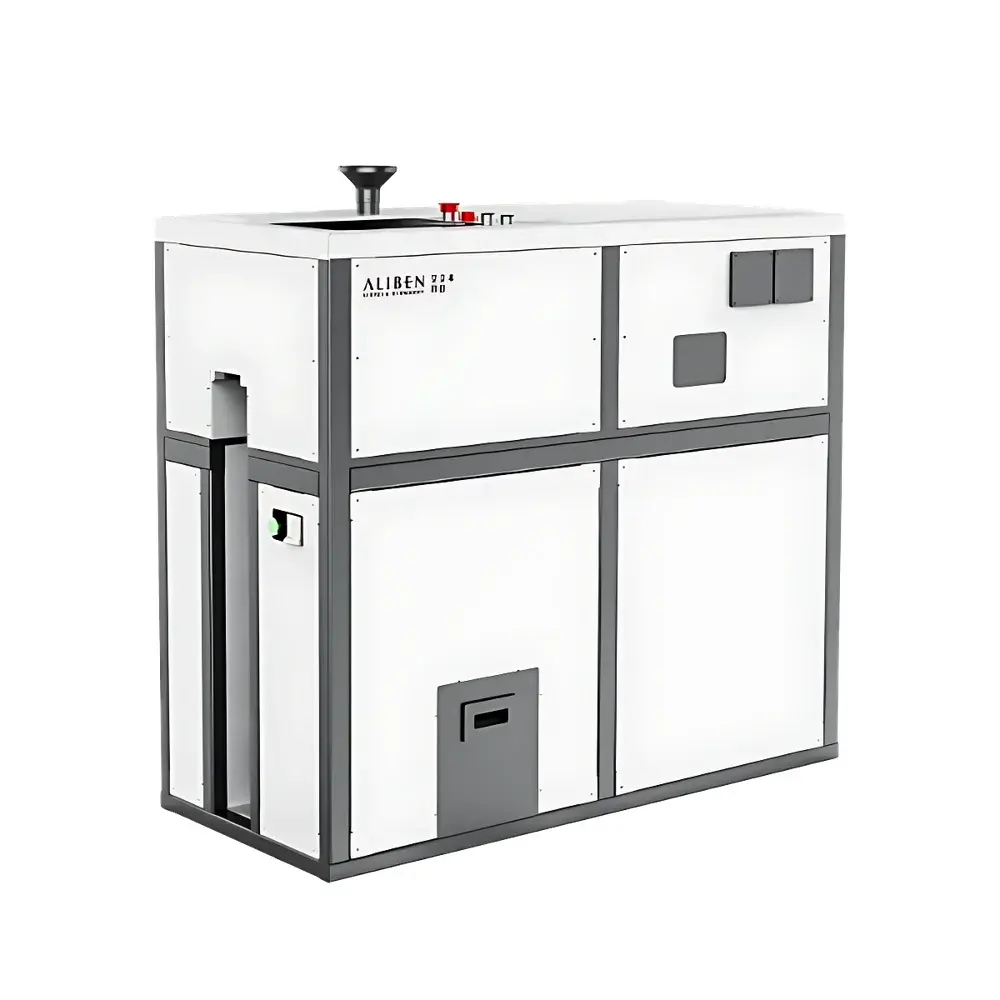
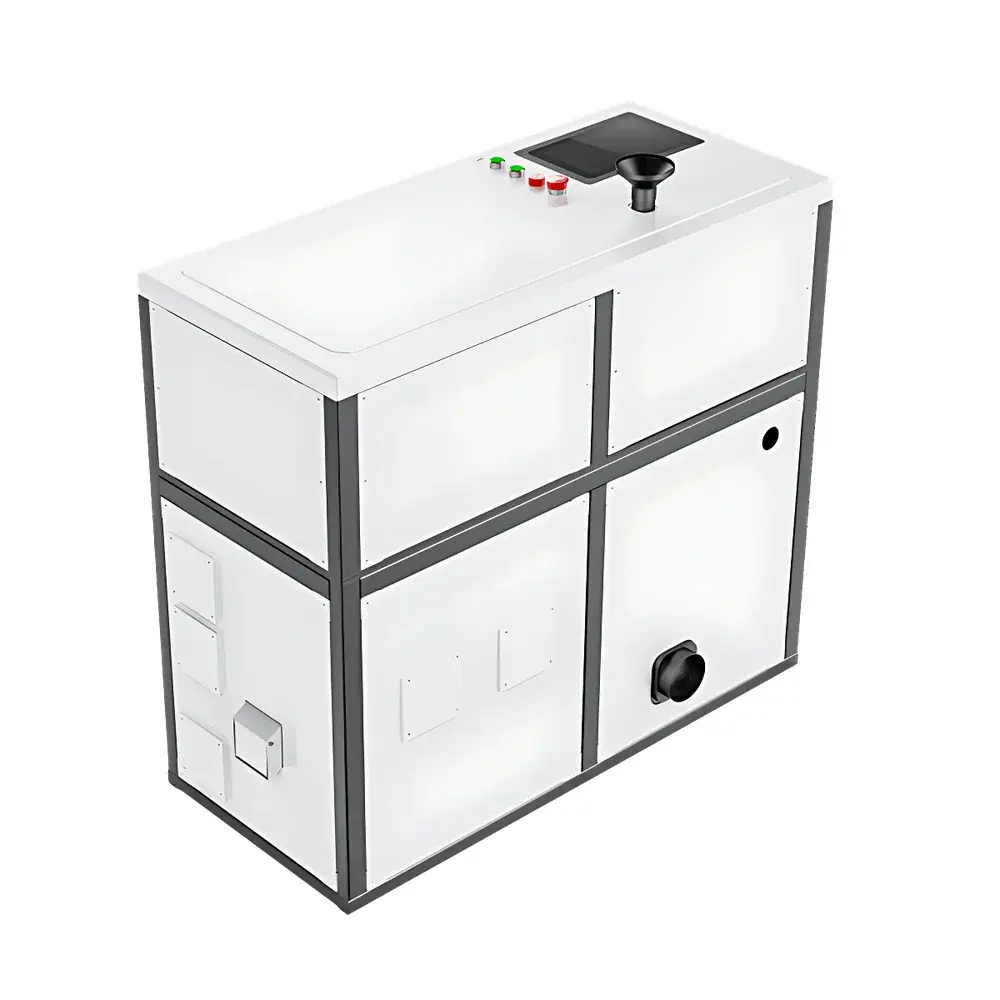
Aliben AGT-LIBS Automated Milling-Pressing LIBS Elemental Analyzer
| Brand | Aliben |
|---|---|
| Origin | Sichuan, China |
| Manufacturer Type | Manufacturer |
| Regional Classification | Domestic (China) |
| Model | AGT-LIBS |
| Pricing | Upon Request |
| Instrument Form Factor | Benchtop |
| Integration Level | Fully Integrated System |
| Laser Pulse Energy | ≤ 100 mJ |
Overview
The Aliben AGT-LIBS Automated Milling-Pressing LIBS Elemental Analyzer is a benchtop, fully integrated laser-induced breakdown spectroscopy (LIBS) system engineered for rapid, direct elemental analysis of geological solid samples. It combines automated sample preparation—comprising precision milling and hydraulic pellet pressing—with high-repetition-rate pulsed laser ablation and time-resolved spectral detection in a single platform. The system operates on the fundamental LIBS principle: a focused nanosecond laser pulse (≤ 100 mJ, typically 1064 nm Nd:YAG) ablates a micro-volume of material from the sample surface, generating a transient plasma (> 10,000 K). Emitted atomic and ionic line spectra from the cooling plasma are collected via high-throughput Czerny–Turner spectrometer (200–900 nm range) and resolved with CCD or ICCD detection. Unlike X-ray fluorescence (XRF), LIBS enables detection of light elements (Z < 12), including C, N, O, Li, Be, and B—critical for carbonate mineralogy, organic matter quantification, and redox-sensitive geochemical interpretation.
Key Features
- Fully automated sample workflow: integrated miller (planetary ball mill configuration) and hydraulic press (≥ 15 ton force) eliminate manual grinding, sieving, and pelletization—reducing operator variability and contamination risk.
- Direct rock particle analysis: accepts irregular geological fragments up to 1.5 cm in maximum dimension; no pre-sizing or acid digestion required.
- Rapid cycle time: complete milling, pressing, and LIBS acquisition within ≤ 90 seconds per sample under standard operating conditions.
- Multi-element capability: simultaneous qualitative and semi-quantitative detection of ≥ 17 elements—including Si, Al, Fe, Ca, Mg, Mn, Na, Ti, Ba, Sr, Cl, P, V, Ni, Zr, Th, U—covering major, minor, trace, and actinide species relevant to sedimentology and ore genesis.
- Light-element optimized optics: UV-enhanced grating and quartz-transmissive optics enable robust C/N/O signal collection, supporting kerogen typing and diagenetic assessment in shale gas exploration.
- Robust architecture: vibration-damped optical table, sealed spectrometer housing, and temperature-stabilized laser cavity ensure long-term spectral reproducibility (RSD < 3% for major oxides over 8-hour operation).
Sample Compatibility & Compliance
The AGT-LIBS accepts unprepared rock fragments across lithological classes: clastic (sandstone, siltstone, shale), carbonate (limestone, dolomite, gypsum), igneous (granite, basalt, rhyolite), and metamorphic (schist, quartzite). No acid dissolution or fusion is needed—preserving volatile element integrity and reducing lab safety hazards. The system supports method validation per ASTM D7359 (standard test method for determination of elements in crude oil by LIBS) and aligns with ISO/IEC 17025:2017 requirements for analytical competence. Spectral data files include embedded metadata (laser energy, gate delay, integration time, sample ID) compliant with FAIR data principles. Optional audit trail module satisfies GLP and GMP documentation needs per FDA 21 CFR Part 11 when configured with user authentication and electronic signature.
Software & Data Management
Control and analysis are executed via Aliben LIBS Studio v3.x—a Windows-based application with dual-mode interface: wizard-driven routine operation for field geologists and scriptable advanced mode for method developers. Calibration employs matrix-matched geological reference materials (e.g., USGS BHVO-2, NIST SRM 278, GeoReM certified standards) with internal standard normalization (e.g., Ca II 393.37 nm or Si I 288.16 nm). Quantitative models use partial least squares regression (PLSR) with cross-validation (leave-one-out). All spectra are stored in HDF5 format with embedded calibration coefficients and uncertainty propagation metadata. Export options include CSV, Excel, and ASTM E1357-compliant .spc files. Remote monitoring and batch report generation (PDF/HTML) are supported via optional Ethernet/Wi-Fi module.
Applications
- Geological field screening: real-time lithostratigraphic correlation during core logging or drill-cuttings analysis in petroleum and mining exploration.
- Environmental site assessment: rapid Pb, As, Cr, and U mapping in soil and tailings without digestion—supporting EPA Method 6010D equivalency studies.
- Metallurgical process control: inline monitoring of slag composition (CaO/SiO₂ ratio, FeO content) and alloy feedstock verification.
- Academic research: isotopic ratio proxy development (e.g., Mg isotopes via high-resolution LIBS-TOF coupling), paleoredox reconstruction using V/Cr and Mo/U ratios.
- Regulatory compliance: screening for restricted substances (RoHS, WEEE) in mineral concentrates prior to smelting.
FAQ
Does the AGT-LIBS require vacuum or inert gas purging for light-element analysis?
No—ambient air operation is sufficient for C, N, and O detection due to optimized UV throughput and gated detection timing (1–5 µs delay, 1–10 µs width). Optional Ar purge enhances signal-to-noise for sub-ppm B and Be.
Can it analyze powdered samples directly without pressing?
Yes—loose powder mode is available with adjustable sample cup depth and laser focus compensation; however, pressed pellets are recommended for quantitative reproducibility (RSD < 2%).
Is spectral library matching supported for unknown mineral identification?
Yes—integrated mineral spectral database (based on RRUFF and ICDD PDF-4+ libraries) enables phase classification via peak position, intensity ratio, and full-spectrum correlation (Pearson coefficient > 0.92 threshold).
What maintenance is required for the laser and spectrometer?
Laser diode pump modules are rated for ≥ 1 × 10⁹ shots; spectrometer gratings require no recalibration if operated within ±2°C ambient stability. Annual optical alignment verification is recommended.
How is calibration transfer handled between instruments?
Calibration models are exportable as portable .libsm files; inter-unit transfer requires only a 5-point validation using common CRMs (e.g., NIST 278, BHVO-2, JGb-1).






