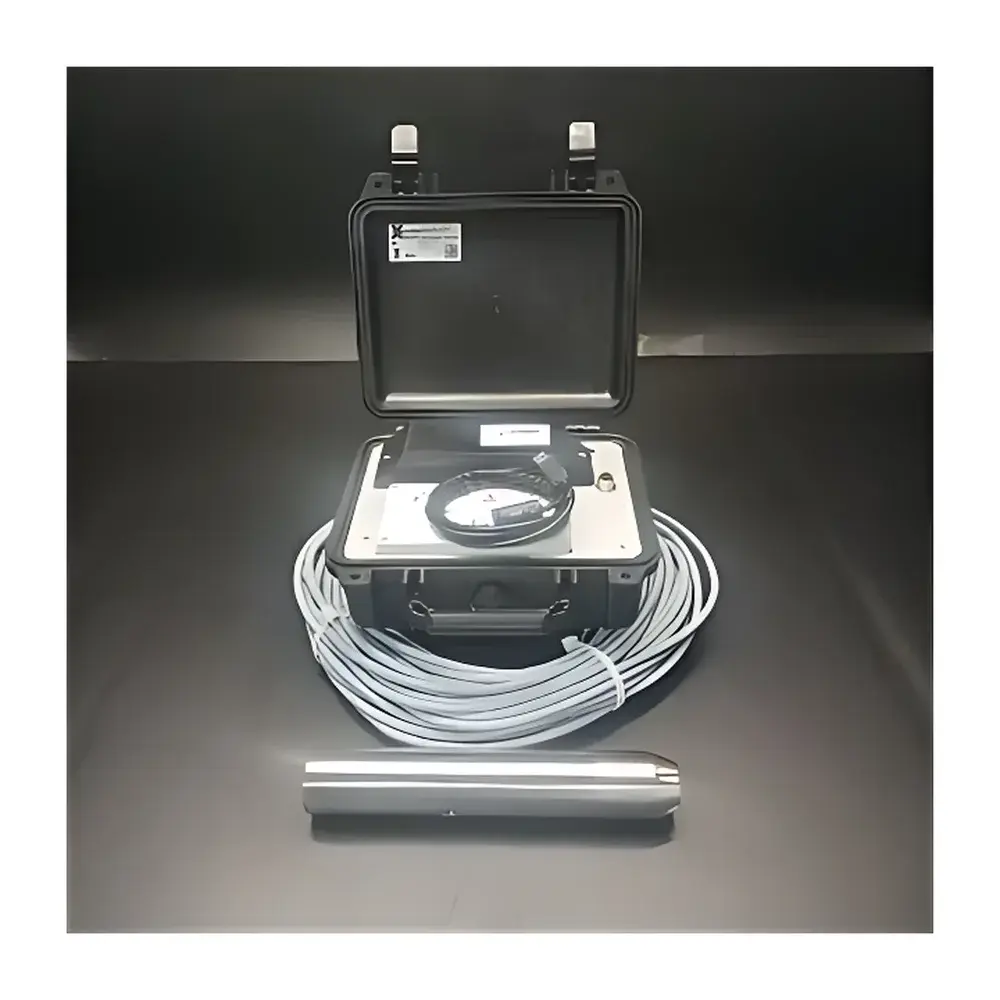
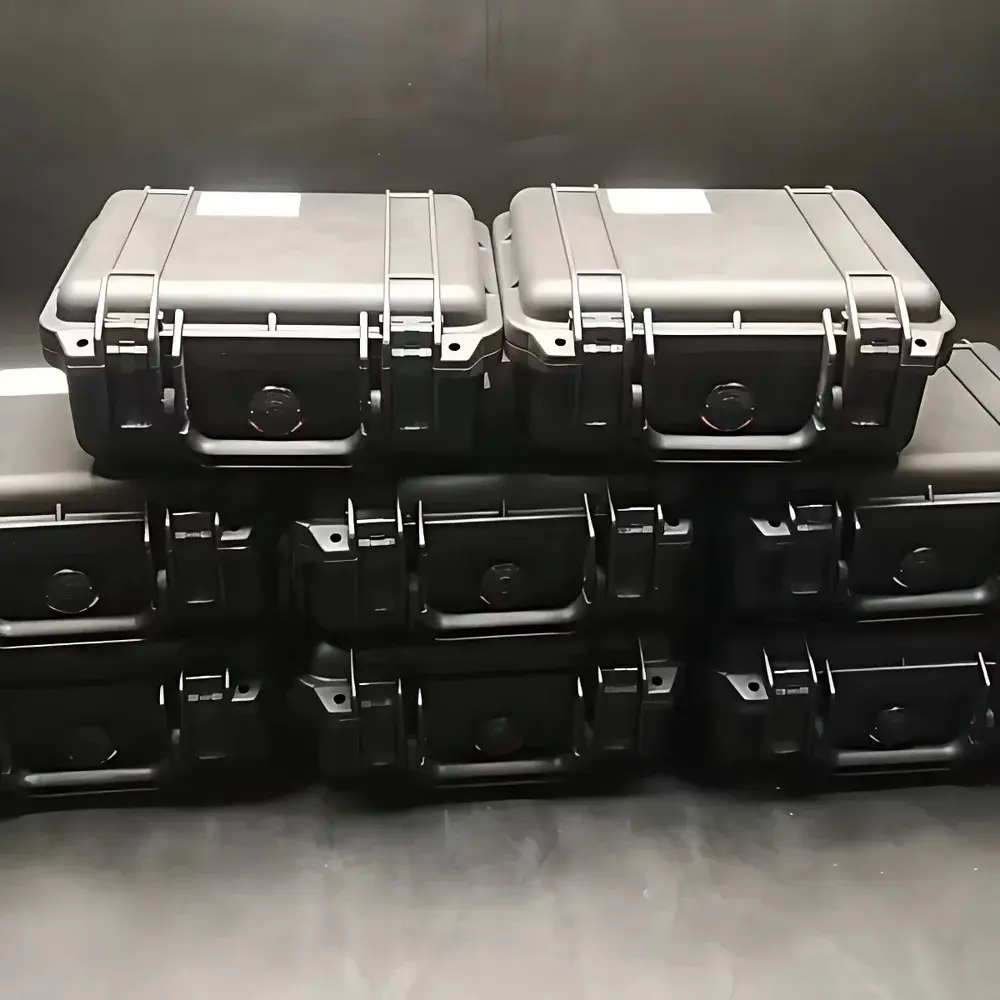
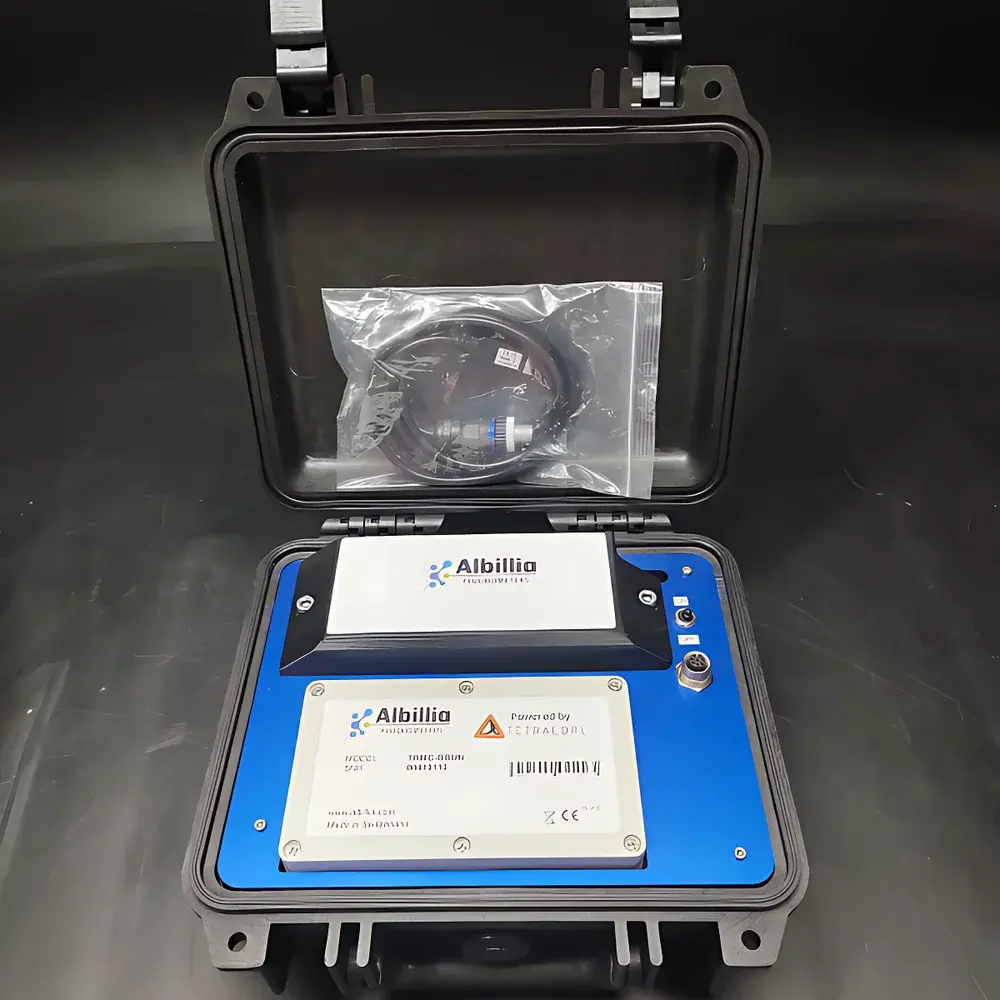
Alibillia FL24 Field-Deployable Fluorescence Tracer Probe for Groundwater Monitoring
| Brand | Alibillia |
|---|---|
| Origin | Switzerland |
| Model | FL24 |
| Optical Modules | 4 |
| Turbidity Range | 0.02–400 NTU |
| Fluorescein Sodium LOD | 2 × 10⁻¹¹ g/mL (typ.) |
| Minimum Sampling Interval | 4 s |
| Communication Interface | RS232 |
| Operating Current | 8–28 mA |
| ADC Resolution | 24-bit unipolar |
| Cable Length | ≥30 m (1 kg per 10 m) |
| Temperature Accuracy | ±0.1 °C |
| Temperature Resolution | 0.034 °C |
| Dimensions | Ø48 mm × 270 mm |
| Enclosure Material | Stainless Steel |
| IP Rating | IP68 |
| Weight | 2.2 kg |
| Power Supply | TRMC-series logger powered |
| Data Logger Options | TRMC-GGUN (local), TRMC-GGUN-COM (remote) |
Overview
The Alibillia FL24 is a field-deployable, submersible fluorescence tracer probe engineered for quantitative in-situ monitoring of fluorescent tracers in groundwater systems. Based on dual-wavelength excitation and synchronous emission detection, the FL24 employs four independent optical channels to simultaneously quantify up to three distinct fluorescent dyes—such as sodium fluorescein, rhodamine WT, and sodium naphthionate—while concurrently measuring turbidity via backscatter or forward-scatter geometry. Its solid-state optical architecture eliminates moving parts, ensuring long-term mechanical stability and zero maintenance under continuous deployment in boreholes up to 200 m depth. Designed specifically for 2-inch (50.8 mm) monitoring wells, the probe integrates seamlessly with standard 6 mm polyethylene or stainless-steel tracer delivery tubing via rapid-connect fittings. The device operates exclusively from external DC power supplied by compatible TRMC-series data loggers, enabling synchronized time-series acquisition with temperature-compensated fluorescence intensity and calibrated NTU output.
Key Features
- Four-channel optical architecture supporting concurrent multi-tracer analysis and real-time turbidity correction
- No moving parts: fully solid-state design ensures operational reliability over extended deployments in abrasive or sediment-laden aquifers
- High-sensitivity photodetection system with typical limit of detection (LOD) of 2 × 10⁻¹¹ g/mL for sodium fluorescein—equivalent to sub-nanogram per liter quantification
- Integrated high-resolution temperature sensor (±0.1 °C accuracy, 0.034 °C resolution) for thermal drift compensation of fluorescence signals
- IP68-rated stainless-steel housing rated for continuous submersion at depths exceeding 200 m; corrosion-resistant surface finish compliant with ISO 9223 C5-M marine industrial classification
- Low-power operation (8–28 mA draw) optimized for battery-backed or solar-charged TRMC logging platforms
- 24-bit unipolar analog-to-digital conversion ensures high dynamic range and minimal quantization noise across full signal span
Sample Compatibility & Compliance
The FL24 is validated for use with EPA-recommended fluorescent tracers including sodium fluorescein (CAS 518-47-8), rhodamine WT (CAS 2201-27-4), and 2-naphthoic acid sodium salt (CAS 124-22-1). Its optical filters and detector gain settings are pre-calibrated per ASTM D3690-22 Annex A1 for tracer concentration linearity and interferences from natural organic matter (NOM). All firmware and calibration protocols comply with GLP requirements for environmental monitoring applications. While not intrinsically certified for hazardous locations, the probe meets IEC 60529 IP68 and EN 61000-6-2/6-4 electromagnetic compatibility standards for field instrumentation deployed in industrial perimeters.
Software & Data Management
Raw sensor outputs—including fluorescence intensity (mV), turbidity (NTU), and temperature (°C)—are transmitted via RS232 serial protocol at user-configurable intervals down to 4 seconds. Data are ingested by the TRMC-GGUN local logger or TRMC-GGUN-COM remote telemetry unit, which supports SD card storage with FAT32 formatting and timestamped binary logging (IEEE 1588 traceable if GPS-synced). Optional Bluetooth 5.0 or GPRS modules enable secure TLS 1.2–encrypted transmission to cloud-based platforms compliant with ISO/IEC 27001 information security management. Firmware updates and on-site calibration verification are performed using Alibillia’s TraceCal desktop application, which maintains full audit trails per FDA 21 CFR Part 11 requirements—including electronic signatures, change history, and calibration certificate export in PDF/A-1b format.
Applications
- Groundwater flow path delineation: High-temporal-resolution tracer breakthrough curve acquisition enables hydraulic conductivity estimation and flow velocity modeling using analytical solutions (e.g., Ogata & Banks, 1961)
- Contaminant plume tracking: Rapid response deployment during spill events allows real-time mapping of contaminant migration vectors and dispersion coefficients in fractured or karst aquifers
- Surface–groundwater interaction studies: Paired FL24 installations in adjacent streambed piezometers and shallow wells quantify exchange fluxes in hyporheic zones per USGS Techniques and Methods 4-D2 methodology
- Leak detection in subsurface infrastructure: Continuous monitoring of tracer concentration gradients around buried pipelines or containment basins provides early warning of seepage anomalies exceeding statistical process control thresholds
- Managed aquifer recharge (MAR) performance assessment: Quantitative recovery efficiency calculation via mass balance of injected vs. recovered tracer mass, referenced to ISO 20426:2018 guidelines
FAQ
What is the maximum recommended deployment depth for the FL24 probe?
The FL24 is rated for continuous operation at hydrostatic pressures up to 20 bar, corresponding to 200 m water column depth. Mechanical integrity has been verified per ISO 6892-1 tensile testing of the hermetic stainless-steel housing.
Can the FL24 be used in saline or brackish groundwater?
Yes—the optical windows employ fused silica with anti-fouling hydrophobic coating, and the electronics are conformally coated per IPC-CC-830B Class 3. Long-term exposure tests in 35 g/L NaCl solution showed no degradation in fluorescence sensitivity or turbidity linearity over 180 days.
Is factory calibration traceable to NIST standards?
All optical channel calibrations are performed using NIST-traceable reference standards (SRM 1932a for fluorescein, SRM 2101b for turbidity), with calibration certificates issued per ISO/IEC 17025:2017 by Alibillia’s accredited metrology lab in Lausanne.
Does the probe require periodic recalibration in the field?
No routine recalibration is required. However, Alibillia recommends annual verification using the included field calibration kit (FL-CAL-KIT-24), which contains stable fluorescent and turbidity reference suspensions for on-site validation prior to critical tracer tests.
How is data synchronization handled between multiple FL24 units in a networked array?
TRMC-GGUN-COM loggers support IEEE 1588 Precision Time Protocol (PTP) over Ethernet or cellular backhaul, achieving sub-10 ms clock skew across distributed nodes—enabling cross-well correlation analysis of tracer arrival times with hydraulic tomography-grade precision.