
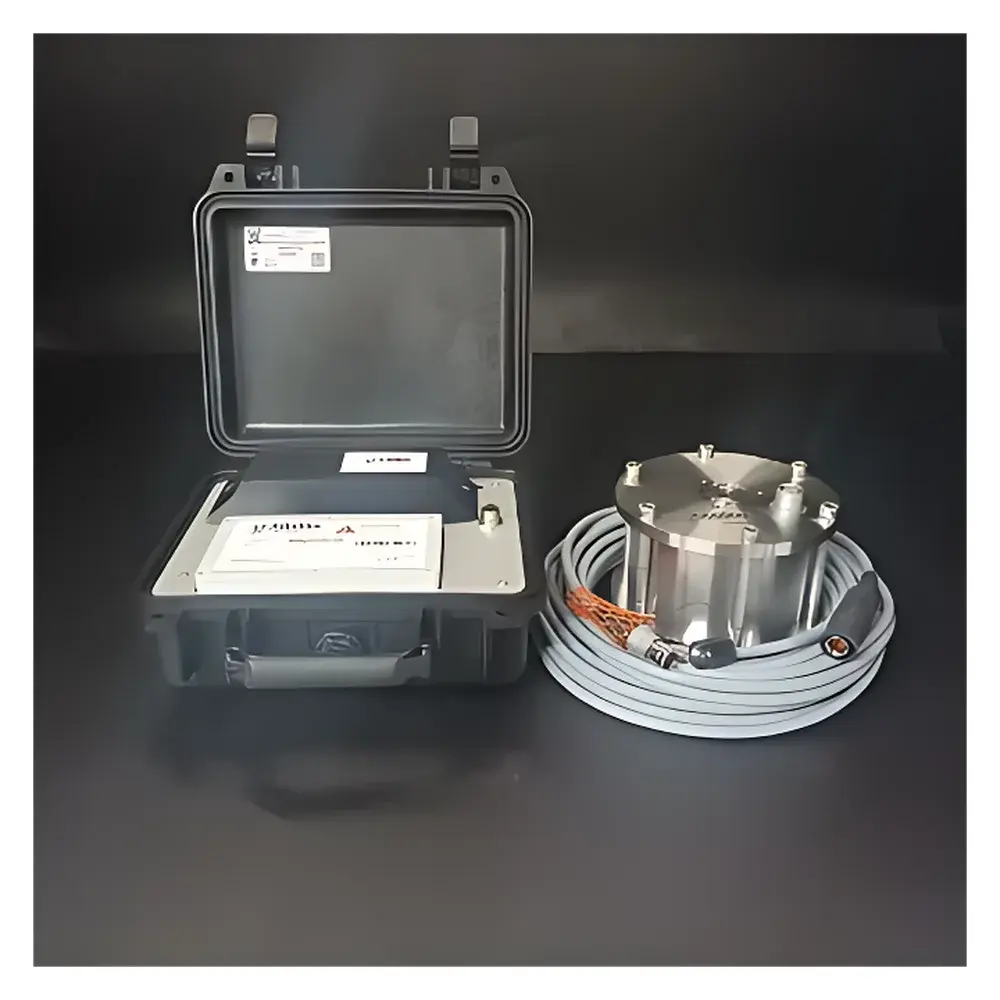
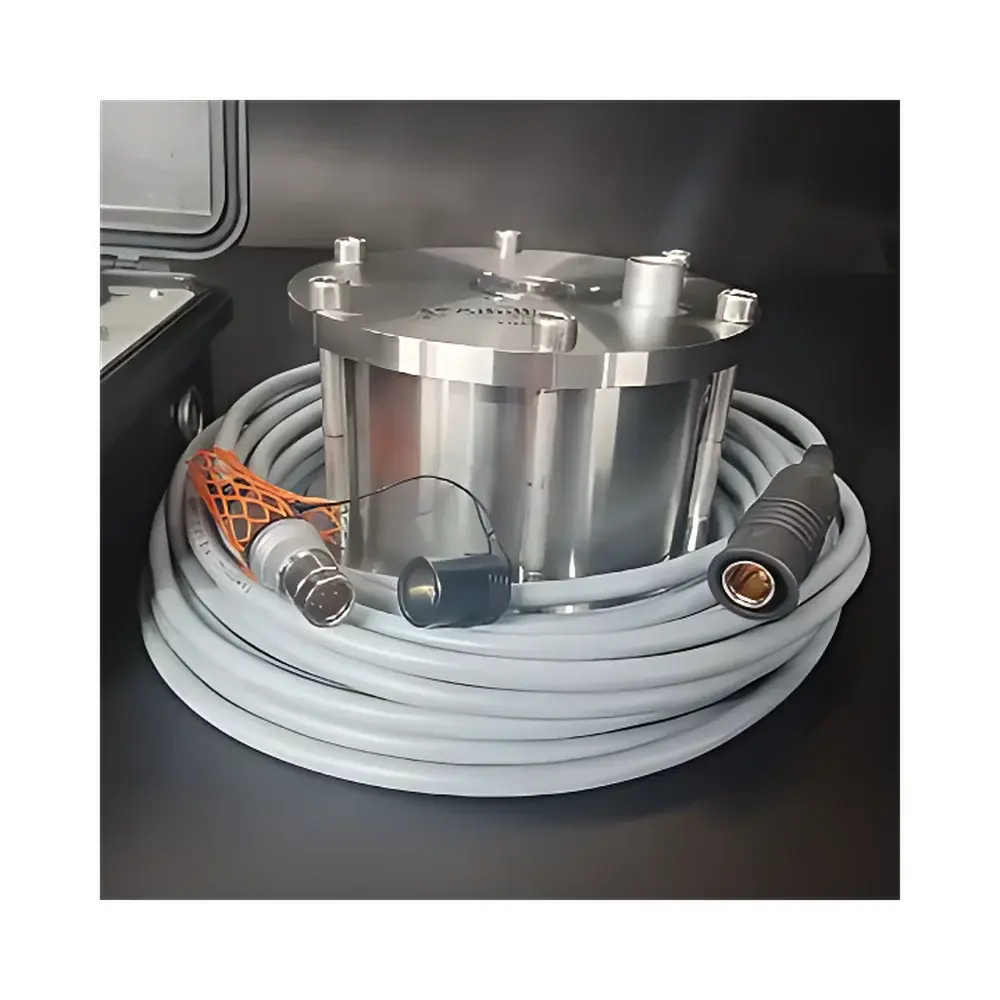
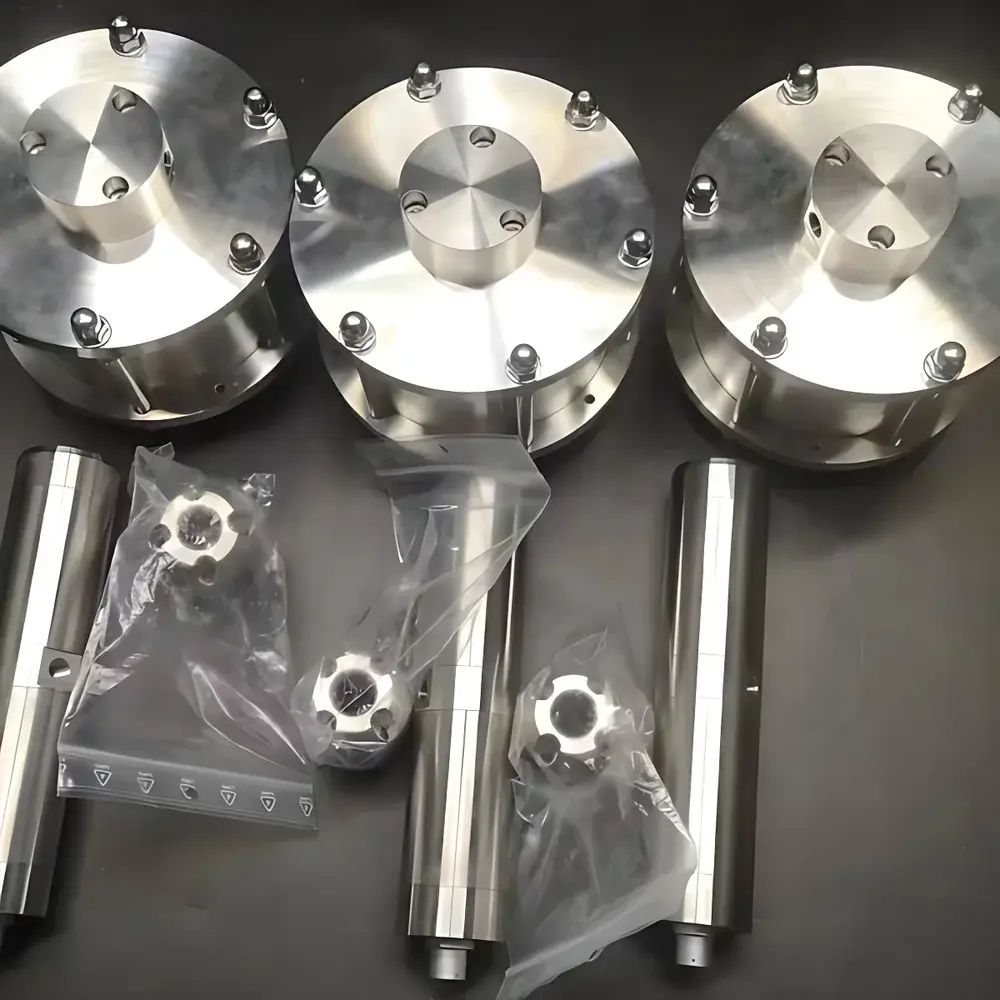
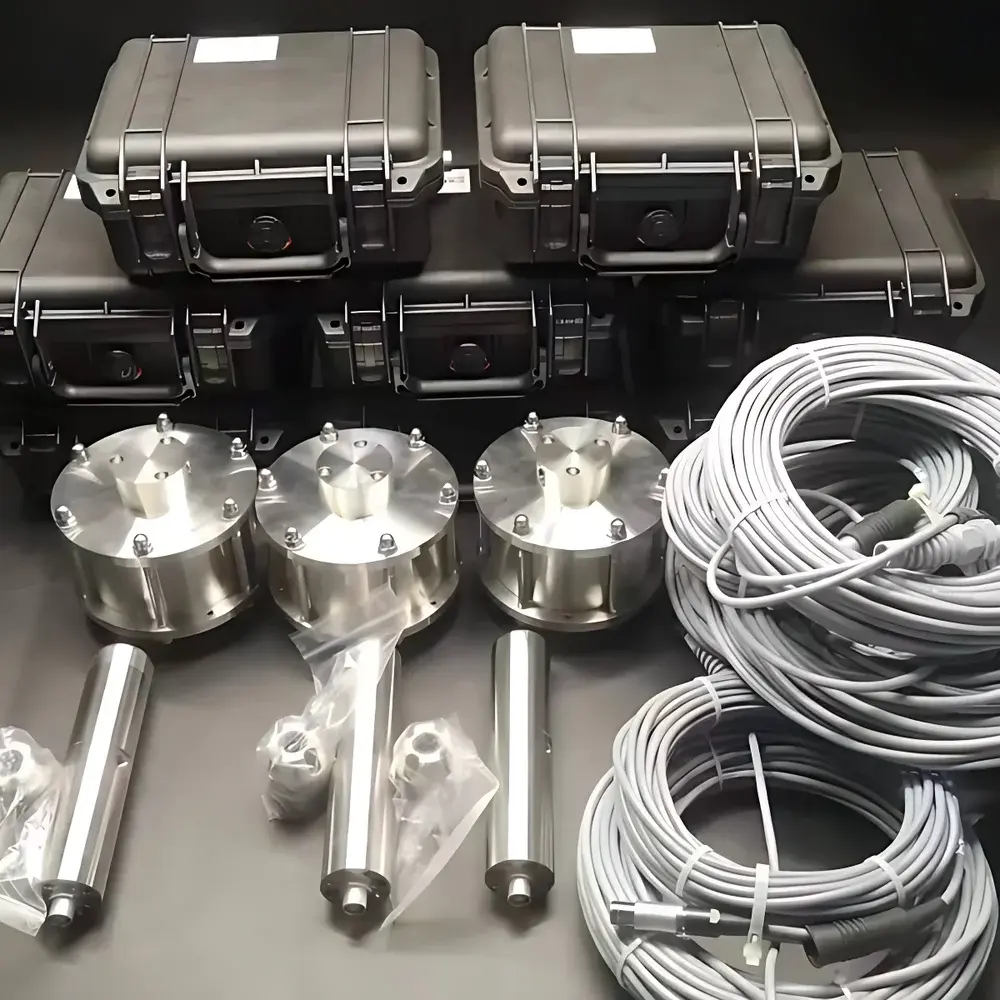
Alibillia GGUN-FL30 Portable Fluorescence Tracer Analyzer for Surface Water
| Brand | Alibillia |
|---|---|
| Origin | Switzerland |
| Model | GGUN-FL30 |
| Instrument Type | Portable/Handheld Water Quality Analyzer |
| Optical Modules | 4 |
| Turbidity Range | 0.02–400 NTU |
| Fluorescein Sodium Detection Limit | 2 × 10⁻¹¹ g/mL (typical, uranine) |
| Minimum Sampling Interval | 4 s |
| Communication Interface | RS232 |
| Operating Current | 8–28 mA |
| ADC Resolution | 24-bit unipolar |
| Cable Length Options | 15–50 m (1 kg per 10 m) |
| Temperature Accuracy | ±0.1 °C |
| Temperature Resolution | 0.034 °C |
| Dimensions | Ø160 mm × 170 mm (cylindrical) |
| Enclosure Rating & Material | IP68, stainless steel |
| Weight | 7.3 kg |
| Power Supply | TRMC-series data logger |
| Optional Local Data Logger | TRMC-GGUN |
| Remote Data Logger Option | TRMC-GGUN-COM |
Overview
The Alibillia GGUN-FL30 is a field-deployable fluorescence tracer analyzer engineered for quantitative, real-time detection of fluorescent dyes in surface water systems. It operates on the principle of ultraviolet-excited fluorescence spectroscopy—employing four independent optical modules with precisely matched excitation/emission filter sets to enable simultaneous multi-tracer discrimination (e.g., uranine, rhodamine WT, sodium fluorescein). Unlike broad-spectrum fluorometers, the GGUN-FL30 integrates calibrated photodiode-based detection with temperature-compensated signal processing, delivering trace-level sensitivity (sub-10 pg/mL for uranine) under variable hydrodynamic and turbid conditions. Its design targets hydrological tracing applications where spatial resolution, temporal fidelity, and environmental robustness are critical—particularly in watershed delineation, inter-aquifer connectivity studies, and emergency contaminant plume mapping.
Key Features
- High-sensitivity fluorescence detection: Achieves a typical detection limit of 2 × 10⁻¹¹ g/mL for uranine, validated against ISO 10602:2021 reference protocols for tracer quantification in natural waters.
- Multi-dye spectral discrimination: Four dedicated optical channels allow concurrent monitoring of up to four fluorescent tracers without cross-talk, supporting complex mixing studies and multi-source attribution.
- Integrated turbidity compensation: Built-in 850 nm LED turbidimeter (0.02–400 NTU range) enables real-time correction of fluorescence quenching effects induced by suspended solids, per ASTM D7315-22 guidelines.
- Ruggedized field architecture: IP68-rated stainless-steel housing withstands prolonged submersion, mechanical abrasion, and thermal cycling; operating temperature limit strictly capped at 35 °C to preserve optical filter integrity and calibration stability.
- Low-power embedded operation: Draws only 8–28 mA, enabling extended deployment (up to 3 weeks) when paired with TRMC-series loggers equipped with >12 Ah LiFePO₄ batteries.
- Modular cable interface: Standardized 15–50 m armored RS232 cables—rated for tensile loads >200 N and sand-impacted environments—include strain relief and hermetic connectors compliant with IEC 60529.
Sample Compatibility & Compliance
The GGUN-FL30 is validated for use with EPA-recommended fluorescent tracers including sodium fluorescein (CAS 518-47-8), uranine (CAS 518-45-6), and rhodamine WT (CAS 2201-60-7). It meets functional requirements of ISO 7888 (water quality — determination of fluorescence tracers), and its turbidity module conforms to ISO 7027-1:2016. All optical components undergo factory calibration traceable to NIST SRM 2036 (fluorescein solution standards). Device firmware supports GLP-compliant audit trails when used with TRMC-GGUN-COM remote loggers featuring time-stamped metadata, user authentication, and tamper-evident storage—fully compatible with FDA 21 CFR Part 11 electronic record requirements.
Software & Data Management
Data acquisition is managed via Alibillia’s TRMC Control Suite v4.2, a Windows-based application supporting real-time visualization, baseline drift correction, and automatic peak integration for pulse-injection experiments. Raw sensor outputs (fluorescence intensity, turbidity, temperature) are stored in CSV/NetCDF formats with embedded UTC timestamps and sensor-specific calibration coefficients. Optional TRMC-GGUN-COM units provide LTE-M or NB-IoT uplink capability (certified to ETSI EN 301 908-1), enabling secure TLS 1.3 transmission to cloud platforms such as AWS IoT Core or custom SCADA endpoints. Firmware updates are delivered via signed OTA packages with SHA-256 verification.
Applications
- Surface water flow path mapping: Quantifies dye breakthrough curves across river networks and floodplains to parameterize hydraulic residence time distributions (RTDs) and identify preferential flow routes.
- Source water protection: Detects infiltration from surface runoff into karst aquifers or bank-filtered wells, supporting compliance with WHO Guidelines for Drinking-water Quality (4th ed., Annex 2).
- Emergency spill response: Enables rapid deployment during accidental releases (e.g., hydrocarbon or chemical leaks), providing high-temporal-resolution concentration gradients for predictive dispersion modeling.
- Lake and wetland exchange studies: Measures lateral and vertical tracer fluxes to estimate water renewal rates and biogeochemical turnover times in stratified systems.
- Industrial infrastructure integrity monitoring: Installed permanently in cooling water intakes or tailings pond outfalls to detect early-stage seepage before conductive or pressure-based methods register anomalies.
FAQ
What is the maximum allowable water temperature during operation?
The device must not be exposed to water exceeding 35 °C. Prolonged exposure above this threshold risks irreversible degradation of interference filters and invalidates factory calibration.
Can the GGUN-FL30 operate autonomously without a connected data logger?
No. It requires external power and command signaling from a TRMC-series logger; no internal battery or standalone memory is provided.
Is Bluetooth or Wi-Fi connectivity currently available?
These interfaces are under active development and not yet certified for field deployment; only RS232 and optional cellular (LTE-M/NB-IoT) are production-ready.
How often must the quartz flow cell be cleaned?
A mandatory cleaning with a nylon brush is required before each tracer injection and at minimum every 14 days—even if unused—to prevent biofilm-induced signal attenuation.
What happens if the cable connector seal fails in coastal environments?
Saltwater ingress into the probe head will cause permanent photodiode saturation and optical misalignment; seal integrity must be verified every 2 hours in such settings per operational bulletin ALB-GGUN-FL30-SEAL-2024.
Related Products







