
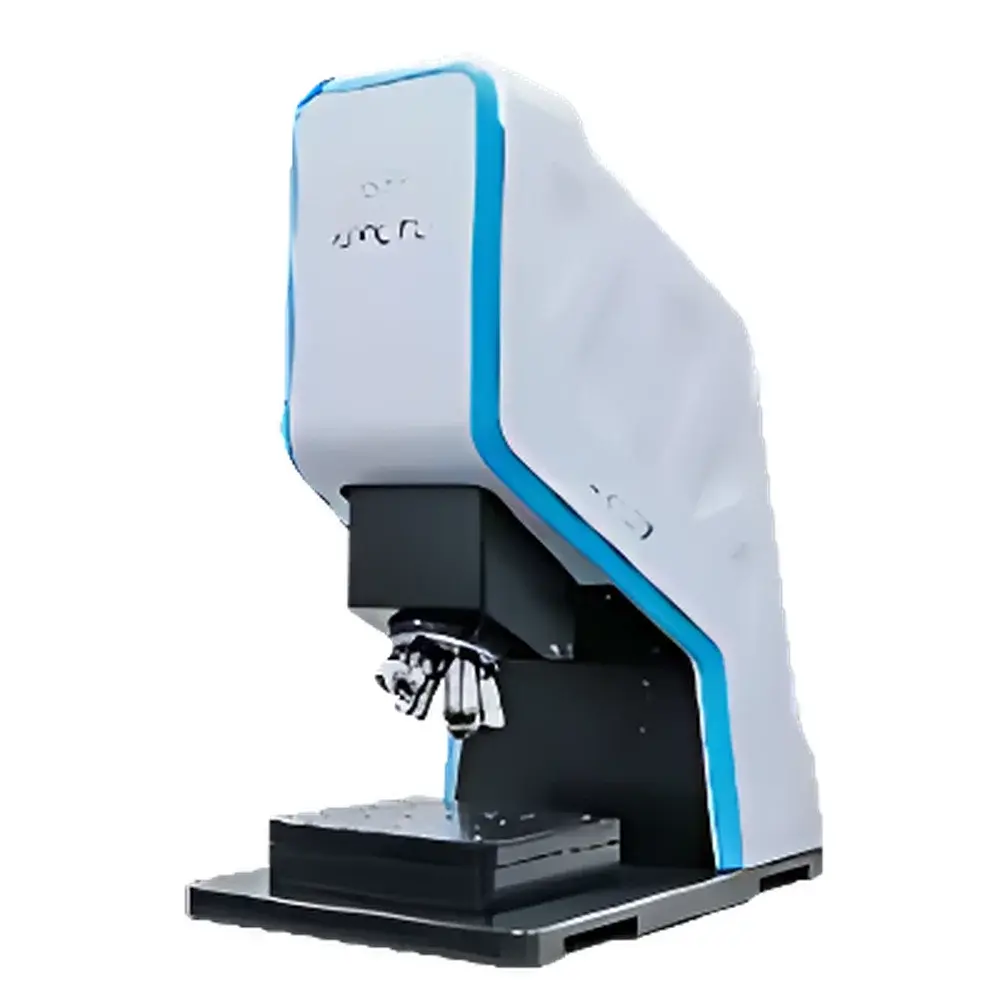
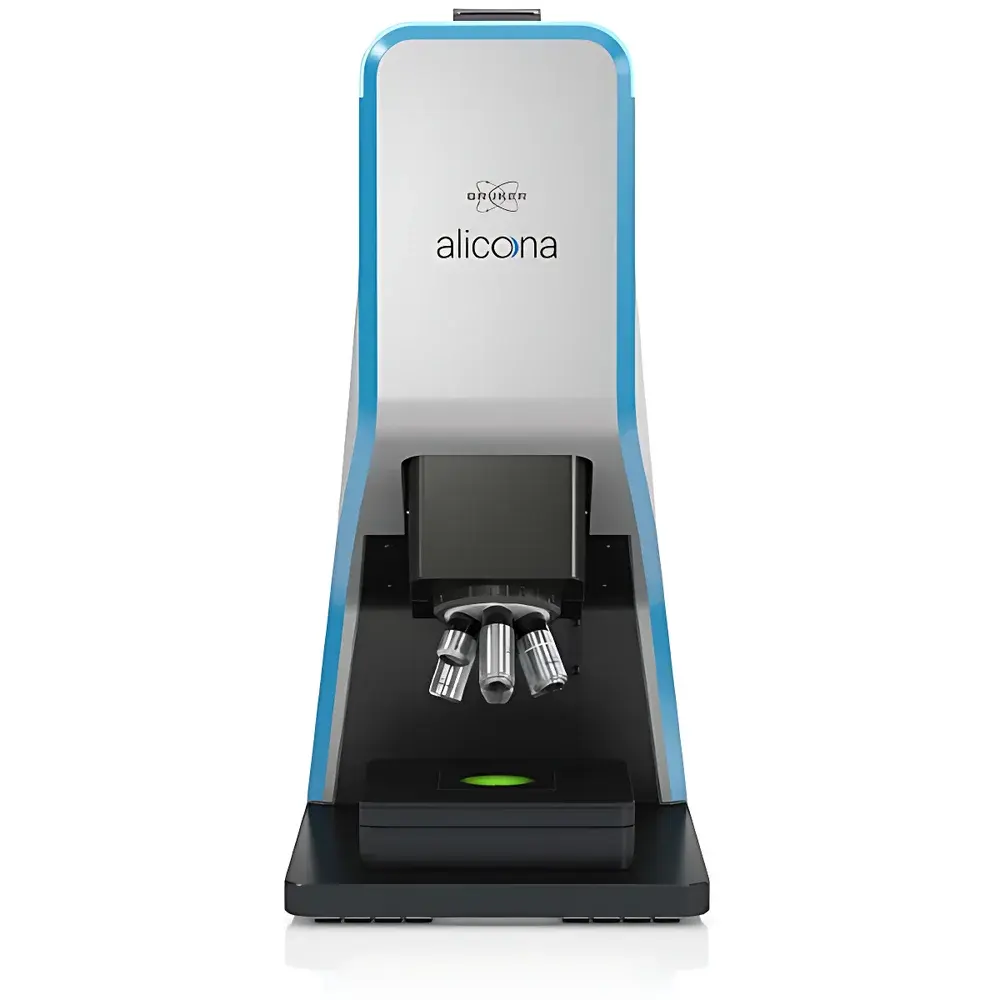
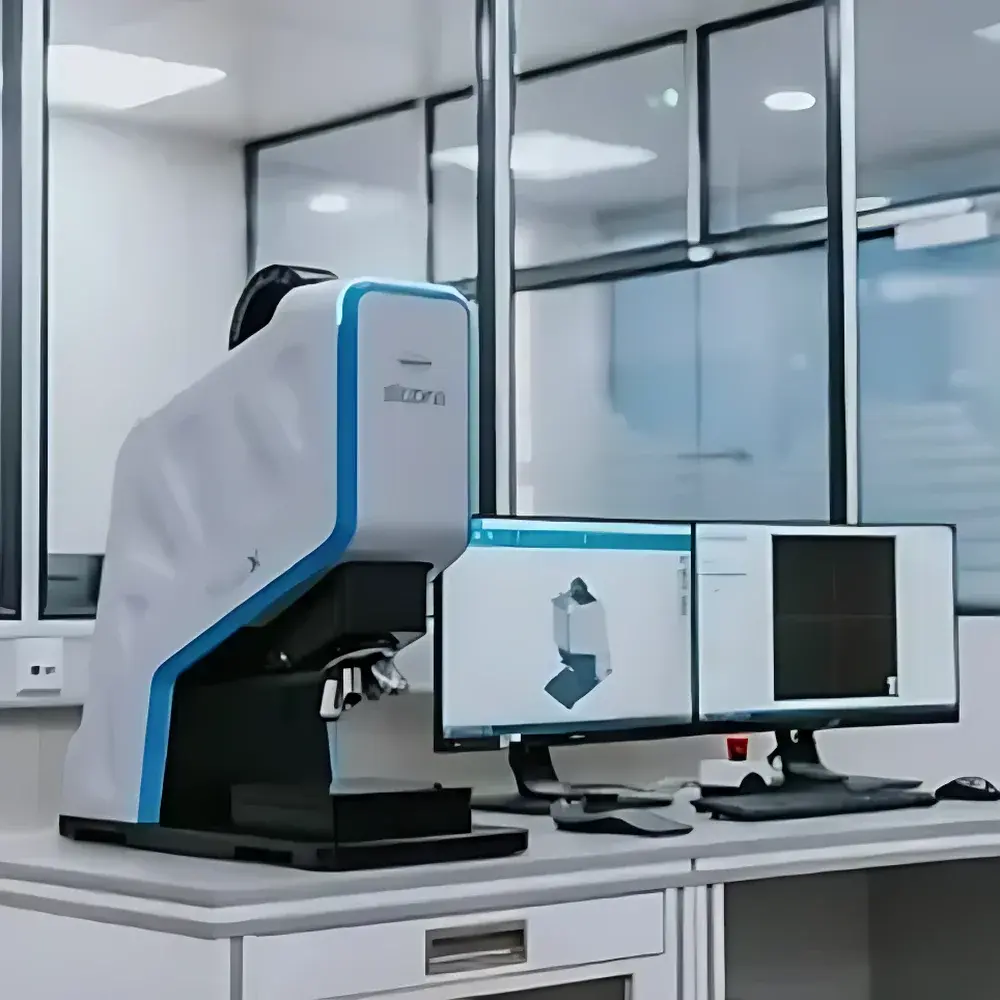
Alicona FocusX Optical 3D Metrology System
| Brand | Alicona |
|---|---|
| Origin | Austria |
| Model | FocusX |
| Measurement Principle | Focus-Variation Technology |
| ISO Compliance | ISO 25178 (areal surface texture), ISO 4287/4288 (profile roughness), ISO 1101 (geometrical tolerancing) |
| Typical Vertical Resolution | <10 nm |
| Lateral Resolution | Down to 0.4 µm |
| Maximum Field of View | Up to 12 mm × 9 mm (configurable) |
| Z-Range | Up to 20 mm |
| Measurement Speed | Up to 5 million points/sec (typical full-field acquisition in <5 s) |
| Surface Reflectivity Range | 0.1%–100% (including mirror-polished, matte, and structured surfaces) |
| Steep Angle Capability | Up to 87° sidewall measurement |
| Traceability | NIST-traceable calibration kits available |
Overview
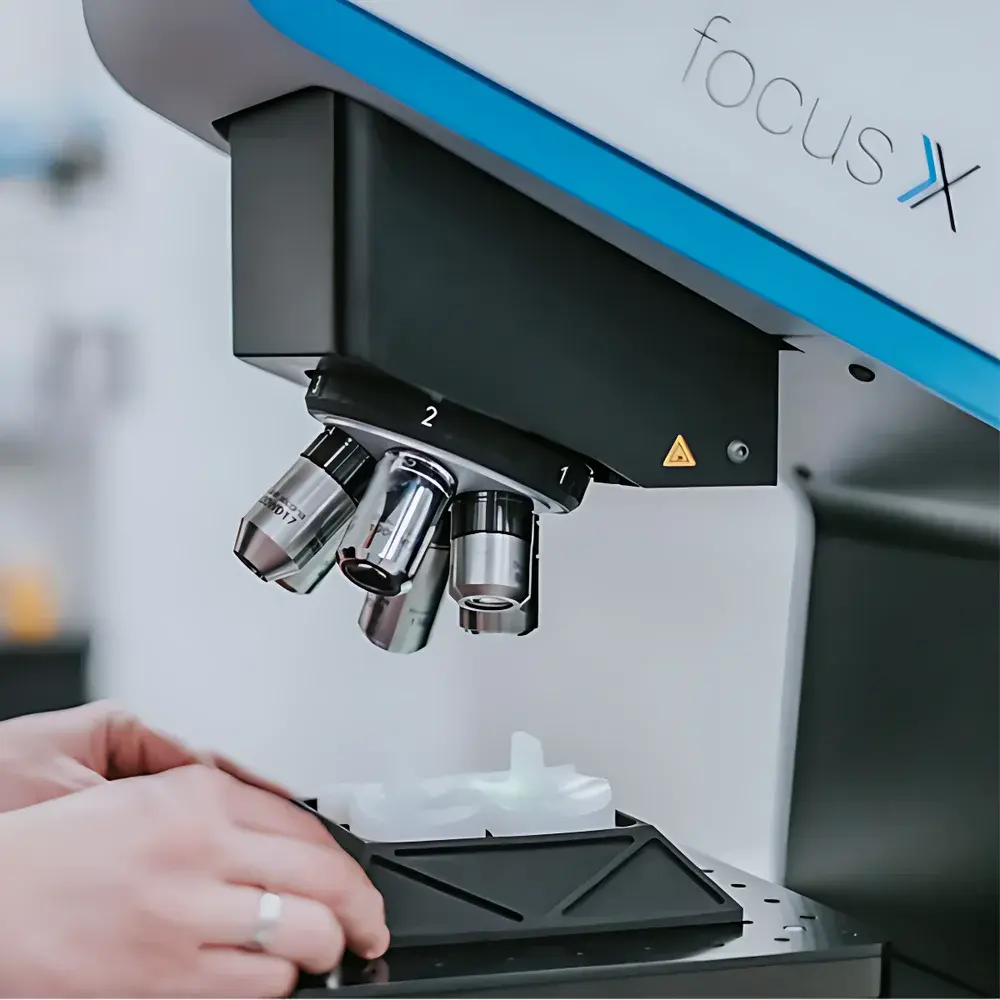
The Alicona FocusX is a high-performance optical 3D metrology system engineered for non-contact, full-field surface topography and geometric dimensioning measurement. It operates on the principle of focus-variation—a robust optical technique that combines high-resolution microscopy with precise axial scanning to reconstruct surface height data from localized focus maxima across millions of pixels. Unlike confocal or interferometric systems, focus-variation delivers consistent accuracy on surfaces with varying reflectivity, complex geometries, and steep flanks—making it especially suited for production-integrated quality control and R&D validation in precision engineering, medical device manufacturing, and micro-machining. The FocusX integrates a motorized high-NA objective turret, automated XYZ-stage with sub-micron repeatability, and real-time autofocus synchronization—enabling traceable, ISO-compliant measurements without operator intervention or surface preparation.
Key Features
- Single-sensor multimodal capability: Simultaneous acquisition of form, position, roughness (Sa, Sq, Sz), waviness, and GD&T (e.g., flatness, parallelism, radius, angle) from one scan.
- Focus-variation optics optimized for multi-material surfaces: Validated performance on polished stainless steel, PVD-coated implants, silicon wafers, injection-molded polymers, and EDM-finished tool steels.
- Automated ISO 25178-compliant roughness analysis: Fully compliant with areal parameters (e.g., Sdr, Sku, Sdq) and filtering per Gaussian robust filter (ISO 16610-61).
- Real-time depth-of-field stacking: Adaptive z-stepping ensures optimal sampling density across height discontinuities and overhangs up to 87°.
- Integrated calibration traceability: Supports NIST-traceable step-height and roughness standards; calibration certificates documented per ISO/IEC 17025 requirements.
- Production-ready workflow: One-click measurement scripting via MeX software; configurable pass/fail thresholds aligned with APQP/PPAP documentation.
Sample Compatibility & Compliance
The FocusX accommodates parts ranging from MEMS components (<1 mm) to orthopedic implants (up to Ø120 mm × 50 mm height) with no size-induced compromise in resolution. Its optical design enables reliable data capture on surfaces with reflectance as low as 0.1% (e.g., black anodized aluminum) and as high as 100% (e.g., electroplated chrome). Critical applications—including knee joint prostheses, turbine blade cooling holes, and semiconductor packaging substrates—are routinely validated under GLP and GMP environments. All measurement algorithms comply with ISO 25178-2 (terms and definitions), ISO 25178-601 (instrument calibration), and ISO 1101 (geometrical product specifications). Optional FDA 21 CFR Part 11 compliance packages include electronic signatures, audit trails, and user-access controls.
Software & Data Management
MeX software serves as the unified platform for acquisition, analysis, reporting, and integration. It provides fully customizable report templates (PDF, Excel, XML) with embedded uncertainty budgets per GUM (JCGM 100:2008). Raw point clouds (STL, OBJ, ASCII) and parametric datasets are exportable for CAE interoperability (e.g., ANSYS, PolyWorks, Geomagic Control X). Batch processing supports statistical process control (SPC) with Cp/Cpk calculation, trend analysis, and automated outlier detection. Data integrity is maintained through built-in revision history, metadata tagging (operator, timestamp, environmental conditions), and optional network-based database archiving compliant with ISO/IEC 27001.
Applications
- Medical device QA: Non-destructive verification of additively manufactured acetabular cups, dental abutments, and stent strut geometry—ensuring conformity to ASTM F2924 and ISO 13485 requirements.
- Automotive powertrain: Quantitative assessment of cylinder bore cross-hatch angles, piston ring groove wear, and fuel injector nozzle orifice geometry.
- Electronics interconnects: Full-area inspection of solder bump coplanarity, PCB pad roughness (IPC-7095), and flex circuit conductor edge definition.
- Tooling & moldmaking: Validation of EDM electrode wear, cavity surface fidelity, and micro-texture replication fidelity down to Ra < 0.02 µm.
- Aerospace components: Measurement of thermal barrier coating porosity, turbine vane leading-edge radius, and laser-drilled film cooling hole taper.
FAQ
Does FocusX require sample coating or vacuum environment for measurement?
No. FocusX performs fully non-contact, ambient-air measurements without conductive coating, sputtering, or vacuum chamber—ideal for delicate, hygroscopic, or electrically sensitive samples.
Can FocusX measure transparent or semi-transparent materials?
Yes, with optimized illumination settings and optional polarization filters; however, subsurface scattering may limit vertical resolution on thick glass or PMMA—surface topography remains fully quantifiable.
Is calibration required before each measurement session?
No. Routine calibration is performed per ISO 25178-601 at defined intervals (typically quarterly); daily verification uses certified reference artifacts with documented uncertainty budgets.
How does FocusX handle vibration-sensitive environments?
The system includes active anti-vibration damping and motion-compensation algorithms; for high-precision labs, optional pneumatic isolation tables are available to meet ISO 25178-701 stability criteria.
What file formats are supported for CAD comparison?
STEP AP214, IGES, and native CAD formats (SolidWorks, Creo, Siemens NX) are directly importable; GD&T-aware deviation mapping supports ASME Y14.5 and ISO GPS standards.





