
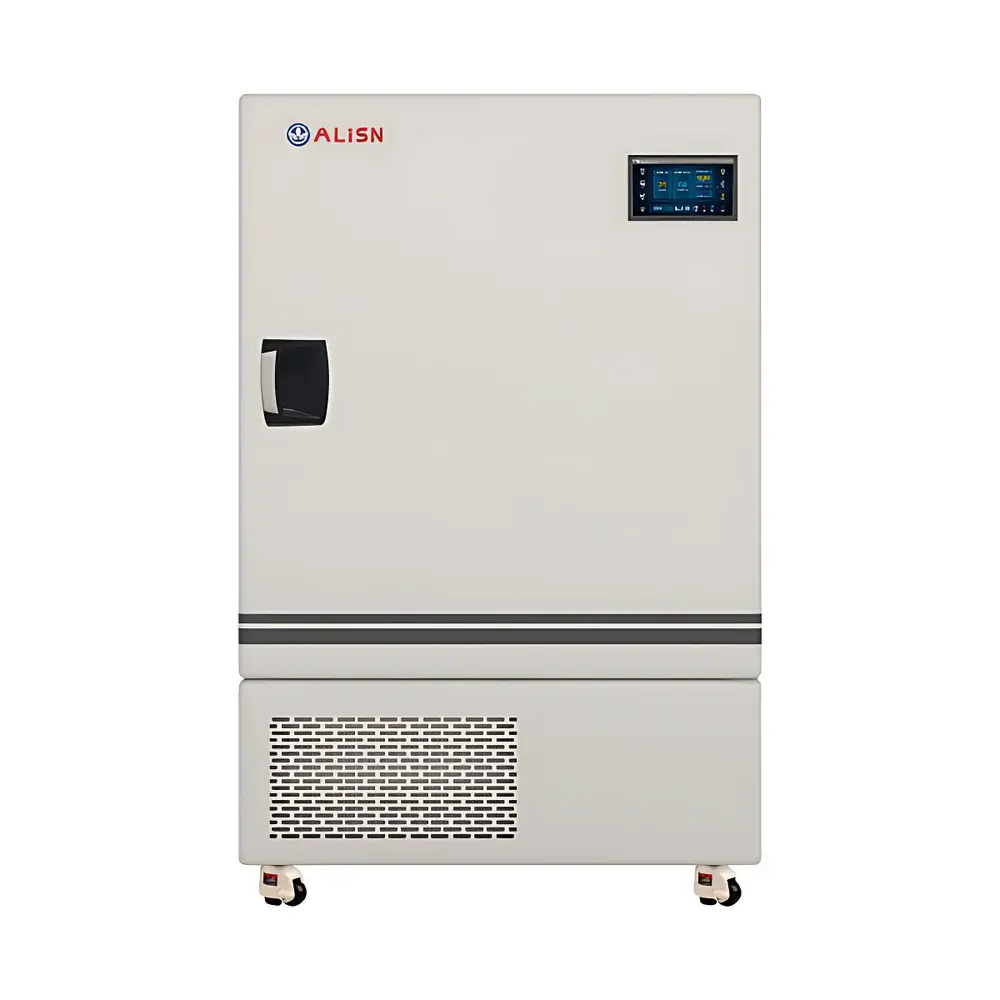
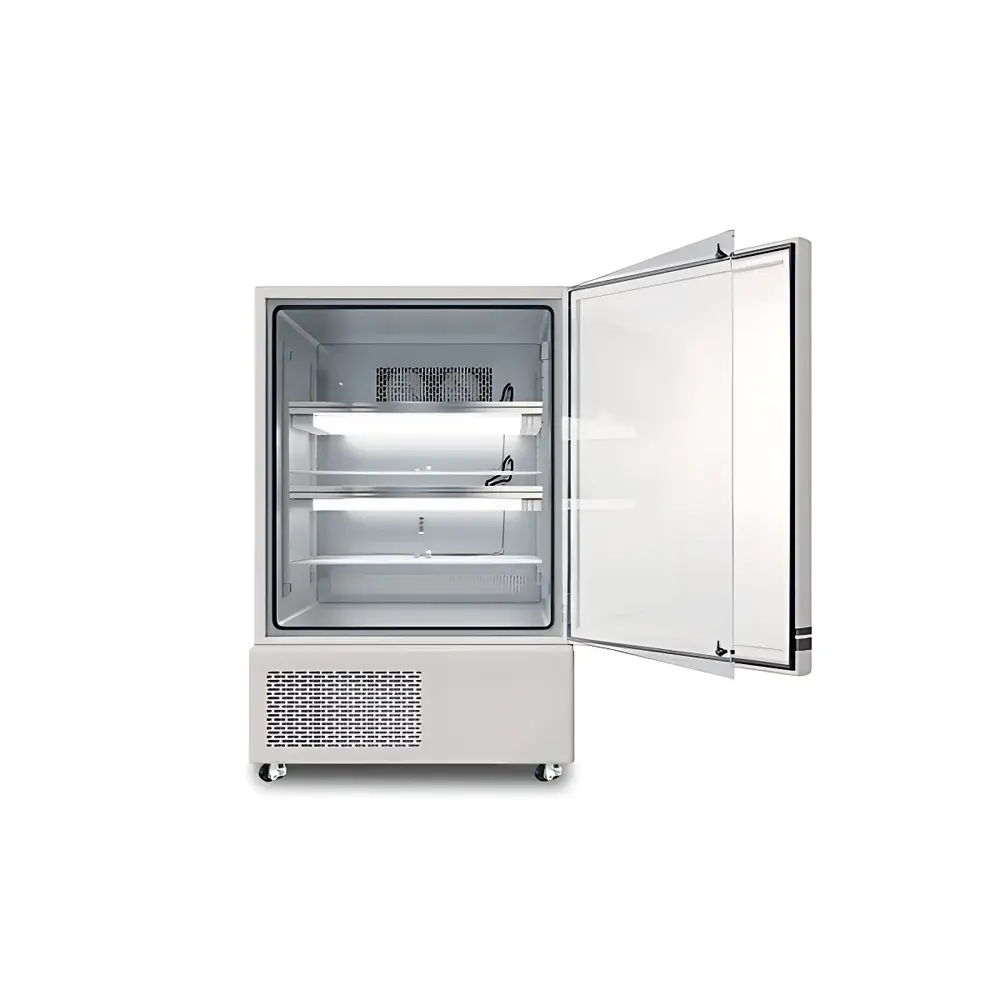
ALISN QCA 460 Photostability Testing Chamber for Low-Temperature Pharmaceutical Products
| Brand | ALISN |
|---|---|
| Origin | Shanghai, China |
| Model | QCA 460 |
| Control Method | PID + Fuzzy Logic |
| Temperature Range | 4°C to 65°C |
| Temperature Uniformity (20–45°C, no light) | ±0.2–0.5°C |
| Temperature Accuracy | ±0.1°C |
| Illumination Source | ICH-compliant D65 daylight simulator (6500 K) and UV-A (320–400 nm) |
| Visible Light Intensity | 0–8000 lux (continuously adjustable) |
| UV Irradiance | 0–5 W/m² |
| Internal Volume | 460 L |
| Dimensions (W×H×D) | 933×1765×960 mm |
| Net Weight | 210 kg |
| Refrigeration System | Inverter-driven SECOP (Danfoss) compressor with R290 eco-refrigerant |
| Humidity Sensor | E+E Electronics |
| Temperature Sensor | Heraeus platinum RTD |
| Data Storage | ≥10 years of raw test data |
| Compliance | Designed to support ICH Q1B, Q5C, and WHO TRS 992 Annex 6 requirements |
Overview
The ALISN QCA 460 Photostability Testing Chamber is an engineered environmental simulation system designed specifically for pharmaceutical stability studies under controlled low-temperature and photo-exposure conditions. It implements the core principles of ICH Q1B — “Photostability Testing of New Drug Substances and Products” — by delivering traceable, spectrally accurate illumination across both UV-A (320–400 nm) and visible D65 (6500 K) bands, while maintaining precise thermal control from 4°C to 65°C. Unlike general-purpose climate chambers, the QCA 460 integrates dual-spectrum optical architecture with refrigeration-grade thermal stability, enabling concurrent evaluation of cold-chain drug products (e.g., monoclonal antibodies, mRNA formulations, or lyophilized biologics) under photolytic stress. Its inverter-driven SECOP compressor, polyurethane monolithic foam insulation, and capacitive Pt100 temperature sensing collectively ensure ≤±0.1°C control accuracy and <0.5°C spatial uniformity in the 20–45°C operating range — critical parameters for GLP-compliant stability protocols. The chamber operates as a stand-alone unit compliant with ISO 17025-aligned validation practices and supports full lifecycle data integrity per FDA 21 CFR Part 11 and EU Annex 11 expectations.
Key Features
- ICH-aligned dual-light source system: Independently controllable top-mounted D65 daylight (6500 K LED) and UV-A (320–400 nm) emitters, each monitored via hemispherical broadband sensors for integrated irradiance quantification.
- True-color 7-inch capacitive touchscreen interface with bilingual (English/Chinese) menu navigation and intuitive icon-based workflow guidance.
- Embedded audit trail functionality: Stores ≥16,000 timestamped operator actions and alarm events internally; exports immutable logs via USB in CSV format with cryptographic hash verification.
- Multi-level user permission management: Administrator-configurable roles for up to five users, restricting access to calibration, program editing, data export, or system configuration functions.
- Advanced thermal architecture: Monolithic polyurethane insulation (≥40% energy reduction vs. conventional chambers), Danfoss SECOP variable-speed compressor, and EBM German condenser fan ensure frost-free, low-noise, long-term operational stability.
- Full data sovereignty: Onboard memory retains ≥10 years of continuous temperature, humidity, and irradiance time-series data; all exported datasets are write-protected and non-editable.
Sample Compatibility & Compliance
The QCA 460 accommodates standard pharmaceutical packaging formats including vials, syringes, blister packs, and secondary cartons within its 460 L stainless-steel interior (750 × 1105 × 560 mm). Its double-door design — featuring tempered glass inner door and silicone-sealed outer door with Ø50 mm utility port — ensures minimal thermal perturbation during sample loading while permitting real-time visual monitoring. All illumination profiles adhere strictly to ICH Q1B spectral power distribution tolerances and radiometric calibration traceability to NIST-traceable standards. Temperature and humidity sensors (Heraeus Pt100 and E+E EE190) are factory-calibrated and support on-site verification per ISO/IEC 17025. The system’s firmware architecture conforms to ALCOA+ data integrity principles and provides configurable electronic signatures, change control logs, and automated backup triggers — enabling direct integration into GMP quality management systems (QMS) and supporting regulatory submissions to FDA, EMA, PMDA, and NMPA.
Software & Data Management
The embedded operating system features deterministic real-time scheduling for synchronized acquisition of temperature, humidity, UV, and visible light channels at 1-second resolution. Data is stored in encrypted binary format with SHA-256 checksums; USB export generates timestamped, digitally signed CSV files containing raw sensor values, setpoints, alarms, and user metadata. Optional RS485/RS232 interfaces allow connection to centralized LIMS or SCADA platforms using Modbus RTU protocol. Built-in multi-point temperature offset correction enables field compensation for spatial gradients without hardware recalibration. All software updates require administrator authentication and generate version-controlled audit entries. The system supports IQ/OQ documentation templates aligned with ASTM E2500 and ISPE GAMP5 guidelines, facilitating rapid qualification in regulated environments.
Applications
- ICH Q1B photostability testing of temperature-sensitive biologics stored at 2–8°C or frozen conditions.
- Forced degradation studies evaluating light-induced oxidation, deamidation, or aggregation kinetics in protein therapeutics.
- Stability protocol execution per USP , Ph. Eur. 2.2.45, and JP 17 General Test Chapter 5.05.
- Validation of light-barrier packaging efficacy (e.g., amber vials, aluminum overwraps) under accelerated irradiance exposure.
- Environmental stress screening of cold-chain logistics containers and secondary shipping materials.
FAQ
Does the QCA 460 meet ICH Q1B spectral requirements for both UV and visible light?
Yes — the chamber employs NIST-traceable D65 and UV-A sources with real-time hemispherical irradiance feedback, satisfying ICH Q1B Section 3.1 spectral distribution and intensity specifications.
Can raw data be modified after export via USB?
No — exported datasets are cryptographically locked; any attempt to alter file content invalidates the embedded digital signature and triggers immediate alert upon re-import.
Is remote monitoring supported out of the box?
Native Ethernet or Wi-Fi connectivity is not included; however, RS485/Modbus integration enables third-party SCADA or cloud-based supervision via gateway devices.
What validation documentation is provided with the system?
Factory-issued IQ/OQ protocols, sensor calibration certificates (traceable to national standards), and a complete Design Qualification (DQ) summary are supplied with each unit.
How frequently must temperature and irradiance sensors be recalibrated?
Per ISO/IEC 17025 recommendations, annual calibration is advised; the system includes built-in sensor diagnostics and drift detection alerts to support predictive maintenance scheduling.





