
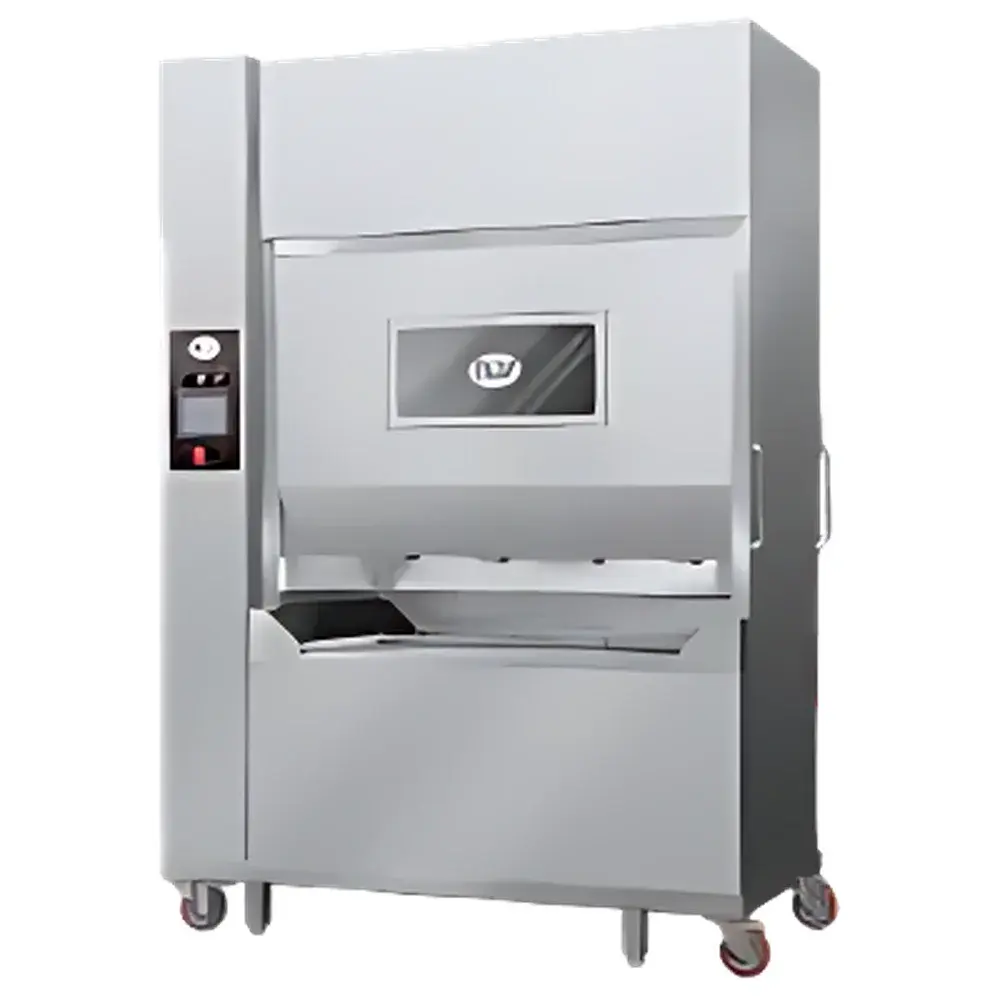
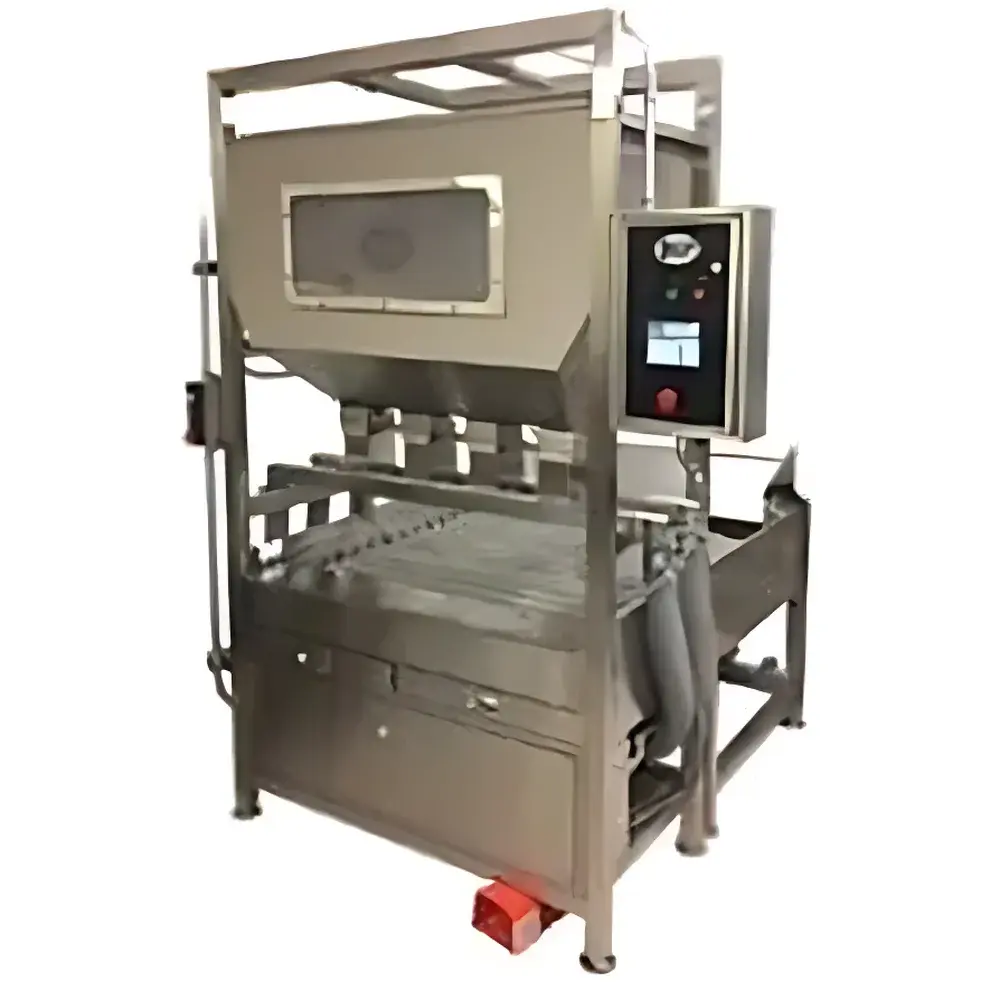
Allentown BetterBuilt C200 Series Bedding Dispenser
| Brand | Allentown |
|---|---|
| Origin | Canada |
| Model | C200 |
| Configuration | Standalone or In-Line |
| Construction | Full 316 Stainless Steel |
| Control System | PLC with Optional 7" Color Touchscreen HMI |
| Dust Mitigation | Optional External Dust Collection System |
| Integration | Compatible with Sure-Flo®/Sure-VAC® Bedding Conveyance and Activ™ Automation Ecosystem |
Overview
The Allentown BetterBuilt C200 Series Bedding Dispenser is an engineered solution for precision bedding delivery in modern laboratory animal facilities. Designed around volumetric dispensing principles—leveraging pneumatically actuated flip-gate metering and calibrated gravity-fed flow—it delivers repeatable, operator-independent bedding volumes per cage. Unlike manual or auger-based systems prone to compaction variability and dust generation, the C200 employs a non-sliding, low-shear flip-gate mechanism that minimizes material degradation and residual carryover—critical for maintaining bedding integrity across diverse substrates (e.g., cellulose fiber, aspen shavings, corn cob). Its architecture supports both discrete cage handling workflows and fully automated tunnel-washer-integrated lines, enabling seamless transition from GLP-compliant manual operations to high-throughput, 21 CFR Part 11–ready automated environments.
Key Features
- Volumetric Precision Control: Pneumatic flip-gate valve with adjustable dwell time and gate angle ensures ±3% volume repeatability across batch runs—validated per ASTM F2149 (Standard Practice for Laboratory Animal Cage Bedding Application).
- Dual-Mode Operation: Configurable for single-cage dispensing (via footswitch) or synchronized multi-cage filling (via conveyor synchronization signal), supporting variable throughput without reconfiguration.
- Hygienic Material Handling: Entire wetted path—including hopper, feed chute, and discharge assembly—constructed from electropolished 316 stainless steel (ASME BPE compliant); smooth-radius welds and zero-stagnation geometry prevent biofilm accumulation.
- Adaptive Feed Mechanism: Optional vibratory base, paddle mixer, or fluidized air assist modules mitigate bridging in low-density paper-based bedding, ensuring uninterrupted flow even at ≤25 kg/m³ bulk density.
- Modular Structural Design: Frame-mounted on heavy-duty casters (lockable) for standalone units; in-line models integrate directly with ISO 14644-1 Class 7 cleanroom-rated conveyor systems using standardized mounting interfaces.
Sample Compatibility & Compliance
The C200 accommodates bedding materials ranging from 0.5 mm to 12 mm particle size (e.g., shredded paper, virgin wood pulp, compressed recycled fiber). Its open-hopper design permits rapid changeover between formulations without tooling. Regulatory alignment includes compliance with NIH OLAW Guidelines for IACUC-approved housing protocols, EU Directive 2010/63/EU Annex III (bedding quality and application consistency), and USP environmental control requirements when deployed in barrier vivaria. Optional NEMA 4X-rated control enclosures meet IP66 ingress protection standards for high-humidity wash-down zones.
Software & Data Management
The base system features a CE-certified PLC with real-time cycle logging (timestamped start/stop, gate actuation count, error codes). The optional 7-inch color touchscreen HMI provides intuitive parameter configuration (dispense volume, delay timing, sequence selection) and supports role-based access control via PIN authentication (up to 8 user profiles). Data export options include USB-CF card logging (CSV format), Ethernet TCP/IP interface for SCADA integration, and optional thermal printer output for audit-ready dispensing records. All firmware adheres to IEC 62443-3-3 security levels for industrial control systems, with secure boot and encrypted parameter storage.
Applications
- High-volume rodent housing in contract research organizations (CROs) processing >5,000 cages/day, where consistent bedding depth directly impacts thermoregulation metrics and behavioral assay reproducibility.
- Barrier-level SPF facilities requiring minimized personnel intervention to reduce pathogen transmission risk—integrated with Activ™ automation to eliminate manual cage handling post-washing.
- Academic core facilities upgrading legacy manual stations to support NIH grant-mandated environmental enrichment documentation, with automated logging of bedding type, lot number, and dispense volume per cage ID.
- GMP-compliant biologics production sites where bedding application must be included in equipment qualification (IQ/OQ/PQ) protocols—facilitated by built-in calibration routines and electronic signature-capable audit trails.
FAQ
What cage types and sizes are supported by the C200 series?
Standard configurations accommodate standard IVC cages (e.g., Allentown E3600, Tecniplast Green Line) and shoebox cages (up to 48″ W × 24″ D × 12″ H). Custom adapters available for proprietary cage geometries.
Can the C200 be validated for GxP environments?
Yes—PLC firmware supports 21 CFR Part 11-compliant electronic signatures, audit trail generation, and alarm/event log retention ≥12 months. IQ/OQ templates and calibration certificates available upon request.
How does the system handle dust mitigation during dispensing?
An optional external dust collection manifold interfaces with facility vacuum systems (≥100 CFM @ 8″ H₂O static pressure), capturing >99.5% of airborne particulates ≥1 µm per ISO 16890 testing protocol.
Is remote diagnostics supported?
Via optional Ethernet module with TLS 1.2-secured remote access; technicians can perform firmware updates, parameter backup/restore, and real-time sensor monitoring without on-site presence.
What maintenance intervals are recommended?
Flip-gate pneumatic cylinder inspection every 6 months; stainless steel hopper cleaning after each bedding lot change; annual validation of volumetric accuracy using NIST-traceable graduated cylinders.



