
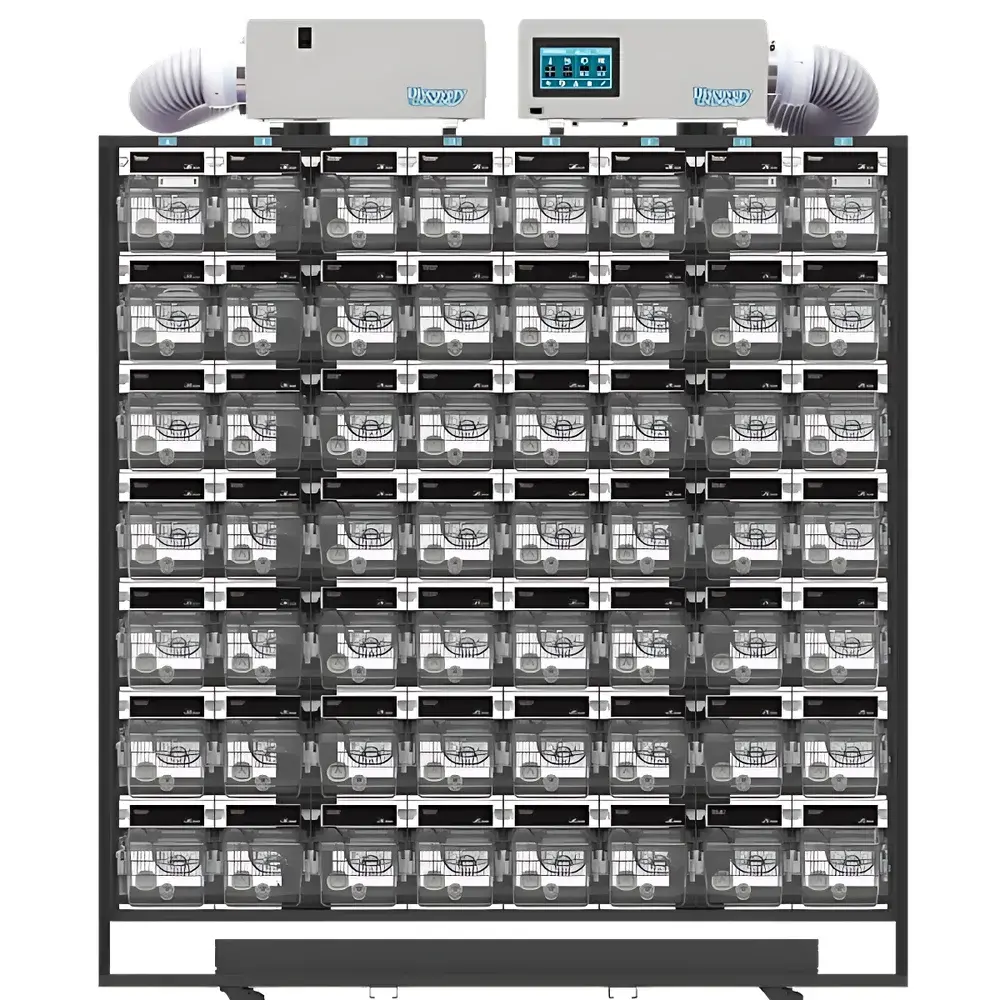
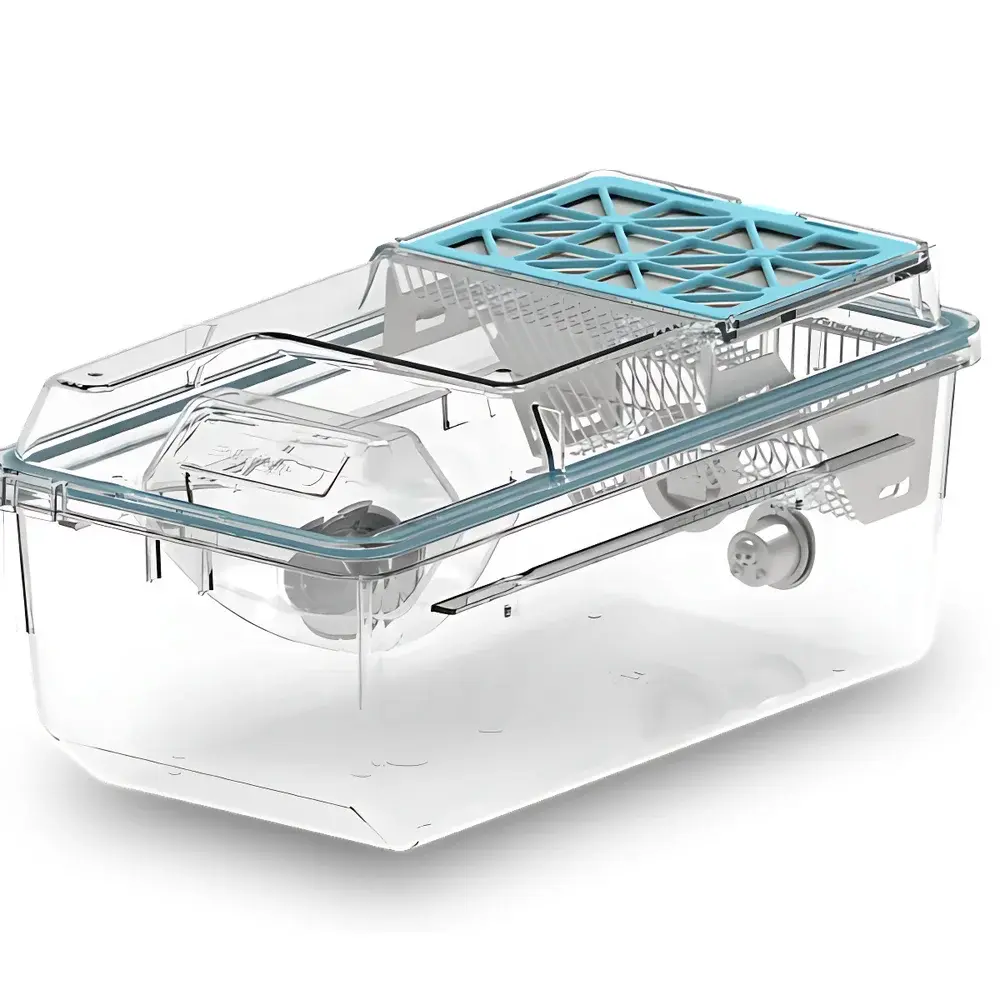
Allentown Discovery™ AI-Powered IVC System for Individualized Mouse Behavioral Monitoring
| Brand | Allentown |
|---|---|
| Origin | Canada |
| Model | Discovery™ IVC |
| Regulatory Classification | Imported Medical/Research Equipment |
| Distribution Model | Authorized Distributor |
Overview
The Allentown Discovery™ AI-Powered IVC System is a purpose-built, research-grade independent ventilation cage (IVC) platform engineered to transform preclinical rodent studies through continuous, non-invasive, individual-level behavioral phenotyping. Unlike conventional IVC systems that prioritize environmental control alone, the Discovery™ IVC integrates hardware-optimized imaging infrastructure with cloud-native artificial intelligence to deliver quantifiable, time-synchronized digital biomarkers from group-housed mice—without physical tagging, implants, or manual scoring. Its core measurement principle relies on high-fidelity video acquisition coupled with deep learning–based pose estimation and behavior classification algorithms trained on annotated murine ethograms. The system operates under validated conditions compliant with AAALAC International standards and aligns with NIH guidelines for reproducible animal research. Designed in collaboration with The Jackson Laboratory, it bridges the gap between standardized housing and high-content phenotypic data generation—enabling longitudinal, hypothesis-driven analysis of complex behavioral endophenotypes across neuropharmacology, genetic model validation, and toxicology workflows.
Key Features
- 48-cage NexGen IVC rack architecture with integrated EcoFlo® ventilation—ensuring stable temperature, humidity, and CO2 control per cage while minimizing cross-contamination risk.
- Per-cage infrared HD camera modules (IVV) with wide-angle optics and uniform LED illumination—optimized for low-light, motion-resilient tracking in standard 12:12 light-dark cycles.
- Real-time video streaming to Envision™ Cloud Platform via secure TLS 1.3 encrypted channels—supporting zero-latency ingestion and scalable processing across multiple concurrent studies.
- AI-driven behavioral segmentation: automated detection and temporal annotation of locomotion, rearing, grooming, social proximity, immobility episodes, and respiration rate proxies derived from thoracic motion patterns.
- Configurable alert engine: rule-based notifications triggered by deviations in feeding/water consumption trends, prolonged immobility (>60 sec), or abnormal gait symmetry indices—integrated with institutional LIMS and electronic lab notebooks (ELN).
- FDA 21 CFR Part 11–ready audit trail: full traceability of user actions, algorithm versioning, raw video metadata, and processed metric lineage—including timestamps, calibration logs, and operator credentials.
Sample Compatibility & Compliance
The Discovery™ IVC supports standard C57BL/6, BALB/c, CD-1, and transgenic strains (e.g., APP/PS1, DAT-KO, Shank3 mutants) housed in group sizes of 3–5 animals per cage. Cage dimensions conform to NIH Guide recommendations (≥ 75 in² floor area per mouse). All hardware components meet UL 61010-1 safety certification and ISO 14644-1 Class 7 cleanroom compatibility for barrier facility integration. Software outputs comply with FAIR data principles (Findable, Accessible, Interoperable, Reusable) and support export in HDF5, CSV, and BIDS-compliant formats for third-party statistical packages (R, Python SciPy, MATLAB). Validation documentation includes analytical method transfer reports aligned with ASTM E2500-13 and ISO/IEC 17025 requirements for measurement uncertainty assessment.
Software & Data Management
Envision™ Cloud Platform serves as the central analytics hub—hosted on HIPAA- and GDPR-compliant AWS GovCloud infrastructure. It provides role-based access control (RBAC), multi-site study synchronization, and version-controlled pipeline deployment. Researchers define custom behavioral metrics using a visual workflow builder or Python SDK; all analyses are containerized via Docker for reproducibility. Built-in GLP/GMP features include electronic signatures, change control logs, and automatic backup to georedundant S3 buckets. Raw video archives are retained for ≥7 years unless explicitly purged per institutional IRB protocol. Integration APIs support bidirectional sync with LabVantage, Benchling, and OpenClinica for translational data harmonization.
Applications
- Neuroscience: Quantification of anxiety-like behavior (open field center time), depressive phenotypes (forced swim test immobility latency), and motor deficits (rotarod coordination loss) with sub-second temporal resolution.
- Pharmacology: Dose-response modeling of CNS-active compounds using dynamic behavioral biomarkers—not limited to endpoint snapshots but capturing circadian modulation of drug effects.
- Genetic Phenotyping: Longitudinal monitoring of progressive behavioral decline in aging models or seizure onset patterns in epilepsy lines—enabling early intervention windows previously undetectable by manual observation.
- Toxicology: Detection of subtle respiratory depression or autonomic dysregulation following compound exposure—correlating with histopathology and plasma biomarker panels.
- Animal Welfare Science: Objective scoring of nesting behavior, burrowing activity, and thermal preference shifts—providing auditable evidence for IACUC welfare assessments.
FAQ
Does the system require surgical implantation or RFID tagging?
No. Discovery™ IVC uses markerless computer vision—no physical modification of animals is needed.
Can Envision™ output data compatible with statistical software such as Prism or SPSS?
Yes. Export options include tab-delimited CSV, HDF5, and structured JSON with embedded metadata schemas.
How is data privacy maintained for multi-institutional collaborations?
Each study is isolated via tenant-aware architecture; shared access requires explicit project-level permissions and encrypted token exchange.
Is on-premise deployment of Envision™ supported?
Yes—validated on-premise deployments are available for institutions with strict data sovereignty policies, including air-gapped environments.
What validation documentation is provided for regulatory submissions?
A complete V3 Validation Package (Verification, Analytical Validation, Clinical Validation) is supplied—including IQ/OQ/PQ protocols, algorithm accuracy benchmarks against expert-labeled ground truth datasets, and peer-reviewed publication references.





