
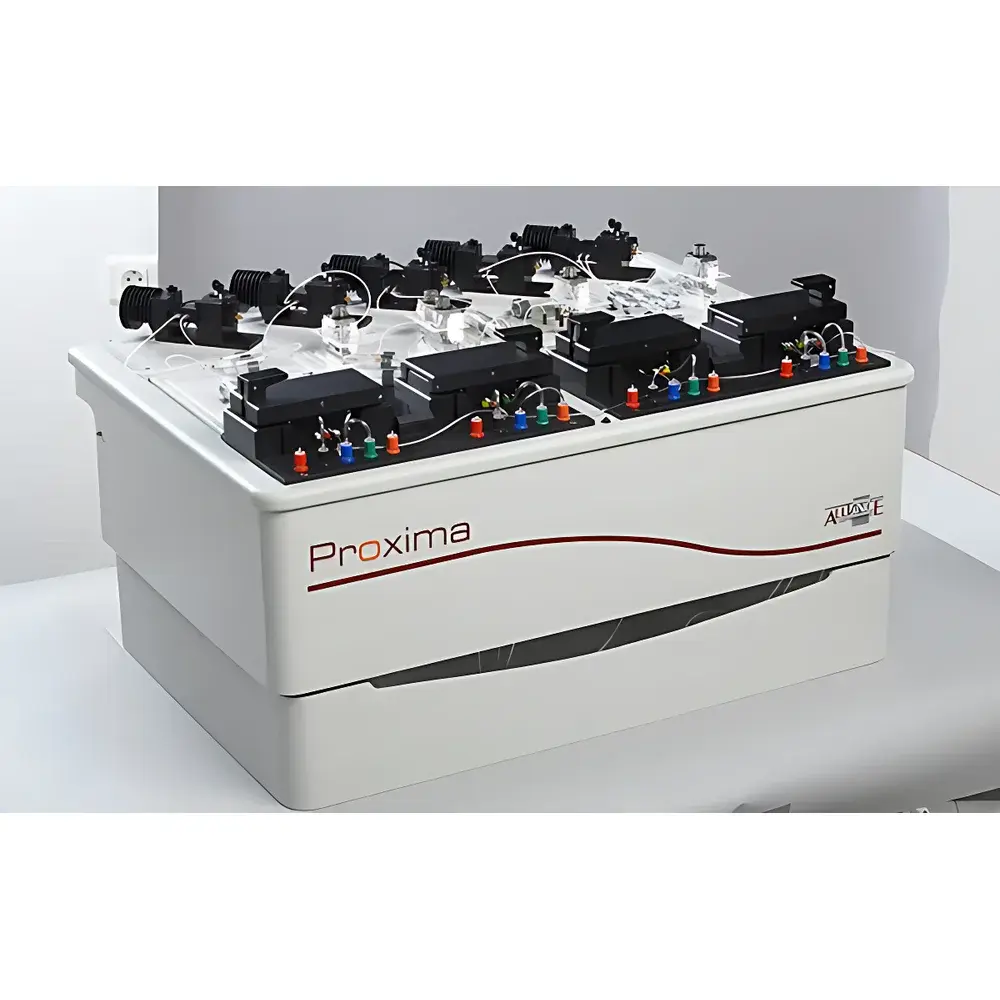
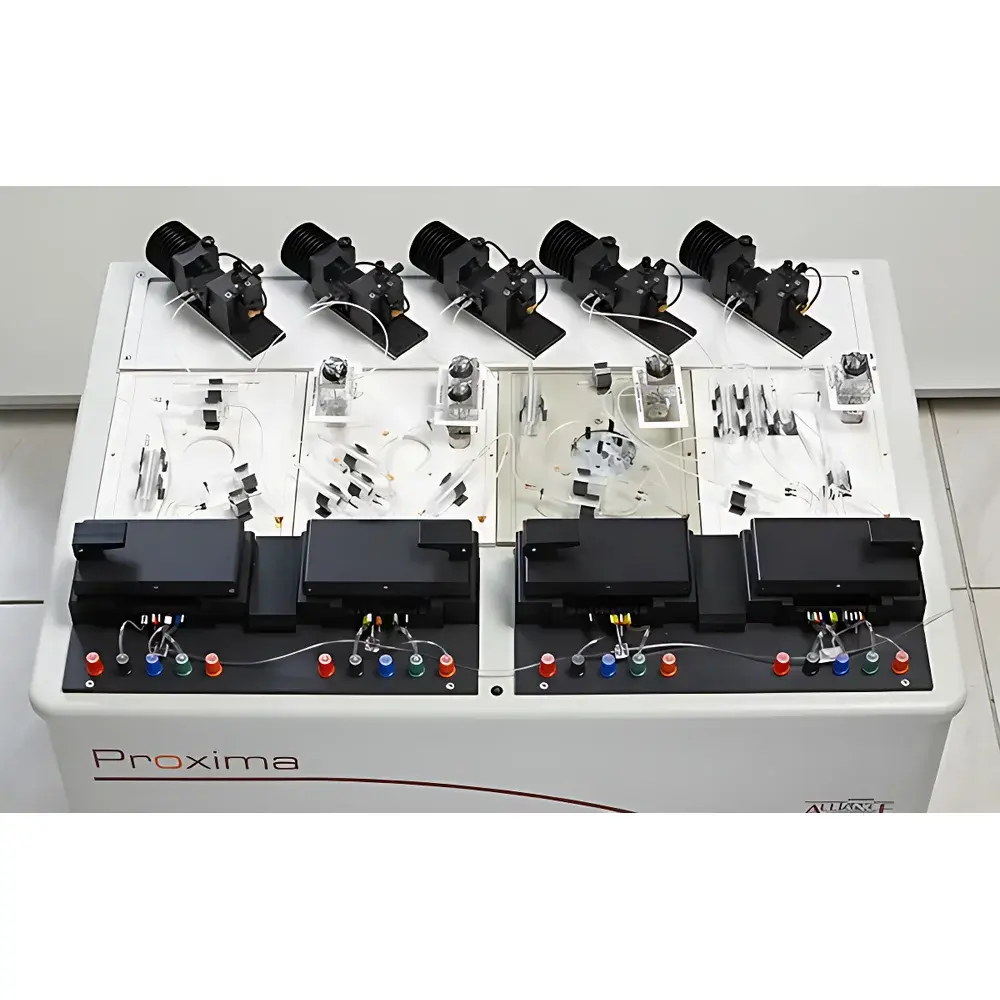
Alliance Proxima Continuous Flow Analyzer
| Brand | AMS Alliance |
|---|---|
| Origin | France |
| Model | PROXIMA |
| Product Type | Continuous Flow Analyzer |
| Wavelength Range | 340–1100 nm |
| Sample Capacity | ≥100 positions |
| Reagent Positions | 1–20 |
| Flow Cell Pathlength | 15–50 mm |
| Light Source | Tungsten-Halogen Lamp |
Overview
The Alliance Proxima Continuous Flow Analyzer (CFA) is a high-precision, modular wet-chemistry automation platform engineered by AMS Alliance in France for standardized, reproducible colorimetric and photometric analysis. Based on classical continuous flow methodology—where sample and reagent streams are segmented by discrete air bubbles and transported through chemically inert tubing—the Proxima implements segmented flow analysis (SFA) principles to ensure precise reaction timing, complete mixing, and minimized cross-contamination. Unlike discrete analyzers, the Proxima maintains a steady-state fluidic environment, enabling robust kinetic control over color development, digestion, distillation, dialysis, and extraction steps—all performed inline within dedicated, thermally regulated modules. Designed for regulatory-compliant laboratories, the system supports full traceability, method validation, and audit-ready operation in accordance with ISO/IEC 17025, EPA Methods 353.2 and 365.2, AOAC Official Methods, and CORESTA Recommended Methods—making it particularly suited for tobacco, food, beverage, environmental water (drinking, wastewater, seawater), soil extract, and clinical chemistry applications.
Key Features
- Modular architecture: A single chassis accommodates up to five independent analytical modules; each module operates autonomously and can be hot-swapped without system shutdown.
- Integrated online sample pretreatment: Onboard capabilities include programmable dilution, membrane dialysis, steam distillation, acid digestion (up to 120 °C), liquid–liquid extraction, and thermostatic incubation (±0.1 °C stability).
- Automated fluidic management: Self-priming peristaltic pumps with digitally adjustable speed (0.1–100 rpm), auto-purge cycles, scheduled shutdown/startup sequences, and low-reagent-consumption protocols reduce operational cost and waste generation.
- Configurable optical detection: Interchangeable flow cells with pathlengths from 15 mm to 50 mm; selectable dual-beam UV-Vis spectrophotometer with tungsten-halogen source covering 340–1100 nm; optional fluorescence or ion-selective electrode interfaces.
- Human-machine interface: Integrated LED touchscreen with physical keypad enables standalone operation; all methods, calibration routines, and diagnostic logs are accessible without external PC dependency.
Sample Compatibility & Compliance
The Proxima accepts aqueous, mildly acidic or alkaline, and organic-aqueous mixed samples—including turbid or particulate-containing matrices when paired with inline filtration or centrifugal separation modules. Sample introduction supports single-, dual-, or quad-needle autosamplers (30–360 position capacity), with barcode-driven sample identification and customizable vial labeling. All fluidic pathways use PTFE, FEP, and polyether ether ketone (PEEK) components to ensure chemical resistance and minimize memory effects. The system meets GLP/GMP documentation requirements via built-in electronic signatures, time-stamped audit trails, and 21 CFR Part 11–compliant user access controls when operated with validated software configurations. Method performance aligns with AFNOR T90-210, ISO 15681-1/-2, BATF 2003/2005, and YC/T 243–2008 for tobacco-specific analytes (e.g., nitrate, phosphate, reducing sugars, nicotine).
Software & Data Management
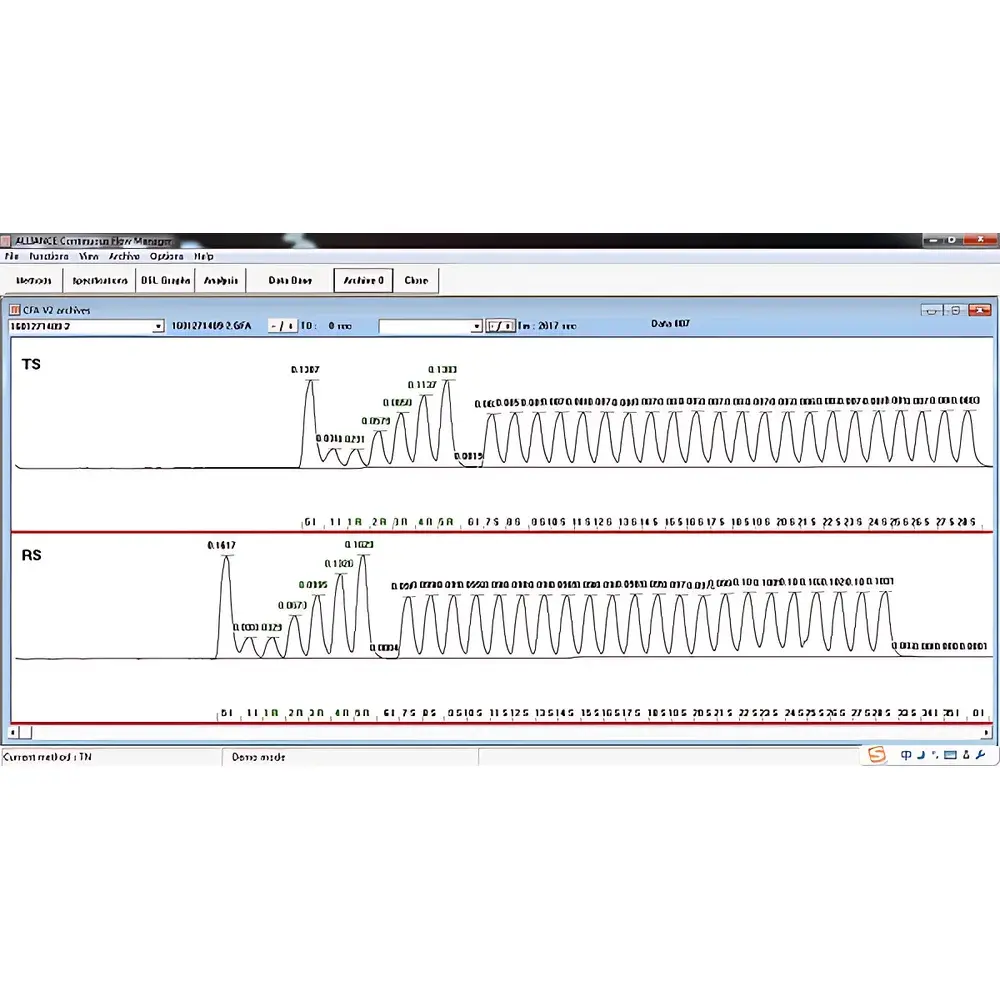
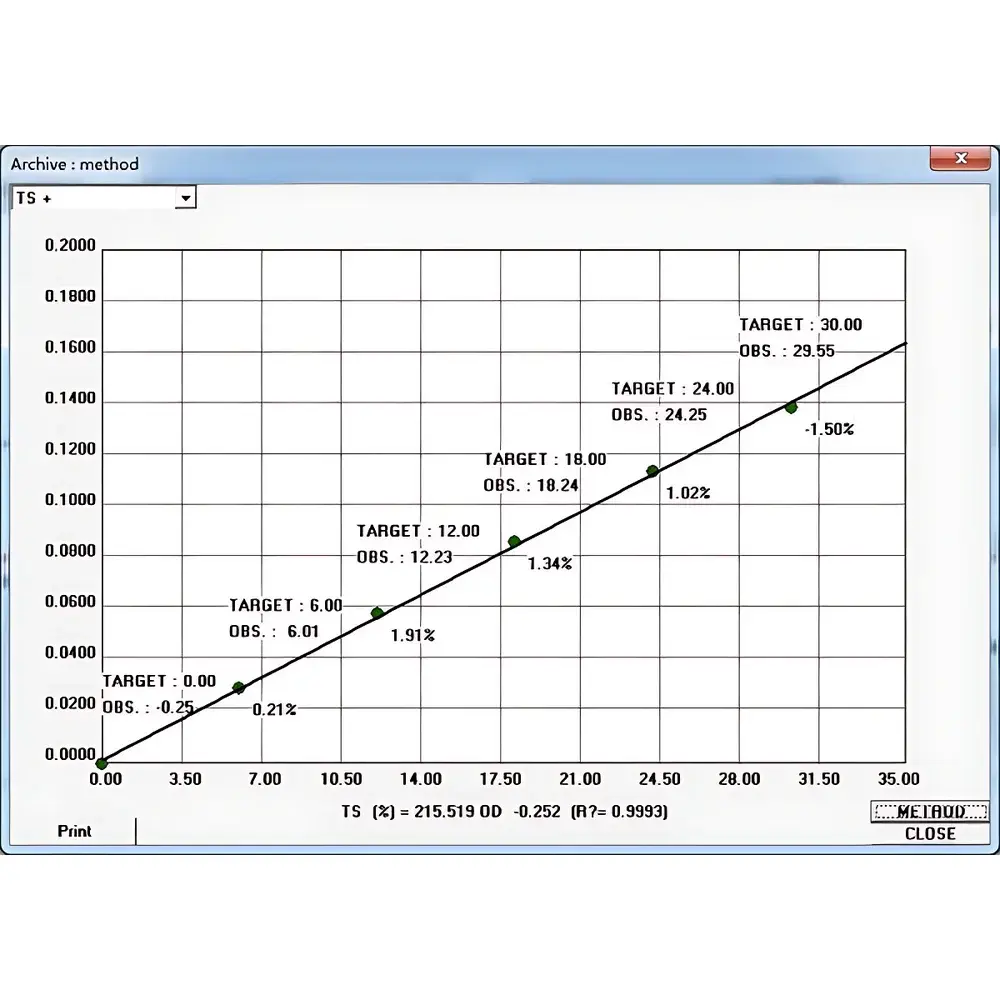
The Proxima Control Suite provides intuitive method development via drag-and-drop workflow editor, real-time signal visualization, and dynamic baseline correction algorithms. Calibration curves (linear, quadratic, or cubic) are generated automatically from standard series; limit of detection (LOD) and quantification (LOQ) calculations follow ICH Q2(R2) guidelines. Peak integration uses adaptive thresholding and second-derivative smoothing to resolve overlapping signals in multi-analyte runs. Raw absorbance data, event logs, pump status, temperature profiles, and error codes are stored in vendor-neutral CSV and XML formats. Native LIMS connectivity is achieved through ASTM E1394-compliant middleware or direct ODBC/JDBC drivers; secure TLS 1.2 transmission ensures HIPAA- and GDPR-aligned data exchange.
Applications
The Proxima delivers validated performance across regulated and research-grade workflows: nitrogen species (NO₃⁻, NO₂⁻, NH₄⁺) in surface and wastewater per EPA 353.2; total phosphorus after persulfate digestion (ISO 15681-2); sucrose and glucose in tobacco leaf extracts (CORESTA RM 41); volatile acidity and sulfur dioxide in wine (OIV MA-AS313-06); cyanide after microdiffusion (ISO 6703-1); phenols in effluents (APHA 3500-P); and chloride via mercury thiocyanate complexation (ISO 9297). Its macro-flow architecture handles high-solids content samples (e.g., digested sludge, homogenized plant tissue), while micro-flow optimization preserves reagent economy for high-throughput screening in QC labs.
FAQ
What standards does the Proxima comply with for environmental testing?
The system supports method execution aligned with EPA, ISO, AFNOR, and AOAC reference protocols; full validation packages—including precision, accuracy, ruggedness, and linearity reports—are available upon request.
Can the Proxima integrate with existing LIMS without custom coding?
Yes—via preconfigured ASTM E1394 message templates or certified ODBC drivers; no API development is required for major LIMS platforms including Thermo Fisher SampleManager, LabVantage, and STARLIMS.
Is remote monitoring and troubleshooting supported?
Remote desktop access (with customer consent and firewall-configured port forwarding) and encrypted log export enable off-site technical support and preventive maintenance scheduling.
How is calibration verification handled during unattended operation?
The software executes periodic bracketing standards and blank checks at user-defined intervals; deviations beyond ±2% absorbance trigger automatic alerting and optional pause-and-notify workflow interruption.
What maintenance intervals are recommended for long-term reliability?
Peristaltic pump tubing replacement every 3–6 months (dependent on usage), flow cell cleaning weekly with 10% nitric acid, and annual optical alignment verification using NIST-traceable neutral density filters.





