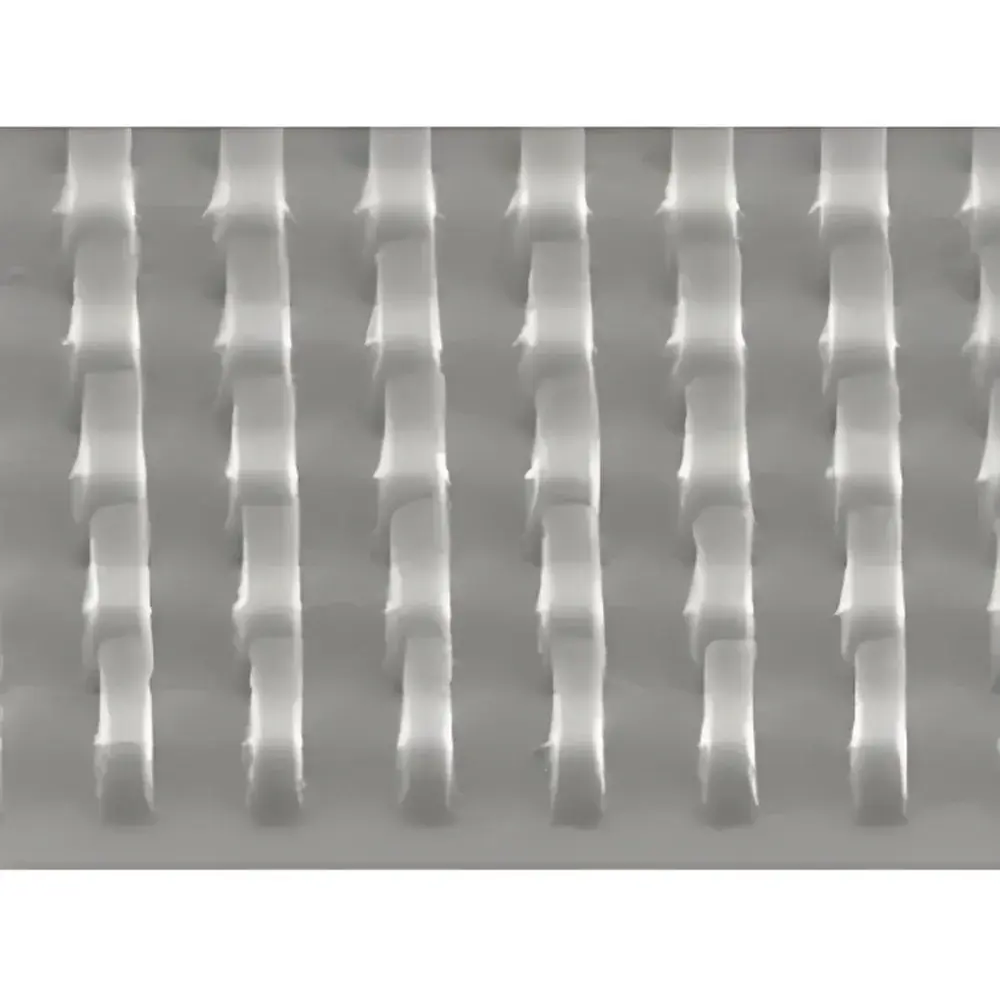
Allresist AR-N7700 Electron-Beam and Deep-UV Resistant Photoresist
| Brand | Allresist |
|---|---|
| Origin | Germany |
| Model | AR-N7700 |
| Type | Chemically Amplified Negative Tone Resist |
| Exposure Modalities | Electron Beam (e-beam), Deep Ultraviolet (248 nm) |
| UV Transparency Range | 248–265 nm & 290–330 nm |
| Etch Resistance | High (Compatible with CF₄, CHF₃, O₂-based Plasma Etching) |
| Packaging | 100 mL amber glass bottles under nitrogen purge |
Overview
Allresist AR-N7700 is a high-performance, chemically amplified negative-tone photoresist engineered for advanced lithographic processes in semiconductor R&D, mask fabrication, and nanofabrication. Designed specifically for electron-beam (e-beam) direct-write lithography and hybrid exposure schemes combining e-beam with deep ultraviolet (DUV) radiation at 248 nm, AR-N7700 delivers exceptional sensitivity, resolution, and process robustness. Its formulation leverages acid-catalyzed crosslinking chemistry activated by post-exposure bake (PEB), enabling sub-20 nm feature definition under optimized conditions. The resist exhibits high contrast (γ > 5) and low line-edge roughness (LER < 3.5 nm RMS), critical for patterning high-aspect-ratio structures in silicon, SiO₂, and metal stacks. As a solvent-based spin-coatable resist, AR-N7700 is compatible with standard cleanroom processing workflows—including HMDS priming, soft bake, exposure, PEB, and aqueous alkaline development (e.g., AR 300-26 or TMAH-based developers).
Key Features
- Multi-Modal Exposure Capability: Optimized for both high-resolution e-beam lithography (accelerating voltage: 10–100 kV) and DUV photolithography at 248 nm (KrF excimer laser), supporting hybrid maskless/mask-based patterning strategies.
- High Sensitivity: Typical e-beam dose sensitivity of 10–50 µC/cm² (depending on beam energy and substrate), significantly reducing write time in research and prototyping environments.
- Negative-Tone Performance: Forms stable, insoluble networks upon PEB via acid-catalyzed crosslinking—delivering high etch selectivity against silicon, silicon dioxide, and hard masks during reactive ion etching (RIE).
- Superior Dry-Etch Resistance: Demonstrated compatibility with fluorocarbon (CF₄/CHF₃) and oxygen-based plasma chemistries; maintains structural integrity through >150 nm silicon etch depth with minimal sidewall erosion.
- Controlled Film Properties: Spin-coated films exhibit uniform thickness (±2% across 100 mm wafers), low intrinsic stress (<50 MPa), and excellent adhesion to Si, SiO₂, SiNₓ, and Cr substrates after HMDS treatment.
- Stable Shelf Life & Handling: Supplied in nitrogen-purged amber glass vials (100 mL); recommended storage at 2–8 °C; shelf life ≥12 months when unopened and properly stored.
Sample Compatibility & Compliance
AR-N7700 is validated for use on standard semiconductor substrates including silicon wafers (bare, thermally oxidized, or nitrided), fused silica, quartz, and chromium-coated photomasks. It meets the material handling requirements of Class 100 cleanroom environments and conforms to ISO 14644-1 standards for airborne particulate cleanliness. While not certified under FDA 21 CFR Part 11 or EU Annex 11, its batch traceability, lot-specific QC documentation (including viscosity, solids content, and spectral absorbance at 248 nm), and controlled manufacturing per ISO 9001 support GLP-compliant process qualification. Users performing qualification under IEST-STD-CC1246D or SEMI S2/S8 are advised to conduct full process validation per internal SOPs.
Software & Data Management
AR-N7700 does not integrate with proprietary software or hardware controllers. Its process parameters—including spin speed (2,000–6,000 rpm), soft bake (90–110 °C, 60–90 s), PEB (100–120 °C, 60–120 s), and development time (30–90 s in AR 300-26 developer)—are defined empirically and documented in Allresist’s Technical Data Sheet (TDS) and Process Guide (PG-7700). These parameters are fully compatible with industry-standard lithography workflow management systems such as LithoTools, Genisys, or custom Python/MATLAB-based recipe managers. Batch-specific analytical data (e.g., GPC molecular weight distribution, FTIR acid generator quantification) is provided upon request for audit readiness and failure analysis traceability.
Applications
- Nanoelectromechanical systems (NEMS) and microelectromechanical systems (MEMS) device patterning
- Photomask and reticle fabrication for DUV and EUV mask writing
- Plasmonic nanostructure arrays and metamaterial templates
- Quantum dot and nanowire device isolation layers
- Hard mask formation for high-aspect-ratio silicon etching (e.g., in MEMS inertial sensors or RF filters)
- Research-scale graphene and 2D material device definition
FAQ
Is AR-N7700 compatible with immersion lithography tools?
No—AR-N7700 is formulated for dry e-beam and DUV (248 nm) exposure only; it is not optimized for 193i immersion or EUV wavelengths.
What developer is recommended for optimal resolution and LER control?
Allresist recommends AR 300-26 (0.26 N TMAH) at 23 ± 0.5 °C with agitation; alternative developers require re-qualification of contrast curve and process window.
Can AR-N7700 be used as a bilayer resist with PMMA or PS-b-P4VP?
Yes—AR-N7700 serves effectively as a top imaging layer in bilayer schemes; compatibility with common bottom layers has been verified under standard lift-off and etch-transfer protocols.
Does the resist require special filtration before spin coating?
Yes—filtration through a 0.2 µm PTFE syringe filter immediately prior to dispensing is mandatory to prevent nozzle clogging and particle-induced defects.
How does storage temperature affect sensitivity stability?
Prolonged exposure above 25 °C accelerates acid generator decomposition; deviations from 2–8 °C storage reduce dose consistency and increase post-bake linewidth variation beyond ±5% after 30 days.