Allresist AR Series Photoresists and Electron Beam Resists for Semiconductor Lithography
| Brand | Allresist |
|---|---|
| Origin | Germany |
| Type | Imported Chemical Reagent |
| Product Line | AR-N (Negative Tone), AR-P (Positive Tone), CAR (Chemical Amplified Resist), E-Beam Resists |
| Compliance | ISO 9001-certified manufacturing, compatible with standard cleanroom protocols (Class 100/ISO 5) |
| Packaging Options | 30 mL, 100 mL, 250 mL, 1 L, 2.5 L |
| Storage | Light-sensitive, refrigerated (2–8 °C), nitrogen-purged sealed containers |
Overview
Allresist AR Series photoresists and electron beam resists are high-purity, solvent-based polymer formulations engineered for precision pattern transfer in semiconductor fabrication, MEMS, photonics, and advanced packaging processes. These chemically defined resists operate on established lithographic principles: UV or e-beam exposure induces photochemical changes—either chain scission (positive tone) or crosslinking (negative tone)—enabling selective removal during aqueous or organic development. The AR portfolio includes deep UV (248 nm, 193 nm), i-line (365 nm), g-line (436 nm), and broadband formulations, as well as high-resolution e-beam resists based on PMMA, copolymers, and chemically amplified systems. Each formulation is manufactured under strict quality control in Germany, adhering to semiconductor-grade purity standards (metal impurities <10 ppt), batch-to-batch reproducibility, and rigorous lot traceability—critical for process stability in R&D and pilot-line environments.
Key Features
- Comprehensive resist architecture: Positive-tone (AR-P series), negative-tone (AR-N series), and chemically amplified resists (CAR) with PAG (photoacid generator) chemistry for enhanced sensitivity and resolution.
- Tailored rheology: Viscosity ranges from 1.5 to 150 cP, enabling uniform spin-coating across thicknesses from 50 nm to >200 µm—validated for lift-off, LIGA, grayscale, and high-aspect-ratio applications.
- Process robustness: Optimized thermal stability (Tg 100–180 °C), etch resistance ratios (SiO₂:Resist ≈ 1:3 to 1:6), and ion-beam resistance for plasma and reactive ion etching (RIE) compatibility.
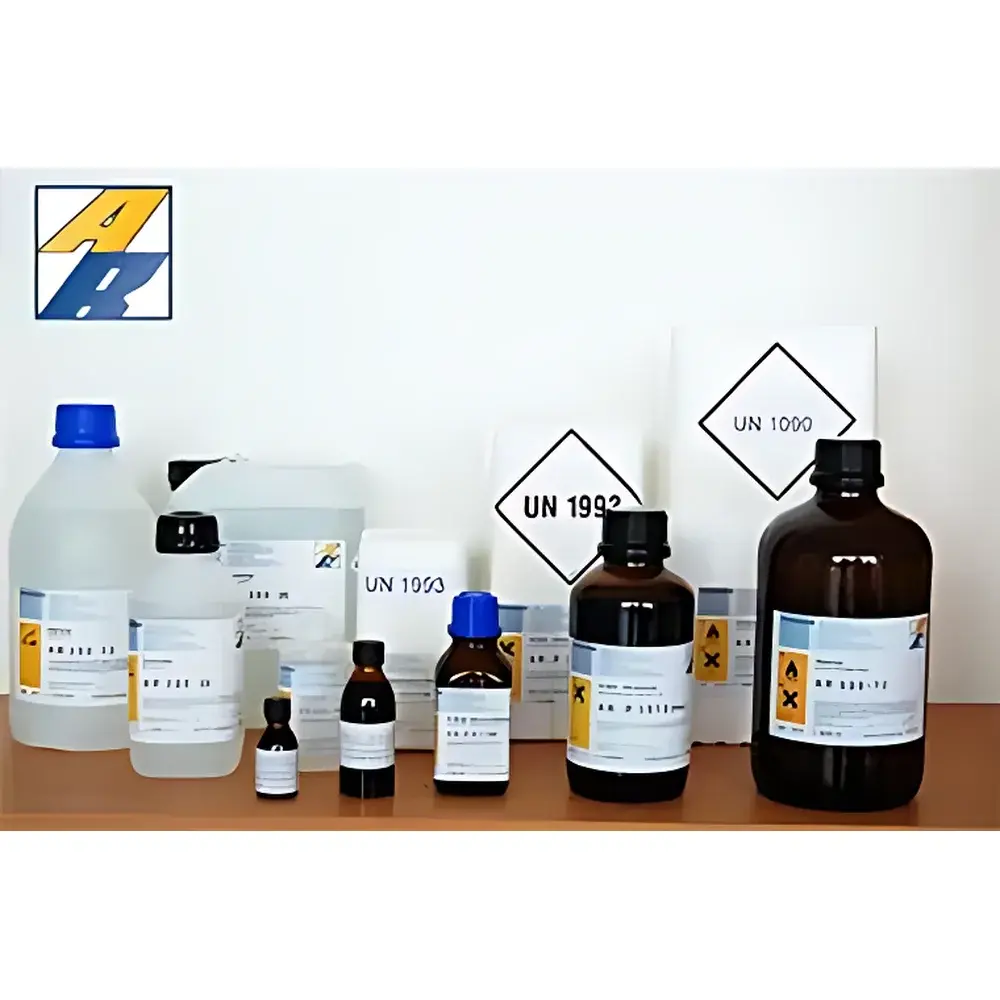
- Cleanroom-ready packaging: Nitrogen-sealed amber glass vials and fluorinated polymer bottles minimize moisture uptake and UV degradation; certified for Class 100 (ISO 5) handling.
- Full ancillary chemistry suite: Dedicated developers (e.g., AR 300-35, AR 600-54), strippers (AR 300-70, AR 600-72), adhesion promoters (AR 300-12), and diluents compliant with SEMI C1/C2 specifications.
Sample Compatibility & Compliance
Allresist resists demonstrate consistent performance on silicon, SiO₂, SiNₓ, GaAs, InP, fused silica, and metal substrates (Cr, Al, Ti, Au). They are validated for use with standard lithography tools—including mask aligners (MJB4, MA6), stepper/scanners (ASML PAS 5500), and e-beam writers (Raith eLINE, JEOL JBX-6300FS)—and support industry-standard process flows per ASTM F2123 (lithography terminology), ISO 14644-1 (cleanroom classification), and SEMI E10 (definition of specification limits). For regulated environments, Allresist documentation supports GLP/GMP audit trails, including CoA (Certificate of Analysis), CoC (Certificate of Conformance), and full elemental impurity reports (ICP-MS). CAR formulations meet sensitivity thresholds required for EUV readiness evaluation (≤10 mJ/cm² at 13.5 nm equivalent dose).
Software & Data Management
While Allresist resists are hardware-agnostic consumables, their process integration is supported by comprehensive technical documentation: downloadable process recipes (spin speed vs. thickness curves, PEB temperature windows, developer concentration/time matrices), spectral absorption data (UV-Vis extinction coefficients), and dissolution rate models (DRM) compatible with lithography simulation platforms (e.g., Sentaurus Lithography, Dr. LiTHO). Batch-specific QC data—including viscosity (ASTM D445), solids content (ASTM D2196), and residual solvent analysis (GC-FID)—are provided digitally via secure customer portal access. All documentation complies with FDA 21 CFR Part 11 requirements for electronic records and signatures where applicable.
Applications
- Semiconductor IC fabrication: Front-end-of-line (FEOL) gate patterning with AR-N 4400 (i-line) and AR-N 7700 (DUV); back-end-of-line (BEOL) interconnect definition using CARs such as AR-N 4340.
- MEMS & NEMS: High-aspect-ratio structures via LIGA-compatible thick resists (AR-P 6510, AR-N 4400) and electroplating mold formation.
- Photonics & optoelectronics: Grating fabrication, waveguide patterning, and grayscale lithography (AR-N 7720) for micro-optical elements.
- Advanced packaging: Redistribution layer (RDL) patterning, fan-out wafer-level packaging (FOWLP), and through-silicon via (TSV) insulation using low-stress, high-adhesion resists.
- Research & prototyping: Lift-off metalization (AR-P 5350, AR-N 4240), 3D nanostructuring (e-beam grayscale + PMMA blends), and hybrid optical/e-beam lithography workflows.
FAQ
What is the shelf life of Allresist photoresists under recommended storage conditions?
Unopened bottles stored at 2–8 °C in nitrogen-purged, light-tight containers retain full specification compliance for 12 months from manufacture date. Post-opening stability depends on handling protocol; we recommend use within 30 days under inert gas blanket.
Are Allresist resists compatible with immersion lithography?
AR-N 7700 and select CAR variants have been tested for water contact angle >85° and leaching resistance in 193i immersion systems; full qualification data available upon NDA.
Do you provide custom resist formulation development?
Yes—Allresist offers collaborative R&D services for application-specific resist design, including modified PAG systems, high-Tg polymers, and solvent-free or low-VOC alternatives, subject to feasibility assessment and MOQ agreement.
How is lot-to-lot consistency ensured?
Each production lot undergoes ≥12 analytical QC tests (GPC, UV-Vis, FTIR, viscosity, solids, pH, metal impurities) against master reference standards; deviation tolerance is ±3% for critical parameters.
Can AR resists be used for X-ray or ion-beam lithography?
PMMA-based AR-P 3200 and AR-N 4400 exhibit proven performance in synchrotron X-ray lithography and He⁺/Ga⁺ focused ion beam (FIB) direct writing; detailed dose-response curves available in technical bulletins.