
Alluxa High-Performance Optical Interference Filters
| Brand | Alluxa |
|---|---|
| Origin | USA |
| Filter Types | Bandpass, Notch, Dichroic, Dielectric |
| Wavelength Range | 250 nm – 6.2 µm |
| Center Wavelength Accuracy | ±0.05 nm |
| Minimum Bandwidth (FWHM) | 0.1 nm |
| Peak Transmission | Up to 99% |
| Blocking Depth | >OD9 (10⁻⁹ attenuation) |
| Edge Steepness | <1% of edge wavelength (10%T → 90%T) |
| Transmission Wavefront Error (TWE) | ≤0.01 wave RMS/inch |
| Damage Threshold | High (Laser-Grade Ion-Beam Sputtered Coatings) |
| Compliance | ISO 9001-certified manufacturing, RoHS-compliant, suitable for GLP/GMP environments |
Overview
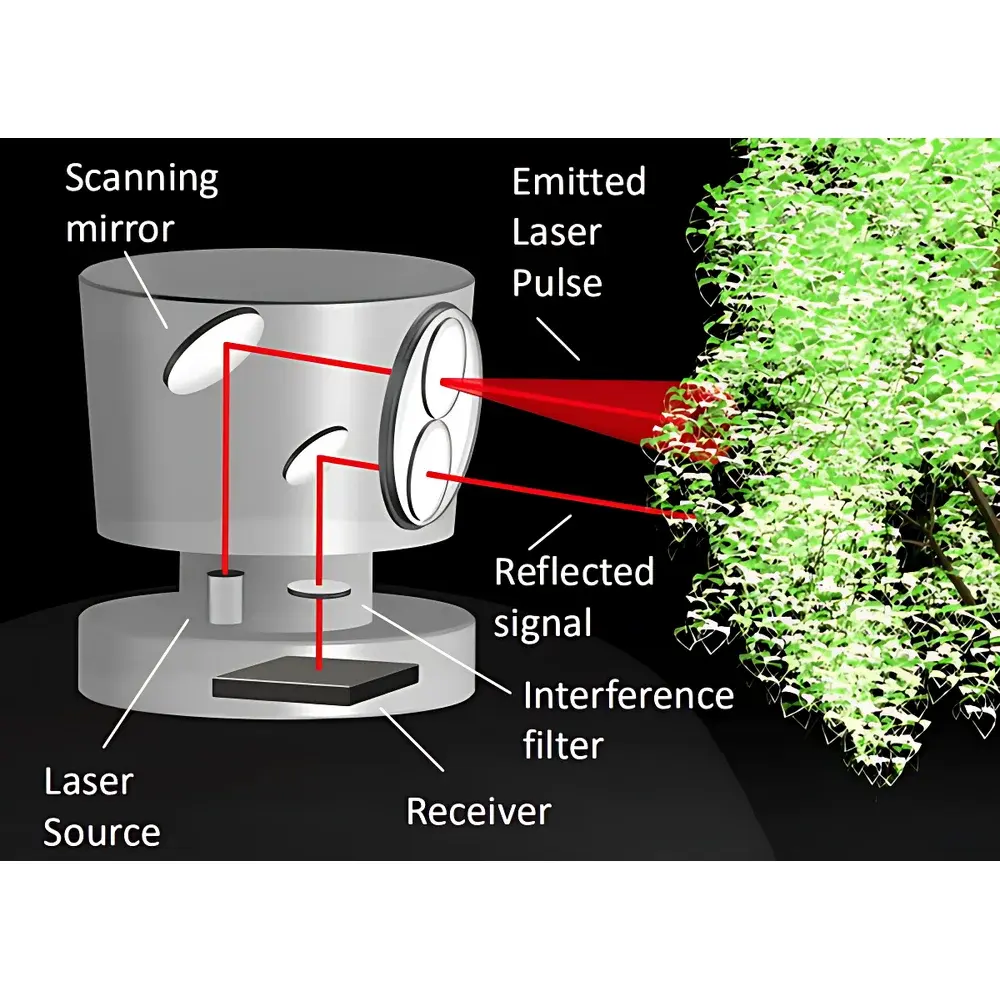
Alluxa High-Performance Optical Interference Filters are precision thin-film components engineered for demanding spectroscopic, laser-based, and quantum optical systems. Built upon proprietary SIRRUS™ ion-beam sputtering (IBS) technology, these filters deliver exceptional spectral fidelity, mechanical durability, and long-term environmental stability. Unlike conventional evaporation or magnetron-sputtered coatings, Alluxa’s IBS process enables atomic-level control over layer thickness, density, and stoichiometry—resulting in ultra-low absorption, minimal scatter, and sub-nanometer spectral repeatability across production lots. Each filter is designed for operation in high-flux laser environments (e.g., LIDAR transceivers, Raman excitation paths, fluorescence lifetime imaging), where thermal drift, polarization sensitivity, and coating delamination must be rigorously mitigated. The core measurement principle relies on constructive and destructive interference within multilayer dielectric stacks—optimized using rigorous electromagnetic modeling (RCWA and transfer-matrix methods) to achieve near-theoretical performance limits across UV-VIS-NIR (250 nm – 6.2 µm).
Key Features
- Ultra-narrow bandwidth: FWHM down to 0.1 nm with peak transmission ≥90%, validated per ISO 10110-7 surface quality and spectral uniformity standards
- Deep blocking: Optical density >OD9 (10⁻⁹) in rejection bands, enabling high-dynamic-range signal isolation in multi-laser or broadband detection setups
- Exceptional edge steepness: Transition slopes <1% of edge wavelength (measured between 10% and 90% transmission points), critical for spectral multiplexing and background suppression
- Thermal stability: Spectral shift <±0.005 nm/°C across –40°C to +85°C operating range; verified via accelerated thermal cycling (MIL-STD-810G, Method 502.6)
- Low wavefront distortion: Transmission wavefront error ≤0.01 wave RMS per inch, ensuring diffraction-limited performance in imaging and interferometric applications
- High laser damage threshold: Certified to ISO 21254 at 1064 nm, 10 ns, 10 Hz (≥5 J/cm² for CW and pulsed Nd:YAG systems)
- Batch-to-batch reproducibility: <±0.035% transmission uniformity across 72 mm diameter substrates, measured via automated spectral mapping per ASTM E308
Sample Compatibility & Compliance
Alluxa filters are fabricated on UV-fused silica, BK7, CaF₂, or custom substrates (e.g., sapphire, Ge) with optional AR coatings on non-functional surfaces. Substrate flatness meets λ/10 @ 633 nm (per ISO 10110-3), and surface roughness is maintained below 0.3 nm RMS (measured by AFM). All products comply with RoHS Directive 2011/65/EU and REACH Regulation (EC) No. 1907/2006. Manufacturing adheres to ISO 9001:2015 quality management protocols, with full traceability from deposition run logs to spectral certification reports. For regulated life-science or pharmaceutical instrumentation, filters support FDA 21 CFR Part 11–compliant audit trails when integrated with validated optical subsystems.
Software & Data Management
Each filter ships with a NIST-traceable spectral certification report, including full transmission/reflection curves (250–6200 nm), center wavelength, FWHM, OD depth profiles, and TWE maps. Raw spectral data is delivered in ASCII-compatible .csv format compatible with MATLAB, Python (NumPy/Pandas), and commercial optical design tools (Zemax OpticStudio, CODE V, FRED). Custom spectral modeling files (.zmx, .cvd) are available upon request for system-level integration validation. All calibration data is archived for ≥15 years and accessible via secure customer portal with role-based access controls.
Applications
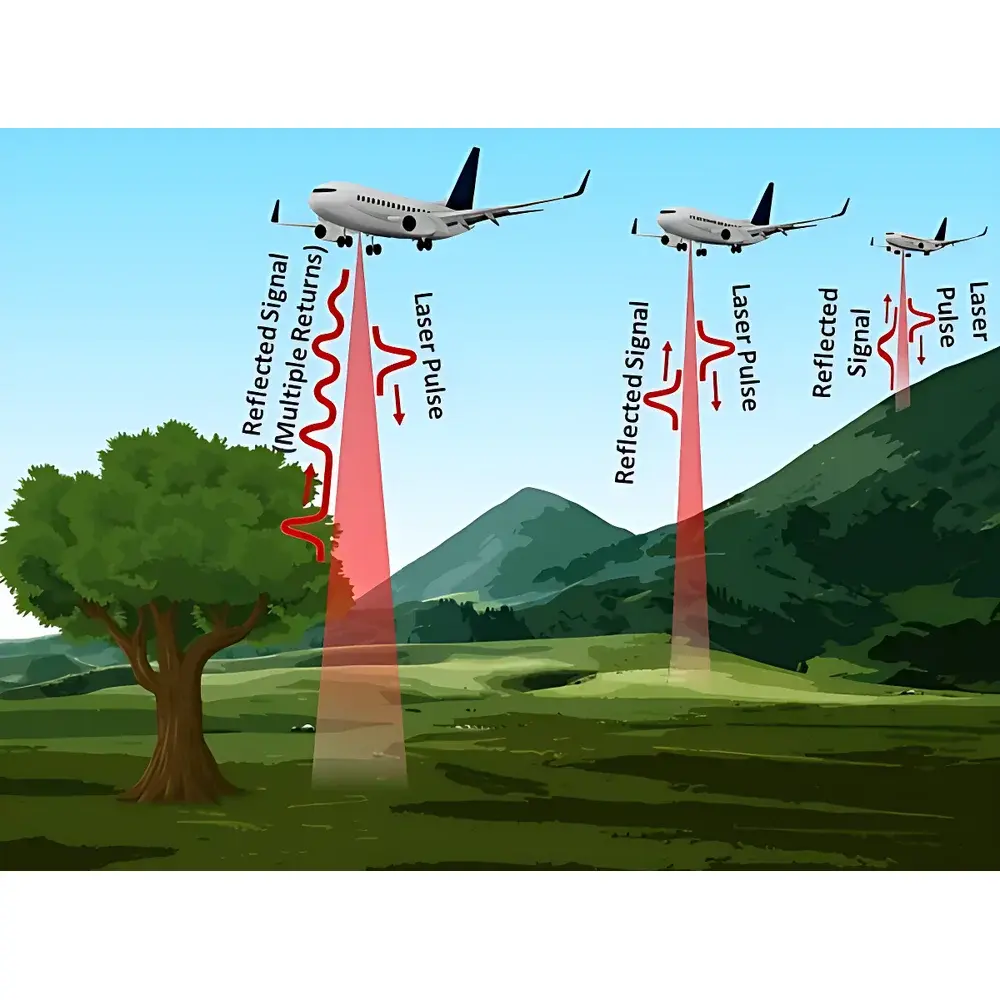
- LIDAR systems: High-rejection notch filters for 355 nm, 532 nm, and 1064 nm laser return isolation; narrowband bandpasses for atmospheric gas sensing (e.g., O₂ A-band at 760 nm, CO₂ at 2.05 µm)
- Confocal and super-resolution microscopy: Multiband dichroics and notch filters enabling simultaneous multi-color fluorescence detection with <0.5 nm crosstalk
- Quantum optics: Ultra-stable cavity mirrors and spectral filtering for single-photon sources (e.g., NV centers, quantum dots) requiring <10⁻⁴ out-of-band leakage
- Raman spectroscopy: Laser-line cleanup filters (OD7–OD9) and edge filters with <0.2 nm transition width for low-wavenumber (<50 cm⁻¹) detection
- Satellite-based Earth observation: Radiation-hardened variants qualified to ECSS-Q-ST-70-08C for spaceborne spectrometers (e.g., hyperspectral imagers in 400–2500 nm range)
FAQ
What substrate materials are available for custom Alluxa filters?
Standard options include UV-fused silica (185–2100 nm), BK7 (330–2000 nm), CaF₂ (120–8000 nm), and IR-grade materials (Ge, ZnSe, Si) for mid- to far-IR applications. Custom substrates (e.g., sapphire, MgF₂) are supported upon technical review.
Can Alluxa filters be used in vacuum or high-humidity environments?
Yes. Ion-beam sputtered coatings are fully dense and non-hygroscopic. All standard filters meet MIL-C-48497A for humidity resistance and are routinely deployed in UHV systems (≤10⁻⁹ Torr) without outgassing or spectral shift.
Do you provide environmental testing data (thermal, vibration, shock)?
Yes. Accelerated life testing reports—including thermal cycling (–40°C to +85°C, 100 cycles), random vibration (5–2000 Hz, 11.6 g RMS), and mechanical shock (1500 g, 0.5 ms half-sine)—are available under NDA for qualified OEM integrators.
How does Alluxa ensure spectral consistency across large-volume orders?
Every production lot undergoes full spectral verification on a calibrated PerkinElmer Lambda 1050+ spectrophotometer with NIST-traceable standards. Process control includes real-time quartz crystal microbalance (QCM) monitoring and closed-loop plasma emission spectroscopy during deposition.
Are custom designs supported for non-standard angles of incidence or polarization requirements?
Yes. Alluxa supports AOI-specific designs (0°–45°), polarizing beam splitters, and polarization-maintaining dichroics. Modeling accounts for s/p-splitting, angular shift, and field curvature per ISO 9211-2.






