
Alluxa ULTRA Series Bandpass Filter Model 7365
| Brand | Alluxa |
|---|---|
| Origin | USA |
| Manufacturer Type | Authorized Distributor |
| Product Category | Optical Component |
| Model | 7365 |
| Substrate | Fused Silica |
| Center Wavelength | 310 nm ± 2.0 nm |
| Full Width at Half Maximum (FWHM) | 10 nm ± 2.0 nm |
| Peak Transmission | >70% T Absolute |
| Blocking Level | OD4 |
| Blocking Range(s) | OD4 from 200–295 nm and 325–1200 nm |
| Diameter | 25.0 mm |
| Thickness | 2.0 mm |
| Mount | Anodized Aluminum Ring |
| Total Assembly Thickness | 5.0 mm |
| Angle of Incidence | 0° |
Overview
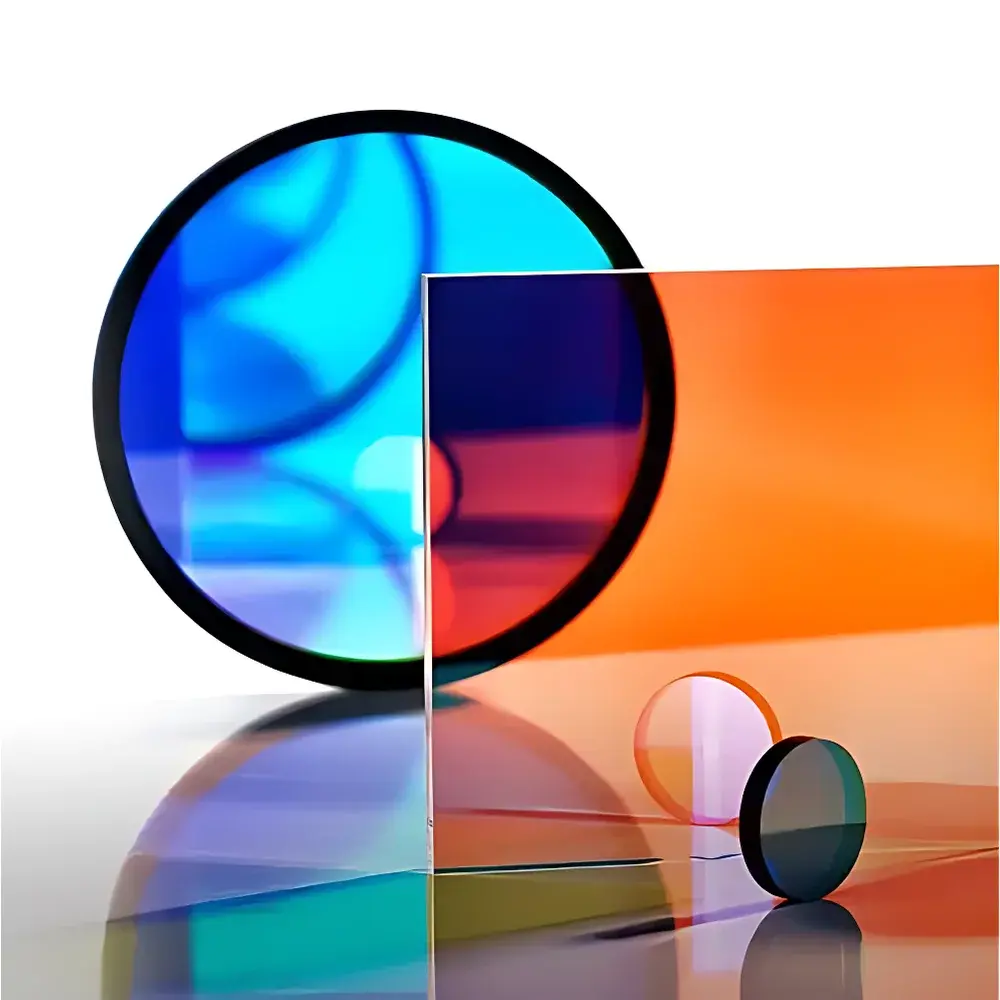
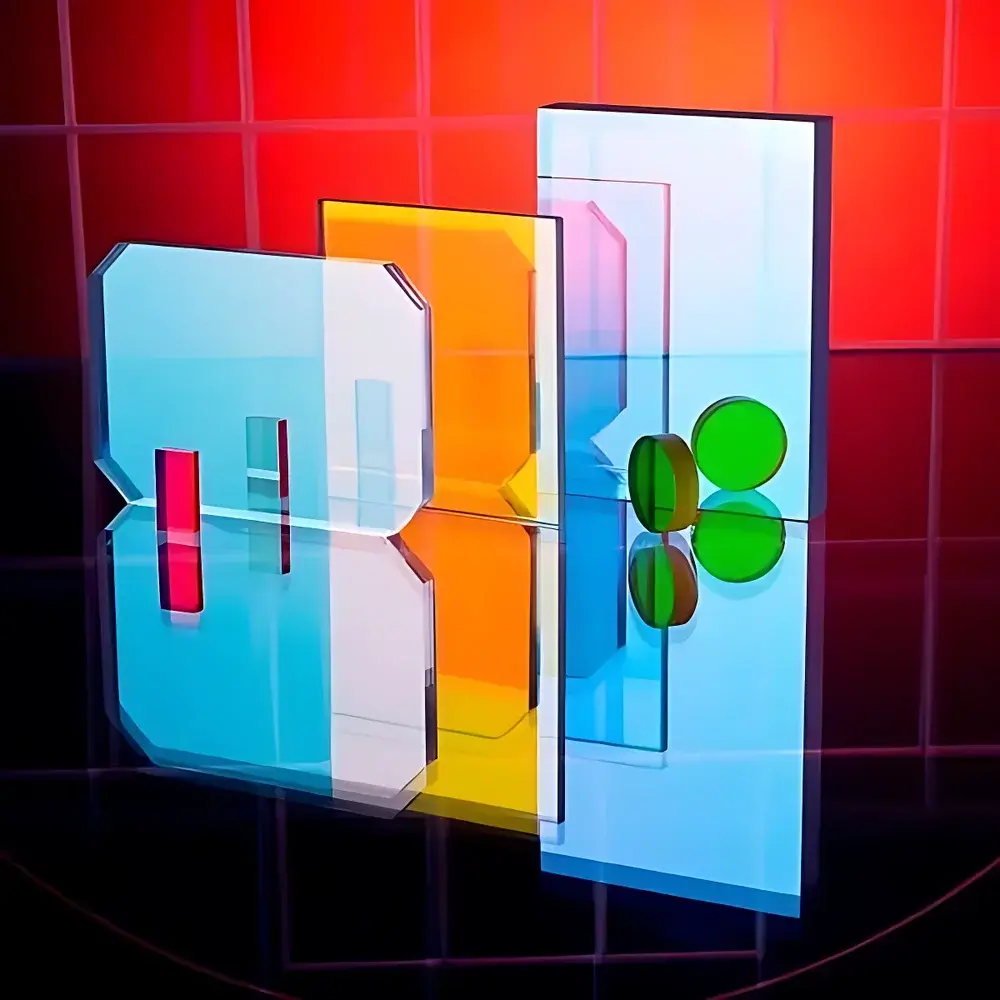
Alluxa ULTRA Series Bandpass Filters are high-performance thin-film optical components engineered for precision spectral isolation in demanding scientific and industrial applications. Based on interference filter principles, these bandpass filters transmit a narrow, well-defined wavelength band while rejecting light outside that band with exceptional optical density (OD). The Model 7365 exemplifies this capability: a UV-optimized filter centered at 310 nm (±2.0 nm), with a 10 nm FWHM bandwidth, >70% absolute peak transmission, and OD4 blocking across two broad spectral regions (200–295 nm and 325–1200 nm). Fabricated using Alluxa’s proprietary SIRRUS™ ion-beam sputtering process, the filter achieves sub-nanometer layer control, enabling industry-leading wavelength accuracy, steep edge transitions, and long-term environmental stability.
Key Features
- Ultra-High Spectral Precision: Tight center wavelength tolerance (±0.25% of CWL) and nominal FWHM control ensure consistent alignment with laser lines and fluorophore emission peaks—critical for multiplexed fluorescence detection and Raman excitation rejection.
- Deep Out-of-Band Suppression: Engineered OD4 (10,000× attenuation) blocking over wide spectral ranges minimizes stray light, improves signal-to-noise ratio (SNR), and enables reliable operation in low-light applications such as single-molecule imaging and time-resolved spectroscopy.
- Hard-Coated Durability: SIRRUS™ ion-beam deposited multilayer coatings on fused silica substrates yield high laser-induced damage threshold (LIDT), excellent humidity resistance, and mechanical robustness—validated per MIL-C-48497A and ISO 9211-4 standards.
- Low Wavefront Distortion: Transmitted wavefront error (TWE) < 0.25 wave RMS @ 632.8 nm ensures minimal beam distortion in collimated or focused optical paths, supporting diffraction-limited performance in confocal and super-resolution microscopy systems.
- Batch-to-Batch Consistency: Process-controlled deposition enables reproducible optical performance across production runs—verified by 100% spectral testing and certified traceable to NIST-traceable reference instruments.
Sample Compatibility & Compliance
The Model 7365 is optimized for use with UV-emitting sources including mercury arc lamps, nitrogen lasers (337 nm), frequency-tripled Nd:YAG lasers (355 nm), and broadband UV LEDs. Its spectral profile supports applications requiring selective excitation of UV-sensitive fluorophores (e.g., DAPI derivatives, Hoechst dyes) and rejection of Raman scattering tails. The fused silica substrate provides high transmission down to 180 nm and superior thermal stability (coefficient of expansion: 0.55 × 10⁻⁶ /°C), making it suitable for vacuum UV (VUV) environments when properly coated. All ULTRA Series filters comply with RoHS Directive 2011/65/EU and meet ISO 10110-7 surface quality specifications (scratch-dig 10-5). They are compatible with standard 25 mm lens mounts and integrate seamlessly into OEM instrumentation designed to IEC 61000-6-3 EMC requirements.
Software & Data Management
Each Alluxa ULTRA filter ships with a full spectral characterization report, including measured transmission curve (200–1200 nm), blocking spectrum, and angular sensitivity data. Reports are provided in ASCII CSV format for direct import into optical design software (Zemax OpticStudio, CODE V, FRED) and laboratory data analysis platforms (MATLAB, Python SciPy, LabVIEW). For integration into automated systems, Alluxa provides optional digital calibration certificates compliant with ISO/IEC 17025:2017 and supporting GLP/GMP audit trails—including timestamped measurement logs, operator ID, instrument serial numbers, and uncertainty budgets per GUM (JCGM 100:2008). No proprietary drivers or closed-format files are used; all metadata conforms to FITS and SIARD archival standards.
Applications
- Fluorescence Microscopy & Cytometry: Excitation filtering for DAPI, Hoechst 33258, and other nuclear stains; rejection of autofluorescence in UV-transmitted light channels.
- Raman Spectroscopy: Laser line cleanup and Rayleigh scatter rejection in backscattering configurations—particularly effective with 325 nm HeCd lasers and deep-UV Raman probes.
- LIDAR & Atmospheric Sensing: Solar-blind detection windows for ozone (Huggins bands) and NO₂ monitoring, leveraging high UV rejection and solar irradiance suppression below 320 nm.
- Quantum Optics: Spectral selection of single-photon sources (e.g., NV centers, quantum dots) and filtering of pump laser harmonics in entanglement generation setups.
- Semiconductor Inspection: Defect detection using UV-induced photoluminescence, where precise excitation control prevents substrate heating and improves defect contrast.
FAQ
What does “OD4 blocking” mean in practical terms?
OD4 indicates optical density of 4, corresponding to 10⁻⁴ transmission—or 0.01% of incident light passing through the blocked region. For Model 7365, this means less than 1 photon in 10,000 at 250 nm or 400 nm reaches the detector, significantly reducing background in low-signal applications.
Can this filter be used at non-zero angles of incidence?
The published specifications assume 0° angle of incidence. At oblique angles, the center wavelength shifts toward shorter wavelengths (blue shift) and the passband shape may distort. For AOI > 3°, Alluxa recommends custom-design consultation to optimize coating architecture and maintain spectral fidelity.
Is the filter suitable for high-power UV laser applications?
Yes—SIRRUS™ coatings on fused silica deliver LIDT values exceeding 500 mJ/cm² at 355 nm (10 ns, 10 Hz), validated per ISO 21254-1. For continuous-wave (CW) UV lasers, thermal management and beam homogeneity must be evaluated case-by-case; contact Alluxa Applications Engineering for power-handling validation reports.
How is wavelength accuracy verified during manufacturing?
Every filter undergoes spectrophotometric verification using a NIST-traceable double-monochromator system (PerkinElmer Lambda 1050+ with UV/VIS/NIR integrating sphere). CWL and FWHM are measured at three spatial locations across the clear aperture, with results documented in the individual certificate of conformance.
Does Alluxa offer multi-band or custom spectral designs?
Yes—ULTRA Series includes single-band, multi-band (up to 12 passbands), ultra-narrow (<1 nm FWHM), and broadband variants. Custom designs support CWL anywhere from 250 nm to 13 µm, with blocking levels up to OD10, edge steepness down to 0.5% of CWL, and substrate options including CaF₂, MgF₂, and IR-grade materials.





