
Alluxa ULTRA Series Ultra-Narrow Bandpass Interference Filter Model 7065
| Brand | Alluxa |
|---|---|
| Origin | USA |
| Manufacturer Type | Authorized Distributor |
| Product Category | Imported Optical Component |
| Model | 7065 |
| Component Type | Optical Filter |
Overview
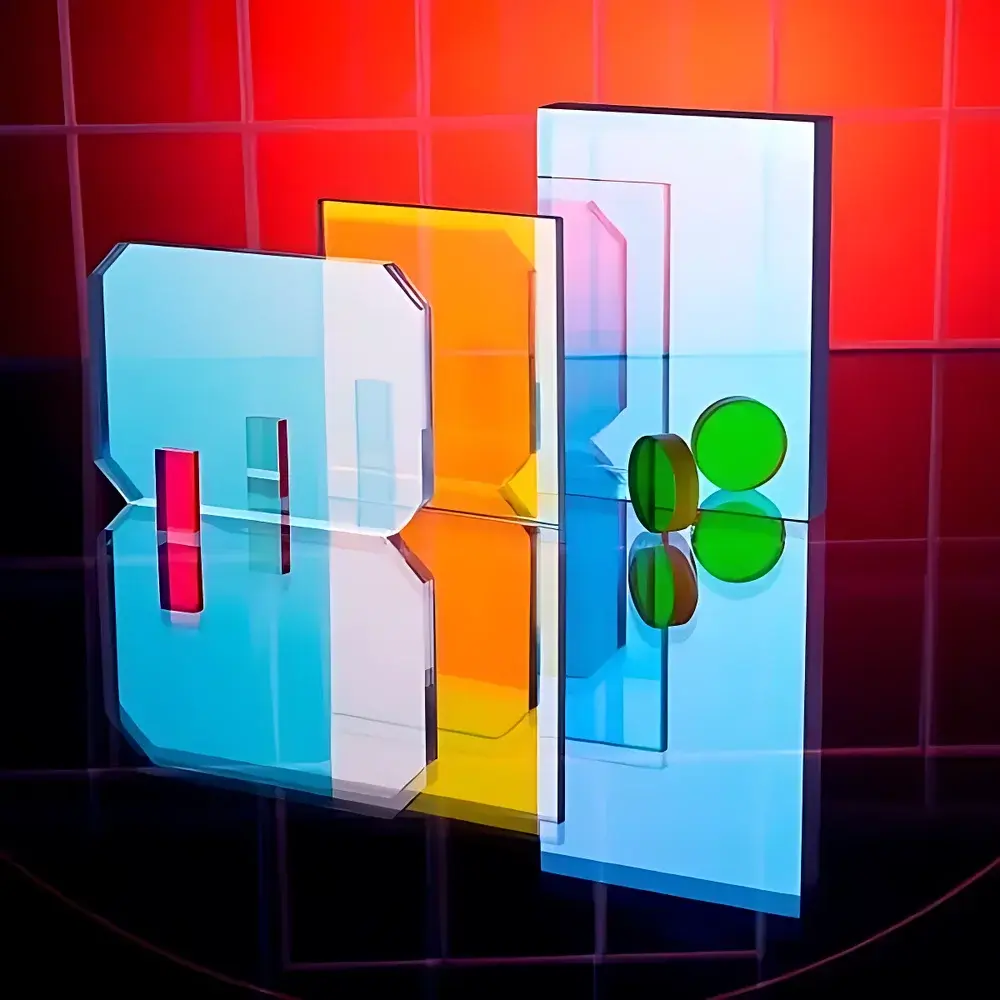
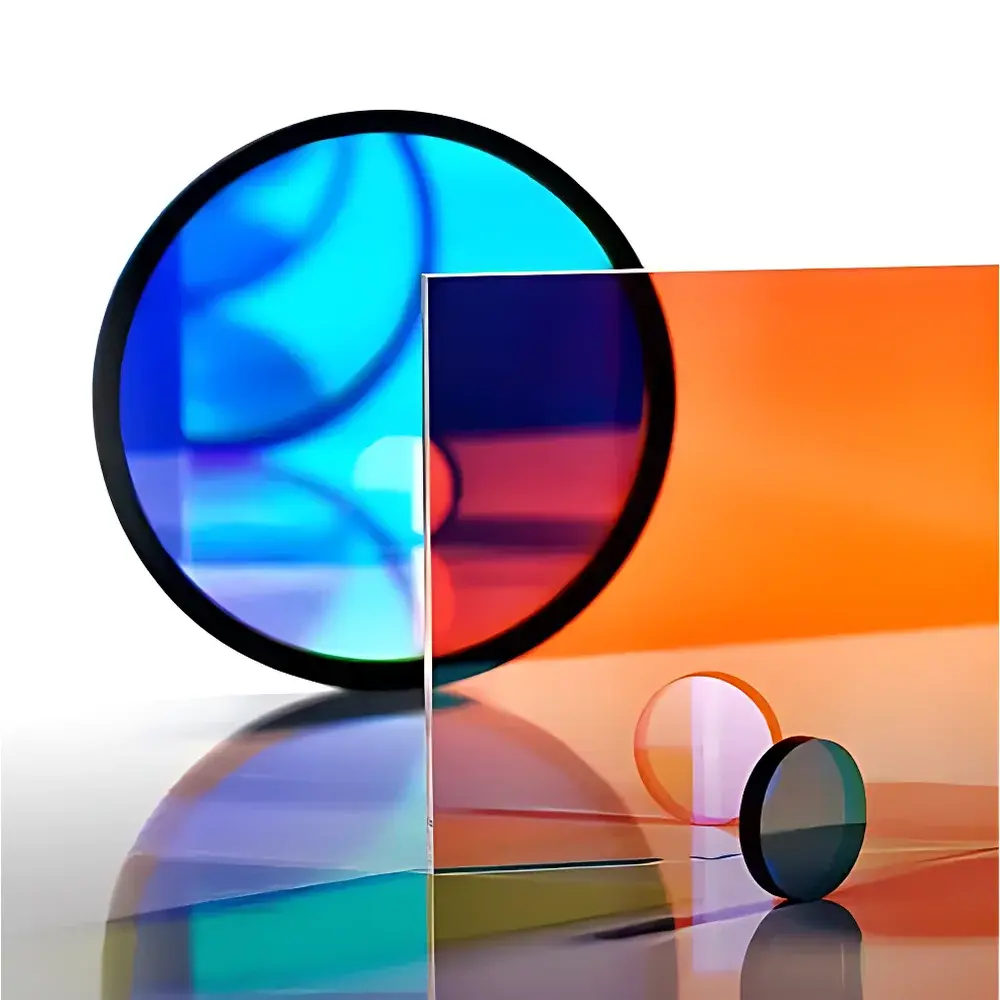
Alluxa ULTRA Series ultra-narrow bandpass interference filters are precision thin-film optical components engineered for demanding laser-based and spectroscopic applications requiring exceptional spectral selectivity, high transmission efficiency, and long-term environmental stability. These filters operate on the principle of multi-cavity dielectric interference, where precisely controlled quarter-wave stacks of high-refractive-index and low-refractive-index materials create constructive interference at the target center wavelength (CWL) and destructive interference across broad rejection bands. Designed for zero-degree angle of incidence (AOI = 0°), each filter delivers a well-defined passband with steep edges, minimal ripple in the transmission region, and deep out-of-band blocking—enabling reliable isolation of weak signals from intense background radiation.
Key Features
- Ultra-narrow bandwidth: FWHM as narrow as 0.1 nm, supporting high-resolution spectral discrimination in Raman spectroscopy, lidar, and quantum optics
- High peak transmission: Up to 98% absolute transmission at CWL, minimizing photon loss in signal-limited configurations
- Deep blocking performance: Optical density (OD) up to OD12 by design, with tailored blocking ranges spanning UV to NIR (200–1200 nm)
- Exceptional wavelength accuracy: CWL tolerances as tight as ±0.05 nm, ensuring precise alignment with laser emission lines or atomic transitions
- Low wavefront error: <0.01 wave RMS/inch @ 632.8 nm, preserving beam quality in interferometric and imaging systems
- SIRRUS™ ion-beam sputtering deposition: A proprietary plasma-assisted process yielding hard, dense, stoichiometric coatings with superior adhesion, humidity resistance, and laser damage threshold (LDT > 5 J/cm² @ 1064 nm, 10 ns)
- Batch-to-batch reproducibility: Tight process control ensures consistent spectral performance across production runs—critical for system integration and regulatory compliance
Sample Compatibility & Compliance
Alluxa ULTRA filters are fabricated on high-grade substrates—including fused silica, N-BK7, and Borofloat®—selected for thermal stability, low birefringence, and transmission homogeneity across the operational spectrum (UV: 250 nm to NIR: 1800 nm). Each filter is mounted in an anodized aluminum ring (standard assembly) or supplied unmounted for OEM integration. The SIRRUS™ coating process is performed in ISO Class 5 cleanroom environments and conforms to rigorous internal quality standards aligned with ISO 9010 (optical component testing) and MIL-PRF-13830B (surface quality). While not medical devices, these filters support instrumentation used in GLP/GMP-regulated laboratories; spectral calibration reports and lot-specific test data are available upon request to support audit readiness and traceability requirements.
Software & Data Management
Alluxa provides comprehensive spectral characterization data for every filter lot, including full-wavelength transmission and reflection curves measured on calibrated PerkinElmer Lambda 1050+ or Agilent Cary 7000 spectrophotometers. Raw measurement files (.csv, .txt) and annotated PDF reports are delivered digitally with each order. For system integrators, Alluxa supports custom spectral modeling via TFCalc or Essential Macleod-compatible coating design files (upon NDA). No proprietary software is required for operation; filters are passive components fully compatible with standard optical alignment workflows and automated stage controllers. Spectral metadata—including CWL, FWHM, blocking OD levels, and substrate specifications—is encoded in machine-readable format for integration into LIMS or instrument control software via API or CSV ingestion.
Applications
- Laser-based fluorescence microscopy: High-OD laser-line cleanup and excitation/emission separation in confocal, TIRF, and light-sheet systems
- Raman spectroscopy: Laser rejection filtering with OD ≥ 8 at Rayleigh line and high transmission (>85%) at Stokes/anti-Stokes bands
- LIDAR and atmospheric sensing: Narrowband detection of specific molecular absorption features (e.g., O2, H2O, CH4) with minimal etalon-induced drift
- Quantum optics & atomic physics: Isolation of D-lines (e.g., Na 589 nm, Cs 852 nm) and telecom wavelengths (1310/1550 nm) for cavity locking and single-photon detection
- DNA sequencing & flow cytometry: Multiplexed excitation and emission filtering with minimal crosstalk between fluorophore channels
- Industrial laser processing monitoring: In-situ plasma emission analysis using narrowband filters matched to metal vapor lines (e.g., Cu 521 nm, Fe 372 nm)
FAQ
What is the typical laser damage threshold (LDT) for ULTRA series filters?
Alluxa specifies LDT values per ISO 21254. For CWLs between 250–1100 nm, typical values range from 3–7 J/cm² (10 ns, 10 Hz, 1064 nm); exact values are provided in the certificate of conformance for each lot.
Can these filters be used at non-zero angles of incidence?
No. ULTRA series filters are optimized for AOI = 0°. Tilting induces spectral shift (blue-shift of CWL) and passband distortion; angular tuning is not supported without custom redesign.
Do you offer custom designs outside the standard catalog?
Yes. Alluxa provides rapid-turnaround custom engineering for non-standard CWLs, FWHM, blocking profiles, substrate types, and mounting configurations—with lead times typically under 6 weeks and no minimum order quantity.
How is spectral stability verified over time and temperature?
All filters undergo accelerated aging (85°C/85% RH, 1000 hrs) and thermal cycling (-40°C to +85°C, 100 cycles). Post-test verification confirms CWL shift < ±0.02 nm and transmission change < ±0.5%—data included in qualification reports.
Are mounting rings compatible with standard kinematic mounts?
Yes. Standard 25.0 mm diameter filters with 3.5 mm thickness use industry-standard SM1 (1.035″-40) threading and are compatible with Thorlabs, Newport, and Edmund Optics mount families.





