
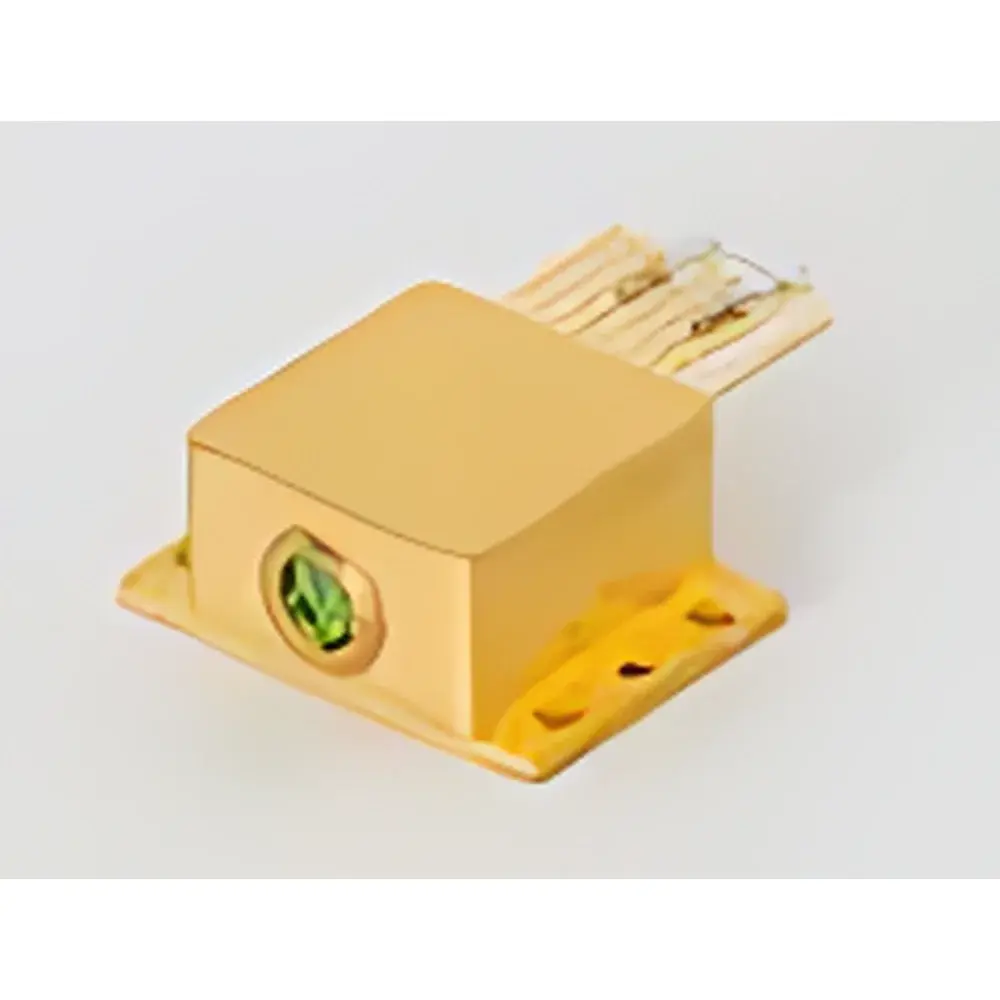
ALPES QCL Quantum Cascade Laser System
| Brand | Auniontech (HaoLiang) |
|---|---|
| Origin | Imported |
| Manufacturer Type | Authorized Distributor |
| Model | ALPES QCL |
| Price Range | USD 95,000 – 136,000 |
| Measurement Mode | AC-coupled modulation capable |
Overview
The ALPES QCL Quantum Cascade Laser System is a high-performance mid-infrared (MIR) and terahertz (THz) light source engineered for precision spectroscopic analysis, gas sensing, and fundamental research applications. Unlike conventional interband semiconductor lasers, QCLs operate on intersubband transitions within engineered quantum well heterostructures—enabling wavelength selection independent of the host material’s bandgap. This principle, first theorized by Kazarinov and Suris in 1971 and experimentally realized by Faist et al. at Bell Labs in 1994, underpins the system’s broad spectral coverage (645–2370 cm⁻¹, or ~4.2–15.5 µm), narrow linewidth, and high spectral brightness. The ALPES platform integrates multiple laser architectures—including distributed feedback (DFB), Fabry–Pérot (FP), interband cascade (ICL), wide-gain, high-power pulsed, extended-tuning, and THz QCL variants—each optimized for specific operational requirements such as continuous-wave (CW) stability, rapid wavelength scanning, high peak power, or low-power integration. All devices are designed to meet stringent laboratory and industrial metrology standards, supporting traceable calibration workflows in accordance with ISO/IEC 17025-accredited environments.
Key Features
- Multi-architecture platform: DFB-QCL (single-mode, 10 cm⁻¹ tuning range), FP-QCL (broadband emission, 740–2390 cm⁻¹), ICL (2.7–3.9 µm, TE-polarized, low-power consumption), wide-gain QCL (up to >80 mW in 1090–1280 cm⁻¹), and CW/pulsed high-power variants (≥1 W avg., ≥20 W peak).
- Extended tuning options: QC-ET (continuous 0.4% Δλ at fixed temperature) and QC-XT (segmented continuous 2% Δλ), enabling rapid spectral acquisition without mechanical cavity adjustment.
- THz QCL modules operating from 1–5 THz (33–167 cm⁻¹), delivering coherent polarized radiation via intraband lasing transitions—validated for time-domain spectroscopy and imaging.
- Thermoelectrically cooled and HHL/TO-3/TO-66 packaged variants, supporting ambient and cryogenic operation (down to 77 K for THz models).
- AC-coupled modulation compatibility: supports direct current modulation up to MHz-range frequencies for lock-in detection, frequency-shift keying, and heterodyne mixing.
- Compliant driver and heatsink subsystems: DS-23 driver with programmable pulse shaping; submount cooling capacity up to 65 W; beam divergence controlled (HD: 50–120 mrad; VD: 650 mrad).
Sample Compatibility & Compliance
The ALPES QCL system is compatible with standard MIR optical benches, multipass gas cells (e.g., Herriott, White), FTIR spectrometers, and external cavity configurations. Its output is polarization-maintained (TE mode), facilitating integration with wire-grid polarizers, photoelastic modulators, and interferometric detection schemes. Devices comply with IEC 60825-1:2014 (laser safety class 4), RoHS 2011/65/EU, and CE marking requirements. For regulated environments—including pharmaceutical QC labs and environmental monitoring stations—the system supports audit-ready operation when paired with validated control software meeting FDA 21 CFR Part 11 data integrity criteria (electronic signatures, audit trails, user access controls). Calibration certificates traceable to NIST SRMs (e.g., NIST Standard Reference Material 2036 for MIR radiometry) are available upon request.
Software & Data Management
ALPES provides vendor-agnostic digital interfaces including USB 2.0, RS-232, and analog TTL inputs for external synchronization. While no proprietary GUI is bundled, the system is fully compatible with LabVIEW™, MATLAB® Instrument Control Toolbox, and Python-based frameworks (PyVISA, NumPy) for custom spectral acquisition, real-time FFT processing, and multivariate regression (e.g., PLS for gas concentration quantification). All drivers support SCPI command sets, enabling seamless integration into automated test platforms compliant with IEEE 488.2 and IVI-C specifications. Raw spectral datasets export in HDF5 or ASCII formats, preserving metadata (wavelength axis, detector gain, integration time, temperature log) required for GLP/GMP documentation.
Applications
- High-resolution absorption spectroscopy of greenhouse gases (CH₄, CO, N₂O, NO₂), volatile organic compounds (VOCs), and isotopic species (¹³CO₂, C₂H₂-D).
- Industrial process monitoring: real-time stack emissions analysis, semiconductor chamber endpoint detection, and chemical vapor deposition (CVD) precursor monitoring.
- Medical breath analysis: non-invasive detection of biomarkers (acetone, ammonia, ethane) at sub-ppb sensitivity levels using multi-laser wavelength modulation spectroscopy (WMS-2f).
- Free-space optical communications and IR countermeasures: leveraging high-peak-power pulsed QCLs (20–30 W, 20–1000 ns pulses) for atmospheric transmission windows.
- Terahertz time-domain spectroscopy (THz-TDS): coherent detection of phonon resonances in crystalline pharmaceuticals and carrier dynamics in 2D materials.
- Frequency comb applications: dual-comb spectroscopy with stabilized QCL combs for absolute frequency metrology and molecular fingerprinting.
FAQ
What is the typical wall-plug efficiency of ALPES QCLs?
Typical wall-plug efficiency ranges from 5% for mid-IR CW devices to <1% for THz QCLs operating below 100 K—consistent with state-of-the-art semiconductor MIR/THz sources.
Can ALPES QCLs be integrated into existing FTIR systems?
Yes—via fiber-coupled or free-space collimated output, compatible with standard input ports on commercial FTIR spectrometers (e.g., Bruker VERTEX, Thermo Nicolet iS50). Alignment fixtures and beam expanders are available as optional accessories.
Do you provide NIST-traceable calibration data?
Yes—calibration reports include spectral responsivity, center wavelength uncertainty (±0.05 cm⁻¹ for DFB units), and power stability measurements (RMS drift <0.5% over 8 h), all traceable to NIST-certified reference detectors.
Is remote temperature stabilization supported?
All TE-cooled models feature 4-wire RTD sensors and PID-controlled TEC drivers with ±0.01 °C stability—accessible via analog voltage input or digital command interface for closed-loop environmental synchronization.
What is the maximum duty cycle for pulsed QCL operation?
Standard pulsed units support up to 20% duty cycle; custom configurations with active liquid cooling enable sustained operation at 50% duty cycle without thermal rollover.




